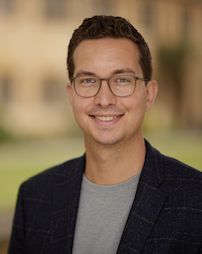
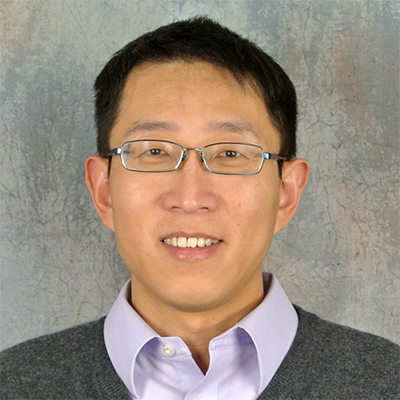
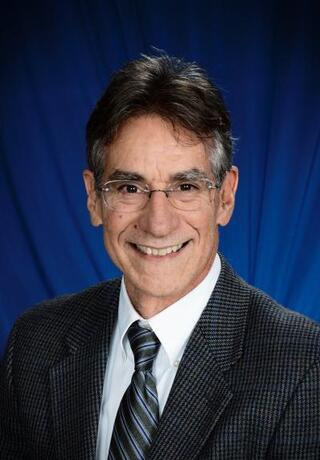
Fletcher Halliday is an Assistant Professor at the Department of Botany and Plant Pathology at Oregon State University, where he leads the Disease Ecology and Diversity Lab . His research focuses on understanding the interplay between host-pathogen communities, climate change, and land-use impacts on disease risk. Primary affiliation: Oregon State University Research lab: Disease Ecology and Diversity Lab Dr. Halliday's work explores how biodiversity moderates disease dynamics, with studies on fungal epidemics, coinfection interactions, and trait-based susceptibility in plant systems. His research spans elevational gradients, successional ecosystems, and climate manipulation experiments to uncover patterns in pathogen distribution and community assembly. Recent publications highlight trends in biodiversity-disease relationships, climate change effects on herbivory and infection, and multiscale ecological interactions. Articles from 2020–2025 emphasize meta-analytic frameworks, priority effects in parasite assembly, and the role of functional traits in disease risk prediction. The Disease Ecology and Diversity Lab investigates disease risk in complex ecological systems, prioritizing integrative approaches to pathogen community structure and climate-driven changes in host-parasite interactions.
Dr. Carlo Cavicchia is an Assistant Professor of Statistics at the Econometric Institute, Erasmus School of Economics, Erasmus University Rotterdam. He holds a PhD in Methodological Statistics from La Sapienza University of Rome and has held roles such as Research Fellow at UnitelmaSapienza University and Consultant for NGOs in Zanzibar. His research focuses on latent variable models, composite indicators, and unsupervised classification, with applications in environmental policy, sports analytics, and teacher job satisfaction. Cavicchia teaches statistics and data science courses at undergraduate and graduate levels and actively contributes to academic communities through journal reviewing, conference organizing, and editorial roles. Education: PhD in Methodological Statistics (La Sapienza University of Rome, 2020) MSc in Statistics and Decision Sciences (La Sapienza University of Rome, 2016) BSc in Statistics (La Sapienza University of Rome, 2013) Dutch University Teaching Qualification (BKO, 2022) Research Interests: Cavicchia’s work emphasizes hierarchical models, non-parametric statistics, and data science applications. He develops methodologies for composite indicators, including ultrametric Gaussian mixture models and disjoint principal component analysis. His research bridges theoretical advancements with real-world problems, such as waste management in Italian municipalities and ranking European football teams using composite metrics. Grants & Awards: 2024: IFCS Chikio Hayashi Award 2023: ESE Starter Grant (€300,000) 2017: Research Grant for Junior Researchers (€1,270) 2016: PhD Scholarship, La Sapienza University Academic Engagement: Cavicchia serves as IASC Data Analysis Competition Officer (2023–2025), co-edits the ISI Magazine , and organizes conferences like DSSV 2020 and DSSV-ECDA 2021. He is an elected member of the International Statistical Institute and contributes to SVQS’s Sustainability initiatives. Labs & Teams: He co-organizes the Econometrics internal seminars at Erasmus University and collaborates with researchers at University of Naples Federico II on hierarchical models and convex clustering.
Dr. Sofia Collignon is a Senior Lecturer in Comparative Politics and Director of the Mile End Institute at Queen Mary University of London. She holds a BA from ITESO, an MSc from the University of Essex, and a PhD from University College London (UCL). Her research focuses on gendered political violence, harassment of political elites, and electoral competition, with particular attention to the UK, Western Europe, and Mexico. She employs quantitative methods such as panel data, multilevel models, and survey experiments, complemented by qualitative interviews. Dr. Collignon’s impactful work has garnered international acclaim, including awards for her studies on gendered effects of political harassment and voter responses to candidate misconduct. She advises governments and NGOs on issues of public life safety, collaborating with organizations like the Local Government Association. Her work has been featured in outlets such as The Guardian, BBC, and CNN. She currently supervises PhD students researching topics like gendered political violence and electoral competition. As Director of the Mile End Institute, she bridges academic research with public policy engagement. Her teaching includes modules on comparative politics and political communication. Key publications highlight the intersection of elite politics with public opinion, particularly regarding the barriers to women’s political representation and the consequences of political misconduct.
Morten Hovd is a Professor in the Department of Engineering Cybernetics at the Norwegian University of Science and Technology (NTNU). His research focuses on advanced control systems, model predictive control (MPC), power electronics, and optimization algorithms. He has contributed significantly to the development of robust control strategies for uncertain systems and has published extensively in leading journals and conferences in the field of control engineering. His research interests span several key areas in control systems engineering, including model predictive control, nonlinear control systems, optimization under uncertainty, and applications in power systems and energy efficiency. He is particularly known for his work on discrete-time bilinear systems, modular multilevel converters (MMCs), and the integration of machine learning techniques with control theory. His contributions address both theoretical advancements and practical implementations in industries such as energy and petroleum engineering. Hovd's recent publications highlight advancements in energy-efficient control systems, stochastic surrogate modeling for subsurface flows, and optimization algorithms tailored for complex engineering problems. His work often combines rigorous mathematical frameworks with real-world applications, such as improving the reliability of power systems and enhancing reservoir management through data-driven methods. He is actively involved in teaching courses such as TTK4210 (Advanced Control of Industrial Processes) and TK8118 (Mini-seminar in Cybernetics). His research has led to innovations in fault detection for power systems, energy-efficient building climate control, and robust MPC strategies for uncertain systems.
Jouni Kuha is a Professor of Social Statistics and MSc Social Statistics Programme Director at the London School of Economics and Political Science (LSE), Department of Statistics. His expertise lies in latent variable modeling, survey data analysis, measurement error, and missing data, with applications in social sciences. He collaborates on projects addressing education mobility, public attitudes toward policing, family support dynamics, and global medicine accessibility. He contributed to the UK General Election exit poll analysis and was elected a Fellow of the British Academy in 2021. Education: MSocSc (Statistics) from the University of Helsinki (1992), PhD (Social Statistics) from the University of Southampton (1996). Prior roles include postdoctoral research at Nuffield College, Oxford, and Assistant Professor at Pennsylvania State University. Teaching includes courses on applied regression analysis, multivariate analysis, and statistical modeling. Research interests span latent variable models, categorical data analysis, and methodological advancements in multilevel and latent class analysis. Recent work focuses on digital trace data biases, procedural justice in policing, and intergenerational welfare dynamics. His methodological contributions include R package implementations for multilevel latent class analysis. Scientific awards include Fellowship of the British Academy (2021). Key grants and collaborations involve cross-national studies on citizenship norms, crime victimization, and healthcare policy. He advises on statistical methodologies for social science applications and maintains active involvement in the LSE’s Department of Methodology.
Matthew Perrigino is an Assistant Professor of Management at the Zicklin School of Business, Baruch College. His research explores work-life flexibility policies, supervisory leadership, and multilevel organizational dynamics. Education: PhD in Organizational Behavior & Human Resources from Purdue University; BBA in Business Law and Operations Management from Emory University. His work addresses work-family conflict, technology integration, and healthcare workforce dynamics, published in journals like Academy of Management Annals and Journal of Occupational Health Psychology . Current projects examine strategic boundary control in remote work and deontic technology perceptions. Selected trends from his publications include: Work-life policy effectiveness Supervisor-subordinate emotional dynamics Technology's role in work-nonwork boundaries Early Career Fellow, Work-Family Researchers Network (2022) Nominated for Academy of Management Best Paper (2017) He serves on editorial boards for International Journal of Human Resource Management and International Human Resource Management , and teaches organizational behavior courses.
Gee Y. Lee is an Associate Professor with Tenure in the Department of Statistics and Probability and the Department of Mathematics at Michigan State University. Lee holds a PhD from the University of Wisconsin-Madison and is an Associate of the Society of Actuaries (ASA). Their research focuses on applying advanced statistical and machine learning methods to solve complex problems in actuarial science and insurance. Dr. Lee's educational background includes: PhD from the University of Wisconsin-Madison Associate (ASA) designation from the Society of Actuaries Dr. Lee's research spans several critical areas in modern actuarial science. Their primary focus includes insurance loss modeling for rate-making and loss reserving applications, optimization of multivariate insurance coverage, and dependence modeling. A significant portion of their recent work applies machine learning methods, particularly deep neural networks, to traditional actuarial problems. They are also pioneering research in analyzing unstructured data for insurance applications, which represents an emerging frontier in the field. Their work bridges theoretical statistical methods with practical insurance industry needs. Dr. Lee's publication record demonstrates a clear evolution from traditional actuarial methods toward more sophisticated and interdisciplinary approaches. Early work focused on fundamental aspects of insurance pricing and modeling, while more recent publications incorporate machine learning techniques, natural language processing, and advanced optimization methods. A notable trend is the increasing integration of unstructured data analysis into actuarial science, reflecting broader industry shifts. Their research consistently addresses both theoretical advancements and practical applications in insurance risk assessment and management. While specific awards aren't detailed in the available information, Dr. Lee's recognition includes: Associate (ASA) designation from the Society of Actuaries Michigan State University recognized by the Society of Actuaries as granting MS and PhD degrees focused on actuarial science (as of 2023) Dr. Lee actively mentors students at multiple levels, supervising undergraduate research through REU programs, directed studies (STT 490, MTH 490, MTH 491B), and graduate research for MS and PhD candidates. They have advised numerous students who have presented at UURAF (Undergraduate Research Assistant Fellowship) conferences. For graduate students, Dr. Lee supports research leading to MS degrees in Statistics, Applied Statistics, and Industrial Mathematics with actuarial science focus, as well as PhD dissertations in Statistics. Beyond direct student supervision, Dr. Lee has organized significant academic events including the Simon Conference for Young Researchers in Risk Management and Insurance (2019, 2023) and contributed to other workshops, demonstrating leadership in the actuarial research community. While specific lab names aren't mentioned, Dr. Lee appears to lead a research group focused on actuarial science and insurance analytics at Michigan State University. Their collaborative work with researchers like Scott Manski, Taps Maiti, Peng Shi, and others suggests an active research team working at the intersection of statistics, machine learning, and actuarial applications. The research group seems particularly focused on bridging traditional actuarial methods with modern data science techniques.
PD Dr. habil. Thomas Wöhling serves as a Senior Research Scientist and Team Leader for Stochastic Modelling of Hydrosystems at the Chair of Hydrology, Dresden University of Technology's Faculty of Environmental Sciences. His research spans integrated environmental systems modeling with particular expertise in surface water-groundwater interactions, braided river systems, and vadose zone processes. Previously, he held research positions at Water and Earth System Sciences Competence Cluster in Tübingen (2010-2015) and Lincoln Environmental Research in New Zealand (2006-2010). Dr. Wöhling completed his Dipl.-Hydrol. (1999) and PhD in Hydrology (2005) at Dresden University of Technology, followed by habilitation in Stochastic Hydrology (2021). His educational background includes extensive research at the Institute of Hydrology and Meteorology at TU Dresden (1999-2005) where he developed foundational expertise in hydrological modeling. Wöhling's research focuses on integrated modeling of coupled environmental systems , particularly flow and contaminant transport in surface water-groundwater systems, nutrient and energy fluxes in soil-plant-atmosphere systems, and distributed hydrological modeling. His work emphasizes stochastic modeling and uncertainty analysis , with significant contributions to inverse modeling, model calibration, multiobjective optimization, and Bayesian model averaging techniques. He has pioneered methods for evaluating monitoring network worth and data utility for environmental models. His publication record demonstrates consistent contributions to hydrological science, with recent work (2023-2025) focusing on machine learning applications in hydrology, advanced statistical inversion techniques, and complex karst system modeling. Key trends include integration of physics-based and data-driven approaches, improved uncertainty quantification methods, and applications to climate change impacts on water resources. His work bridges theoretical advances with practical applications in New Zealand's braided rivers and European hydrological systems. STAHY Best Paper Award (2018) ASCE Journal of Irrigation and Drainage Engineering Best Reviewer Awards (2008, 2010, 2011, 2015, 2018) ASCE Journal of Irrigation and Drainage Engineering Best Paper Awards (2008, 2009) Dr. Wöhling leads the Stochastic Modelling of Hydrosystems team and has secured funding for numerous projects including Klimakonform, ISOSIM, VAMOS II, and the International Research Training Group 'Integrated Hydrosystem Modelling.' His work combines novel monitoring techniques with modeling and optimal sensor placement to improve prediction reliability for river-groundwater exchange fluxes. He collaborates extensively with international partners, particularly in New Zealand through the Lincoln Agritech's Braided Rivers program. His laboratory work focuses on combining traditional hydrological measurements with advanced computational techniques, including deep learning applications for soil surface hydrology and time-windowed Bayesian analysis for predictive modeling. The team maintains strong connections with field sites in Germany's Saxon region and New Zealand's Canterbury Plains, facilitating integrated theoretical and empirical research approaches.
Prof Vasiliki Bamiatzi is a Professor of Strategy and International Business at the University of Sussex Business School, leading the Strategy and Marketing department. She previously served as Deputy Director of Internationalisation (2023–2024) and held roles including Research Director for the International Business group (2020–2024). Her academic journey includes a PhD from Manchester Business School and prior positions at the Universities of Liverpool and Leeds. Her research focuses on strategic responses to adverse environments, M&A performance, and entrepreneurial value creation. She has published widely in journals like Strategic Management Journal and Journal of Business Venturing. Education: BSc in Business Administration (Athens University of Economics and Business, 1995–1999) MBA (Athens University of Economics and Business, 2002–2003) PhD in Strategy and International Business (Manchester Business School, 2005–2009) Research Interests: Her work explores firm performance under adversity, international M&A outcomes, and the role of mental health (e.g., ADHD) in entrepreneurship. Recent studies include CSR responses during crises like the Russia-Ukraine war and cybersecurity threats. Awards: Fellow of the Higher Education Academy (2014–present). Teaching & Leadership: Course Director for MSc International Business and Development (2023–2024). She emphasizes innovative teaching methods like global classroom collaborations and business simulations. Academic service roles include Track Chair for the British Academy of Management’s International Business Special Interest Group. Professional Engagements: Editorial roles include Associate Editor of Rutgers Business Review and Advisory Board member for International Business Review. Visiting positions include Georgia State University’s CIBER-GSU (2012–present) and Grenoble Ecole de Management (2012–2017).
Dr. Tim Heinkelmann-Wild is a Post-Doc Researcher and Lecturer (Wissenschaftlicher Mitarbeiter) at the Department of Political Science, Ludwig-Maximilians-University (LMU) Munich, and a Max Weber Fellow at the European University Institute (EUI) from September 2025 to August 2026. He has held visiting positions at the University of Cambridge’s Department of Politics and International Studies (POLIS) and the University of Oxford’s Nuffield College and Department of Politics and International Relations (DPIR). Education : Bachelor’s in Political Science and History (2015), LMU Munich, top of year. Master’s in Political Science (2018), LMU Munich, top of year. Research Interests : Tim’s research focuses on three main areas: (1) Institutional Contestation by Established Powers , examining how traditionally supportive states like the US challenge international organizations (IOs) and its implications; (2) IO Blame Games , analyzing responsibility attribution and avoidance strategies in contested IO policies; and (3) Indirect Warfare , exploring state intervention via non-state actors and control dynamics. Recent Publications : His work spans institutional resilience, blame attribution in the EU, and indirect warfare. Articles and chapters address topics such as the US withdrawal from IOs, legal safeguards in IO design, and multilevel blame-shifting. Collaborative works with scholars like Andreas Kruck and Bernhard Zangl are central to his output. Scientific Awards : Summa cum laude doctoral honors (LMU Munich). John McCain Dissertation Award (Munich Security Conference 2025). Dissertation Award (Munich University Society, MUG). German Thesis Award (“Deutscher Studienpreis”). Max Weber Fellow (EUI, 2025–2026). Teaching and Mentorship : He has supervised final theses seminars and taught courses on international relations, institutional contestation, and research design. He mentors in the Ment15 program for female doctoral candidates at LMU’s Faculty of Social Sciences. Policy Experience : Internships at the German Foreign Office (Task Force Ukraine) and Peace Research Institute Frankfurt (PRIF) inform his applied insights. He is a member of the German Council on Foreign Relations (DGAP) and the German National Academic Foundation’s selection committee.
Aaron Schat serves as Associate Professor and Associate Dean of Undergraduate Studies at McMaster University's DeGroote School of Business within the Department of Human Resources and Management. His academic career centers on promoting workplace dignity through rigorous research and education in organizational behavior. Schat's research program investigates workplace aggression, work-related stress, and employee well-being with particular focus on customer service contexts. He examines how incivility affects workers' psychological health, explores covert revenge behaviors against abusive customers, and analyzes blameworthiness attribution in service interactions. His work bridges industrial-organizational psychology with practical business applications, emphasizing that "employees deserve to be treated with civility and dignity" regardless of customer demands. Analysis of his publication trends reveals consistent focus on aggression typology and its organizational consequences. Recent work employs person-oriented approaches to understand individual differences in aggression exposure, while earlier research established foundational knowledge about workplace aggression prevalence and intervention strategies. His scholarship consistently connects micro-level interactions to macro-level organizational health outcomes. As an educator, Schat trains future business leaders in human resources management, with students frequently reporting years later how his teachings helped navigate workplace conflicts. He currently collaborates with PhD candidates on peer support mechanisms for service workers handling difficult customer interactions, demonstrating his commitment to translating research into practical organizational solutions.
Nieves Ortega Pérez is a Professor at the University of Granada, affiliated with the Department of Public Law and Special Private Law. Her research spans Political Science, Public Administration, and Migration Studies, focusing on immigration policies, economic crisis impacts, and social integration frameworks. Doctorate in Political and Administrative Science (2011) Supervised by Dr. Juan Montabes Pereira and Dr. María Angustias Parejo Fernández Her research explores: Immigration policy analysis in Spain and Europe Psychosocial risks in migrant labor Intersection of gender and immigration Public administration reform Integration indicators in multicultural societies Political communication in public institutions The 15 most recent publications highlight her focus on legal frameworks, economic impacts, and social policies related to immigration, with additional work in medical sociology and literary studies. Her academic output spans Spanish, Japanese, and Korean, reflecting transnational research perspectives. She has collaborated with institutions like Universitat de València, Universidad de Cartagena, and Universidad Nacional del Nordeste, with 44 followers and 1,368 public views on Academia.edu.
Dr. Jun Yan is a Professor in the Department of Statistics at the University of Connecticut. His research spans network analytics, spatial extremes, survival analysis, and statistical computing with applications in public health, finance, and environmental science. His core research interests include: network modeling and analysis, spatial statistics for climate extremes, survival analysis methodologies, statistical computing frameworks, and applications in interdisciplinary domains including sports analytics. Dr. Yan has developed significant statistical methodologies for network analysis, climate change detection, financial modeling, and health analytics. His recent publications demonstrate innovation in modeling complex network structures, analyzing climate extremes, developing computational approaches for massive datasets, and creating specialized statistical methods for health and finance applications. He maintains active collaborations across disciplines and contributes to open-source statistical software. Honors include: Guggenheim Fellowship, multiple Fromm Foundation commissions, and Barlow Endowment recognition.
Dr Lisa Kim is a Senior Lecturer in the School of Psychology at the University of Sydney, Australia. She holds Chartered Psychologist (CPsychol) and Fellow (FBPsS) titles from the British Psychological Society. As Director of the HEART Research Group and WELL Policy Node, her work focuses on teacher effectiveness, wellbeing, and retention. Previously at the University of York, UK, she completed a PhD in Psychology and held academic roles from Postdoctoral Research Fellow to Senior Lecturer. Her research spans educational psychology, organizational psychology, and individual differences. Notable projects include longitudinal studies on teacher experiences during the pandemic, systematic reviews of burnout interventions, and collaborations with UNESCO and UK Government bodies. Awards include recognition as a top researcher in educational psychology (2022) and best paper awards in educational journals. Key grants include the 2024 Sydney Policy Lab Node funding for WELL initiatives, and the University Research Priming Grant for small school collaborations. She advises policymakers on teacher wellbeing through platforms like the UNESCO Teacher Task Force and BBC interviews. Professional activities include teaching courses on personality and educational psychology, and supervising PhD students in related fields.
Joseph G. Altonji is the Thomas DeWitt Cuyler Professor of Economics at Yale University and a Research Associate at the National Bureau of Economic Research (NBER). He previously held faculty positions at Columbia University and Northwestern University, and served as a visiting professor at Princeton and Harvard. His academic affiliations include memberships in the Econometric Society, the American Academy of Arts and Sciences, and the Society of Labor Economists (past president). He received the IZA Prize in Labor Economics (2018) and has advised numerous federal and academic bodies, including the Federal Reserve Bank of Chicago and the President’s Council of Advisors on Science and Technology. Altonji’s research focuses on labor economics, applied econometrics, and inequality dynamics. Key areas include labor market fluctuations, education economics, family income dynamics, and wage determination. Current projects address school choice impacts on inequality, graduate degree returns, and the interplay between marriage, earnings, and family income. His methodological contributions include techniques to address selection bias in observational studies, particularly in evaluating school and neighborhood effects. Publications highlight trends in advanced degree returns, decomposition of earnings into wage and hours effects, and analyses of pandemic-era labor market shifts. His work often bridges econometric rigor with policy relevance, emphasizing empirical strategies to isolate causal effects. Altonji’s advisory roles reflect his engagement with real-world economic challenges, from STEM education to unemployment insurance policy design.