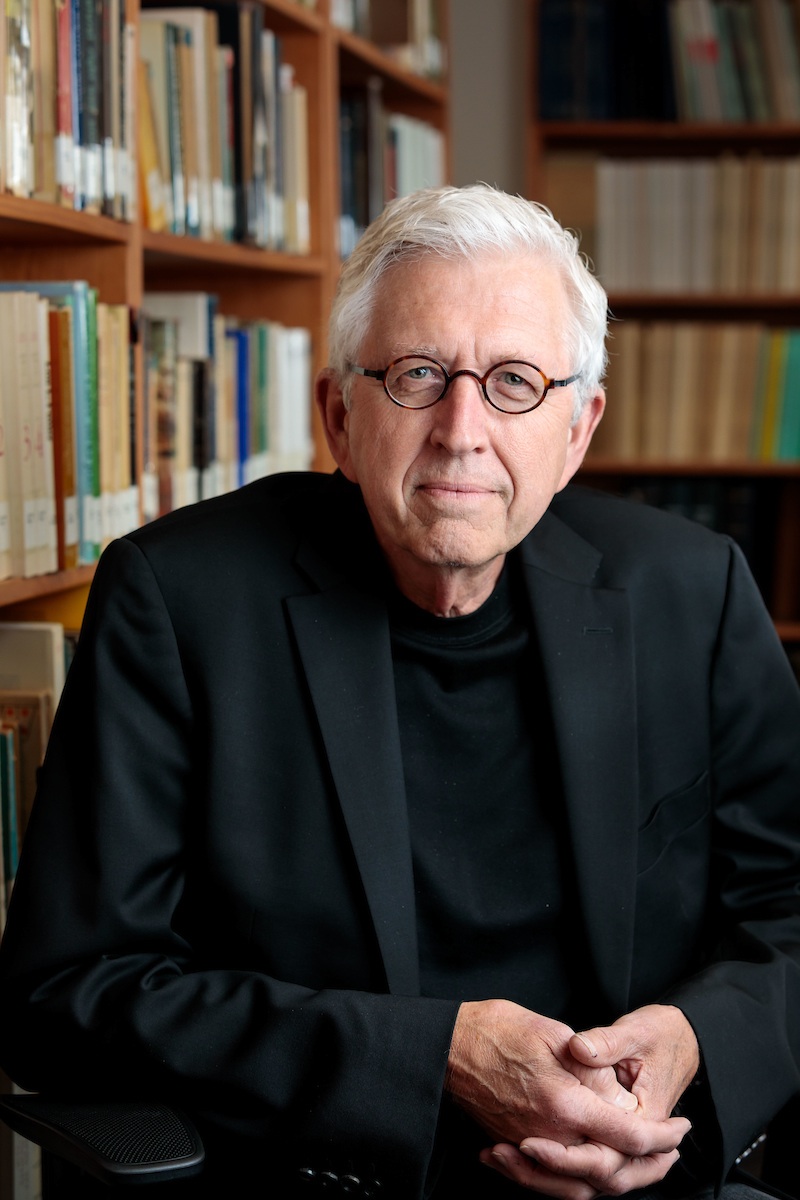
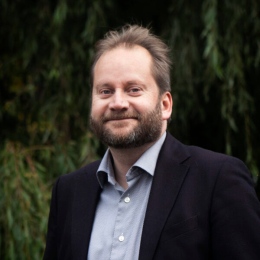
Prof. Dr. Mircea Dumitru is a distinguished academic affiliated with the University of Bucharest , where he serves as Rector since 2011 and teaches at the Faculty of Philosophy. Holding two PhDs—one from Tulane University (1998) on modality and incompleteness, and another from the University of Bucharest on neo-Fregeanism and neo-Russellianism—he specializes in philosophical logic , philosophy of language , and analytic metaphysics of modality . His research spans modal logic, theories of truth, epistemology, philosophy of mind, and interpretations of Wittgenstein, Quine, Kripke, and Kit Fine. President of the European Society of Analytical Philosophy (2011–2014) Member of the Romanian Academy (since 2014) Prof. Dumitru has published over 50 articles in specialized journals and translated seminal works by Nozick, Nagel, Wittgenstein, Quine, Forbes, and Kripke into Romanian. His teaching includes symbolic logic, philosophy of language, and metaphysics of modalities.
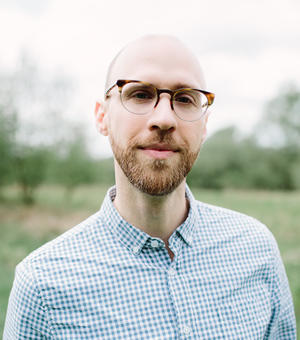
Robert B. Pippin is the Evelyn Stefansson Nef Distinguished Service Professor in the Committee on Social Thought, the Department of Philosophy, and the College at the University of Chicago. He is a leading scholar in modern German philosophy, with major contributions to the understanding of Kant, Hegel, and their implications for contemporary thought. His work bridges philosophy, literature, and film, making him a central figure in interdisciplinary humanities. University of Chicago – Committee on Social Thought Department of Philosophy The College His research interests focus on German Idealism, especially Kant and Hegel, with extensions into political philosophy, aesthetics, theories of self-consciousness, and the philosophy of modernity. He has pioneered the philosophical analysis of film, particularly American cinema, including Westerns and film noir, showing how cinematic narratives engage deep philosophical questions about agency, fate, and self-knowledge. The recent articles reflect a sustained engagement with Hegel’s logic and metaphysics, the philosophical dimensions of modern art and film, and the intersections of literature and moral philosophy. His publications demonstrate a consistent focus on the ways in which art and narrative can embody philosophical insight, especially in the context of modernity. Notable scientific awards include: Mellon Distinguished Achievement Award in the Humanities Fellow of the American Academy of Arts and Sciences Fellow of the American Philosophical Society Fellow of the German National Academy of Sciences Leopoldina Pippin has advised numerous students and is frequently invited to speak at major academic institutions worldwide. He has delivered lectures at Yale, Harvard, Stanford, Princeton, and international universities in Europe and Asia. His work is supported by prestigious fellowships and academic networks, and he is actively involved in ongoing research projects on Hegel, modernism, and cinematic philosophy. He has led seminars and workshops on topics ranging from neurophilosophy to the philosophy of education. He is affiliated with several research initiatives and intellectual communities, including the John U. Nef Committee on Social Thought and the Department of Philosophy at the University of Chicago. His public lectures and writings demonstrate a commitment to making complex philosophical ideas accessible and relevant to broader cultural discussions.
J. P. Moreland is Distinguished Professor of Philosophy at Talbot School of Theology, Biola University. He holds a Ph.D. in philosophy from the University of Southern California, M.A. in philosophy from University of California, Riverside, Th.M. from Dallas Theological Seminary, and B.S. in physical chemistry from University of Missouri. A prolific scholar, he has authored/co-authored 95+ books and 85+ journal articles in venues like Philosophy and Phenomenological Research and American Philosophical Quarterly , and was named among the world's top 50 living philosophers in 2016. His research focuses on philosophy of mind (especially substance dualism), metaethics, critiques of naturalism/scientism, consciousness studies, and Christian apologetics. Recent works rigorously defend theistic moral realism and the immaterial nature of consciousness against physicalist alternatives. His publications demonstrate consistent engagement with metaphysics, epistemology, and science-religion dialogue, with notable emphasis on defending substance dualism through modal arguments, consciousness studies, and neuroscientific critiques since 2020. Awards & Honors: Fellow, Discovery Institute's Center for Renewal of Science & Culture (2000-present) Robert Fischer Faculty Member of the Year, Biola University (1998-99) Senior Fellow, Dallas Willard Center for Spiritual Formation (2013-present) Top 50 Most Influential Living Philosophers (The Best Schools, 2016) He co-directs the Thinking Christianly podcast and serves on boards including the Center for Moral Apologetics. His speaking includes 200+ university engagements addressing ethics, consciousness, and cultural engagement.
David Chalmers is a leading philosopher at New York University , holding the title of University Professor of Philosophy and Neural Science. He co-directs the Center for Mind, Brain, and Consciousness and serves as Honorary Professor of Philosophy at the Australian National University . Additionally, he co-directs the PhilPapers Foundation , a key resource for philosophical scholarship. Chalmers' research spans multiple disciplines, focusing on the philosophy of mind , particularly the hard problem of consciousness , the foundations of cognitive science , and the philosophy of technology . He has explored topics such as AI welfare , consciousness in large language models , and metaphysics/modality . His work bridges broad conceptual frameworks with specific applications in computing, neuroscience, and virtual reality. Chalmers is renowned for his contributions to metaphysics and epistemology , particularly through his papers on the simulation hypothesis and virtual reality, including The Simulation Hypothesis: Metaphysics, Epistemology, Value and Precis of Reality+ . His research also extends to mental content and metaphilosophy . He has collaborated extensively, notably with Kelvin McQueen on Consciousness and the Collapse of the Wave Function , and has participated in debates, interviews, and lectures on consciousness and AI, including engagements with Dan Dennett and Carlo Rovelli .
Irene Binini is an Associate Professor at the University of Parma in the Department of Humanities, Social Sciences and Cultural Enterprises. She is a distinguished researcher in the History of Medieval Philosophy , with a focus on ancient and medieval logic. Marie Skłodowska Curie Global Fellow at University of Parma and University of Toronto DAAD PRIME Fellow (2018-2019) Research Focus: Her work centers on the evolution of modal theories in medieval logic, particularly through figures like Peter Abelard and the Oxford Calculators. She explores topics such as logical determinism, de re/de dicto distinctions, and the metaphysical implications of medieval logical frameworks. Publication Trends: Recent articles (2022-2024) examine counterpossibles , thought experiments , and impossible antecedents in medieval contexts. Earlier works (2017-2019) delve into negation theories, mereology, and existential presuppositions. Scientific Distinctions: Marie Curie Fellowship DAAD PRIME Fellowship Academic Leadership: She has edited the volume Mereology in Medieval Logic and Metaphysics (2019) and organized international conferences on medieval logic.
Uriah Kriegel is a Professor of Philosophy at Rice University's Department of Philosophy. His research focuses on philosophy of mind, metaphysics, epistemology, and metaethics. He is particularly known for his work on consciousness, moral awareness, and fundamental ontology. Kriegel has published extensively, including influential books like Brentano's Philosophical System (2018) and Subjective Consciousness (2009). His current projects explore the value of consciousness, the nature of moral awareness, and ontological categories. He critiques neural correlates of consciousness and advocates for a self-representational theory of consciousness. Kriegel has contributed to debates on epistemic value, aesthetic judgment, and Brentano's philosophy. Teaching areas include metaphysics, metaethics, and the history of philosophy. Despite no listed awards, his work significantly impacts contemporary philosophy of mind and epistemology. No grants or labs are explicitly mentioned, but his research spans interdisciplinary topics like emotion theory and modal idealism.
Mark Colyvan is Professor of Philosophy at the University of Sydney and Director of the Sydney Centre for the Foundations of Science. He holds honorary positions at the Australian National University and is a Visiting Professor at Ludwig-Maximilians University's Munich Center for Mathematical Philosophy. He earned a BSc (Hons) in Mathematics from the University of New England (1993) and a PhD in Philosophy from the Australian National University (1998). His research spans: Philosophy of mathematics (e.g., indispensability, explanation) Decision theory and risk analysis Environmental philosophy and conservation biology Logic and formal methods in philosophy Recent articles (2017–2025) focus on mathematical explanation, ecological modeling, legal reasoning, and the epistemology of uncertainty, reflecting interdisciplinary engagement with mathematics, ecology, and law. Awards and fellowships: ARC Future Fellowship Carl Friedrich von Siemens Research Award Senior Fellowship at Zukunftskolleg He leads major projects including Mathematical Explanation (ARC-funded) and Ecological Allometries , advising interdisciplinary teams across philosophy, ecology, and risk analysis.
Alessandro Giglia is a Doctoral Research Fellow at the Department of Philosophy, Classics, History of Art and Ideas, University of Oslo. He is affiliated with the Faculty of Humanities and works within the ERC project C-FORS: Construction in Formal Sciences , supervised by Øystein Linnebo. Education: BA in Philosophy, Catholic University of Milan (2022), Thesis: Philosophy of Paraconsistent Logics (Supervisors: Alessandro Giordani & Ciro De Florio) MA in Philosophy, University of Italian Switzerland (2024), Thesis: Semantics of Potentialism (Supervisor: Øystein Linnebo) Research Interests: Philosophy of Logic Philosophy of Mathematics Metaphysics of Modality Potentialist Theories in Set Theory Formal Semantics His current work focuses on defining semantics for potentialist theories through a modal and plural lens.
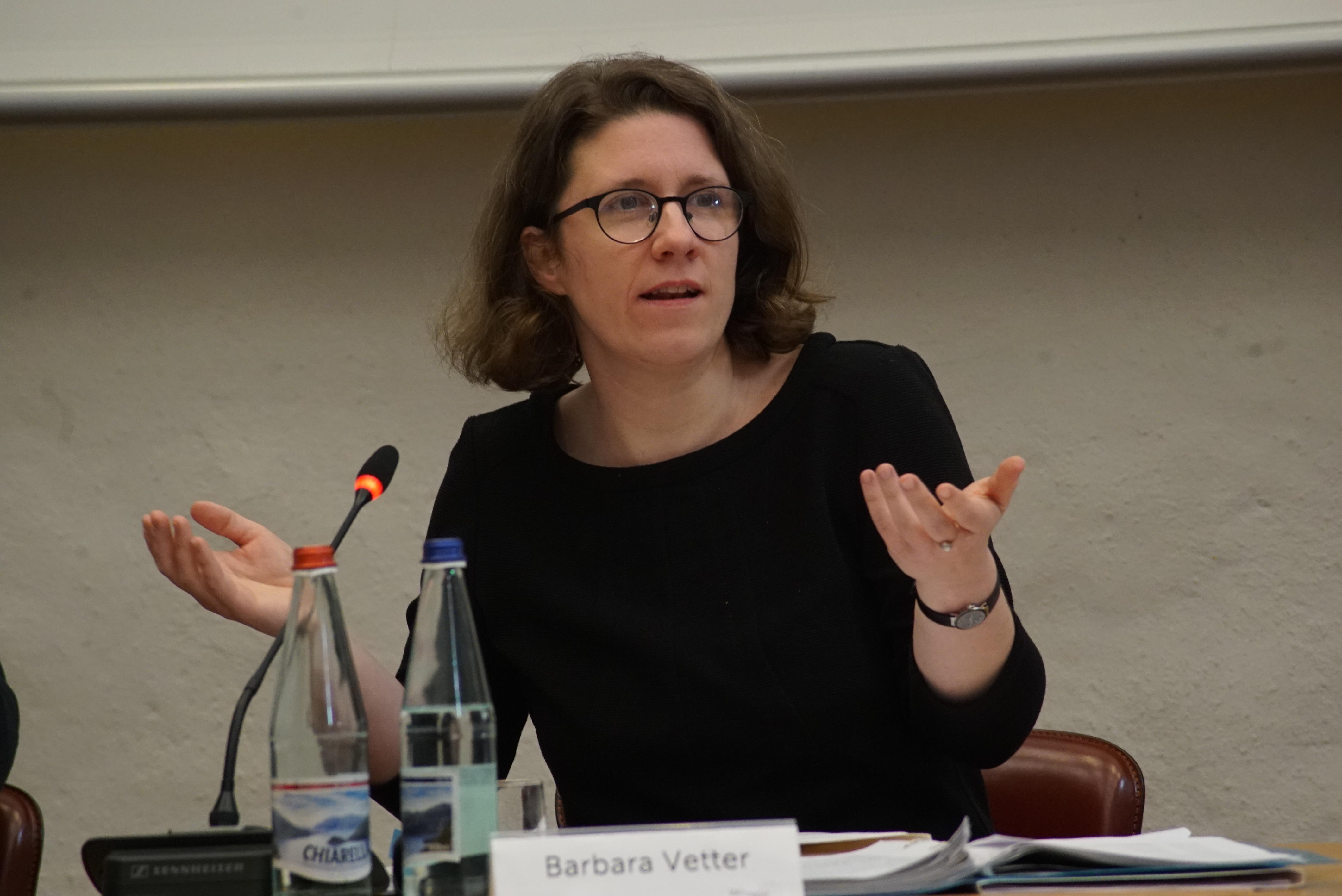
Barbara Vetter is Professor of Theoretical Philosophy at Freie Universität Berlin since April 2017 and serves as the institute’s executive director and Erasmus coordinator . She previously held positions as Professor at FAU Erlangen-Nürnberg (2016–2017) and Junior Professor at Humboldt-Universität zu Berlin (2010–2016). Her research lies at the intersection of metaphysics , epistemology , and the philosophy of modality , focusing especially on dispositions, abilities, and an agency-based approach to modal knowledge. Education & Academic Background DPhil, University of Oxford (2010) – Dissertation: Potentiality and Possibility BPhil, University of Oxford (2006) – Thesis: Abstract Objects Research Interests Her work centers on the metaphysics and epistemology of modal properties . She defends dispositionalism about modality , arguing that metaphysical modality is grounded in the dispositions or potentialities of objects. A second major strand is the development of an agency-based epistemology of modality , which locates the source of modal knowledge in our experience of our own agency and abilities. Awards & Recognition Stegmüller Prize, German Society for Analytic Philosophy (GAP) 2015 Studienstiftung des deutschen Volkes (2001-2006, 2007-2010) DAAD Scholarship (2007-2010) AHRC Scholarship (2004-2006, 2007-2010) Bayerische Begabtenförderung (2001-2006) Hanfling Scholarship, Faculty of Philosophy, Oxford (2007-2008) Leadership & Grants Co-Speaker (with Dominik Perler), DFG Research Group „Human Abilities“ (2020–2024) Principal Investigator (with Erasmus Mayr), DFG Project „Capacities and the Good“ Principal Investigator, Berlin Graduate School „Philosophy, Science and the Sciences“ Vice-President, German Society for Analytic Philosophy (GAP) Steering Committee member, European Society for Analytic Philosophy (ESAP) Teaching & Supervision She offers regular courses on argumentation theory, metaphysics, and philosophy of science, and provides structured supervision for BA, MA, and doctoral theses in theoretical philosophy. Students can expect close guidance, including detailed feedback on drafts and scheduled meetings every two months for PhD candidates.
Henrik Lagerlund is a Professor at Stockholm University's Department of Philosophy, specializing in the history of philosophy with a focus on medieval and Renaissance periods. He serves as Chairman of the Center for Medieval Studies and leads the "The Mechanization of Philosophy 11300-1700" project funded by the Swedish Research Council. His recent work bridges medieval thought with contemporary issues, notably through his book The Philosophy of Food: How to Become a Philosophical Foodie , which explores ethical implications of food systems. Research Areas: Medieval skepticism, causal powers in science, philosophy of food, and mechanistic shifts in philosophical paradigms. Projects: "The Mechanization of Philosophy" (Swedish Research Council-funded), Stockholm History of Philosophy Workshop. Key Publications: Edited volumes on Buridan's influence, medieval skepticism, and causal powers. Authored works include studies on Francisco Suárez's legal philosophy and food ethics in medieval contexts. His articles span topics like final causality in Buridan, divine deception in medieval thought, and historical transitions in intentionality theories. Teaching: Offers courses and research supervision in history of philosophy, with a unique emphasis on the philosophy of food. Maintains an active public presence through interviews and podcasts discussing skepticism, food ethics, and medieval intellectual heritage.
Mohsen Moghri is a Marie Skłodowska-Curie Actions Postdoctoral Fellow at the Department of Philosophy, University of Birmingham, and a Visiting Researcher at the Department of Philosophy, University of Vienna. He joined The Global Philosophy of Religion Project directed by Professor Yujin Nagasawa in September 2022. His educational background includes: PhD in Philosophy of Science, Sharif University of Technology (2020) MA in History and Philosophy of Science, Sharif University of Technology (2015) BA in Industrial Engineering, Amirkabir University of Technology (2012) Moghri's research spans Metaphysics, analytic philosophy of religion, philosophy of science, and science-religion dialogue. His doctoral work addressed Leibniz's question 'Why is there anything at all?', resulting in interdisciplinary publications. Current projects examine Axiological Explanation and Religious Naturalism, including a monograph on how Value grounds Nature, while collaborating with Vienna's Phlox research group on Grounding and Metaphysical Explanation. His publications demonstrate expertise in metaphysical frameworks connecting possibility theory, value ontology, and naturalistic religious perspectives. Key recognition includes: Marie Skłodowska-Curie Actions Postdoctoral Fellowship As a postdoctoral researcher, he focuses on independent scholarship without formal advisees. His work is primarily funded through the Marie Curie fellowship grant supporting his Birmingham-Vienna collaborative research. He maintains active affiliations with The Global Philosophy of Religion Project at Birmingham and the Phlox research group at Vienna, driving interdisciplinary work at the intersection of metaphysics and philosophy of religion.
Nicholas Gaskill is an Associate Professor of American Literature at the Faculty of English , University of Oxford, and a Tutorial Fellow at Oriel College. His research bridges US literature and philosophy from Emerson to the present, focusing on the interplay between sensory experience and abstract thought. His scholarship explores the material history of chromatic technologies (1880–1930), American pragmatism, and the philosophical implications of literary artifice. Key themes include color theory , aesthetic formalism , and the relationship between reality and representation in American literature. He is currently working on a book titled Reality in America: Aesthetic Education and the Sense of the Real , examining novels and poems that question metaphysical reality through literary construction. His published work spans topics like color-music analogies, pragmatist criticism, and sensory abstraction.
Oliver Pooley is Vice Provost at Oriel College, University of Oxford, where he serves as Fellow and Tutor in Philosophy. He is also an Associate Professor in the Faculty of Philosophy at the University of Oxford. His academic appointments include teaching roles in multiple interdisciplinary programs: Computer Science and Philosophy, Mathematics and Philosophy, Philosophy and Modern Languages, Philosophy (Joint Honours), Philosophy and Theology, Philosophy, Politics and Economics, and Physics and Philosophy. Pooley's research focuses on the philosophy of physics, particularly the nature of space, time, and spacetime. His work intersects significantly with metaphysics and the philosophy of language. He is currently completing a book titled The Reality of Spacetime under contract with Oxford University Press. His research addresses fundamental questions about whether time really passes (concluding it doesn't) and how work in general metaphysics should inform the interpretation of physics. Analysis of Pooley's publication record reveals a sustained focus on spacetime ontology, particularly the substantivalist-relationalist debate. His work frequently engages with the hole argument, general covariance, and background independence in both classical and relativistic physics. A significant portion of his scholarship examines how metaphysical considerations interact with physical theories, especially regarding the interpretation of spacetime structure. His more recent work shows increasing attention to the relationship between dynamical symmetries and spacetime structure. Prior to his current position at Oriel, Pooley held a British Academy Postdoctoral Fellowship and college lectureship at Exeter College, Oxford. His teaching interests extend beyond philosophy of physics to include logic, metaphysics, epistemology, philosophy of language, and philosophy of science. He actively welcomes contact from potential graduate students whose research interests overlap with his own.
Matteo Favaretti Camposampiero is Associate Professor of the Philosophy of Language at the Department of Philosophy and Cultural Heritage, Ca' Foscari University of Venice. He serves as director of the Center for Renaissance and Early Modern Thought (CREMT) and vice-president of the Sodalitas Leibnitiana. Academic roles: Philosophy of Language, Metaphysics, Logic, Early Modern Philosophy Research areas: Descartes-Kant period, language theory, knowledge epistemology His work explores intersections between philosophy of language, metaphysics, and early modern scientific thought. He has contributed extensively to journals like Journal of the History of Philosophy and Oxford Studies in Early Modern Philosophy . 2021 Leibniz Society of North America prize winner Editorial board member: LCA – Leibniz's Correspondents and Acquaintances , Studi Lockiani , Synthesis He has participated in refereeing for Czech Science Foundation and Université Libre de Bruxelles (Marie Skłodowska-Curie Actions Cofund).
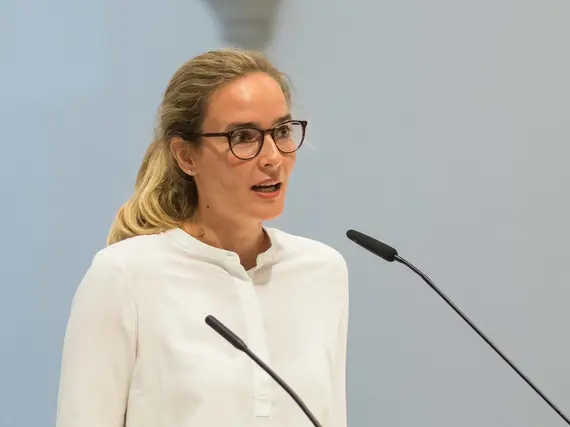
Silvia Jonas is a Junior Professor of Philosophy at the Otto-Friedrich University of Bamberg, where she is affiliated with the Institute for Classical Philology and Philosophy within the Faculty of Humanities and Cultural Studies. She has held this position since 2022, following postdoctoral appointments at the Munich Center for Mathematical Philosophy (MCMP) of the Ludwig-Maximilians-University of Munich (2017-2022) and at the Polonsky Academy of the Van Leer Institute and the Hebrew University of Jerusalem (2012-2017). Dr. Jonas's educational background includes a doctorate in Philosophy from Humboldt University of Berlin (2010-2012), a Master in Philosophy (BPhil) from the University of Oxford (2008-2010), a Master of Arts in Philosophy (MLitt) from the University of St Andrews (2007-2008), and a Master's degree in Political Science, Philosophy, and Religious Studies from Ludwig Maximilian University of Munich (2002-2007). Her research program centers on three fundamental questions: how mathematics shapes our understanding of reality, whether reality extends beyond what can be scientifically measured, and if there can be knowledge beyond the limits of language. These inquiries manifest in interconnected research areas examining mathematical analogies across meta-empirical domains, the justification for ontological commitment to non-spatiotemporal objects, and the possibility of non-propositional forms of knowledge in aesthetic, religious, and philosophical experiences. Dr. Jonas's scholarly contributions include the monograph 'Ineffability and its Metaphysics' (2016) and numerous peer-reviewed articles exploring connections between mathematical, moral, and religious realism. Her publication pattern shows consistent output in top philosophy journals with a focus on metaphysical questions at the intersection of mathematics, ethics, and theology. Karl-Heinz Hoffmann-Prize (2023) from the Bavarian Academy of Sciences Dr. Jonas maintains multiple professional affiliations including external membership at the Munich Center for Mathematical Philosophy and association with the Konstanz Center for Philosophy of Mathematics. She serves on the Board of Trustees of the Martin Buber Society of Fellows and as a trusted advisor for the Ernst Ludwig Ehrlich Studienwerk. Starting in 2026, she will assume the role of vice-president of the German Society for Analytic Philosophy. Committed to public engagement, Dr. Jonas has participated in prominent philosophy events including the World Science Festival in New York, the HowtheLightGetsIn Festival, and media appearances with Deutsche Welle and the 'Closer to Truth' documentary series, making complex philosophical ideas accessible to broader audiences.