معرفی
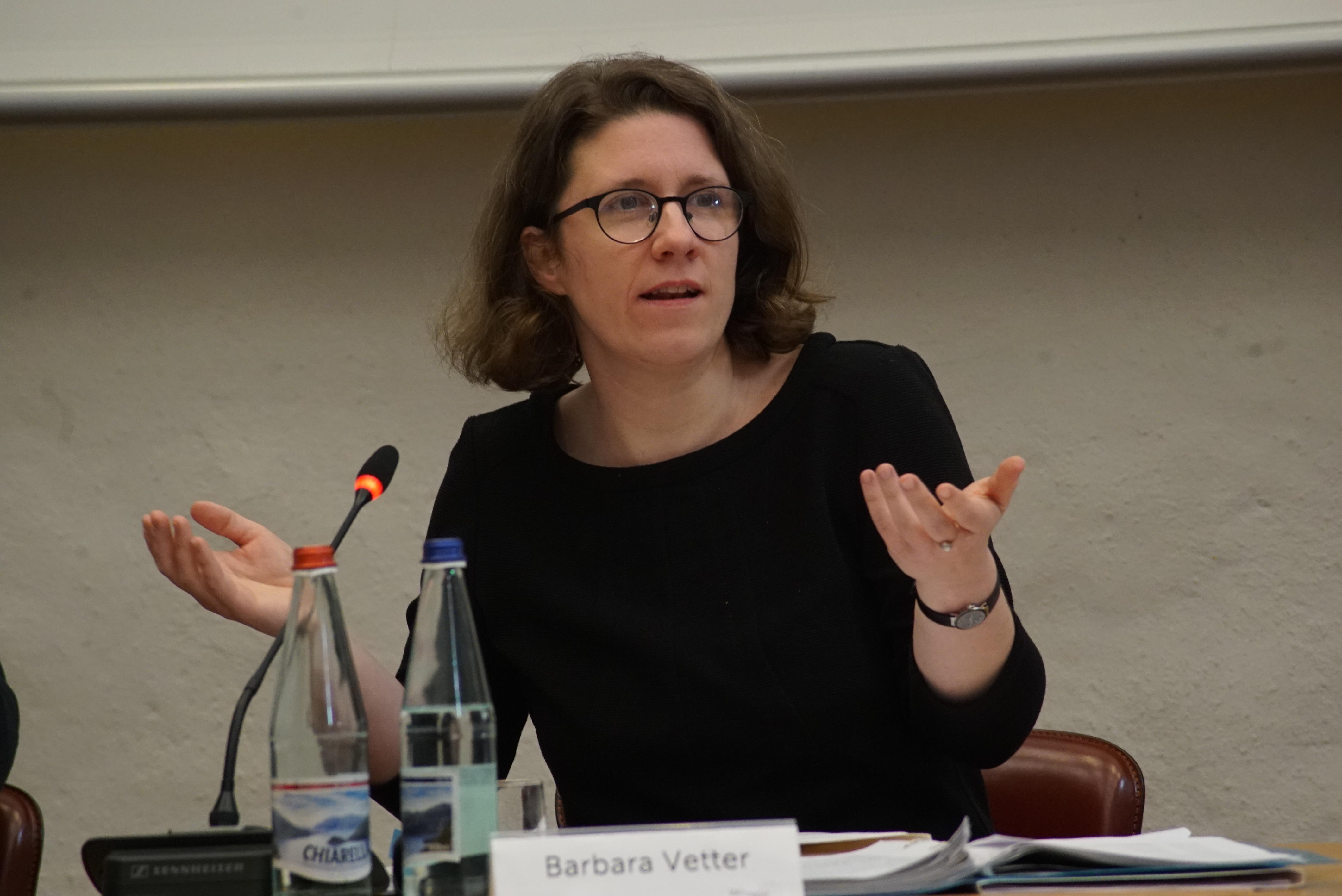
Barbara Vetter is Professor of Theoretical Philosophy at Freie Universität Berlin since April 2017 and serves as the institute’s executive director and Erasmus coordinator. She previously held positions as Professor at FAU Erlangen-Nürnberg (2016–2017) and Junior Professor at Humboldt-Universität zu Berlin (2010–2016). Her research lies at the intersection of metaphysics, epistemology, and the philosophy of modality, focusing especially on dispositions, abilities, and an agency-based approach to modal knowledge.
Education & Academic Background
- DPhil, University of Oxford (2010) – Dissertation: Potentiality and Possibility
- BPhil, University of Oxford (2006) – Thesis: Abstract Objects
Research Interests
Her work centers on the metaphysics and epistemology of modal properties. She defends dispositionalism about modality, arguing that metaphysical modality is grounded in the dispositions or potentialities of objects. A second major strand is the development of an agency-based epistemology of modality, which locates the source of modal knowledge in our experience of our own agency and abilities.
Awards & Recognition
- Stegmüller Prize, German Society for Analytic Philosophy (GAP) 2015
- Studienstiftung des deutschen Volkes (2001-2006, 2007-2010)
- DAAD Scholarship (2007-2010)
- AHRC Scholarship (2004-2006, 2007-2010)
- Bayerische Begabtenförderung (2001-2006)
- Hanfling Scholarship, Faculty of Philosophy, Oxford (2007-2008)
Leadership & Grants
- Co-Speaker (with Dominik Perler), DFG Research Group „Human Abilities“ (2020–2024)
- Principal Investigator (with Erasmus Mayr), DFG Project „Capacities and the Good“
- Principal Investigator, Berlin Graduate School „Philosophy, Science and the Sciences“
- Vice-President, German Society for Analytic Philosophy (GAP)
- Steering Committee member, European Society for Analytic Philosophy (ESAP)
Teaching & Supervision
She offers regular courses on argumentation theory, metaphysics, and philosophy of science, and provides structured supervision for BA, MA, and doctoral theses in theoretical philosophy. Students can expect close guidance, including detailed feedback on drafts and scheduled meetings every two months for PhD candidates.