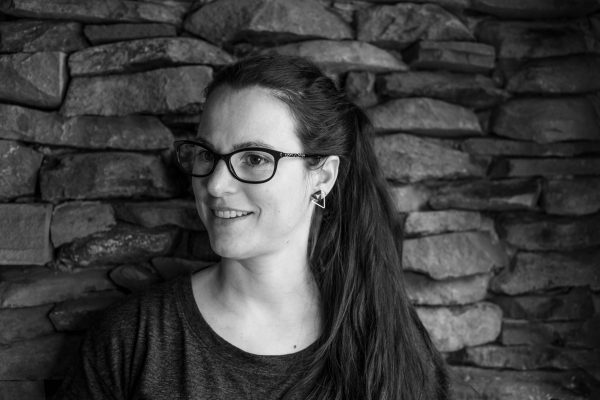
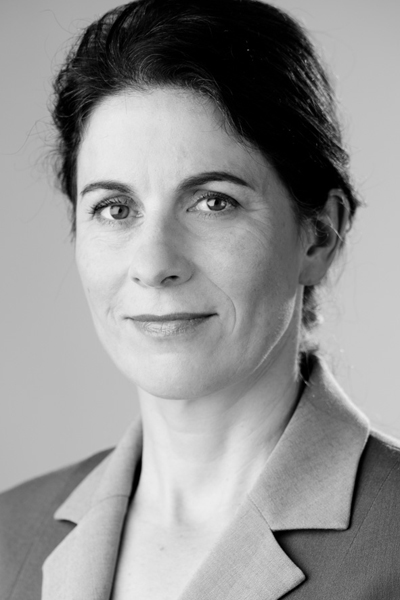
Evi Papadaki is a Researcher specializing in Mathematics Education, affiliated with the University of East Anglia. She holds a Doctor of Philosophy in Mathematics Education from the same institution (Award Date: 15 May 2023). Her work focuses on teacher discourse, pedagogical strategies, and the integration of interdisciplinary approaches in educational technology. She has collaborated internationally on topics such as horizon discourse in teaching and the role of skill centers in academic communities. Education: Doctor of Philosophy in Mathematics Education, University of East Anglia, 2023 Research Interests: Exploring teacher discourse beyond the immediate mathematical content ("mathematics of the moment") Interdisciplinary pedagogy and contextualized assessment tools (e.g., NUMBAS) Communities-of-Practice in mathematics and statistics teaching Professional development models linking research and classroom practice Recent Research Trends: Her publications emphasize the analysis of horizon discourse, a priori educational analysis, and the role of institutional scripts in shaping teaching practices. She investigates how teachers can expand their instructional approaches to encompass broader mathematical horizons and foster student understanding through innovative task design.
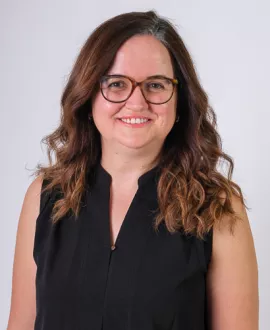
Silvia De Toffoli is an Associate Professor of Philosophy at the University School for Advanced Studies IUSS Pavia , Italy. She holds affiliations with the Institute of History and Philosophy of Science, Technology and Literature at the Technical University of Berlin and the Laboratoire SPHere in Paris. Previously, she was an Assistant Professor at Linköping University (Sweden) and a Postdoctoral Researcher at Princeton University. She holds dual PhDs in Philosophy (Stanford University, 2019) and Mathematics (Technical University of Berlin, 2013). Her research focuses on the philosophy of mathematics , epistemology , and the intersections of philosophy of science and literature . She explores topics such as mathematical justification, the role of diagrams in proofs, and the historical practices of mathematical rigor. She is actively involved in academic societies like the Association for the Philosophy of Mathematical Practice and the European Society for the Philosophy of Mathematics . De Toffoli has been recognized for her work with the Wallenberg Academy Fellowship (Linköping University). Her scholarship bridges historical case studies (e.g., the Italian School of Algebraic Geometry) with contemporary debates on mathematical rigor, intuition, and visualization. She advocates for a practice-based approach to understanding mathematical knowledge, emphasizing the social and cognitive dimensions of mathematical reasoning. Her publications span over 20 articles, including influential works on diagrammatic reasoning, the epistemological status of mathematical diagrams, and the fallibilist nature of mathematical justification. She also engages with broader philosophical themes, such as existential pessimism in Giacomo Leopardi’s writings.
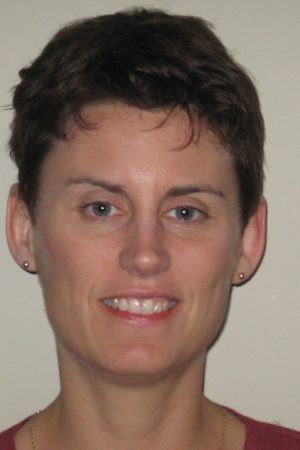
Elçin Emre Akdoğan is an Associate Professor in Mathematics Education at the Faculty of Education , TED University, Turkey. Her work focuses on mathematics education, geometric transformations, and teacher training through lesson study and problem-posing frameworks. Current roles: Faculty Member, Vice Dean Department: Mathematics and Science Education - Mathematics Education Research interests include: Mathematical creativity and discourse Transformation geometry and symmetry instruction Discursive development in classrooms Design-based research and curriculum innovation Recent publications emphasize teacher noticing, geometric concept formation, and the integration of design thinking in mathematics education. Her work often bridges theoretical knowledge with practical classroom implementation. Academic affiliations: TED University since at least 2008, with leadership roles like Vice Dean.
Kaliakatsos Papakostas Maximos is an Associate Professor in AI in Music at the Department of Music Technology and Acoustics, Hellenic Mediterranean University, where he also directs the MSc program in Sound and Music Technologies. He collaborates with the Athena Research and Innovation Centre and the Cognitive and Computational Musicology Group at Aristotle University of Thessaloniki. His research focuses on computational creativity, neural networks in music understanding, evolutionary algorithms for harmony and rhythm generation, and interactive music systems. He develops applications like Genius Jam Tracks and contributes to open-source projects such as the CHAMELEON harmonisation system. His work bridges music theory, AI, and technology, with applications in mobile music tools and cognitive modeling. Research Interests : Computational Creativity through Machine Learning and Conceptual Blending Neural Networks in Music Generation and Analysis Evolutionary Computation for Musical Structures Human-Computer Interactive Systems for Improvisation Cognitive Models of Musical Perception Labs & Collaborations : Collaborating Researcher at Athena Research Centre Partnership with the Cognitive and Computational Musicology Group (Aristotle University) Development of open-source tools like CHAMELEON and GCT_py Grants & Projects : Not explicitly listed in provided texts, but his GitHub activity suggests ongoing research in AI music technologies.
Prof. Dr. Michael Kleine is a Professor of Mathematics Education at the Faculty of Mathematics, Bielefeld University since 2012. He specializes in mathematics didactics, focusing on developing diagnostic tools for identifying at-risk students, integrating origami into mathematical teaching, and exploring linguistic factors in mathematical task design. Research interests include enactive learning, blended learning environments, and mathematical modeling Actively involved in international collaborations (KMTUT Bangkok, Peking University) and ERASMUS+ projects Previously served as Professor at Weingarten University of Education (2008-2012) Recent publications emphasize experimental mathematics, geometric reasoning through origami, and linguistic complexity in mathematical tasks. He developed the DITOM diagnostic framework for early identification of mathematical learning challenges. Prof. Kleine combines theoretical research with practical teacher training, particularly for secondary education. His work bridges cognitive psychology, educational technology, and curriculum innovation.
Barry Griffiths is a Senior Lecturer in the Department of Mathematics at the University of Central Florida (UCF), part of the College of Sciences. He teaches courses such as MAC 2312 (Calculus) and MAS 3203 (Linear Algebra), and his office is located in MSB 115. His research focuses on mathematics education, including cross-cultural studies of student learning, adaptive technologies in algebra courses, and the impact of the pandemic on classroom transitions. He has published widely on topics like calculus pedagogy, cryptography education, and student perceptions of mathematics in diverse cultural contexts. His work often employs semiotic analysis to explore mathematical concepts and their communication. Griffiths' research spans international comparisons (e.g., USA-Tunisia, India-Sri Lanka) and marginalized communities (e.g., Hmong-Americans). He has investigated innovative teaching methods such as card tricks to boost engagement, and has studied cheating mitigation strategies in online exams. His recent articles highlight trends in post-pandemic education, hybrid learning models, and the role of historical approaches in teaching Taylor series. Griffiths maintains an active teaching schedule with office hours dedicated to student support. While no formal grants or awards are listed, his publications indicate sustained contributions to improving undergraduate mathematics education through both theoretical research and practical classroom innovation.
Janet L. Beery is a Professor of Mathematics at the University of Redlands, where she has been teaching since 1989. She holds a Ph.D. in Mathematics from Dartmouth College (1989) and specializes in finite permutation group theory and the history of mathematics, with particular focus on Thomas Harriot's work. As editor of the MAA online journal Convergence , she has significantly contributed to the integration of historical perspectives in mathematics education. Her research interests span finite permutation group theory approached through representation and character theory, combinatorial methods, and the history of mathematics, particularly in developing innovative approaches to mathematics education. She has been instrumental in implementing computer use and interactive learning in calculus and linear algebra courses, and developed an activity-based elementary mathematics history course (MATH 115) that has proven popular with students. Beery's scholarly output demonstrates a strong trajectory toward historical mathematical analysis, particularly her extensive work on Thomas Harriot's contributions to mathematics. Her publications reveal expertise in both pure mathematics (permutation groups) and historical mathematical methods, with increasing focus on the educational applications of historical mathematical approaches. The majority of her recent work centers on historical mathematical texts and their pedagogical applications. MAA Meritorious Service Award (2010) University of Redlands Innovative Teaching Award (2008) AP Calculus Examination Development Committee, College Board (2002-2008) Newsletter Editor, MAA Southern California-Nevada Section (2003-present) Professor Beery has directed numerous undergraduate research projects through the Senior Research Seminar, a required capstone course for mathematics majors at the University of Redlands. Her approach emphasizes independent study, problem-solving, and communication skills development. She has secured NSF-ILI grants to establish computer classrooms and has coordinated workshops on calculus reform. Her students have undertaken diverse projects spanning mathematical modeling, cryptography, game theory, and historical mathematical analysis.
Elías Fuentes-Guillén is a researcher at the Institute of Philosophy of the Academy of Sciences of the Czech Republic, where he serves as Principal Investigator for the Junior Star project 'Normalisation and Emergence: Rethinking the Dynamics of Mathematics.' His work focuses on the historical transition from 18th to 19th century mathematical practices with special attention to Bernard Bolzano's contributions. His educational background includes a PhD in Logic and Philosophy of Science from the University of Salamanca (supervised by José Ferreirós and María Manzano) and undergraduate studies in Philosophy from the Autonomous University of the State of Mexico. Fuentes-Guillén's research spans multiple dimensions of mathematical history and philosophy, examining how mathematical knowledge evolved during a critical period of standardization. His work integrates textual analysis with philosophical inquiry to understand how mathematical practices transformed from the Enlightenment through the 19th century. He pays particular attention to Bolzano's innovative approaches to mathematical concepts that preceded and influenced later developments in analysis and set theory. His research also investigates how mathematical education changed during this period and how knowledge circulated across European intellectual centers. His publication record shows consistent output focused on Bolzano's mathematical work, 18th-19th century mathematical transitions, and historical analysis of mathematical concepts like irrational numbers and geometric foundations. The publications reveal a strong interdisciplinary approach combining history, philosophy, and mathematical analysis. Josef Dobrovský Fellowship by the Akademie věd České republiky (2018) Fuentes-Guillén leads the research project 'Normalisation and Emergence: Rethinking the Dynamics of Mathematics' funded by the Czech Science Foundation. He co-manages the 'Bolzano in Prague' website and organizes the itinerant Seminar on the Philosophy and History of Mathematics. His work has involved collaboration with international scholars including David Crippa on historical mathematical examinations in Prague. As Principal Investigator, he directs a research team investigating mathematical development in Prague and the Czech lands within the broader European context of the first half of the 19th century, with special focus on Bolzano's contributions to mathematical thought.
Behrooz Mansouri is an Assistant Professor of Computer Science at the University of Southern Maine. He holds a Ph.D. (2022) in Computer Science from the Rochester Institute of Technology (Rochester, NY), an M.Sc. (2017) in Software Engineering from the University of Tehran, and a B.Sc. (2013) in Software Engineering from Shahid Beheshti University. His roles include Director of the Michael E. Dubyak Center, Director of the Artificial Intelligence and Information Retrieval (AIIR) Lab, and Graduate Program Director. He previously worked on the Parsijoo Persian search engine project and co-organized the ARQMath lab during his Ph.D. Education: Ph.D., Computer Science, Rochester Institute of Technology, USA (2022) M.Sc., Software Engineering, University of Tehran, Iran (2017) B.Sc., Software Engineering, Shahid Beheshti University, Iran (2013) His research focuses on Information Retrieval (IR) , Natural Language Processing (NLP) , and Mathematical Information Retrieval (MIR) . He leads the AIIR Lab, which develops systems like MathMex (a conversational math search engine) and explores cross-lingual math retrieval, legal question classification, and cloud detection in satellite imagery. Recent projects include NSF-funded work on conversational math search and participation in CLEF SimpleText labs. His lab's work has been recognized, including a Best Lab Paper at SimpleText'24 and an NSF CRII Grant (2024). He advises students on projects like legal case search, math definition extraction, and AI ethics in STEM education. Grants & Awards: NSF CRII Grant: 'Towards Conversational Search Systems for Math' (2024) Best Lab Paper at SimpleText'24 (2024) Outstanding Reviewer at ECIR 2024 Doctoral Consortium Co-chair at SIGIR 2025 The AIIR Lab collaborates on interdisciplinary projects, including MathMex (math definition search), Cloud Detection in Satellite Images , and Tree Classification . Prospective students are encouraged to align with these research themes and apply via specific guidelines outlined on his website.
Tom J.M. Coenen is a Lecturer at the University of Twente, specializing in education innovation and mathematics pedagogy. He actively contributes to ELAN Teacher Development initiatives, focusing on virtual collaboration tools and lesson study methodologies. His research bridges educational theory with practical implementation in online environments. He earned a PhD from the University of Twente in 2017 with a thesis on wireless network performance modeling. His educational background includes expertise in mathematics curriculum design and combinatorial reasoning pedagogy. Research interests span Lesson Study implementation, technology-enhanced learning environments, and mathematical concept acquisition. His work emphasizes cross-cultural educator collaboration and the application of digital tools in teacher training. Notable contributions include developing frameworks for virtual teaming in education and analyzing student understanding of vector calculus concepts. He has presented at academic conferences on topics ranging from network interference modeling to trigonometric function teaching strategies.
Heinz Steinbring is a Professor at the University of Duisburg-Essen, where he leads the Steinbring working group within the Research Group EInmaL. His academic career centers on mathematics education with a distinct epistemological perspective, focusing on primary school learning environments and teacher development. Research Focus: Steinbring investigates how visual materials, manipulatives, and mathematical signs function as epistemological tools in knowledge construction. His work emphasizes the interplay between social interaction and cognitive constraints in mathematical learning, particularly examining how students interpret visual representations and how teachers facilitate meaning-making through discourse. Key themes include the role of semiotic systems in transitioning from concrete to abstract thinking and the epistemological foundations of classroom communication. Publication Trends: Analysis of his 15 most recent publications (2011-2020) reveals consistent exploration of visual-semiotic dimensions in mathematics education. His research demonstrates evolving sophistication in analyzing classroom interactions, with increasing emphasis on stochastic concepts, frame-based interpretation models, and epistemological barriers in primary mathematics. The corpus shows strong continuity in theoretical frameworks while expanding empirical applications across diverse mathematical topics. Academic Leadership: As working group leader, Steinbring supervises doctoral fellow Katharina Mros and maintains active research collaboration within the EInmaL group. His email contact (heinz.steinbring@uni-due.de) and office location (WSC-O-2.43) indicate ongoing institutional engagement at the University of Duisburg-Essen.
Dr. Erika David Parr is an Assistant Professor in the Department of Mathematics and Statistics at Rhodes College. She holds a Ph.D. in Mathematics Education from Arizona State University, following a postdoctoral position at Middle Tennessee State University. Her research focuses on undergraduate students’ comprehension of graphs and formal mathematical language, emphasizing student-centered approaches to conceptual learning in secondary and undergraduate mathematics education. Education: B.A. in Mathematics, University of Dallas M.A. in Mathematics, Arizona State University Ph.D. in Mathematics Education, Arizona State University Research Interests: Dr. Parr explores how students interpret graphical representations in calculus and mathematics, particularly focusing on the intersection of frameworks that explain student reasoning. Her work highlights strategies to enhance conceptual learning through collaborative activities and epistemic positioning in classroom settings. She examines obstacles in expressing mathematical concepts like distance in Cartesian planes and designs interventions to address these challenges. Publications reflect a sustained focus on graphical reasoning, student interpretations of mathematical statements, and collaborative learning dynamics. Notable themes include the role of epistemic authority in classrooms and the development of hypothetical learning trajectories for calculus concepts. Awards: No scientific awards explicitly mentioned in the provided text. Advising & Grants: No specific advisees or grant details provided. Her work emphasizes classroom-level interventions and collaborative educational strategies. Labs/Teams: No dedicated lab or team affiliations explicitly stated, though her research involves collaborative classroom studies and interdisciplinary educational frameworks.
John R. Thompson is a Professor of Physics at the University of Maine , where he has been a member of the Physics Education Research Laboratory since 2002. He holds a joint appointment with the Maine Center for Research in STEM Education and serves as a Cooperating Professor of STEM Education. His career spans faculty roles at Grand Valley State University (2000-2002) and a postdoctoral position at the University of Washington (1997-1999). He earned a Ph.D. in Physics (1998) and M.S. (1992) from Brown University, and a B.S. in Physics (cum laude) from Rensselaer Polytechnic Institute (1990). Thompson’s research focuses on Physics Education Research (PER) , particularly at the mathematics-physics interface . He investigates student understanding of: Vector calculus and differential elements in electromagnetism Thermodynamics and statistical mechanics Eigenvalue equations and probability in quantum mechanics Calculus applications (Taylor series, Fundamental Theorem, partial derivatives) Graphical representation interpretation in kinematics His work employs network analysis , symbolic forms theory , and conceptual blending to map student reasoning. Notably, his 2024 articles examine probability in quantum contexts through symbolic network analysis, while 2023 studies focus on context-dependent equation construction. Thompson has received prestigious accolades including Fellow of the American Physical Society (2023) , Outstanding Referee (2020), and a Fulbright Scholar award (2008-2009). He co-founded the American Physical Society’s Topical Group on Physics Education Research (GPER) and served as its Chair (2018). As Chair of the University of Maine’s Physics Department (2017-2022, 2023-present), he has shaped institutional academic policy. His educational initiatives include research-based tutorials for entropy, Taylor series, and heat engines, which showed improved student performance over lecture-only methods. He collaborates nationally on NSF-funded projects like DUE-1551038 to transform undergraduate STEM education.
Michelle Stephan is an Associate Professor of Mathematics Education at the University of North Carolina at Charlotte with a joint appointment in the Department of Mathematics and Statistics (College of Liberal Arts & Sciences) and the Department of Middle/Secondary Mathematics (College of Education). She teaches middle and secondary mathematics methods courses and provides extensive professional development to teachers in Cabarrus and Kannapolis County. Her educational background includes: Ed.D. in Mathematics Education from Vanderbilt University (1998) M.S. in Mathematics from Mississippi State University (1994) B.Sc. in Mathematics from Vanderbilt University (1992) Dr. Stephan's research centers on design research methodology, instructional design, and supporting students with special needs in mathematics. She pioneers lesson imaging for inquiry STEM and advocates for community engagement through educational equity initiatives. Her work develops frameworks for 21st-century mathematics education that emphasize contextual problem-solving and critical consciousness. Analysis of her 15 most recent publications (2022-2024) reveals dominant themes in special needs mathematics education, STEM integration through systems thinking, and ethical reasoning development. Key trends include ratio/proportion instruction using ratio tables, co-teaching models for students with disabilities, and teacher strategies for contextualizing mathematical explanations. Her design research consistently focuses on creating equitable instructional sequences that bridge engineering practices with mathematical concepts while addressing social justice dimensions. Dr. Stephan has developed statewide teacher learning communities and co-designed instructional frameworks for high-quality mathematics instruction across North Carolina districts. Her professional development work emphasizes ethical data science implementation and critical consciousness development in K-12 settings, though specific grant details are not documented in the source material.
Eva Cancik-Kirschbaum is Professor for Languages and History of the Ancient Near East at Freie Universität Berlin's Department of History and Cultural Studies, where she has held the Chair since 2003. She serves as co-speaker of both the DFG Centre for Advanced Study in the Humanities 2615 "Rethinking Oriental Despotism" and the Einstein Centre "Chronoi." Previously, she was a Senior Research Associate at the Hermann von Helmholtz Centre for Cultural Techniques at Humboldt Universität Berlin (2001-2003) and Directeur d'Études invitée at École Pratique des Hautes Études, Université la Sorbonne (2001/2002). Her educational background includes: Ph.D. in Assyriology / Ancient Near Eastern Studies, Eberhard Karls-Universität Tübingen (1994) Habilitation in Assyriology / Ancient Near Eastern Studies, Freie Universität Berlin (2002) M.A. in Assyriology and Classical Archaeology, Eberhard Karls-Universität Tübingen (1987-1990) Studies at Tübingen, Rome and Berlin (1984-1989) Cancik-Kirschbaum's research focuses on the languages and history of Ancient Near Eastern Civilizations including Sumer, Akkad, Assyria, and Babylonia, with particular expertise in cuneiform texts from the 2nd and 1st millennia BCE. Her work examines economic, social and political history of Ancient Mesopotamia, perception of time in early societies, history of cultural techniques, and the tradition and transformation of Ancient Near Eastern civilizations. She has made significant contributions to understanding administrative practices, governance structures, and knowledge systems in ancient Mesopotamia. Her extensive publication record reveals consistent scholarly engagement with Mesopotamian writing systems, administrative documentation, temporal organization, and political structures. Recent work shows increasing focus on epistemic infrastructures, knowledge transfer across cultures, and the materiality of textual practices in ancient societies. Her scholarship demonstrates interdisciplinary approaches combining philology, archaeology, and theoretical frameworks from knowledge history. Among her notable recognitions: Member of the Berlin Brandenburg Academy of Sciences (2013) Professeur Invitée at the Collège de France (2019/2020 and 2003/04) Senior Fellow, Martin Buber Society, Hebrew University Jerusalem (2013-2014) Award for Excellent Supervision from Dahlem Research School (2012) Corresponding member of the German Archaeological Institute (2010) Ordinary Member, Academy of Europe (2019) As an educator and mentor, she has received recognition for her supervision, including the Award for Excellent Supervision from Dahlem Research School. Her leadership extends to major collaborative research initiatives including the DFG Centre for Advanced Study in the Humanities 2615 and the Einstein Centre Chronoi. Her work bridges traditional Assyriological methods with contemporary theoretical approaches to knowledge production and cultural transmission. She actively participates in interdisciplinary research teams focused on ancient knowledge systems, water management in historical contexts, and textile production technologies. Her current projects emphasize the intersection of material culture, writing practices, and political organization in the ancient Near East, particularly through her co-leadership of research groups examining "Oriental Despotism" and temporal frameworks in historical contexts.