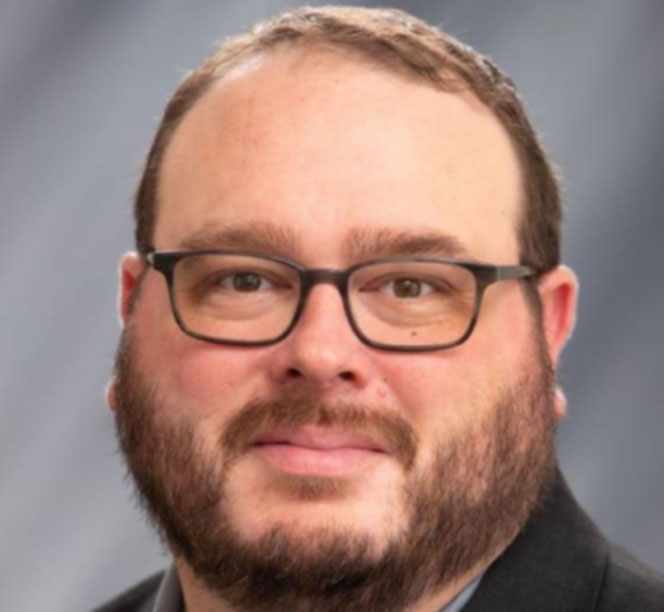
Josh Markle, PhD, is an Assistant Professor of Mathematics Education at the University of Alberta's Faculty of Education since 2022. Previously, he taught at Brock University and the University of Lethbridge, with prior experience as a secondary mathematics teacher. His research focuses on students' and teachers' classroom experiences in mathematics, emphasizing spatial reasoning development, embodiment in mathematical learning, and fostering student flourishing through mathematics. Key research interests include: Spatial reasoning in problem-solving and task design Embodied cognition and classroom interaction Mathematics education equity and capability frameworks Interdisciplinary approaches to STEM learning His recent publications explore themes like collaborative spatial visualization in STEM, embodied task design frameworks (e.g., 'Bodymarking'), and curriculum analysis in Alberta's education system. He teaches the course EDEL 316: Curriculum and Pedagogy in Elementary School Mathematics, focusing on effective teaching strategies and resource utilization. No scientific awards were explicitly mentioned in the provided texts. His work emphasizes teacher education and curriculum development, with no recorded advising/grant information. He contributes to educational research through collaborative projects and methodological innovations in classroom analysis.
Jennifer M. Lewis is a Professor of Mathematics Education at Wayne State University's College of Education, where she also serves as the Director of the TeachDETROIT program. She is deeply involved in teacher education, research, and community engagement, particularly focused on preparing educators for Detroit schools serving children of color in high-poverty contexts. Ph.D., Teacher Education and Mathematics Education, University of Michigan (2007) M.A., Educational Psychology, University of California, Berkeley (1985) B.A., Development Studies, University of California, Berkeley (1984) Teacher Certification: Elementary Education; Secondary English and Social Studies Her research centers on how teachers learn mathematics and effective teaching practices, particularly in urban settings. She investigates equitable mathematics instruction, teacher preparation models, and the role of professional development such as lesson study in improving teaching quality. She emphasizes culturally relevant pedagogy and the integration of real-world data through initiatives like her course Detroit by the Numbers . Her recent publications highlight trends in teacher evaluation, the impact of observation tools, the use of technology to promote equity, and transformative STEM frameworks that integrate community science and data literacy. These works reflect a strong commitment to social justice, teacher learning, and systemic improvement in urban education. Notable Woman in Education, Crain’s Detroit Business (2019) Midcareer Award Nominee, AERA Division K (2018) Kathleen Reilly Koory Endowed Faculty Development Award (2013) Faculty Research Award, WSU College of Education (2014) Lewis has led multiple externally funded research projects, including the Noyce Mathematics Fellows: TeachDETROIT grant ($1.4M), Project REALM, and the Detroit STEM Teaching Initiative. She mentors doctoral students and co-leads the Mathematics Education Research Group at Wayne State. Her community engagement includes weekly teaching in Detroit schools and organizing Family Math Nights to connect preservice teachers with families. She is actively involved in laboratory-like teaching environments and uses her courses as sites for studying instruction. Her work with lesson study groups and professional learning communities underscores her commitment to collaborative, practice-based research and sustainable teacher development.
Prof. Dr.-Ing. Robert Baumgartl is a faculty member at the Dresden University of Applied Sciences , affiliated with the Faculty of Computer Science/Mathematics . He teaches courses on Operating Systems , Real-Time Systems , and Information Security , with a focus on practical implementations and system-level programming. Research Interests: Real-time task scheduling and resource management Operating system design and optimization Embedded systems and hardware-software co-design Security protocols for distributed systems Low-level programming with Rust and safety-critical applications Contact: Room Z357, HTW Dresden. Office hours: Thursdays, 10:00-11:00 a.m. (SS 2025). Email: robert.baumgartl@htw-dresden.de .
Dr. Tobias Bahr is a computer science education researcher at the Institute of Educational Science , University of Stuttgart , focusing on technology didactics. He holds a PhD (Dr. phil.) in educational science and teaches courses on computer science didactics, educational research methods, and quantitative methodologies. Education: 1. Staatsexamen in Mathematics and Computer Science (2014–2021), University of Stuttgart; Erasmus+ Exchange, University of Bergen (2017–2018) His research focuses include computational thinking , gender dynamics in STEM , and AI integration in education . He leads projects like MakeTechEarly (2024–2027) and LPI (2023–2025), examining interdisciplinary STEM programs and teacher training interventions. Recent publications analyze AI chatbot usage in higher education, hybrid teacher training models, and computational thinking in early education. He has presented at conferences including EDUCON , ISSEP , and WiPSCE , with a focus on empirical studies and evidence-based practices. Teaching portfolio includes Didactics of Computer Science I/II and Quantitative Research Methods . He has developed AI-assisted task differentiation tools and conducted workshops on agile teaching methods in computer science education.
Prof. Dr.-Ing. Holger Blume serves as Vice President for Research and Transfer at Leibniz University Hannover while maintaining his academic position as Professor in the Architectures and Systems Section within the Faculty of Electrical Engineering and Computer Science. He holds multiple leadership positions including Chairperson of the Research Commission and Central Ethics Committee, Executive Board member of eNIFE (Leibniz Research Initiative for Neurosciences), and membership in both the Laboratory of Nano and Quantum Engineering and L3S Research Centre. His research interests span computer architecture, hardware design, signal processing, AI accelerators, hearing aid technology, and biomedical engineering. His work bridges theoretical computer science with practical applications in automotive systems, medical devices, and quantum engineering. Professor Blume's research demonstrates strong interdisciplinary connections between electrical engineering, computer science, and biomedical applications, with particular emphasis on hardware-oriented solutions for real-world problems. Analysis of his recent publications (2023-2025) reveals a strong focus on hardware acceleration for AI and signal processing applications, particularly in automotive radar/LiDAR systems and hearing aid technology. His work shows consistent innovation in RISC-V processor design, specialized hardware for mathematical functions, and biomedical applications of engineering principles. The research demonstrates a clear trajectory toward energy-efficient, specialized computing architectures for specific application domains. As Vice President for Research and Transfer, Professor Blume oversees significant research initiatives at Leibniz University Hannover, which hosts multiple Clusters of Excellence including PhoenixD (Photonics, Optics, and Engineering), QuantumFrontiers, and Hearing4all. The university participates in numerous collaborative research centers and junior research groups funded by DFG, BMBF, and EU programs. Professor Blume is actively involved in multiple research facilities including the Laboratory of Nano and Quantum Engineering and the L3S Research Centre. His work connects with Leibniz University's research focuses on optical technologies, quantum optics and gravitational physics, and biomedical research and technology. His leadership positions indicate strong involvement in shaping the research strategy and ethical framework of the university's scientific endeavors.
Robert Powers is a Professor in the Department of Mathematical Sciences at the University of Northern Colorado, affiliated with the College of Natural and Health Sciences. He holds an Ed.D. in Curriculum and Instruction (Mathematics Education) from the University of Houston, an M.S. in Mathematics from Colorado State University, and a B.S. in Mathematics with a Physics minor from the same institution. His research focuses on secondary mathematics teacher preparation, specifically analyzing tasks used in teacher education courses. He contributes to the MODULE(S²) implementation team testing Probability and Statistics modules. Powers actively teaches in undergraduate, MA, and Ph.D. programs. Recent work explores teacher task analysis, standards-based grading, and pandemic-era teaching adaptations. He has presented at conferences like the Association of Mathematics Teacher Educators and contributed to projects like the INFORMS MKT research initiative. Grants include the SUMMIT Colorado MSP program as PI of a subcontract and researcher on the INFORMS MKT project. His professional experience spans roles from community college teaching to university-level instruction and research.
Darshika G. Perera is an Assistant Professor in the Department of Electrical and Computer Engineering at the University of Colorado Colorado Springs (UCCS). Her research focuses on FPGA-based hardware acceleration, neuromorphic computing, and embedded systems optimization with applications in machine learning, cryptography, and battery management systems. She holds a PhD and has extensive experience in designing reconfigurable architectures for compute-intensive tasks. Her work bridges theoretical algorithms with practical hardware implementations, emphasizing efficiency and real-time performance. Key research areas include FPGA design methodologies, neuromorphic hardware for AI applications, and embedded systems security. She has published widely on topics such as hardware-software co-design for edge computing, optimization algorithms for genomics, and blockchain applications in healthcare IoT. Her contributions also span data mining hardware accelerators and dynamic reconfiguration techniques for cryptographic systems. Dr. Perera’s work is characterized by interdisciplinary collaborations, combining principles from electrical engineering, computer science, and applied mathematics. She is committed to advancing next-generation edge-computing platforms through innovative architectures and methodologies.
Dr. Stephen F. Strain is an Assistant Professor of Teaching in the Department of Biomedical Engineering at the University of Memphis. His research focuses on cognitive science, artificial general intelligence, computational modeling of medical diagnosis, and chess-related cognition. He holds a BA in Physics (Columbia University, 1987), MD (ETSU Quillen College of Medicine, 1999), and MS in Biomedical Engineering (University of Memphis, 2009). His doctoral studies under Dr. Stan Franklin explored applications of the LIDA cognitive model to medical diagnosis and chess cognition, though progress was paused following Dr. Franklin’s 2023 passing. Dr. Strain is the faculty sponsor of the UM Chess Club and has an Erdős number of 3 due to collaborative publications with Dr. Franklin. Education: BA, Physics, Columbia College at Columbia University, 1987 MD, ETSU Quillen College of Medicine, 1999 MS, Biomedical Engineering, University of Memphis, 2009 Research Interests: Dr. Strain’s work bridges cognitive science and biomedical engineering, emphasizing computational models of medical diagnosis and chess cognition. He explores how brain rhythms influence cognition and advocates for integrating biological principles into cognitive science. His LIDA Model-based research aims to create intelligent systems for medical decision-making and cognitive tasks. Recent Publications: His recent work includes syllabi for biomedical engineering courses (2021–2024) and advancements in the LIDA model (2011–2018), focusing on cognitive architecture and medical applications. His publications reflect a blend of pedagogical innovation and foundational cognitive science research. Awards & Recognition: No formal awards listed, but his Erdős number of 3 highlights collaborative contributions to interdisciplinary research. Grants & Advising: While no grants are explicitly noted, his doctoral work with LIDA and MAX demonstrates engagement in funded research. He advises the UM Chess Club, fostering academic-community integration. Labs & Teams: Collaborates with the Cognitive Computing Research Group (CCRG) at the University of Memphis, leveraging their LIDA model infrastructure for interdisciplinary projects.
Rebecca Seah is a Lecturer in the School of Education at RMIT University. She holds an ORCID identifier (0000-0001-7307-2775) and is open to supervising Masters Research or PhD students. Her work focuses on Mathematics Education and Special Education, particularly in curriculum design, teacher professional learning, and supporting students with learning difficulties/disabilities. Rebecca has a doctorate investigating teacher professional knowledge and mathematics instruction for students with learning challenges. Prior to academia, she worked in special schools, early intervention programs for children with autism, and inclusive high school settings, where she developed integrated curricula for middle school students. She served as Acting Head of Special Education Services at Griffith University in 2009. Her research interests include Mathematical Reasoning, Learning Progressions, Design-Based Research, and STEM creativity frameworks. She contributed to the Reframing Mathematical Futures II project (2014–2018), developing geometric reasoning tasks for Years 7–10. This work earned her the RMIT Research Impact Award (2016) and the MERGA Beth Southwell Practical Implications Award (2018). Rebecca is a reviewer for journals like Mathematical Thinking and Learning and a regular presenter at conferences. She collaborates with organizations such as the Mathematics Education Research Group of Australasia and the Mathematics Associations of Victoria. Her industry experience includes roles in early childhood education and training workshops for people with special needs.
Prof. Dr. Peter Sanders is a full professor in Theoretical Computer Science at the Karlsruhe Institute of Technology (KIT), leading the Algorithm Engineering group. His academic career includes a doctoral degree from Karlsruhe University and research stints at institutions like the Max Planck Institute for Informatics. He specializes in algorithm theory and engineering, focusing on parallel computing, large-scale data processing, and graph partitioning. His research bridges theoretical foundations with practical implementations, emphasizing real-world applications in optimization, route planning, and distributed systems. Education: Ph.D. in Computer Science, Karlsruhe University (1996) Bachelor/Master studies at Karlsruhe University (1988-1996) Research Interests: Algorithm design and analysis Parallel and distributed algorithms Graph algorithms and partitioning Algorithm engineering for big data High-performance computing Publications: Over 250 papers, emphasizing parallel algorithms, distributed systems, and graph theory. Recent work includes scalable SAT solving, hypergraph partitioning, and distributed string sorting. His contributions have advanced practical applications in route planning, load balancing, and large dataset processing. Awards: Recipient of the prestigious Leibniz Prize (DFG) and Baden-Württemberg State Research Prize. He coordinated the DFG Priority Program on Algorithm Engineering and is an active reviewer for major funding bodies. Consulting: Engages with companies like SAP and Google, focusing on optimization, route planning, and database algorithms. Leads projects on algorithm scalability and real-world problem-solving. Labs/Teams: Heads the Algorithm Engineering group at KIT, fostering collaborations in distributed computing and algorithmic research.
Corey Peltier is an Associate Professor of Special Education in the Department of Educational Psychology at the University of Oklahoma, affiliated with the Jeannine Rainbolt College of Education . His work focuses on enhancing mathematical outcomes for students with disabilities through rigorous research methodologies like single-case experimental designs (SCEDs) and meta-analyses. He collaborates on initiatives such as The Science of Math and co-founded the open-access journal Single-Case in the Social Sciences to advance evidence-based practices. Research Interests: Effective interventions for students with disabilities in mathematics Methodological rigor in single-case research designs Systematic reviews and meta-analyses to inform educational practice Recent work emphasizes: Disseminating research through accessible platforms Addressing implementation barriers in special education Advocating for inclusive pedagogy and policy alignment Key contributions include frameworks for mathematics interventions, critiques of graphing practices in SCED studies, and collaborations to improve teacher preparation. His research bridges gaps between academic theory and classroom practice, particularly in high-need areas like rural education and behavioral disorder support.
Dr. Hendra Nurdin is a Senior Lecturer in the School of Electrical Engineering and Telecommunications at the University of New South Wales (UNSW), where he has been employed since 2012. His academic journey began with a Sarjana Teknik (equivalent to a Bachelor of Engineering) in Electrical Engineering from Institut Teknologi Bandung, Indonesia, followed by an MSc in Engineering Mathematics from the University of Twente in the Netherlands, and culminated with a PhD in Engineering and Information Science from the Australian National University in 2007. His educational background includes: PhD in Engineering and Information Science, Australian National University, 2007 MSc in Engineering Mathematics, University of Twente, The Netherlands Sarjana Teknik (ST, equivalent to Bachelor of Engineering) in Electrical Engineering, Institut Teknologi Bandung, Indonesia Dr. Nurdin's research lies at the intersection of control engineering and systems theory with quantum physics and energy systems. He has made significant contributions to quantum control systems, quantum information processing, and microgrid control. His work combines theoretical advances in quantum stochastic processes with practical applications in quantum computing and renewable energy systems. He has developed novel approaches to quantum reservoir computing, quantum parameter estimation, and control of distributed energy resources. His recent publications reveal a strong focus on quantum reservoir computing, non-Markovian quantum systems, and the intersection of quantum information with machine learning. There's a clear trend toward practical implementations of quantum information processing systems, particularly exploring how quantum systems can enhance computational capabilities. His work bridges fundamental quantum theory with engineering applications, demonstrating how quantum phenomena can be harnessed for practical computing and sensing tasks. Dr. Nurdin has received recognition including an ARC APD Fellowship (2009-2011). His research has resulted in numerous publications in top-tier journals including Nature Communications, Physical Review series, and IEEE Transactions. He has successfully supervised multiple PhD students to completion, including Dr. Jiayin Chen (2022), Dr. Jiacheng Li (2021), Dr. Muhammad Ali (2021), and Dr. Zhan Shi (2016). Currently, he is supervising Mr. Wen Liu as a PhD candidate. His research is supported by various funding mechanisms including Sydney Quantum Academy scholarships and UNSW research grants, enabling him to pursue cutting-edge research in quantum systems and control. Dr. Nurdin is actively involved with the Sydney Quantum Academy, supervising research in quantum systems and control. His work contributes to Australia's growing quantum technology ecosystem, collaborating with researchers across multiple institutions to advance quantum information processing and quantum engineering applications.
Sangyoung Park is an Assistant Professor of Smart Mobility Systems at the Faculty of Mechanical Engineering and Transport Systems, Technical University of Berlin, and is co-affiliated with the Einstein Center for Digital Future. His research focuses on two main areas: enhancing vehicle safety through digitalization and connectivity, and advancing the electrification of the transport sector with emphasis on electric vehicle battery systems design and management. He leads the Chair of Smart Mobility Systems at TU Berlin, where his team investigates how vehicle connectivity can improve energy efficiency, traffic flow, and safety in autonomous vehicle systems. Dr. Park completed his PhD in Electrical Engineering and Computer Science at Seoul National University in Korea, where he focused on energy management techniques for hybrid energy storage systems in electric vehicles. Before joining TU Berlin in 2018, he conducted postdoctoral research at the Technical University of Munich, working on energy management for smartphones in collaboration with Google and studying battery aging processes. His research interests span smart mobility systems, electric vehicle battery management, energy consumption optimization, vehicle connectivity, and autonomous driving systems. Park's work bridges the gap between design engineers and software engineers, investigating how different energy storage components (fuel cells, supercapacitors, lithium-ion batteries) should be interconnected and managed together for maximum efficiency. His research also addresses the design of charging infrastructure for electric vehicles. Analysis of Dr. Park's recent publications reveals a strong focus on digital twin technology for teleoperated driving, battery management systems for electric vehicles, and vehicle connectivity for improved safety and efficiency. His research increasingly integrates cybersecurity aspects of connected vehicles and explores novel approaches to extend battery lifespan through advanced cell balancing techniques. The interdisciplinary nature of his work connects electrical engineering, computer science, transportation systems, and urban infrastructure planning. Dr. Park supervises multiple doctoral students, including Philipp Kremer, Ongun Türkçüoglu, Kil Young Lee, Maria Claudia Miguel de Priego, Muzaffer Citir, Andrea Reindl, Subhendu Bhadra, and Hueseyin Türkyilmaz. His research is supported by various funding sources including the ECDF grant, DAAD projects (ide3a), and government scholarships. He collaborates with institutions including OTH Regensburg and Siemens Mobility. His laboratory, the Smart Mobility Systems group, focuses on developing system-level approaches for measuring, analyzing, and balancing energy consumption in battery-powered mobile systems. The team investigates how direct communication among autonomous vehicles can enable control scenarios that improve energy efficiency, traffic flow, and safety beyond what human drivers or isolated autonomous vehicles can achieve.
Samuel Eskelson is an Associate Professor of Mathematics Education at the University of Northern Iowa's College of Humanities, Arts and Sciences. His office is located in 319 Wright Hall, with Fall 2025 office hours on Wednesdays 1:00–2:30 and Fridays 9:00–10:30, or by appointment. Contact: 319-273-5945. Research Interests: Focuses on mathematics teacher preparation, formal and informal learning opportunities, classroom practices, and mathematics education for students with special education needs. His work investigates consultation models, curriculum implementation challenges, and inclusive pedagogical strategies. Publication Trends: Recent works emphasize collaborative planning frameworks, consultation-driven pedagogical reforms, and special education adaptations in mathematics. Topics include game theory applications, geometric problem-solving, and professional development through modified lesson study cycles.
Eric Mounier is a Lecturer in Mathematics Teaching at Université Paris-Est Créteil Val de Marne (UPEC), affiliated with the André Revuz Didactics Laboratory (LDAR-EA 4434). His academic work focuses on mathematics education research, particularly in primary school settings and teacher training. Dr. Mounier's research interests include: Understanding factors in resource adoption by primary mathematics teachers Studying teacher practices, particularly in the closing phase of teaching activities Investigating knowledge of cycle 2 pupils (6-9 years) concerning numeration Developing assessments for number knowledge (numeration, calculations, problems) Analyzing mathematics textbooks for primary schools, with special focus on the "Singapore Method" His publication record from 2015-2020 reveals a consistent research trajectory examining the relationship between spoken and written numeration systems, assessment design for early mathematical learning, and the complex relationship between teachers and educational resources. Mounier frequently collaborates with researchers including Nadine Grapin, Maryvonne Priolet, and Nathalie Pfaff, producing studies that bridge theoretical research with practical classroom applications in French primary schools. Mounier has led significant research projects including: "Appel d'offre ESPE" (2008-2014): Study of the viability of a new teaching approach for written numerical notation in CP (first grade) LéA EvalNumC2 (2016-2019): Evaluation of numerical knowledge of cycle 2 students, conducted in REP and REP+ schools in Montreuil with 20 primary school teachers and 4 researchers He served as responsible for the national seminar of mathematics didactics ARDM from 2013-2015, organizing 3 national seminars annually in Paris and other regions. Mounier also contributes to academic discourse as a scientific reviewer for journals including "Spirale" (research journal in education) and "Rmé" (mathematics journal for school).