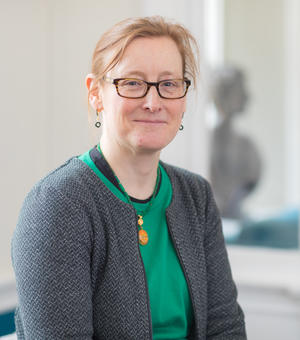
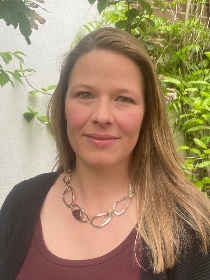
Dr. Julia Anuschka Meßmer is a Researcher at Saarland University in the Faculty of Psychology, working in the Experimental Neuropsychology Unit. She currently serves as a research associate in project A6 of the Sonderforschungsbereich 1102 (Collaborative Research Center 1102), focusing on 'Expectancy-based mechanisms during language comprehension and their relation to memory formation and retrieval' since July 2023. Her research centers on neurocognitive processes underlying schema-based learning and memory retrieval, with particular interest in how schemas influence the formation of memory representations. She primarily employs event-related potentials (ERPs) to investigate these phenomena, examining additional factors affecting schema-based learning and the characteristics of memory representations formed under congruent schemas. Her work bridges cognitive psychology with neuroscientific methodology to understand fundamental memory mechanisms. Analysis of her publications from 2020-2024 reveals a cohesive research trajectory examining how prior knowledge structures facilitate memory processes. Her work consistently applies ERP methodology to investigate schema effects on memory formation and retrieval, with increasing sophistication in experimental paradigms and theoretical frameworks. This research contributes significantly to understanding the neural basis of how existing knowledge shapes new learning. Dr. Meßmer has taught Master's level courses in Psychology since 2021, including seminars on 'Plasticity, Learning and Memory' and 'EKPs in Clinical Research.' Her research has been supported through the Sonderforschungsbereich 1102, a major German research funding initiative, indicating institutional recognition of her work's significance. She participated in the 'Cognitive Neuroscience Skills Training in Cambridge (COGNESTIC)' summer school in 2022, demonstrating international research engagement. She is affiliated with the Experimental Neuropsychology Unit at Saarland University, which appears to be part of a broader research network focused on cognitive neuroscience. Her work connects with the Cognitive and Action Group within the university's psychology department, suggesting interdisciplinary collaboration within the faculty.