معرفی
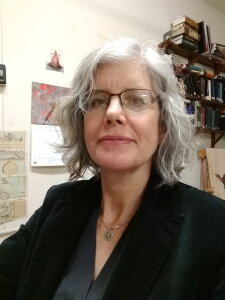
Sue Wiseman is Professor of Seventeenth Century Literature at Birkbeck, University of London's School of Creative Arts, Culture and Communication. She leads the London Renaissance Seminar and serves as Principal Investigator for the Leverhulme Trust-funded project Written Worlds in Seventeenth-Century England: the Work of Non-elite Writing. Her academic leadership includes supervising 15 doctoral researchers to completion on diverse topics spanning love elegy, civil war writing, supernatural discourse, and women's poetry.
Wiseman's research centers on Renaissance and seventeenth-century writing with specific focus on non-elite literary production, women's writing, civil war literature, and the cultural history of love. Her work examines textual practices across social strata—from Derbyshire elites to London widows—using material evidence alongside literary analysis. Current projects explore wolf-transformation narratives, captivity accounts, legal constructions of 'gypsies', and psalm usage in Reformation contexts. She has published on Katherine Austen, John Donne, Elizabeth Delaval, and Mary Rowlandson, demonstrating interdisciplinary engagement with history, law, and material culture.
Her publications reveal consistent engagement with marginalized voices and textual forms. Recent articles analyze non-elite networks (Textual Practice 2022), 'gypsy' discourses in Reformation law (Proceedings of the British Academy 2022), and early modern beast literature (Textual Practice 2019). Monographs like Writing Metamorphosis (2014) and Conspiracy and Virtue (2006) establish her expertise in Ovidian reception and women's political writing. She frequently examines how material contexts shape literary production, particularly in edited collections like Early Modern Women and the Poem (2013).
Wiseman actively mentors doctoral researchers through both literary-focused and interdisciplinary projects. Current supervisees examine classical reception in Burton/Browne, psalm usage in Reformation England, and Protestant identity in sixteenth-century portraiture. Alumni theses cover topics including civil war elegy, early modern piracy, women's mausoleums, and customary culture in Shakespeare. Her supervision philosophy welcomes proposals bridging literary studies with history, theology, and material culture.
She teaches postgraduate modules including Postgraduate Research, The Woman Question: Medieval to Renaissance, and Medieval and Renaissance Literatures, emphasizing historical contextualization and methodological innovation. Her Leverhulme project Written Worlds exemplifies commitment to recovering non-canonical writing practices through collaborative digital humanities approaches.