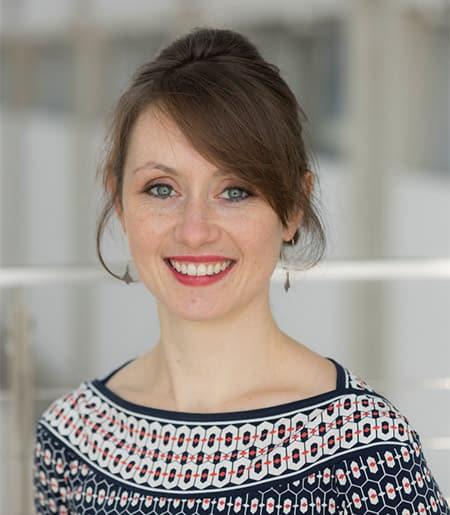
Natasha Holmesمشاهده پروفایل
دانشیار
Natasha Holmes serves as the Ann S. Bowers Associate Professor in the Department of Physics at Cornell University's College of Arts and Sciences. Her research focuses on physics education with particular emphasis on laboratory instruction efficacy and student learning outcomes in STEM fields. Dr. Holmes earned her BSc. (Hons) in Physics from the University of Guelph (2009), followed by an MSc. (2011) and PhD. (2015) in Physics from the University of British Columbia. After completing postdoctoral research at Stanford University (2015-2017), she joined Cornell University as an Assistant Professor before being promoted to her current Associate Professor position. Her research examines how students acquire skills and content knowledge in physics laboratory settings, with particular attention to critical thinking development, assessment methodologies, and the impact of different teaching approaches. Dr. Holmes employs both qualitative methods (observations, interviews) and quantitative approaches (test scores, analysis of student work) to investigate variables affecting student learning, motivation, and persistence in physics and other STEM fields. A significant portion of her work focuses on developing assessment instruments like the Physics Lab Inventory of Critical thinking and examining gender dynamics in collaborative learning environments. Analysis of her publication history reveals consistent focus on laboratory instruction improvement, with recent work emphasizing Course-based Undergraduate Research Experiences, natural language processing applications for educational assessment, and equity considerations in lab group dynamics. Her research bridges theoretical educational frameworks with practical classroom applications. Dr. Holmes holds the Ann S. Bowers Professorship, an endowed position recognizing her contributions to physics education research. Her work has been featured in Cornell news coverage regarding gender bias in lab groups, best practices for instructional labs, and innovative approaches to physics education. She currently advises graduate students Rebeckah Fussell and Matthew Dew through the Cornell Physics Education Research Lab. Her research program spans both small-scale studies evaluating individual learning activities and large-scale projects redesigning entire course sequences using evidence-based teaching methods. Current research directions include evaluating Course-based Undergraduate Research Experiences in introductory physics labs and studying how students navigate social dynamics and implicit biases in laboratory group work.