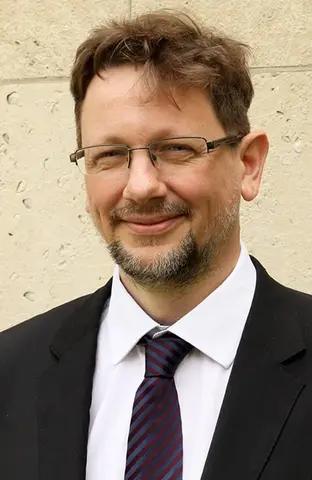
Tomás Dorta is a Full Professor at the School of Design, Université de Montréal, and holds an affiliate professorship at Penn State University's Stuckeman School. He specializes in virtual and augmented reality, co-design, and design cognition. His academic roles include directing the Hybridlab research laboratory and serving on editorial boards for journals like CoDesign . He co-founded Hybridlab Inc., a startup focused on design technologies. Affiliations: Université de Montréal (since 1997), Penn State (since 2021), and over 20+ international collaborations. Education: PhD (2001), M.Sc. (1994), Architecture (1991). Research Focus: Hybrid virtual environments, collaborative design tools, and immersive technologies like Hyve-3D. His work bridges design education, innovation, and industry, with funded projects exploring design cognition and co-design methodologies. Notable awards include recognition for teaching and entrepreneurship. He advises over 20 graduate students and has published extensively in design and computer science conferences (e.g., SIGGRAPH, eCAADe).
Zheng Zhang is a Ph.D. candidate in the Department of Computer Science and Engineering at the University of Notre Dame, where he focuses on human-AI interaction. He also works as an Applied Scientist in Adobe's GenAI team, developing interactive AI systems for user experience enhancement. He has held internships at Apple, AWS AI, and Meta Reality Labs. Education: Ph.D. (in progress) at University of Notre Dame M.S. in Computer Science from University of Rochester and University of Minnesota B.Eng. in Software Engineering from Shaanxi Normal University His research explores the intersection of human-computer interaction (HCI) and machine learning (ML), emphasizing systems that provide adaptive, context-sensitive support for complex cognitive tasks. Key areas include collaborative tools for team ideation, incremental learning from user demonstrations, and multimodal context-aware interfaces. Recent publications demonstrate a focus on AI-augmented collaboration through large shared displays (LADICA), audio-visual annotation (PEANUT), and interactive qualitative coding (PaTAT). His work increasingly integrates generative AI with real-time human input, particularly for co-located teams and educational applications. He serves as a Program Committee member and reviewer for top HCI/ML conferences including CHI, UIST, IUI, and ACL. Teaching experience spans courses in human-AI systems, algorithms, and data structures.
Michael Stevenson is a New Zealand-born artist and educator based in Berlin. Since 2011, he has served as Professor of Sculpture at the Academy of Fine Arts Nuremberg , where his work bridges art, philosophy, and institutional critique. His practice interrogates systems of power, philanthropy, and knowledge production through installations that reimagine bureaucratic and educational frameworks as speculative artifacts. BFA, Elam School of Fine Arts (1986) Lives/works in Berlin (since 2000) Research interests span contemporary art practices , installation theory , and critical engagement with economic systems . Recent projects like Mind’s Eye (2024) and Disproof Does Not Equal Disbelief (2021) employ soft furnishings and telethon motifs to critique philanthropy’s paradoxes. His Serene Velocity series (2017–2023) merges theological and tech pedagogy, inspired by John Wimber’s healing clinics and Peter Thiel’s Silicon Valley ideologies. Scientific awards include the Berlin Senate’s working scholarship (2005) and Art Center Pasadena scholarship (2001). Key publications such as Animal Spirits (2013) and This is the Trekka (2003) reflect his interdisciplinary approach. Collaborations with galleries like Michael Lett (Auckland) and KW Berlin showcase his global institutional presence.
Oliver Kessler is a Professor of International Relations at the School of Social Sciences , University of Erfurt. He leads the Promotionskolleg "De-Globalisierung und Globale Entkopplung (DeGlobE)" and contributes to interdisciplinary research at the intersection of constructivist theories, international political economy, and risk politics. His research focuses on: Constructivist theories of international relations International political economy Risk and uncertainty in global governance Politics of international law Recent publications analyze risk-race intersections in finance, contingency in constructivist thought, world society frameworks, and cyberwarfare legal status. He has edited special forums in journals like Millennium and Review of International Studies . As a project leader for DeGlobE, he explores processes of global decoupling. His methodological approach combines critical theory, practice theory, and systems theory.
Rolf Steier serves as Professor at Oslo Metropolitan University within the Faculty of Education and International Studies, Department of Primary and Secondary Teacher Education, holding the position of Head of Studies for Area of Responsibility 5. His office is located at Pilestredet 52, 0167 Oslo (B534), with contact details including mobile +47 906 92 626, office +47 672 36 014, and email rolf.steier@oslomet.no. He actively contributes to the Digital Learning Arenas research group, focusing on technology-enhanced educational environments. Steier's research centers on computer-supported collaborative learning (CSCL) and virtual reality applications in education, with specific expertise in embodied cognition, science education, museum learning, and narrative structures in STEM. His work examines how learners co-construct knowledge through digital interactions, particularly investigating the role of physical embodiment in virtual environments and the integration of narrative techniques to facilitate engagement in informal learning contexts. Recent projects explore immersive VR experiences for collaborative meaning-making and the adaptation of interaction analysis methodologies for technology-mediated educational research. Analysis of Steier's 2021-2025 publications reveals a clear trajectory toward increasingly sophisticated integration of virtual reality in educational research, with growing emphasis on interdisciplinary applications in science education. Key thematic developments include the refinement of interaction analysis frameworks for digital contexts, the exploration of perspective-taking across blended realities, and the strategic use of narrative to enhance STEM engagement in informal settings. His work consistently bridges theoretical learning science with practical educational technology implementation. The Digital Learning Arenas research group serves as the primary platform for Steier's collaborative work, functioning as an interdisciplinary hub for developing and studying innovative digital learning solutions. This group facilitates partnerships across educational sectors to transform teaching practices through emerging technologies, with recent focus on VR-based collaborative learning environments and cross-contextual knowledge transfer.
Scott Koslow is a Professor of Business (Marketing) at Macquarie University, affiliated with the Department of Marketing. His career spans institutions including the University of Southern California, University of Texas, University of Michigan, and the University of Waikato (New Zealand's top business school). PhD in Marketing from University of Southern California Academic visitor at Imperial College London, NYU, and others Research Interests focus on advertising creativity, strategy, and effectiveness , consumer behavior, marketing research methods, and cross-cultural marketing. His work bridges academic rigor and industry practice, with a fingerprint covering advertising agencies, creativity, and campaign dynamics . Scientific Recognition: Best Article Award (1989, Journal of Advertising) Twice Best Reviewer (Journal of the Academy of Marketing Science) Runner-up and Finalist for Best Article Awards (2022, 2021) 2014 Teaching Award for Social Media Integration in Online Teaching Editorial Roles include Associate Editor for the Journal of Advertising and Journal of Advertising Research, and Special Issue Editor for the Journal of Advertising. He serves on review boards of top-tier journals like Journal of Marketing and Journal of Consumer Research. Collaborations span projects such as Creativity in Advertising , Understanding the Australian Self-Medication Industry , and Closing the Green Rhetoric-Purchasing Gap . His recent 2020 presentation on product design creativity highlights his interdisciplinary engagement.
Lars B. Sonderegger serves as a Lecturer at the Lucerne University of Applied Sciences and Arts (HSLU), School of Business, within the Institute for Business and Regional Economics. He teaches management and leadership modules while simultaneously leading his research and consulting firm Quantonomics LLC. His work bridges academic theory with practical business applications, focusing on translating behavioral neuroscience into organizational solutions. His educational background includes neuroscience and behavioral sciences studies at the University of Zurich, culminating in a magna cum laude doctorate in stress management under Prof. Dr. Ulrike Ehlert. This foundation combines with his Swiss Federal Diploma in Business Administration and family background in SME entrepreneurship to create his unique practitioner-scholar approach. Sonderegger's research centers on behavioral economics and neuroscience applications in management, with particular emphasis on leadership development, organizational transformation, and human capital optimization. His work explores how neurobiological principles can reshape traditional management practices, especially in hybrid work environments, decision-making processes, and talent retention strategies. Current projects include the VR Board Assessment Tool, Transformation Tracking, and Agile Collaborative People Management. His publication portfolio demonstrates consistent focus on practical neuroscience applications, with recent work examining leadership in VUCA environments, employee well-being frameworks, and cognitive bias mitigation in governance. The trajectory shows increasing integration of neuroscientific evidence into management literature, moving from foundational stress research toward actionable leadership tools. Schulze Award for Outstanding Applied and Practice Publication (2023) Fellow of the Royal Society for the Encouragement of Arts, Manufactures & Commerce (2017) Sonderegger actively advises Master's students at HSLU on topics ranging from performance management to organizational transformation, while securing consulting engagements that translate academic insights into business value. His Quantonomics firm implements behavioral strategies for clients, supported by research projects tracking transformation effectiveness and developing neuroscience-based leadership tools. He serves on multiple boards including SHL Schweizerische Hotelfachschule Luzern and Eigthwell, applying his expertise to real-world organizational challenges. Through Quantonomics and his university role, Sonderegger maintains a dynamic research-practice ecosystem where academic inquiry directly informs consulting solutions. His teams develop tools like the VR Board Assessment platform while conducting field research on agile people management and SME internationalization, ensuring continuous feedback between theory and practice.
Diego S. Crescentino serves as Assistant Professor at the University of Deusto's Faculty of Social and Human Sciences, maintaining an active research profile bridging International Relations and Contemporary History. His transdisciplinary work examines foreign policy frameworks through historical lenses, with particular focus on Latin American geopolitical positioning and conceptual evolution of the Global South. Fluent in five languages (Spanish, English, German, French, Portuguese), he has conducted research stays at Columbia University, Universidade do Estado do Rio de Janeiro, University of Erfurt, and multiple Brazilian institutions. His educational foundation includes: Ph.D. in Contemporary History from Universidad Autónoma de Madrid (international mention from Columbia University) M.A. in International Relations and African Studies (Universidad Autónoma de Madrid) B.A. in Political Science and Public Administration (Universidad Nacional de Cuyo) Crescentino holds ANECA accreditation for Assistant, Associate, and Private University Professor positions across the Spanish higher education system. Research interests span critical international relations theory with emphasis on utopian narratives in political positioning, Brazilian diplomatic evolution, environmental resistance movements, and migration policy frameworks. His work challenges traditional geopolitical binaries while examining how literary sources decode postcolonial resistance. Current projects analyze how far-right populism constructs covert utopias through environmental denial and the tension between extractivist geopolitics and community resilience. Recent publications (2023-2025) reveal three key trajectories: deconstruction of Global South conceptualization through environmental agendas, analysis of academic influences on Brazilian diplomatic practice, and methodological innovations merging historical and IR frameworks. His scholarship employs qualitative analysis, process tracing, and interdisciplinary source triangulation to examine structural transformations in emerging economies and migration governance. Professional recognition includes: Juan de la Cierva Postdoctoral Fellowship (2024) at the Spanish National Research Council Margarita Salas Postdoctoral Fellowship at Catholic University of Eichstätt-Ingolstadt While specific advisees aren't documented in the provided materials, his teaching manual "Cartografías disidentes" demonstrates engagement with critical theoretical frameworks at graduate level. Research collaborations with scholars like Sergio Caballero and Gabriela de Lima Grecco indicate participation in transnational academic networks. His work with the Grupo de Estudios Internacionales de la UAM continues critical scholarship traditions established through their academic journal and master's program. Crescentino's methodological approach combines historical analysis with contemporary policy examination, particularly through oral history integration with normative frameworks. His current research examines epistemic resistance strategies in Global South conceptualization and environmental utopianism within populist movements, building on extensive fieldwork across Latin American and European academic institutions.
Carlos Vazquez Hernandez is a Lecturer at the Sydney Business School, University of Sydney, with expertise in behavioral sciences, innovation management, and technology-driven decision-making. His research explores how cognitive processes, social environments, and technological tools interact to influence organizational and societal outcomes. Education BBA Iberoamericana GradCert Educational Studies Higher Education, University of Sydney MIP Melbourne PhD, University of Sydney His research focuses on microfoundations of decision-making, innovation in technology contexts, and narrative-driven behaviors. Key areas include experimental methods in business research, AI-enhanced judgment, and behavioral strategies for sustainable innovation. His work bridges psychological insights with technological understanding to reshape management education. Recent publications (2018-2025) demonstrate a consistent focus on intuitive decision-making in innovation contexts, AI-human collaboration in forecasting, and behavioral economics. Thematic analysis reveals strong emphasis on cognitive biases in product development, cross-cultural business strategies, and empirical validation of heuristic approaches in management. Grants Augmented judgments: Human-AI interaction for better new product success predictions (2023 Business School Pilot Research Grant) He teaches courses spanning Ethical Decision Making, International Risk Management, and Innovation Strategy, preparing leaders for evolving business landscapes through integration of behavioral science and technology concepts.
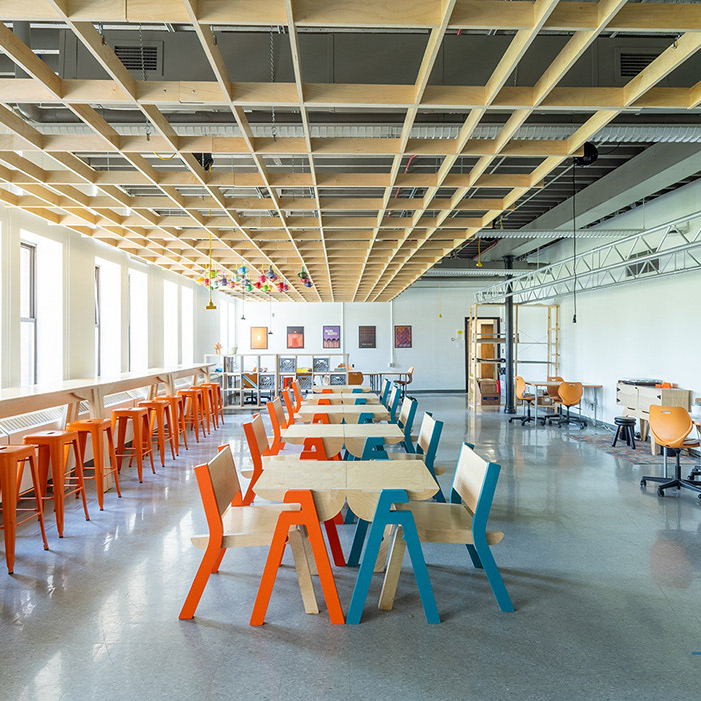
William Nickley is an Assistant Professor in the Department of Design at The Ohio State University, holding an MFA and BSD in Design from the same institution. His research bridges industrial design with social impact, focusing on co-design methodologies, youth development through design-based making (DBM), and person-centered design (PCD). He leads the Ohio State DESIS Lab, emphasizing practice, pedagogy, and research to create equitable futures. Nickley has pioneered frameworks for youth empowerment through design, including grant-funded projects with Columbus City Schools and the Boys & Girls Clubs of Central Ohio. His education includes a MFA (2020) and BSD (2010) in Industrial Design from OSU. He previously worked in consultancy, freelance design, and non-profit leadership. Current courses include Design 4650/5650 (Collaborative Design Studio) and Design 4151 (Intermediate Industrial Design II). Research interests include design for social justice, LGBTQIA+ youth healthcare engagement, and the intersection of design with Positive Youth Development. Notable projects include the ISPARK Mobile Maker Cart (2024), CoDe Rainbow training platform (2023), and the Hayes 210 Student Space Redesign (2024-25), a grant-funded interdisciplinary initiative enhancing campus spaces through student input. He has received the 2024 IDSA Young Educator Award and serves on multiple committees including the IDSA Education Council. His service includes leadership in Local Tech Heroes, a nonprofit promoting tech access for underserved communities.
Joseph Gallo, MD, MPH, is a Professor of Mental Health at the Johns Hopkins Bloomberg School of Public Health and the School of Medicine. His primary affiliations include the Johns Hopkins Center on Aging and Health and the Center for Mental Health and Addiction Policy. He received his MD from Pennsylvania State University in 1982 and an MPH. His research focuses on late-life depression, comorbidity of mental and physical health, and mixed methods in health services research. He leads the Mixed Methods Research Training Program for the Health Sciences and directs the Precursors Study, a longitudinal aging project. Notable awards include the NIMH K24 Mid-Career Award and the Steven Banks Award for mentoring. His courses include 'The Intersection of Physical and Mental Health' and mixed methods training. Recent projects involve end-of-life decision-making, depression care outcomes, and HPV self-sampling in underserved communities.
Carolyn B. Allard, Ph.D., is a Professor and Program Director at the California School of Professional Psychology (CSPP) of Alliant International University. She earned her B.A. (Hons.) from Queen's University and her Ph.D. in Clinical Psychology from the University of Oregon, followed by a postdoctoral fellowship at the Veteran’s Affairs San Diego Healthcare System (VASDHS) and UCSD. Key Affiliations: VASDHS (Research Investigator), APA Division 56 (Past President), ISTSS, VA LGBTQ+ Health Program. Research Focus: Trauma-related guilt and shame, interpersonal trauma, cultural moderators in PTSD outcomes, and interventions like Trauma-Informed Guilt Reduction Therapy (TrIGR) and Cognitive Processing Therapy (CPT) . Her work spans randomized clinical trials on PTSD treatments, including telemedicine delivery and genetic predictors of outcomes. She has mentored numerous students and co-developed tools like the Trauma Informed Guilt Reduction Workbook . Awards include the Top Downloaded Article (2022), Outstanding Poster Award (2020), and Best New PTSD Book (2019). She leads the STRIVE Lab , focusing on trauma recovery and violence prevention, and recently investigated mental health among Ukrainian evacuees post-invasion.
Ellen Gorus is a Professor at the Department of Personality and Psychopathology at Vrije Universiteit Brussel (VUB), specializing in gerontology and clinical psychology. She conducts research on Alzheimer’s disease, Mild Cognitive Impairment, active ageing in frail elderly, and suicide risk assessment in older adults, with an h-index of 21. Her clinical work focuses on cognitive and emotional assessment of geriatric patients at UZ Brussel’s Geriatric Dayhospital. 2025: Biopsychosocial profiles of suicidal elderly 2024: Digital health technologies for neurocognitive disorders Research interests encompass early Alzheimer’s detection, psychosocial aspects of physical activity in frail elderly, and eHealth solutions for older adults. Her projects include collaborations with Québecois institutions and longitudinal studies on suicide risk in Flanders. Scientific awards : Best Oral Communication (2006) Gerontological Thesis Prize (2002) Psychogeriatric Award (2008)
Daniel Klein, Ph.D. is a Distinguished Professor in the Department of Psychology at Stony Brook University, State University of New York. He has been a leading figure in developmental psychopathology and mood disorders research since 1983, with a focus on depression across the lifespan. He directs two major longitudinal studies: the Stony Brook Temperament Study and the Adolescent Development of Emotions and Personality Traits study. Education: Dr. Klein earned his Ph.D. in Clinical Psychology from the State University of New York at Buffalo in 1983. Research Interests: His work centers on developmental psychopathology, particularly mood disorders in children, adolescents, and adults. Key areas include the intergenerational transmission of depression, roles of temperament and emotional reactivity, early adversity, long-term course of mood disorders, classification of mood disorders, comorbidity, and treatment approaches. Current Research: Dr. Klein is currently directing the Stony Brook Temperament Study, a longitudinal investigation of early temperament and emotional style in the development of mood and anxiety disorders in a large community sample of children assessed from age 3 to 21. He is also co-directing (with Dr. Roman Kotov) the Adolescent Development of Emotions and Personality Traits study, which follows early adolescent girls from age 14 to 25 to identify antecedents and pathways to depressive disorders. Awards and Honors: Dr. Klein has received numerous prestigious awards, including: Distinguished Scientist Award, Society for a Science of Clinical Psychology (APA Division 12, Section III) Joseph Zubin Award for Lifetime Contributions in Psychopathology, Society for Research in Psychopathology Distinguished Scientific Contributions to Clinical Psychology, Society of Clinical Psychology (APA Division 12) Lawrence H. Cohen Outstanding Mentor Award, Society for a Science of Clinical Psychology John Neale Sustained Mentorship Award, Society for Research in Psychopathology Dean’s Award for Excellence in Graduate Mentoring by a Faculty Member, Stony Brook University Contact Information: Office: Psychology A-338, Phone: (631) 632-7859, Email: daniel.klein@stonybrook.edu
Lawrence Ang is an Associate Professor and Honorary Associate Professor in the Department of Marketing at Macquarie University. His research focuses on consumer behavior, brand equity, advertising creativity, and digital marketing strategies. He has led notable projects such as improving the Bachelor of Business Administration (BBA) program and a field study on the Australian Self Medication Industry. His work bridges marketing theory and practical applications, with a strong emphasis on understanding consumer decision-making processes and the impact of visual and digital elements in communication. Recent studies explore topics like the influence of buy-now-pay-later payment modes and impression management through eye-tracking in financial reporting. Ang has received a teaching award for MKTG204 Integrated Marketing Communications (2014). He actively engages in academic activities, including keynote talks on data-centric storytelling and behavioral finance technologies, and media contributions discussing financial report bias.