Anna Smithمشاهده پروفایل
دانشیار
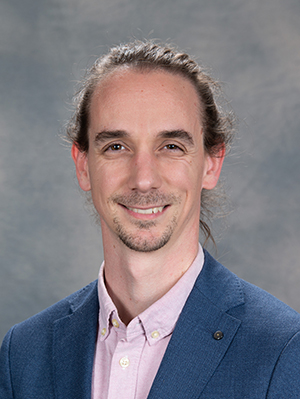
Anna Smith is an Associate Professor in the Department of Radiation Science & Technology at the Faculty of Applied Sciences, Delft University of Technology (TU Delft). She leads research in advanced nuclear fuel materials, focusing on ceramics and molten salts for next-generation reactors. Her work integrates experimental and computational approaches to study thermophysical, thermochemical, and structural properties of nuclear materials. Her educational background includes a Master of Science in Chemistry and Chemical Engineering from Chimie ParisTech and a M.Phil. in Advanced Chemical Engineering from the University of Cambridge. She earned her PhD in Materials Science and Metallurgy from the University of Cambridge, where she studied actinide oxides and their interactions with sodium, conducting part of her research at the European Commission's Joint Research Centre in Karlsruhe. Dr. Smith’s research interests span nuclear materials chemistry, molten salt systems, structure-property relationships, corrosion at high temperatures, and fuel-coolant-cladding interactions in Generation IV reactors such as Molten Salt Reactors (MSRs), Sodium-cooled Fast Reactors (SFRs), and Lead-cooled Fast Reactors (LFRs). She combines X-ray and neutron diffraction, X-ray Absorption Spectroscopy, and Differential Scanning Calorimetry with CALPHAD-based thermodynamic modeling. Her recent publications focus on the structural and thermodynamic properties of molten fluoride and chloride salts, particularly actinide-containing systems, contributing to safety assessments for fluid-fueled reactors. The research trend emphasizes predictive modeling of physico-chemical behavior under extreme conditions. She has received competitive funding, including a NWO VENI grant and participation in multiple Euratom H2020 and Horizon Europe projects such as INSPYRE, SAMOSAFER, PATRICIA, PASCAL, and MIMOSA. She also contributes to international databases like TAF ID and TDB. Dr. Smith teaches courses including Materials Chemistry for the Nuclear Fuel Cycle, Introduction to Nuclear Science and Engineering, Molecular Thermodynamics, and Advanced Thermodynamics. She leads a research team comprising PhDs, postdoctoral researchers, and master’s and bachelor’s students, actively supervising student projects in nuclear materials. Her laboratory is equipped for handling uranium and thorium materials safely.