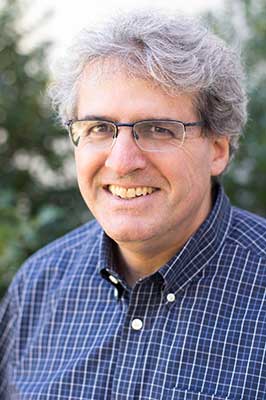
Marshall Abrams is an Associate Professor in the Department of Philosophy at the University of Alabama at Birmingham (UAB). His research focuses on the philosophy of science, particularly the interplay between probability, causality, and scientific practices in biology and social sciences. He explores how scientific knowledge is shaped by experimental design, data interpretation, and the use of mathematical models and computer simulations. His work bridges philosophy and interdisciplinary science, emphasizing pragmatic approaches to understanding population-environment systems and the role of chance in evolutionary processes. Dr. Abrams teaches courses on philosophy of biology, philosophy of mind and AI, and general philosophy of science. He collaborates on both philosophical and purely scientific research, including projects on fitness concepts, environmental variation, and the application of probability theory in ecological and evolutionary contexts. His publications span topics from infinite population models to the philosophical implications of pseudorandomness in simulations. His research interests include the integration of humanities perspectives into scientific inquiry, particularly through innovative modeling techniques. He advocates for a mechanistic view of probability, emphasizing causal structures over purely statistical descriptions. Recent work addresses challenges in measuring and modeling fitness, as well as the causal roles of environmental factors in natural selection. Dr. Abrams has contributed to debates on the levels of selection, the irrelevance of individual-level fitness, and the importance of population-environment interactions in evolutionary theory. His interdisciplinary approach reflects a commitment to bridging gaps between philosophical analysis and empirical scientific practice.