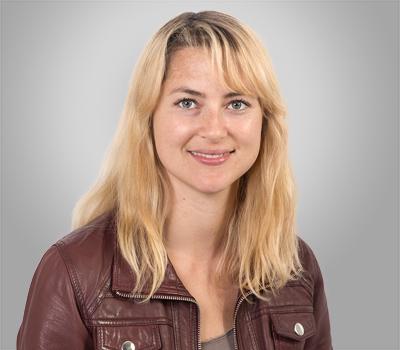
Lorin Schöni is a PhD candidate at ETH Zürich, actively contributing to the Security, Privacy and Society research group since October 2022. Concurrently, he serves as a Lecturer at the Department of Humanities, Social and Political Sciences, where he teaches the course Focus on the Human: Human-Centered Security and Privacy Lab (Autumn Semester 2025, Unit 851-0391-00L). His research focuses on human-centered approaches to cybersecurity , particularly through three key domains: Human-Computer Interaction - Investigating design decisions that influence user behavior in digital security contexts Extended Reality Applications - Developing immersive training systems for phishing prevention Usability Engineering - Creating intuitive security interfaces with explainable AI components Recent publications highlight his work at the intersection of autonomous motivation theory and personalized cybersecurity training , with notable presentations at top venues including CHI 2025 and SOUPS 2024. His research aims to transform security from a restrictive framework into a collaborative partnership between users and digital systems, as emphasized in his award-winning work on human-centered cybersecurity.
Heather Knight is an Assistant Professor in the Department of Electrical Engineering and Computer Science at Oregon State University, part of the College of Engineering. Her research focuses on social robotics and human-robot interaction, emphasizing non-verbal communication and the design of non-anthropomorphic robots. She directs the CHARISMA Research Lab, which applies principles from performing arts to enhance robot charisma through expressive motion and interaction design. Dr. Knight holds a Ph.D. in Robotics from Carnegie Mellon University (2016), and dual M.S. degrees in Robotics (Carnegie Mellon) and Electrical Engineering & Computer Science (MIT, 2008), alongside a B.S. in Electrical Engineering from MIT (2006). She also leads Marilyn Monrobot, a robot theater company producing comedic performances and an annual Robot Film Festival. Her work bridges technical innovation with societal impact, exploring how robots can better communicate intent through motion and interaction. Notable contributions include the 'Sanitizerbot' project for playful public health support and the development of Laban-based motion frameworks for expressive robotics. Awards include being named to Forbes' 30 Under 30 in Science (2011) and her TED talk on robot comedy. Key Research Themes: Multi-robot formations, expressive motion design, human-robot social dynamics, and ethical integration of AI in robotics. Recent Projects: VR storytelling with social robots, service robots in workplace environments, and motion-based affective communication. Her articles span topics from robot humor generation to industrial light communication systems, reflecting a commitment to both foundational research and applied solutions for human-robot coexistence.
Dr. Matteo Montecchi is a Senior Lecturer (Associate Professor) in Marketing at King’s Business School, King’s College London, where he also serves as Theme Lead for Sustainable Consumption at the Centre for Sustainable Business and Programme Director for the Strategic Marketing (Open Executive) programme. He teaches core modules such as Consumer Behaviour, Digital Marketing, and Research Methods, and leads executive education initiatives. Previously, he was a Senior Lecturer at the London College of Fashion, University of the Arts London, and has held visiting positions at Milan Politecnico, Università Cattolica del Sacro Cuore, and Università Federico II. Montecchi earned his PhD in Marketing from King’s College London, an MRes in Marketing from Birkbeck College, an Executive Master in Marketing and Sales from SDA Bocconi and ESADE, and a Bachelor’s in Business Economics from the University of Modena and Reggio Emilia. He also holds a PgCert in Academic Practice and is a Fellow of the Higher Education Academy (FHEA). His research focuses on the digital transformation of marketing, particularly the role of artificial intelligence and blockchain in enhancing transparency and trust. He investigates ethical engagement with diverse consumer groups, inclusion, and corporate responsibility, with a special interest in marginalized communities. His work integrates consumer behavior, digital interactions, and decision-making with technological innovation, offering actionable insights for sustainable and responsible business strategies. The most recent 15 publications reflect a strong trend in AI in retail, brand transparency, consumer trust, ethical data use, voice technologies, and social sustainability. His research spans journals in marketing, psychology, interactive marketing, and business ethics, demonstrating interdisciplinary impact. Scientific Awards: KingsCAT: Capture and Analysis Tool for Social Media Research at King’s College London (2024) – Recognized as part of a collaborative team for advancing digital research infrastructure and media analysis. Montecchi is actively involved in PhD supervision and is accepting new students. He has led research projects using social media analytics (KingsCAT) and has contributed to strategic debates on grand challenges in marketing. His work connects academic research with real-world managerial applications, particularly in digital strategy and ethical innovation. He is a key contributor to interdisciplinary research through tools like KingsCAT, which supports collaborative social media analysis, and his publications often involve co-authorship with experts in data science, psychology, and organizational behavior.
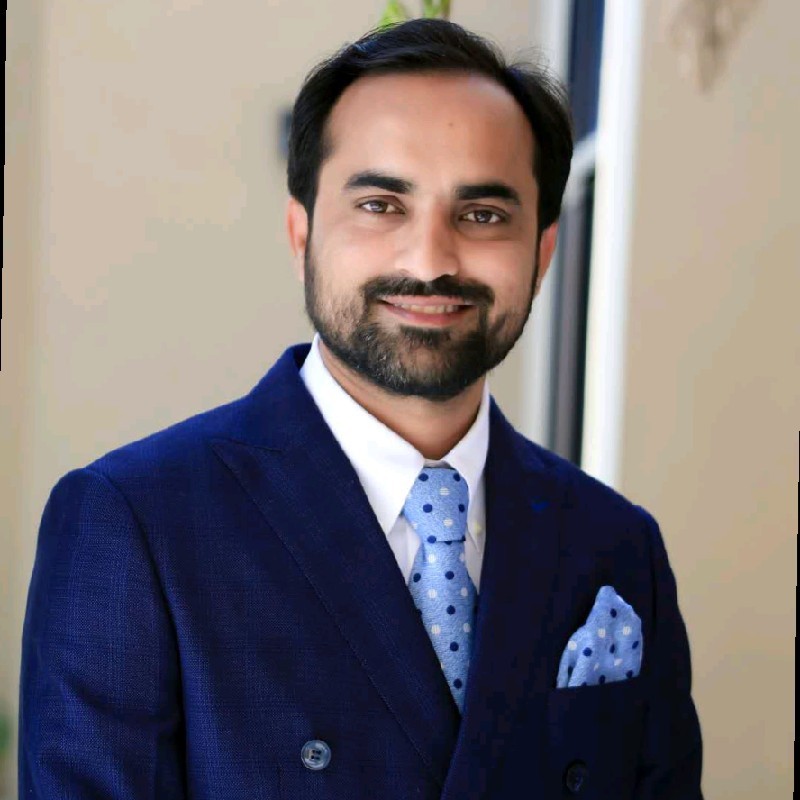
Dr Wasim Ahmad is a Lecturer in Marketing at the Department of Marketing, Lancaster University Management School (LUMS), having joined the institution in January 2024. His prior academic appointments include Monash University, Florida State University, Teesside University, and Fujian University of Technology, where he conducted research, taught undergraduate/postgraduate modules, and led curriculum development. Education: Ph.D. in Marketing, University of International Business and Economics PostDoc, Florida State University Research Interests: Dr Ahmad investigates consumer behaviour with emphasis on negative emotions (brand hate, betrayal) and extreme responses to brands across cultural contexts. His work spans sustainability-oriented innovation in B2B firms, eco-brand strategy, and cross-cultural CSR implementation—particularly during crises like the pandemic. He employs quantitative methodologies including experimental designs and meta-analysis, frequently examining digital marketing phenomena such as virtual influencers, travel apps, and dark patterns in online interfaces. Publication Trends: His 2023-2025 output reveals concentrated research on brand hate consequences in B2B relationships, sustainability innovation linked to triple-bottom-line performance, and cross-cultural digital behaviour (e.g., social media addiction, travel app usage). Key journals include Journal of Business Research , Industrial Marketing Management , and Annals of Tourism Research , demonstrating interdisciplinary reach across marketing, sustainability, and tourism. Scientific Awards: No specific awards, prizes, or fellowships mentioned in source materials Advising and Grants: Dr Ahmad actively supervises PhD candidates in green marketing topics (product sustainability, eco-brand orientation) using quantitative approaches. He teaches core modules including International Marketing (MKTG101), Strategic Marketing (MKTG301), and Marketing Research (MKTG212). No grant funding details were provided in the directory. Labs and Teams: No dedicated research labs or teams specified in current affiliation Collaborative work evident in B2B sustainability studies with international co-authors
Dr. Arnold Japutra is an Associate Professor of Marketing at Southampton Business School, University of Southampton. His research focuses on brand management, consumer behaviour, relationship marketing, and the adoption of emerging technologies such as AI, AR/VR, and robotics. Recognized among the Top 2% of Global Scientists, he has published in leading journals including the Journal of Business Research, European Journal of Marketing, International Marketing Review, Journal of International Management, Journal of Travel Research and Tourism Management. Dr. Japutra has held academic roles at the University of Western Australia and Universitas Indonesia, and has extensive experience in teaching, corporate training, and consulting for global organizations. His research interests include: Consumer-brand relationships Consumer negative behaviours Dark-side of brands Human-Robot interactions Adoption of new technologies (e.g., AI, AR, VR) Brand management (e.g., brand attachment, brand loyalty, brand equity) Technology adoption and consumer behaviour (e.g., impulsive and compulsive buying) Dr. Japutra's research sits at the intersection of branding, consumer psychology, and emerging technologies. His work examines how consumer–brand relationship factors drive both positive behaviors and negative ones such as impulsive buying, compulsive consumption, and trash-talking. He investigates how psychological traits shape consumer decision-making and has recently been exploring human-technology interactions with a focus on AI, robotics, AR, and VR. His publication pattern shows a clear evolution from traditional brand management topics toward increasingly technology-focused research, particularly examining the psychological impacts of AI and digital interfaces on consumer behavior. Dr. Japutra has received numerous prestigious awards, including: Stanford 2% Global Scientist Citation Rankings (2023, 2024) Business School Mid-Career Research Award, University of Western Australia (2023) Best Researcher Award, Faculty of Economics and Business, Universitas Indonesia (2023, 2022) Best paper at Journal of Hospitality and Tourism Management (2019) Best Researcher Award and Top Publication Award, Tarumanagara University (2016) Dr. Japutra is actively accepting PhD students and has extensive experience mentoring graduate researchers. His research has been supported by various grants though specific funding sources aren't detailed in the provided materials. He has also delivered corporate training and consulting services for numerous global organizations, bridging academic research with practical business applications.
Zhiqing Zhou is an Associate Professor in the Department of Mental Health at Johns Hopkins Bloomberg School of Public Health. He holds affiliations with the Hopkins Business of Health Initiative and the Johns Hopkins P.O.E. Total Worker Health® Center. His research examines organizational impacts on employee mental health, workplace mistreatment, work-nonwork balance, and health behaviors. Education: PhD, University of South Florida (2014) MA, University of South Florida (2012) BA, Peking University Health Science Center (2009) Research Interests: Dr. Zhou investigates how workplace practices influence employee well-being, focusing on: Workplace violence/bullying prevention Cross-domain spillover between work and family life Behavioral interventions for health/safety promotion Impact of illegitimate tasks and incivility on mental health Publication Trends: Recent articles (2021-2025) emphasize remote work challenges, cyber incivility, moral identity in organizations, and dyadic family-work dynamics, using longitudinal and diary methodologies. Awards: Summer Faculty Research Fellowship, Office of Naval Research (2021, 2022) Academy of Management OB Division Best Reviewer Award (2015) SIOP LGBT Research Award (2012) Leadership: Associate Editor for Journal of Occupational Health Psychology , Group & Organization Management , and Stress & Health . Collaborates with global researchers and graduate students.
Prof. Dr. Christina Raasch is Professor of Digital Economy at Kühne Logistics University (KLU) and holds a joint appointment with the Kiel Institute for the World Economy (IfW) . Since 2017 she has led research and teaching on how digitalization reshapes innovation processes, enterprise crowdfunding, and customer-driven disruptive innovation. Education Habilitation (Dr. habil.) in Business Administration, Hamburg University of Technology (TUHH), 2012 PhD in Management, University of Erlangen-Nuremberg, 2006 MSc (lic. oec.) in Economics & Management, University of St. Gallen (HSG), 2002 Visiting Researcher, MIT Sloan School of Management, 2010-2012 Research Interests Prof. Raasch’s work centers on digital transformation of innovation . She investigates how firms leverage digital technologies—ranging from AI to crowdfunding platforms—to enhance idea generation, evaluation, and implementation. Core themes include: Open & User Innovation: understanding when and how users become valuable innovators inside and outside firms. Disruptive Innovation Dynamics: analyzing whether disruptive ideas stem from users or producers under varying environmental conditions. Enterprise Crowdfunding: designing decentralized decision-making systems that mitigate hierarchy-induced biases. Publication Trends Her 70+ publications reveal a systematic exploration of demand-side innovation . Early work modeled welfare impacts of user innovation; recent studies use large-scale field data from Siemens and other multinationals to uncover cognitive and social biases in idea evaluation. A consistent thread is bridging micro-level behavioral insights with macro-level policy and strategy implications. Scientific Awards & Honors Fellow of the Open and User Innovation (OUI) Society Host of the 2023 OUI Conference at KLU Research Funding & Industry Collaboration Current grants exceed €2 million and include: FabCity-Citizen Extension (2025-2026) – decentralized urban innovation funded by the German Federal Ministry of Education and Research. EvaluationShirking (2024-2026) – idea evaluation biases in collaboration with a global industrial manufacturer. Idea Evaluation in Democratized Innovation (2019-2023) – DFG-funded project on enterprise crowdfunding design. Labs, Teams & Knowledge Transfer Prof. Raasch leads the Open & User Innovation Research Group at KLU, supervising doctoral researchers and managing industry partnerships with firms in automotive, high-tech, and logistics sectors. She regularly contributes to policy panels and media outlets such as Harvard Business Manager and Springer Professional .
Julien Cloarec is a Full Professor of Quantitative Marketing at iaelyon School of Management, Université Jean Moulin Lyon 3, where he also serves as Vice-President for Digital Strategy and Artificial Intelligence. He is an internationally recognized expert in artificial intelligence, with a focus on responsible AI development that balances innovation with privacy protection. His research interests center on Artificial Intelligence , Privacy in AI , Consumer Behavior , and Digital Marketing . He investigates how users perceive and adopt AI technologies, particularly in domains like autonomous vehicles, brain–machine interfaces, and eHealth, emphasizing the psychological and ethical dimensions of trust and privacy. His recent publications (2022–2025) reflect a strong thematic focus on the personalization-privacy paradox , algorithmic aversion , and transparency in AI systems . These works appear in leading journals across marketing, technology, and transportation research, demonstrating interdisciplinary impact. Scientific Awards: Prix AFM - Association Française du Marketing pour la meilleure communication (2022) Julien Cloarec actively collaborates with regulatory bodies, professional associations, and academic institutions to influence public policy and promote responsible AI. He leads research at the Magellan Laboratory @iaelyon and manages educational initiatives such as the Certificate in Artificial Intelligence for Marketing . He advises on doctoral research and has contributed to publications on the doctoral experience in management. Laboratory Affiliation: Magellan Laboratory @iaelyon - Research in Organizational Management
Thomas S. Gruca serves as the George Daly Professor in Marketing and Director of the Iowa Electronic Markets at the University of Iowa's Tippie College of Business. His interdisciplinary work bridges marketing, finance, and healthcare through innovative prediction market applications. Education PhD in Decision and Information Sciences, University of Illinois Urbana-Champaign MBA in Management Information Systems, University of Illinois Urbana-Champaign BS in Mathematics and Computer Science, University of Illinois-Chicago His research centers on prediction markets for political and healthcare forecasting, with recent work analyzing geopolitical biases , anti-incumbency effects , and rural healthcare access disparities . This intersects with his expertise in marketing/finance interface phenomena like brand equity measurement and consumer behavior modeling in casino gaming. Analysis of his 15 most recent publications reveals three dominant research streams: (1) Election forecasting through Iowa Electronic Markets (35% of output), (2) Rural healthcare access modeling (27%), and (3) Marketing analytics including brand equity and consumer behavior (38%). His work consistently appears in top journals like Journal of Marketing , International Journal of Forecasting , and PS: Political Science & Politics . Scientific Awards 9-time recipient of MBA Marketing Professor of the Year (2006-2019) President & Provost Award for Teaching Excellence (2018) Iowa MBA Instructor of the Year - Core (2014) Gruca has secured significant external funding including an NSF grant ($300,000) for Active Learning in Undergraduate Education Using Iowa Electronic Markets (2000-2003) and a US Department of Education grant for Enhancing Economic Literacy (1997-2000). His leadership roles include Faculty Director of the MBA Marketing Career Academy (2008-2019) and PhD Program Director for Marketing (2008-2014). He directs the Iowa Electronic Markets (IEM), a real-money prediction market used globally for election and economic forecasting research, which serves as both a research platform and teaching tool for over 10,000 students annually.
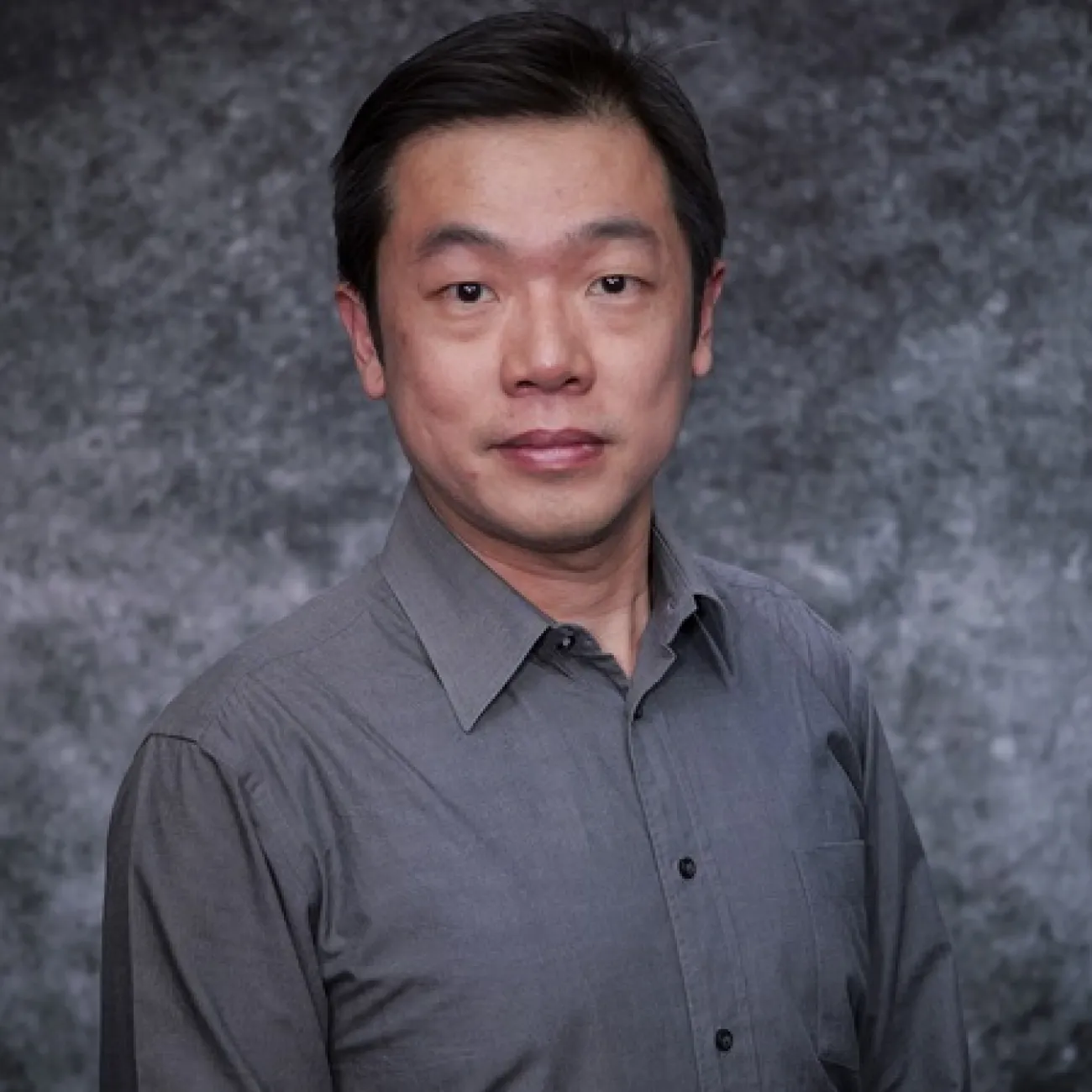
Professor Tatsuya Kimura serves at Waseda University's Graduate School of Business and Finance, holding a Ph.D. from Waseda University and an MBA from Lancaster University (UK). His academic appointments include Professor at the Faculty of Commerce and Graduate School of Business and Finance, with additional affiliations at the Global Education Center. His research spans Consumer Economics and Society , Marketing , Internal Marketing , and Service Management , with particular focus on Japanese market adaptations of customer satisfaction metrics. Kimura pioneered the Promoter Score Japan (PSJ) as a culturally adapted alternative to Net Promoter Score (NPS), demonstrating through empirical studies that Japanese consumer response patterns differ significantly from Western models. His publication trends reveal evolving specialization from foundational marketing theory (1990s-2000s) toward culturally-specific metric development (2010s-2020s). Recent work analyzes care worker motivation through internal marketing frameworks and examines service industry dynamics through Japanese cultural lenses. His research consistently bridges academic theory with practical business applications across manufacturing and service sectors. Nikkei Advertising Award Category Award Winner (since 1990) Fujisankei Advertising Award (since 1986) Kimura leads multiple Japan Society for the Promotion of Science research projects including Research on the promotion requirements for internal marketing (2018-2023) and Internal Marketing (2011-2013), with findings published in Routledge's Internal Marketing: Another Approach to Marketing for the Growth (2016). His international collaborations include research at Columbia University (2012-2013) on global marketing strategy. He teaches core graduate courses including Marketing & Brand Management , Service Marketing & Management , and Marketing Management , with particular emphasis on case-based learning methodologies for Japanese business professionals.
Michele Gattullo serves as an Assistant Professor within the Department of Mechanics, Mathematics & Management at the Polytechnic University of Bari, Italy, specializing in design methods for industrial engineering (ING-IND/15). His research bridges cutting-edge extended reality technologies with practical industrial applications, focusing on human-centered solutions for manufacturing, maintenance, and workplace design. Dr. Gattullo's research portfolio centers on Augmented Reality, Virtual Reality, and Biophilic Design, with significant contributions to Human-Computer Interaction in industrial contexts. He investigates how nature-inspired elements in virtual workspaces enhance employee well-being and productivity, while simultaneously developing practical AR tools for assembly guidance, technical documentation, and maintenance support. His work uniquely integrates ergonomics, cognitive psychology, and industrial engineering to optimize human-technology interaction in complex production environments. Analysis of his 15 most recent publications reveals two dominant research trajectories: biophilic design frameworks for virtual/metaverse workspaces (2023-2025) and industrial AR authoring methodologies. The biophilic stream establishes evidence-based guidelines for digital nature integration, while the AR stream delivers validated tools like ADAM and minimal AR approaches that streamline technical documentation creation. Both trajectories emphasize user experience validation through rigorous industrial studies, demonstrating strong interdisciplinary impact across computer science, industrial engineering, and environmental psychology. Scientific Awards: No awards or honors were documented in the available sources. Advising and Grants: The provided materials contain no information regarding graduate student supervision, research grants, or funding sources. His academic profile emphasizes publication output over mentoring activities or project financing details. Laboratories and Teams: While Dr. Gattullo's research involves advanced XR technologies, the source text does not specify laboratory facilities, research groups, or collaborative teams associated with his work at Politecnico di Bari.
Vince Castillo serves as an Assistant Professor in the Department of Marketing & Logistics at The Ohio State University's Max M. Fisher College of Business, where he bridges academic research with industry applications in supply chain innovation. His work addresses critical modern challenges including last mile delivery optimization, sustainable operations, and AI integration, with media features on NPR's Marketplace and The World from PRX highlighting his practical impact. His academic foundation includes: PhD in Supply Chain Management from the University of Tennessee (2018) MBA in Supply Chain Management and Finance from the University of San Diego (2014) BS in Civil Engineering from the Colorado School of Mines (2006) Dr. Castillo's research portfolio demonstrates exceptional focus on human-centered logistics and resilient supply chains . Key themes include: Technology Integration : Applying AI and simulation modeling to optimize delivery networks and educational frameworks Sustainability Transformation : Developing frameworks for ethical sourcing and carbon footprint reduction Geopolitical Adaptation : Analyzing supply chain vulnerabilities in conflict zones like Ukraine Behavioral Dynamics : Studying driver engagement and customer tipping effects in gig economy platforms His publication trajectory from 2018-2025 reveals accelerating innovation, particularly in generative AI applications for supply chain education and real-time adaptation to geopolitical disruptions. Recent work emphasizes the interdependence of technological solutions and human factors in achieving operational resilience. Professor Castillo actively shapes future supply chain leaders through courses including Logistics Analytics (BUSML 4382), Supply Chain Sustainability and Resilience (BUSOBA 7395), and Building a Sustainable Supply Chain (BUSML 4385). His industry-engaged teaching approach prepares students for complex challenges in e-commerce operations, risk management, and sustainable logistics strategy implementation.
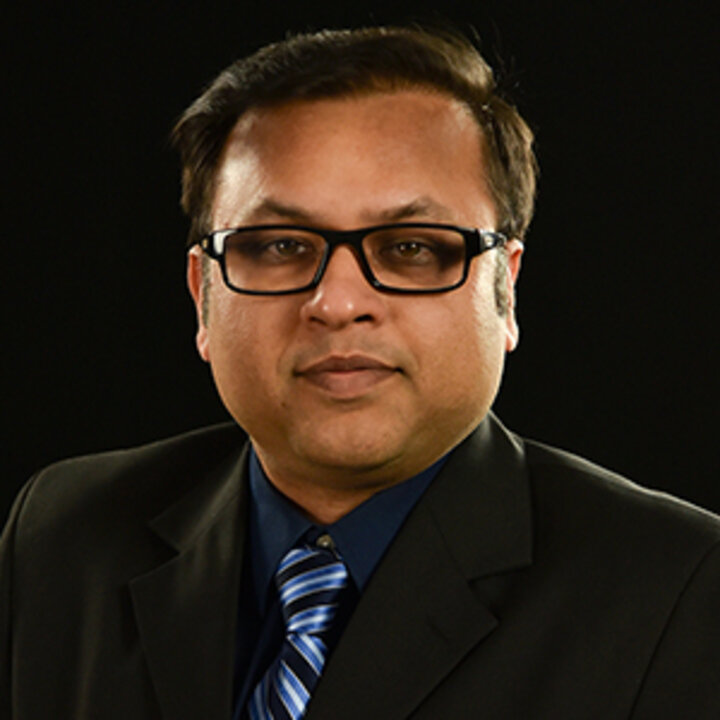
Sunil K. Singh is an Assistant Professor of Marketing in the Department of Marketing at the College of Business, University of Nebraska-Lincoln, holding this position since 2017 with active involvement in research, teaching, and university service. Education: Ph.D. in Marketing, University of Missouri-Columbia, 2017 MBA in Marketing, Xavier Labor Relation Institute, India, 2005 B.Tech in Mechanical Engineering, College of Engineering and Technology, India, 2001 Dr. Singh's research centers on marketing strategy implementation at customer-firm interfaces, interpersonal influence in sales , and managing frontline service interactions . His work integrates empirical modeling and text analysis to decode verbal/nonverbal cues in service encounters, with significant contributions to understanding business-to-business negotiations and sales query resolution. His methodological rigor bridges theoretical frameworks with real-world sales and service operations challenges. His publication trajectory in premier journals including Journal of Marketing, Journal of Marketing Research, and Journal of the Academy of Marketing Science reveals consistent focus on frontline employee-customer dynamics, influence tactics in digital negotiations, and problem-solving mechanisms in service contexts. Notable recognitions include: Faculty Research Award (2021) Emerging Scholar Research Award (2018) OFR Symposium Young Scholar Award (2017) Shelby D. Hunt/Harold H. Maynard Award Finalist (2021) Multiple dissertation awards including AMA Sales SIG Competition Winner (2015) Dr. Singh mentors graduate students through Master's committees and comprehensive exam reviews while teaching Managerial Marketing at graduate level and Market Research at undergraduate level. His service extends to editorial review roles for top marketing journals and active participation in University Faculty Senate since 2021, reflecting deep institutional engagement beyond his five years of prior industry experience in service operations.
Jin Li serves as Zhang Yonghong Professor in Economics and Strategy, Area Head of Management and Strategy, and Director of the Centre for AI, Management and Organization (CAMO) at Hong Kong University Business School. Previously, he held tenured positions at Kellogg School of Management and London School of Economics where he was Tenured Associate Professor of Managerial Economics and Strategy. Professor Li's research focuses on organizational economics, personnel economics, and labor economics, examining how firms design organizations to align incentives and build trust. His recent work explores digital economy topics including causality issues in machine learning algorithms, blockchain governance, and AI-organization interactions. This research demonstrates how organizational design creates competitive advantage through effective incentive structures and relational contracts. His publication portfolio shows consistent output in top-tier journals with recent emphasis on AI's organizational impact (2022-2023). Key thematic clusters include relational contracting dynamics (30% of recent work), digital transformation challenges (25%), labor market structures (20%), and blockchain governance mechanisms (15%). Management Department teaching prize at London School of Economics Associate Editor, Management Science Professor Li has advised numerous PhD students through courses like 'Economics of Organization for PhDs' at Kellogg. His service includes reviewing for 30+ top journals (AER, Econometrica, JPE, QJE, ReStud) and grant proposals for NSF and SSHRC. He serves as external PhD examiner for Norwegian School of Economics. As Director of CAMO, he leads research initiatives at the AI-organization interface, focusing on how artificial intelligence transforms workplace structures, managerial decision-making, and competitive dynamics in digital economies.
Prof. Dr. Reinhold Decker is a full professor of business administration with a focus on marketing and market research at Bielefeld University's Faculty of Economics, where he has been affiliated since 1997. He currently serves as the Rector's Representative for Cooperation with Business, BRIC, and Research Transfer (since October 2023), following previous roles as Vice Rector for Information Infrastructure and Business (2019-2023), Vice Rector for Information Management (2015-2019), and Vice Rector for Financial Affairs and Resources (2012-2015). He is also the Scientific Director of BI2000plus - Research Projects on the Region since 2005 and a member of the Bielefeld Graduate School of Economics and Management (BiGSEM). Decker earned his degree in industrial engineering with a focus on OR/Computer Science in 1988, received his doctorate in 1993, and completed his habilitation in 1997, all from the University of Karlsruhe (KIT). His academic career includes visiting professorships at the University of Vienna, Moscow Academy of Economics, University of Veliko Turnovo, Universidade NOVA de Lisboa, Université Paris III – Sorbonne Nouvelle, and the University of Maryland. His research focuses on the development and empirical testing of methods and models for acquiring and analyzing consumer data, particularly from social media, and data-driven, consumer-centric development of intelligent products and services. His work spans social media analysis, buyer behavior modeling, brand image analysis, web mining in marketing, and internet-based preference measurement. Decker's interdisciplinary approach bridges marketing, data science, and consumer behavior, with increasing emphasis on intelligent systems and digital transformation in marketing contexts. Analysis of his 15 most recent publications reveals a strong focus on emerging technologies in marketing, including augmented reality, voice assistants, and social media analytics. His research increasingly examines privacy concerns in the digital age, sustainability communication, and the integration of AI in consumer decision-making processes. The interdisciplinary nature of his work is evident in publications spanning marketing journals, data science publications, and technology-focused outlets. Member of the Scientific Council of the journal Argumenta Oeconomica Cracoviensia (since 2013) Associate Editor of the journal Behaviormetrika (since 2012) Member of the Editorial Board of the Springer series Studies in Classification, Data Analysis, and Knowledge Organization (since 2004) Vice President of the European Association for Data Science – EuADS (2018-2022) Decker has served on numerous editorial boards and scientific program committees, including for the International Federation of Classification Societies. His extensive reviewing work spans prestigious journals such as Journal of Business Research, Journal of Product Innovation Management, and Review of Managerial Science. His leadership extends to project management, including BiLinked (2025), Bielefeld 2000plus (2024), and Bielefelder DatenNarrative (2022). Decker has also edited multiple volumes and special issues on data analysis and marketing, demonstrating his commitment to advancing methodological approaches in business research. As Scientific Director of BI2000plus, Decker leads interdisciplinary research projects focused on regional development. His work bridges academia and industry through initiatives like the Bielefeld Center for Data Science (BiCDaS) and the Bielefeld Graduate School in Theoretical Sciences. His recent projects emphasize data narrative techniques, linking data analysis with effective communication strategies for diverse audiences.