Dr. Steve Rholes is a Professor in the Department of Psychology at Texas A&M University, directing the Close Relationships and Attachment Theory Lab. His research focuses on adult attachment theory, exploring how relationships and personality influence behavior, particularly during transitions like parenthood. His work examines marital dynamics, childcare stress, and the impact of attachment styles on emotional well-being. Key studies include longitudinal analyses of couples during the transition to parenthood, revealing how insecure attachment correlates with dissatisfaction and depression. He investigates how attachment styles affect information-seeking behaviors, empathetic accuracy, and conflict resolution in relationships. Future research priorities include repressed memories in avoidant individuals, self-concept, and well-being across relationships. His articles emphasize attachment theory applications in marital and parental contexts, using innovative methods like machine learning to predict relationship quality. The lab’s work bridges theoretical and applied psychology, with implications for social policy and health interventions.
Nikolai Haahjem Eftedal is a Postdoctoral Fellow at the Department of Psychology, University of Oslo, affiliated with the PROMENTA research group. His work bridges moral psychology, behavioral genetics, and political attitudes, focusing on heritability and social dynamics. 2014: Master in Cognitive Neuroscience, University of Oslo 2012: Bachelor in Cognitive Psychology, University of Oslo His research explores motivated reasoning , ideological conflicts , and genetic influences on political and social behaviors. Key areas include hereditary pathways , assortative mating , and personality-politics intersections . Recent publications analyze genetic similarity in relatives, non-random mating patterns, and ADHD transmission . Collaborations span interdisciplinary teams at UiO and international institutions.
Dr. Penelope Watt serves as a Senior Lecturer in Zoology within the School of Biosciences at the University of Sheffield, where she maintains an active research profile and significant teaching responsibilities. Her academic home is anchored in the Alfred Denny Building on Western Bank, Sheffield, with her primary email p.j.watt@sheffield.ac.uk serving as the key contact point for collaborations and student inquiries. Her research program centers on behavioural ecology with dual emphases: fish models (particularly guppies and zebrafish) investigating personality traits, stress physiology, and transgenerational epigenetic mechanisms; and earthworm systems examining behaviour, distribution, and health implications for soil quality improvement in regenerative agriculture. This work bridges fundamental questions in evolutionary biology with applied agricultural sustainability challenges, consistently exploring how environmental stressors manifest across generations through potential epigenetic pathways. Analysis of her publication trajectory reveals a strategic evolution from foundational studies on fish mating behaviours and personality heritability toward increasingly complex investigations of stress transmission mechanisms and agricultural applications. Recent work prominently features collaborative, interdisciplinary projects integrating soil science, epigenetics, and conservation biology, with earthworm biodiversity and regenerative farming practices becoming central themes alongside continued zebrafish stress-response research. Her scientific recognition includes: APS Teacher of the Year (2010) Dr. Watt supervises a robust cohort of graduate researchers, currently mentoring 6 advanced students (including PhD candidates Joseph Llanos on earthworm dynamics and Wafa Abudayah on zebrafish anxiety traits) while having successfully guided 8 PhD graduates and over 10 Master's students through completion. Her research program is supported by significant external funding, most notably as co-investigator on the £249,704 EpiStressNet grant (ESRC/BBSRC, 2015) investigating epigenetic embedding of social stress responses through biosocial systems approaches. Her research group operates at the intersection of laboratory-based behavioural assays and field studies, particularly in regenerative agriculture contexts, with strong connections to soil science initiatives and collaborative networks examining stress phenotypes across taxa.
Dr. Lu Lu is an Associate Professor and Arthur F. McGonigle Research Fellow at Temple University's School of Sport, Tourism and Hospitality Management (STHM). She joined STHM from Washington State University, where she earned both her master's and Ph.D. degrees and served as an instructor before transitioning to her current position. Dr. Lu's research program centers on consumer behavioral marketing with primary emphasis on service interactions and marketing, food and beverage decision-making, and the influence of marketing messages on consumer travel decisions. Her work bridges hospitality, tourism, and business disciplines, examining how consumers interact with service environments and make purchasing decisions in various contexts. Her recent publications demonstrate an expanding research trajectory into artificial intelligence applications in service operations and consumer behavior analytics. Dr. Lu serves as an Associate Editor for Journal of Hospitality & Tourism Research and Journal of Hospitality and Tourism Technology, and maintains editorial board membership with several leading journals including International Journal of Contemporary Hospitality Management, Journal of Hospitality & Tourism Research, Annals of Tourism Research, Journal of Hospitality Marketing & Management, and Cornell Hospitality Quarterly. Her research has been published in top-tier journals such as Journal of Business Research, International Journal of Information Management, International Journal of Hospitality Management, and Tourism Management. Highly Commended Award for the Outstanding Research Article (Journal of Hospitality & Tourism Research, 2021) Highly Commended Award (International Journal of Contemporary Hospitality Management, 2017) Best Track Chair Award (Global Marketing Conference, 2023) Best Paper Awards (Annual Graduate Education and Graduate Student Research Conferences in Hospitality and Tourism, 2023 and 2016) Chinese Government Award for Outstanding Self-Financed Students Abroad (2015) Outstanding Graduate Student Research Award (Washington State University, 2015-2016) Dr. Lu's scholarly work has gained significant media attention and has been featured in prominent outlets including CNN, Fortune, Yahoo News, Restaurant Business, NBC 10, Pennsylvania Cable Network, and ScienceDaily. Her research demonstrates strong impact in both academic and practical business contexts, particularly in understanding consumer behavior in service and hospitality settings where digital transformation is rapidly changing customer expectations and service delivery models.
Jing Yuan serves as an Assistant Professor in the Department of Computer Science and Engineering at the University of North Texas, where he directs the Robust Adaptive Learning (RAL) Lab. His research centers on theoretical foundations of artificial intelligence and machine learning, specifically developing advanced optimization techniques to enhance algorithmic performance and efficiency for building robust, adaptable AI systems capable of solving complex real-world problems across diverse domains. Dr. Yuan's primary research focuses on submodular optimization, adaptive algorithms, and fairness in AI systems. He investigates approximation algorithms for sequential decision-making under uncertainty, calibrated recommendations, and non-monotone optimization problems. His work bridges theoretical computer science with practical applications in recommender systems, social advertising, and personalized learning, emphasizing algorithmic efficiency while addressing societal concerns like equity and ethical constraints in AI deployment. Analysis of his recent publications reveals a concentrated research trajectory in adaptive submodular maximization and its extensions. The body of work demonstrates rigorous theoretical contributions in approximation guarantees while tackling practical challenges including fairness constraints, sponsored content integration, and multi-objective optimization in dynamic environments. This research has been consistently published in premier AI conferences such as AAAI, IJCAI, and AAMAS, reflecting significant impact in both theoretical and applied communities. Dr. Yuan actively mentors PhD students including Twumasi, whose research on incentivized social advertising was accepted to AAAI ICWSM 2024. He has successfully recruited and guided numerous undergraduate researchers through programs like LREU and Google CAHSI, with multiple students presenting at conferences including GMiS and University Research Days. His research is supported by a Google CAHSI Institutional Research grant for fairness-aware optimization, and he recruits new PhD students annually with full financial support. The Robust Adaptive Learning Lab at UNT has demonstrated steady growth since 2022, currently comprising multiple PhD students and a rotating cohort of undergraduate researchers. The lab maintains active collaborations with industry partners like Google and participates in the CAHSI network, focusing on developing theoretically sound AI solutions with tangible societal impact through rigorous algorithmic design and empirical validation.
Amit Mehra is a Professor in the Information Systems department at the Jindal School of Management, University of Texas at Dallas. His academic and professional journey includes significant contributions to digital marketing, software development, and educational technology. PhD, University of Rochester (2006) MS, University of Rochester (2004) MTech, Indian Institute of Technology, Delhi (1992) BTech, Indian Institute of Technology, Delhi (1991) His research focuses on Digital Marketing , Human Capital Development , and Analytics , with recent work exploring livestream commerce, omnichannel retail strategies, and blockchain marketplaces. Earlier studies address software pricing, open-source collaboration, and training impacts in IT services. Key trends in his publications include E-commerce Innovation , Consumer Behavior in Retail , and Personalized Education Technologies . Medical research articles from 2022 may reflect interdisciplinary collaborations or data errors. Best Paper Award at INFORMS CIST 2013 Nomination for Best Paper at WITS 2012 Xerox Fellowship, University of Rochester (2001) Amit teaches MIS 6344 - Web Analytics and is affiliated with professional organizations such as INFORMS and the ISS Society. His work bridges theoretical and applied research, emphasizing empirical validation in fields like K-12 education and platform economics.
Shaojie Tang is a Professor in the Management Science and Systems department at the School of Management, University at Buffalo. He serves as the Associate Director of the AI and Management Science Institute for Artificial Intelligence and Data Science. His research focuses on Machine Learning, Responsible AI, and Combinatorial Optimization, with applications in business and data science. PhD from Illinois Institute of Technology His work spans interdisciplinary domains including Federated Learning, Recommender Systems, and Optimization techniques. Key subfields involve Personalized AI, Tensor Completion, and Algorithm Design for collaborative systems. Recent publications from 2025 and 2024 highlight his leadership in Federated Learning, Neural Network Decoupling, and Strategic AI Deployment. Trends include balancing personalization with collaboration, enhancing model robustness, and cross-modal adaptation in distributed environments. Professional affiliations include IEEE, ACM, and INFORMS. He advises graduate students in theoretical and applied AI research, though specific advisees are not listed publicly. His research teams operate under the Institute for Artificial Intelligence and Data Science, advancing scalable solutions for dynamic business challenges.
Melissa Hughes is a Professor in the Biology department at the College of Charleston, teaching core courses including Cellular Biology, Evolution, Ornithology, and Animal Behavior labs. Her research integrates field and laboratory studies of animal communication, aggression, and territoriality across diverse taxa from songbirds to crustaceans. Her academic credentials include: Ph.D. from Duke University B.A. from Bucknell University Professor Hughes' research spans animal communication systems with emphases on honesty/deception in signals, weapon evolution in sexually dimorphic species, and individual behavioral plasticity (nonhuman 'personalities'). She actively investigates song dialect evolution in birds and crustacean territorial defense mechanisms, while also contributing to inclusive pedagogy and science education reform. Her publication record shows consistent contributions to behavioral ecology, particularly in crustacean autotomy/regeneration and avian communication. Recent work increasingly addresses pedagogical challenges in animal behavior education, including pandemic-era teaching adaptations and student misconceptions about sex differences. Her honors include: William V. Moore Distinguished Teacher-Scholar Award, College of Charleston (2020) Ralph E. Powe Junior Faculty Award, Oak Ridge Associated Universities (2003) Adrian M. Wenner “Strong Inference” Award, Division of Animal Behavior, SICB (1995) Excellence in Teaching Award, Zoology Department, Duke University (1993) Professor Hughes teaches BIOL 650: Graduate Seminar in Behavioral Ecology, indicating graduate advising involvement, though specific students aren't listed in available materials. Research grant details aren't provided in current documentation. Her primary research facility is the Grice Marine Laboratory (118-120), where she conducts experiments on snapping shrimp behavior and songbird communication using both field observations and controlled laboratory setups.
Dr. Sebastian Gabel is an Assistant Professor at the Rotterdam School of Management (RSM), Erasmus University Rotterdam, and a Scientific Advisor at the Schwarz Group. His research focuses on the intersection of quantitative marketing, machine learning, and econometrics, with applications in retail optimization. He develops scalable machine learning systems to enhance marketing personalization, particularly in large-scale retail settings. Research Interests: Gabel's work addresses challenges such as promotion personalization, recommender systems, pricing strategies, and assortment optimization. His industry collaborations with leading retailers and solution providers aim to improve revenue, advertising ROI, and conversion rates through data-driven solutions. Awards: ERIM Outstanding Performance by a Young Researcher (2025) Convergence Resilient Delta Initiative Seed Grant (326,000€, 2024) Erasmus Trustfonds Grant (2024) EMAC–Sheth Sustainability Research Competition (Honorable Mention, 2023) Grants & Activities: Organized Workshop on Digital Markets (WDM) in 2025 Recipient of multiple research grants totaling over 368,500€ Teaching: Courses include 'Marketing Strategy in the Age of AI' and 'Learning from Big Data,' emphasizing data-driven decision-making for future marketers.
Xueming Luo is the Charles E. Gilliland, Jr. Professor of Marketing at Temple University's Fox School of Business and Management. He also serves as Professor of Strategic Management and Management Information Systems. As the founder and director of the Global Institute for Artificial Intelligence and Business Analytics, his work bridges AI, machine learning, and business strategy. His research focuses on digital mobile marketing, omnichannel analytics, sharing economy platforms, and social responsibility with a data-driven approach. His academic contributions span prestigious journals like Marketing Science , Strategic Management Journal , and Journal of Marketing . Notable studies include analyzing corporate social issue responses, AI's impact on employee creativity, and platform optimization strategies. He has been ranked 8th globally in marketing journal productivity (2013–2022). Professor Luo's research emphasizes large-scale field experiments and big data analytics. Key themes include personalized promotions, competitive pricing, social media advertising, and smart city analytics. His work addresses real-world challenges like algorithmic fairness, consumer behavior in shared economies, and ethical AI deployment. He teaches graduate courses such as Advanced Topics of AI and Machine Learning for Business Decisions and Empirical Modeling in Marketing , reflecting his commitment to integrating cutting-edge technology into business education.
Fernando G. Bernstein is the William and Sue Gross Distinguished Professor of Business Administration and Associate Dean for Global Initiatives at Duke University's Fuqua School of Business. He holds a PhD in Operations Management from Columbia University (2001) and has been at Duke since 2000. His research focuses on supply chain management, production planning, inventory control, game theory applications in distribution systems, and revenue management. He has published extensively in top journals like Operations Research and Management Science , and serves as their associate editor. Bernstein teaches core Operations Management courses for executive MBA programs and executive education, winning Duke's Excellence in Teaching Award. He leads global initiatives, including strategic partnerships with Nazarbayev University. His work bridges theoretical rigor with practical applications in retail, healthcare, and supply chain optimization. Education: PhD in Operations Management (Columbia University, 2001); Licentiate in Mathematics (University of Buenos Aires, 1995) Research Themes: Supply chain strategy, dynamic pricing, and service operations innovation Professional Roles: Editor for leading journals; advisor on global business strategy
Vince Formica is Associate Professor and Department Chair of Biology at Swarthmore College, with affiliations in Environmental Studies and Cognitive Science. His research investigates evolutionary biology using the forked fungus beetle (Bolitotherus cornutus) as a model system, focusing on social behavior evolution through multilevel selection theory, social network analysis, and field experiments. Research integrates animal behavior, phenotypic assortment, and environmental influences on selection pressures. Publications emphasize social network dynamics, sexual selection, and habitat-mediated evolutionary processes. Recent work (2020-2024) examines age-structure effects, resource distribution impacts, and sex-specific selection patterns. Fieldwork is conducted at Mountain Lake Biological Station where his team develops novel analytical methods.
Dr. Cameron Kay is a Visiting Assistant Professor of Psychology at Union College. His research aims to enhance data quality in psychological studies through tools detecting careless survey responses and validating new scales like the Generic Conspiracist Beliefs Scale. He teaches courses in personality psychology, social psychology, statistical methods, and conspiracy theories. He holds a B.A. from the University of British Columbia and M.A., M.S., and Ph.D. degrees from the University of Oregon. His publications explore psychometrics, Dark Tetrad traits, and social cognition, with recent work focusing on efficient measurement tools for conspiracist beliefs. He mentors students including Mai Tran '26 and Trishikha Kiran Rao '25, who presented research at the Eastern Psychological Association convention.
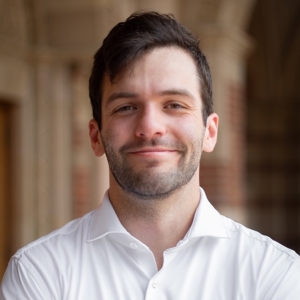
Radu Dimitriu is an Associate Professor of Marketing at Trinity Business School, Trinity College Dublin. He previously served as Director of the Full Time MBA (2020-2023) and currently directs the undergraduate Business Studies & Languages program. Holding a PhD from BI Norwegian Business School, his research focuses on branding, consumer behavior, social media marketing, CSR, and AI-enabled technologies like autonomous cars and chatbots. He lectures on Marketing Strategy and oversees Trinity MBA capstone projects. With industry engagements including judging at the Ireland User Experience Awards and speaking at the Customer Experience Professional Association, Radu also advises blue-chip firms. Fluent in multiple languages, his work bridges academic rigor with practical industry insights. Education: PhD in Marketing from BI Norwegian Business School, Oslo (specific year not stated). Prior to TCD, he worked at Cranfield University (2010-2018). Research Interests: Branding strategies and brand extension dynamics Consumer responses to emerging technologies (AI, autonomous products) Sensory-enabling technologies in marketing (e.g., VR olfactory experiences) Prosocial behavior and corporate social responsibility Consumer psychology in decision-making and satisfaction Recent Work Trends: His articles emphasize technology adoption barriers (e.g., autonomous cars), AI's role in retail, and emotional drivers like schadenfreude in consumer choices. He frequently explores how sensory and digital tools enhance consumer engagement. Awards: None explicitly listed in the text. Advising & Grants: No specific grants mentioned; however, his role in capstone projects indicates student advising. No named grants or funding sources provided. Labs/Teams: No dedicated labs or teams specified; research collaborations are highlighted through co-authored works with global scholars.
Philipp Lersch is a Professor of Sociology of Social Policy at the Institute of Social Sciences, Humboldt University of Berlin and heads the Life Course and Inequality Research Group at the German Institute for Economic Research (DIW Berlin) . His work bridges longitudinal data analysis, social policy, and economic sociology. Humboldt University of Berlin: Professor of Sociology of Social Policy DIW Berlin: Head of Life Course and Inequality Research Group Research Interests : Lersch investigates social inequalities across life courses, focusing on family dynamics, wealth distribution, and labor market outcomes. He leverages longitudinal survey data to analyze how institutional contexts (e.g., policy frameworks) shape financial investments, occupational mobility, and cohabitation/marriage stability. Publications & Projects : He has published in top-tier journals like American Sociological Review and Socio-Economic Review , covering topics such as assortative mating , class origin effects on wealth , and demographic trends in inequality . Current projects include DECIPHE (intergenerational homeownership persistence) and WEALTHTRAJECT (wealth accumulation trajectories).






/prod01/channel_3/media/tcd/business/images/profile-images/faculty-professors/Radu-Dimitriu-D26323-0553.jpg)
