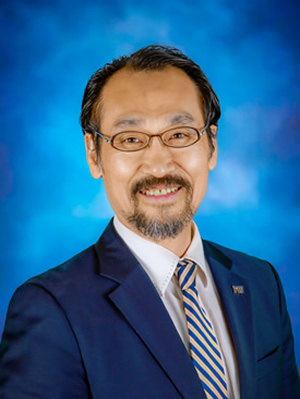
Kate Letheren is an Associate Professor at the Peter Faber Business School, Faculty of Law and Business. Her research primarily explores the intersection of technology and service delivery, with a focus on artificial intelligence, service robotics, consumer behavior, and digital marketing. She investigates how emerging technologies transform service experiences and consumer interactions. Her research interests span: Service Management : AI-driven service recovery, task allocation in human-robot teams. Consumer Behavior : Vulnerability, digital self-narratives, and ethical advertising. Robotics & AI : Anthropomorphism design, deepfake implications, and robotic guardianship. Recent publications (2021-2025) reveal consistent themes: the optimization of AI/robotics in service contexts, ethical considerations in synthetic media, and consumer-centric strategies for vulnerable populations. Her work often integrates marketing, psychology, and technology management perspectives.
Jukka Rintamäki is a researcher affiliated with Cass Business School at City, University of London. His work spans corporate social responsibility, organizational memory, institutional theory, and ethical dynamics in organizations. University: City, University of London School: Cass Business School His research focuses on: Corporate Social Responsibility (CSR) and its societal impacts Organizational memory and resistance to historical narratives Institutional parasites and their role in organizational change Unethical acts in corporate and elite sports contexts Metaphorical frameworks for understanding wrongdoing Post-truth and jargon in managerial discourse Key trends in his publications highlight the interplay between institutional structures and organizational behavior, with a critical lens on CSR, memory work, and moral repair. His work often examines how organizations navigate ethical dilemmas and societal expectations.
Professor Daniel Frings is an academic and practicing psychotherapist affiliated with London South Bank University , where he serves as Associate Dean for Research and Enterprise in the School of Applied Sciences . He earned his PhD in Social Psychology from the University of Kent in 2008, followed by a visiting researcher role at the University of California, Santa Barbara. Education : PhD in Social Psychology (2008), University of Kent. Frings’ research spans social identity processes, addiction, mental health, psychophysiology, and AI-driven healthcare solutions . His work often intersects with commercial mental health product development, including apps and online platforms, and has been funded by entities such as the Economic and Social Research Council and Cancer Research UK . Recent studies focus on AI applications in cardiac care, identity dynamics in addiction recovery, and the psychological impact of dietary identities like veganism. His academic contributions include over 98 research outputs, with recent emphasis on AI-driven appointment systems, problematic social media use, and alcohol/vaping cessation . He also maintains a private psychotherapy practice in Faversham, UK, integrating person-centered therapy and Acceptance Commitment Therapy for clients dealing with anxiety, depression, and trauma.
Jeff Fountain is a Professor and Director of Academic Affairs for Entrepreneurship and Sports Management Programs at Nova Southeastern University's H. Wayne Huizenga College of Business & Entrepreneurship. His expertise spans sports marketing, finance, and emerging technologies in sports. Ph.D., University of Northern Colorado - Sport Administration M.S., Indiana University - Sport Administration B.A., University of Washington - Business Administration Dr. Fountain's research focuses on collegiate athletics, financial efficiency in sports, athlete rights, and the intersection of technology and sports management. He has authored numerous articles and a book exploring these themes. His publications span topics such as gender dynamics in college selection, financial sustainability in Power Five conferences, and legal challenges in athlete education. He also investigates fan economics, sports media representation, and ethical governance. Co-authored the book Sports Scandals (2008) Presented at major international conferences, including College Sport Research Institute and Sport Marketing Association events Dr. Fountain teaches courses in sport finance, promotions, and management, including SPT 3925 The Business of College Sports and SPT 5940 Sport Revenue Generation and Emerging Technologies .
Vera Blazevic is an Associate Professor of Digital Marketing and Innovation at Radboud University Nijmegen and a Visiting Professor at RWTH Aachen University's Institute of Technology and Innovation Management. Her work bridges sustainable development and digitalization, focusing on organizational innovation within stakeholder ecosystems. Education: MSc in International Business from Maastricht University (2005), PhD from Maastricht University (2005). Current Role: Teaching 'Managing the Innovation Process' and 'Principles of Technology and Innovation Management'. Blazevic's research explores how organizations innovate through co-creation with stakeholders, addressing challenges in digital transformation and paradox management. Her recent publications emphasize AI's role in hybrid innovation, digital manufacturing systems, and stakeholder engagement. She has received multiple accolades, including the AACSB Influential Leader (2024), IPDMC Christer Karlsson Best Paper Award (2023), and Frontiers in Services Award (2023). Her work appears in top journals like Journal of Marketing and Journal of Product Innovation Management . At RWTH Aachen, Blazevic contributes to innovation management education and collaborates on projects related to Generative AI and stakeholder ecosystems. Her methodologies integrate paradox theory and hybrid intelligence to address complex organizational challenges.
Howook Sean Chang is an Associate Professor at the Chaplin School of Hospitality & Tourism Management within Florida International University , specializing in hospitality management. His expertise includes Customer Experience Management , Green Operations , Optimal Pricing , Product & Service Development , and Service Innovation . With over a decade of teaching experience and industry roles spanning hotel front desk operations to casino analysis, Dr. Chang bridges practical and academic hospitality research. His work has appeared in top-tier journals like Cornell Hospitality Quarterly , and he has presented over 20 peer-reviewed conference papers. Research trends in Dr. Chang’s publications focus on sustainability in hospitality (e.g., green practices, energy conservation), service innovation (e.g., service recovery, loyalty programs), and consumer behavior (e.g., wine consumption, meal kits). His work often integrates technology (e.g., crowdsourcing platforms) and environmental psychology to address modern hospitality challenges.
Charlotte Wildman is a Lecturer in Modern British History at the University of Manchester, Department of History (L5). She has held academic positions at the University of Nottingham and Liverpool before joining Manchester in 2010. She serves on the board of Manchester Histories and was Assistant Director of Research Impact for the School of Arts, Languages and Cultures (2018–2021). Her research focuses on urban culture, working-class communities, and gender in 20th-century Britain, with a particular emphasis on deviant women and domestic criminality. She leads a major AHRC fellowship examining crime in working-class homes (2023–2025) and co-authored a monograph on child emigration to Canada. Wildman’s research interests include readdressing the historical narratives of Liverpool and Manchester, challenging stereotypes of urban decline by highlighting post-WWI redevelopment projects like the Mersey Tunnel and Wythenshawe Estate. Her work emphasizes civic pride and consumer culture in these cities. She has secured significant grants, including an AHRC Research Fellowship and a British Academy Small Grant. Her impact work spans community engagement, broadcast media, and policy consultation. She collaborates with schools and heritage groups via projects like 'Burnage: A Place Called Home' and contributes to historical documentaries, including a BBC production distributed to schools. She also advises a major US film studio on historical screenplays. Wildman supervises numerous PhD students in urban, gender, and social history. Her academic roles include serving on the AHRC panel and editorial boards for journals like Women’s History Review . She actively participates in public history initiatives and policy discussions, linking historical insights to contemporary issues like social inequality and criminal justice reform.
Dr. Ilona McNeill is a Lecturer in the Graduate Diploma of Psychology (Advanced) at the School of Health Sciences, Swinburne University of Technology. She holds a PhD in Psychology from the University of Amsterdam and a MSc in Social and Organizational Psychology from Leiden University. Her interdisciplinary research bridges health, environmental, and social psychology, focusing on self-regulatory processes in decision-making related to health, wellbeing, and sustainability. PhD in Psychology, University of Amsterdam MSc in Social and Organizational Psychology, Leiden University Dr. McNeill’s research centers on understanding and improving human decision-making in critical domains such as health self-management, disaster preparedness, and low-carbon living. She investigates how digital health interventions, AI, and social norms can be leveraged to support behavior change. Her current work emphasizes holistic self-management of health across physical, psychological, and social domains, with a focus on adolescents and young adults. She also explores the acceptance of AI in health diagnostics by both patients and professionals. Her recent publications reveal a strong focus on digital health, environmental psychology, and risk communication. Themes include the role of AI in sustainable consumption, the design of effective public warnings using maps, and interventions to improve health and environmental behaviors. Her work often employs experimental and survey methodologies to test behavioral interventions and assess psychological constructs. Dr. McNeill has secured both internal and external research funding, including an internal Swinburne grant on AI and circular consumption and an external grant from the Dutch Research Council on group indecision. She actively supervises higher degree research students, including a PhD project on CBT for older adults. She welcomes applications from students interested in Honours, Master's, or PhD projects in her research areas. She has contributed to the development of validated psychological measures, such as the Constructive and Unconstructive Worry Questionnaire, and has published in high-impact journals including Journal of Applied Psychology , PLoS ONE , and Preventive Medicine . Her work has been cited extensively and has influenced both academic discourse and public policy. Dr. McNeill teaches advanced quantitative methods and serves as a thesis supervisor for graduate students. She is committed to training the next generation of psychologists and promoting rigorous, impactful research in health and environmental behavior.
Niina Hernández is a University Lecturer at the Department of Textile Technology within the Academy of Textiles, Technology and Economics at the University of Borås. She has been affiliated with the university since 2011, initially serving as a training leader and teacher for Design Techniques while completing her doctoral studies. Education: Textile teacher's degree Licentiate in fit for deviant figures from the University of Gothenburg (Thesis: "Tailoring the Unique Figure") Doctoral thesis: "Does it really fit?" Research Interests: Hernández specializes in the mathematical, virtual, and physical aspects of garment fit. Her work spans systems for product development and production, software for custom-made clothing manufacturing, and virtual fit evaluation methodologies. Core research areas include Textile Engineering, Garment Fit, Virtual Fitting, Custom Clothing Production, Smart Textiles, and Wearable Technology, with emphasis on bridging theoretical models with practical applications. Publication Trends: Her 15 most recent publications (2014-2023) demonstrate concentrated expertise in garment fit prediction, smart textile sensors, and wearable health monitoring systems. Key themes include deep learning for textile degradation analysis, virtual sizing solutions, sensor integration for neurological disorders, and sustainable fashion technologies. The work consistently bridges textile engineering with computer science and healthcare applications, showing progression from theoretical fit modeling to real-world implementations in neurorehabilitation and UN collaborations. Research Projects and Funding: wearITmed: Funded by the Swedish Foundation for Strategic Research (SSF) for neurorehabilitation garments Digimode: Vinnova-funded project extending EC-supported "from Roll to Bag" circular fashion initiative SIIR: Industry collaboration projects for textile companies UN Collaboration (2024-2025): Development of guide clothing for UN headquarters in New York with design students Teaching and Advising: Hernández has instructed Design Techniques since 2011 and mentored students in high-impact projects like the UN guide clothing collection. Her teaching integrates industry experience from CAD/CAM systems development and women's apparel production. Laboratory and Team Involvement: She is a core member of the WearITmed Consortium developing sensor-based garments for neurological rehabilitation. Her work with SIIR facilitates industry-academia knowledge transfer, while the UN project demonstrates applied design leadership in international contexts.
Joanne Turney is a Professor of Fashion and Textiles at the University of Southampton, affiliated with Winchester School of Art. Her work bridges academic research, editorial leadership, and pedagogical innovation, focusing on everyday fashion practices and their socio-cultural implications. Research: Explores post-war dress, marginalized garments (e.g., cardigans, vests), and intersections of fashion with social justice. Current Projects: Investigates 1970s domestic interiors and leads the funded 'Beyond Heritage: Material Making Meaning' initiative on craft sustainability. Teaching: Coordinates doctoral programs and the Professional and Academic Skills module for MA students. Editorial: Founder and Editor of Clothing Cultures (AHI/SCOPUS), and member of Textile and Dress and Bodies Association boards. Her publications analyze how clothing mediates identity, power, and cultural norms, with a focus on gendered and stigmatized dress practices. She actively supervises PhD students in Fine Art, Design, and Health Sciences.
Ruolian Fang is a Senior Lecturer in the Management and Organisations group at the UWA Business School. Her research focuses on the interplay between individuals and social networks influencing employee experiences and performance. Key areas include network positioning, newcomer socialization, and entrepreneurship. She holds a PhD from the University of Minnesota and previously served as Assistant Professor at the National University of Singapore. She currently serves on editorial boards for Academy of Management Journal and Personnel Psychology . Education: PhD, Carlson School of Management, University of Minnesota (2009) Research Interests: Her work examines how personality traits and social networks shape career success, organizational justice, and entrepreneurial outcomes. She employs meta-analytic and field study methods to explore brokerage dynamics, political skill, and social capital. Articles: Her recent work includes studies on gender differences in network brokerage, newcomer strategies for social capital accumulation, and the role of political skill in entrepreneurial networks. These studies contribute to understanding workplace dynamics and organizational behavior.
Mark Bushell joined Northumbria University in 2024 as an Assistant Professor in Criminology and Sociology. With over 10 years of experience in higher education, he specializes in criminology, sociology, and criminal justice. His research focuses on the nighttime economy, workplace violence, and social harm, informed by ultra-realist criminological theory. Current research explores violence and abuse against public-facing workers in the retail sector. His recent publications address topics such as retail industry safety, migration dynamics, and pandemic policy critiques. Key article trends span criminology, sociology, and policy analysis, with subfields like labor conditions, postcolonial theory, and neoliberal governance. No scientific awards or student advising details are publicly available.
Dr. Jose Yong is a Senior Lecturer at James Cook University's School of Social and Health Sciences, specializing in Psychology. He holds a PhD from Singapore Management University (2014–2017), an MSc (2012–2014), and a BSocSc with majors in Psychology and Political Science (2007–2011). His research integrates evolutionary psychology, behavioral ecology, and modern societal challenges, focusing on topics like evolutionary mismatch, reproductive behavior, cultural differences in status perception, and philosophical questions about human nature. He has published in high-impact journals such as American Psychologist , Journal of Personality and Social Psychology , and Culture and Evolution . Jose's work explores modern issues such as ultralow fertility, competitive stress, and mental health through an evolutionary lens. He also examines 'deviant' healthy subcultures (e.g., rave culture, sexual kinks) for insights into human well-being. His research on cultural differences in social status reveals Western informal routes (creativity, popularity) versus Eastern formal routes (education). He engages in public discourse through media appearances and podcasts, addressing topics like relationships and mental health. Beyond academia, Jose is a DJ and electronic music enthusiast, advocating for art's therapeutic value. Recent highlights include studies on wealth's moderating effect on fertility, the psychological impact of lockdowns on intelligent individuals, and critiques of evolutionary mate preference theories via matrilineal cultures. His work bridges evolutionary science with contemporary societal issues, emphasizing interdisciplinary approaches.
David J. Hughes is Professor of Personality and Organisational Psychology at Manchester Business School, University of Manchester. He serves as Programme Director for both the M.Sc. Organisational Psychology and M.Sc. Business Psychology programs. With a career spanning academia and practical application, Hughes has established himself as a leading expert in personality and organizational psychology. Dr. Hughes completed his PhD at the University of Manchester, where his research identified personality traits that influence consumers' use of credit (loans, credit cards) and insurance (genuine and fraudulent claims). Prior to joining Manchester Business School in January 2015, he developed and directed the MSc. Business Psychology program at Coventry University. Professor Hughes' research centers on individual differences, encompassing personality, emotions, and motives, with three primary focus areas: (i) the theoretical nature and measurement of individual differences, (ii) the role of individual differences in workplace contexts, and (iii) individual differences in unethical, impulsive, and deviant behavior. His work on the "three Cs" of personality—content, causes, and consequences—has led to significant contributions in personality assessment, including the development of the Personality Facet MAP, the most comprehensive model and measure of personality traits to date. His recent publications demonstrate a strong focus on personality structure, emotion regulation, and the impact of personality traits in educational and organizational settings. Hughes' work bridges theoretical foundations with practical applications, particularly in understanding how personality influences workplace behavior, student performance, and leadership effectiveness. Excellence in Practice Gold Award for executive education University-wide award for best research-led teacher University-wide award for best research supervisor Prestigious Distinguished Teacher Award (2022) Ranked within Stanford-Elsevier top 2% most impactful scientists Professor Hughes has supervised 11 PhD students to completion, with research topics spanning adaptive personality regulation, emotional intelligence, innovative work behavior, team creativity, personality facet modeling, work breaks, leadership differentiation, dark personality traits, job-specific personality profiles, and interpersonal emotion regulation. His supervision approach emphasizes both theoretical rigor and practical relevance, preparing students for impactful careers in both academia and industry. As an expert in psychometric tool development, Hughes has created numerous research instruments, developed the Accuracy and Appropriateness model of validation, co-edited the two-volume Wiley Handbook of Psychometric Testing, and developed psychometrics for high-stakes nuclear and legal sectors. His work with the Thomas Ashton Institute connects his research to broader societal implications and practical applications.
Meghann M. Lucy is an Assistant Professor of Sociology and Criminal Justice Studies at Truman State University, with an upcoming position at Montana State University. Her research focuses on the sociology of health and medicine, consumption patterns, deviance, social control, and housing, particularly exploring intersections between medicalization and criminalization of behaviors like hoarding. She employs ethnography, interviews, and administrative data analysis in her work. Education: Ph.D. in Sociology, Boston University (2024) M.A. in Liberal Studies: American Studies, The Graduate Center, CUNY (2013) B.A. in Political Science, University of Wyoming (2009) Research Interests: Meghann investigates the medicalization and criminalization of deviant overaccumulation (hoarding), the opioid crisis’s impact on obituaries, leisure computer use’s effects on physical activity, and the role of clutter in self-identity construction. Her work bridges sociological theory with empirical analysis. Awards & Recognition: 2023 ASA Consumers & Consumption Graduate Student Paper Award 2024 Honorable Mention for Best Student Paper (ASA Mental Health Section) 2022 Teaching Fellow Award in Sociology (Boston University) Editorial & Academic Contributions: She served as Editorial Assistant for the Journal of Health and Social Behavior and Co-editor for Accounts: The ASA Economic Sociology Newsletter . Her work appears in journals like Journal of Consumer Culture and Social Science & Medicine .