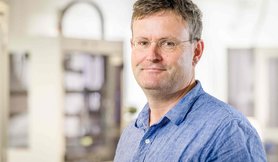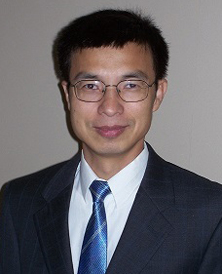
Dr. Xianchang Li serves as Professor in the Department of Mechanical Engineering at Lamar University, where he leads research in computational thermal-fluid sciences. His work bridges fundamental heat transfer and combustion principles with critical environmental applications. Ph.D. in Mechanical Engineering, Clemson University (1999) M.S. in Thermal Engineering, Tsinghua University B.S. in Thermal Engineering, Tsinghua University Dr. Li's research focuses on three interconnected domains: gas turbine thermal management (notably backward-injection film cooling and mist-assisted techniques), industrial flare emissions optimization, and hydrodynamic water quality modeling. His gas turbine work has demonstrated up to 40% more uniform cooling coverage through innovative backward injection methods, while his flare research develops high-fidelity CFD models to simultaneously minimize black carbon and VOC emissions. The water quality modeling investigates urban stormwater systems using wireless sensor networks and hydrodynamic simulations to improve sustainability. His publication record shows consistent output in top journals like Journal of Heat Transfer , ASCE Journal of Irrigation and Drainage Engineering , and Journal of the Air & Waste Management Association , with recent work emphasizing emission reduction and sustainable water management. Lamar University Merit Award (2009) Dr. Li maintains active collaborations with Chemical Engineering (Drs. Chen and Lou), Civil Engineering (Drs. Lin and Qian), and Chemistry (Dr. Martin) faculty at Lamar University. His research group has secured funding from NSF, TCEQ, and industry partners to support 25+ graduate students across thermal-fluid, combustion, and environmental projects. Current students investigate ammonia co-firing emissions, earth pipe heat transfer, and spray cooling optimization. The research group operates advanced CFD simulation capabilities and experimental facilities for thermal-fluid investigations, with recent projects including gas turbine combustor LES modeling, mercury flux chamber design, and solar chimney ventilation systems.