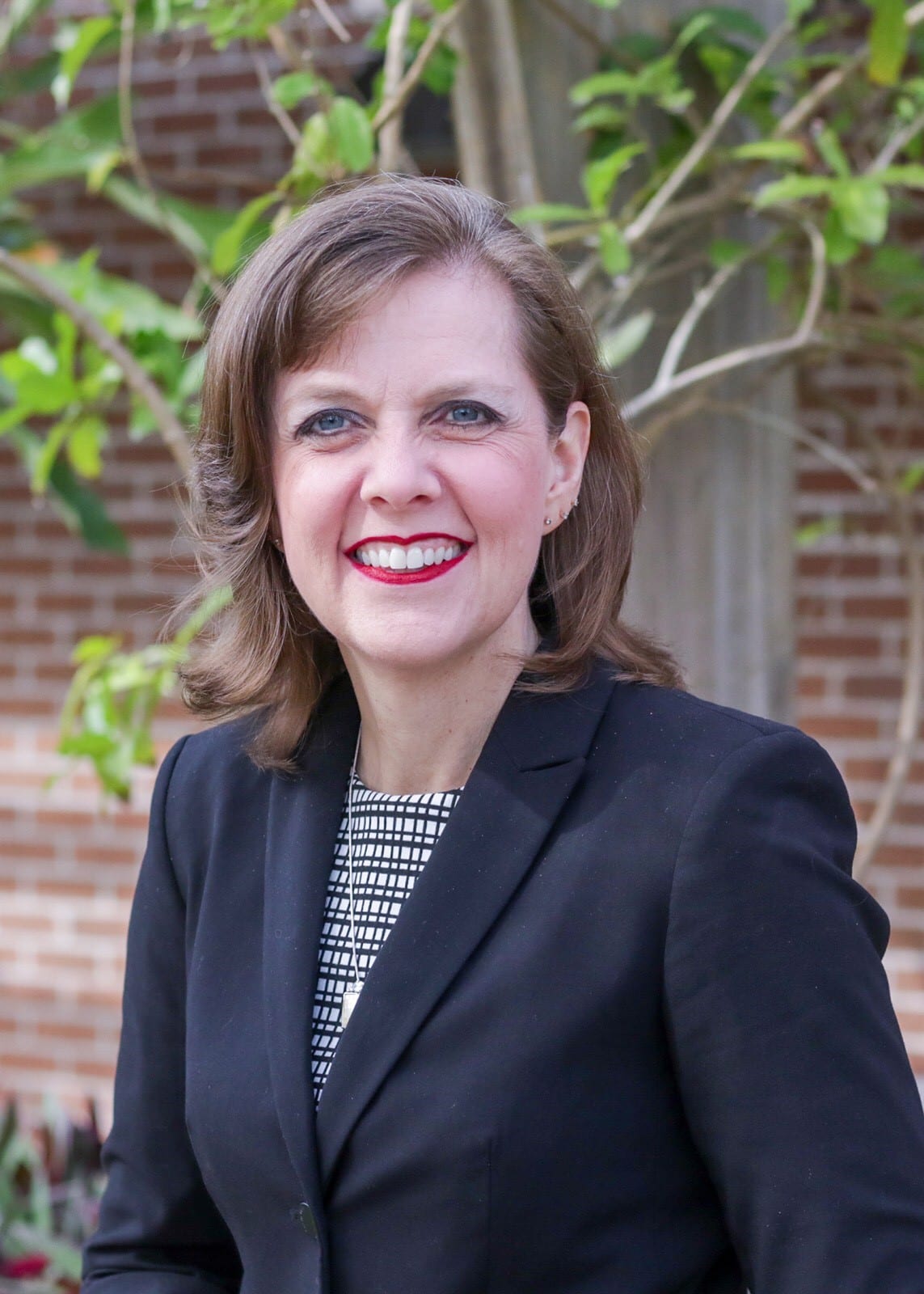
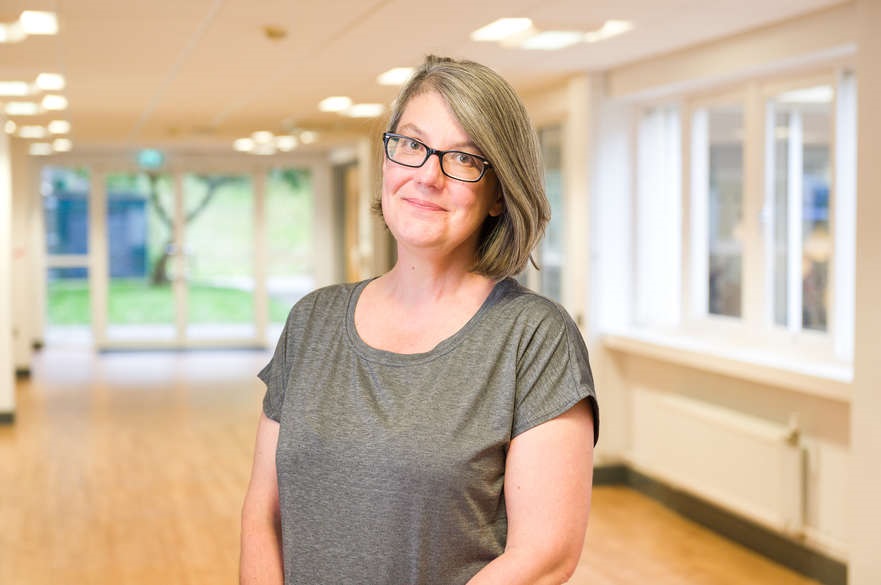
Janay B. Sander is a Professor of Educational Psychology and Director of the PhD in School Psychology program at Ball State University's Teachers College since 2012. She is a licensed psychologist in Indiana, specializing in intersections between emotional, behavioral, and academic concerns in youth, particularly those involved with juvenile justice systems. Her research focuses on evidence-based interventions to reduce educational disparities, using ecological systems frameworks and strengths-based methodologies. She has led school-level and systemic consultation projects, emphasizing equity in mental health services and behavioral outcomes. Recent publications highlight collaboration models for social-emotional learning, multicultural competence in consultation, and juvenile justice reform. She secured a National Institute of Justice grant (2016-2018) for reading interventions and behavioral outcomes in at-risk youth. Professional roles include American Psychological Association Commissioner (2020-2025) and Director of the Ball State University Internship Consortium in School Psychology (since 2013).
Mozziyar Etemadi, MD, PhD, is an Assistant Professor at Northwestern University, holding dual appointments in the Feinberg School of Medicine (Department of Anesthesiology) and the Mccormick School of Engineering . His research focuses on integrating artificial intelligence with wearable technology to address critical challenges in clinical care, particularly in cardiology, gastroenterology, and maternal health. He leads projects in the Institute for Augmented Intelligence in Medicine and Northwestern University Clinical and Translational Sciences Institute (NUCATS) . **Education**: BS and MS from Stanford University (2008–2009); PhD and MD from University of California, San Francisco (2013–2016). Postdoctoral training included Computer Science at UC Berkeley (2014) and Anesthesiology residency at Northwestern (2021). Board-certified in Anesthesiology. **Research**: Develops AI-driven tools for non-invasive monitoring (e.g., wearable sensors for heart failure, pulmonary pressure estimation) and diagnostic systems in radiology and gastroenterology. Key areas include reducing racial bias in clinical AI, improving radiologist efficiency, and global health applications like fetal ultrasound in low-resource settings. **Awards**: Notable recognitions include Forbes 30 Under 30 in Science (2011) , CIMIT Prize for Primary Care Innovation (2012) , and a Best Paper Award at EICS (2015) . **Industry Ties**: Collaborates with Cardiosense and other entities, focusing on translational AI solutions for clinical challenges. His work balances academic innovation with real-world healthcare impact.
Andrew F. Heckler is a Professor and Vice Chair for Administration in the Department of Physics at The Ohio State University, within the College of Arts and Sciences. He holds a B.S. in Physics from Ohio State (1986) and a Ph.D. in Physics from the University of Washington (1994). His research focuses on Physics Education Research and Astrophysics/Cosmology, emphasizing cognitive processes in STEM learning, assessment methodology, and educational equity. Key areas include student response time analysis, mastery-based learning, and curriculum design. He leads initiatives in digital education tools, such as online vector practice platforms and equitable assessment instruments. His work explores how self-efficacy and social comparison impact academic performance, particularly in physics courses. Heckler has developed frameworks to improve graduate-level physics instruction, addressing misconceptions in quantum mechanics and materials science. Publications highlight analysis of procrastination patterns, pandemic-era digital divides, and the role of concreteness in educational examples. His research bridges educational psychology with physics pedagogy, aiming to enhance student success through evidence-based interventions. He actively contributes to national projects like QuSTEAM, advancing quantum information science education.
Ingrid Söchting is a Clinical Professor and Director of the UBC Psychology Clinic, affiliated with the University of British Columbia. She holds a PhD from Simon Fraser University (1996) and specializes in cognitive behavioral therapy (CBT) and interpersonal therapy (IPT) for depression and anxiety disorders. PhD, Simon Fraser University, 1996 Her clinical research focuses on evaluating outcomes of CBT and IPT group therapies, particularly for Asian immigrants. Key areas include patient expectations, predictors of therapeutic success, dropout rates, alexithymia's impact on outcomes, and competency standards for OCD CBT. She also explores bridging science and practice in psychotherapy. Recent publications investigate CBT standards for OCD, virtual group therapy, and psychometric tools for child psychology. Her work spans collaborations with international researchers and contributions to group therapy frameworks. Scientific awards include certification as a Canadian-CBT therapist and a Certified Group Therapist by the American Group Psychotherapy Association. She coordinates UBC's CBT program for psychiatry residents and teaches CBT/IPT to psychology and psychiatry trainees. The UBC Psychology Clinic, where she directs, serves as a hub for clinical practice and research.
Vanessa Kind is an Honorary Professor in the School of Education and Durham CELLS (Centre for Ethics and Law in the Life Sciences) at Durham University. She holds roles such as Deputy Head of Faculty in Social Sciences and Health, and has served as Director of the Science Learning Centre North East. Her career spans molecular biology, chemistry teaching, and academic leadership in international schools and universities. She earned her doctorate studying post-16 chemistry students' conceptual understanding and has contributed to science education policy globally. Education: Biochemistry degree and molecular biology work Doctorate in science education focusing on student conceptual development Research Interests: Vanessa’s work explores science teacher knowledge, pedagogical strategies, practical science education, and chemical education. She focuses on how teachers’ knowledge impacts student outcomes and contributes to international STEM education initiatives like Ethiopia’s pedagogy reforms and Gatsby Foundation-funded practical work studies. Key Achievements: ESRC-DFID funded Ethiopia STEM project British Academy Newton Mobility Grant for South Africa Wellcome Trust Award on stem cell research education Publications & Supervision: Over 20 journal articles and books, including Teaching Secondary How Science Works . Supervises PhD/EdD students in science education, teacher development, and conceptual change research.
Mariana K. Falconier is a Professor in the Department of Family Science at the University of Maryland, College Park, and Director of the Couple and Family Therapy Master's Program. She holds a PhD and MS in Family Studies from the University of Maryland, alongside a Licentiate in Psychology from the University of Buenos Aires. Her work integrates clinical practice with research on couple dynamics under chronic stress, particularly focusing on economic, immigration, medical, and minority stressors among marginalized groups such as low-income, Latine, and LGBTQ+ populations. Educations: PhD in Family Studies, University of Maryland, College Park (2005) Master’s in Marriage and Family Therapy (MFT), University of Maryland, College Park (2002) Licentiate in Psychology (equivalent to MA Psychology), University of Buenos Aires (1992) Research Interests: Dr. Falconier’s work centers on dyadic coping mechanisms, economic and immigration-related stress mitigation, and culturally adapted interventions for underserved populations. She has developed the evidence-based TOGETHER/JUNTOS en PAREJA program, which integrates relationship and financial education, funded over $11 million federally and adapted for Latine immigrant and LGBTQ+ couples. Her research emphasizes emotional co-regulation, intersectional stress frameworks, and program evaluation methodologies. Grants & Awards: Recipient of the National Council for Family Relations’ Excellence in Professional/Clinical Practice Award and the George F. Kramer Practitioner of the Year Award. Over $11 million in federal grants have supported her program development and evaluation efforts. Teaching & Leadership: Taught nationally and globally in multicultural MFT, couple therapy, and post-modern approaches. Directed the Virginia Tech Center for Family Services (2008-2016) and the MFT Master’s Program (2017-2018). Currently teaches courses on gender/ethnicity in family services, couple therapy, and clinical supervision. International Impact: Collaborations in Switzerland, Romania, Italy, Hungary, Pakistan, and Chile. Presented at the Vatican City on family stress and coping for Pope Francis and the Pontifical Academy of Social Sciences. Editor of Couples Coping with Stress: A Cross-Cultural Perspective (2016) and co-author of Treatment Plans and Interventions in Couple Therapy (2024). Labs & Teams: Active in the Center for Healthy Families and the Department of Family Science’s interdisciplinary initiatives.
Prof. Kira Weber is an Assistant Professor at the University of Hamburg 's Faculty of Education . Her research focuses on AI-driven feedback systems in education, teacher professional development, classroom management, and educational technology adoption. She leads studies analyzing the impact of prompt engineering on AI feedback quality and investigates how teacher educators' AI literacy influences pedagogical practices. Her work bridges educational psychology with technological innovation, emphasizing video-based interventions and peer feedback mechanisms. Her research explores topics such as the role of self-efficacy beliefs in AI tool adoption among student teachers, the effects of expert feedback on pre-service teachers' competencies, and the influence of socioeconomic factors on teacher professional development needs. She has published extensively on professional vision measurement, reflective practice in teacher training, and digital tools for feedback quality enhancement. Recent studies include analyses of LLMs in educational feedback (2025), mixed-methods investigations of teacher educators' AI literacy (2024), and longitudinal studies on peer feedback expertise development (2022–2023). Her work consistently emphasizes practical applications of research in teacher training programs and classroom settings. Prof. Weber's academic contributions span over 30 peer-reviewed articles since 2017, covering domains from self-concept measurement in primary education to cutting-edge AI applications. She is affiliated with the University of Hamburg's Faculty of Education , contributing to both research and pedagogical innovation.
Helen Swaby is a Senior Lecturer in Counselling and Psychotherapy at the University of Derby's College of Health, Psychology and Social Care. Her research focuses on forensic psychology, sexual offender treatment, clinical ethics, and mental health policy. She has published extensively on topics including barriers to help-seeking among sex offenders, stigma management for minor-attracted persons, and pharmacological interventions for hypersexuality. Her work spans multiple disciplines, integrating clinical practice with criminological insights. Key areas of interest include: Therapeutic approaches for high-risk offenders Stigma reduction in healthcare contexts Pharmacological treatment efficacy in correctional settings Families coping with life-limiting child illnesses Psychotherapy training challenges Swaby's recent research highlights innovative interventions like Circles of Support and Accountability programs. Her studies often employ mixed-methods approaches, combining qualitative insights with quantitative analysis to address complex issues in offender rehabilitation and mental health service delivery. Her publications demonstrate a commitment to evidence-based practice, with particular attention to vulnerable populations including transgender offenders and minor-attracted persons. She has contributed to policy discussions around desistance strategies and community reintegration programs.
Priscila M Tamplain is an Associate Professor and Associate Chair for Undergraduate Programs in the Department of Kinesiology at The University of Texas at Arlington (UTA). She holds a PhD in Motor Neuroscience from Texas A&M University and has expertise in developmental motor disorders, particularly Developmental Coordination Disorder (DCD). Her work bridges motor development, neurodevelopmental conditions, and clinical interventions. Education: PhD (Motor Neuroscience, Texas A&M, 2011), MS (Motor Behavior, Universidade Federal do Paraná, 2006), BS (Physical Education, Universidade Federal do Paraná, 2004). She completed certifications in Effective Instruction (ACUE, 2021) and Family Engagement in Research (McMaster University, 2023). Research interests focus on motor development in neurodivergent populations, including DCD and autism spectrum disorder (ASD), with emphasis on diagnostic frameworks, intervention efficacy, and psychosocial impacts. She explores motor-cognitive interactions, tool use, and environmental influences on motor skills. Her recent articles analyze motor behavior in neurodivergent children, social media narratives of lived experiences, and transcranial stimulation for ASD. She has secured grants totaling over $1M, including studies on DCD-ASD overlap and eHealth interventions for mental health. Awards: Early Career Distinguished Scholar (NASPSPA), NASPSPA Excellence in Research (CONHI), Halverson Motor Development Award. Service: Chair of American Kinesiology Association, Editorial Board member for Human Movement Science, and leadership roles in ISRA-DCD and I-MDRC. Advising: Supervised 11+ graduate students in research areas like DCD-CAS associations and motor intervention efficacy. Her lab investigates motor behavior through interdisciplinary approaches, emphasizing translational research to improve clinical practices and public health strategies.
Dr. Zhini Zeng is an Associate Professor of Chinese and Co-Director of the University of Mississippi Chinese Language Flagship Program. She is affiliated with the Department of Modern Languages within the College of Liberal Arts. Her research focuses on language pedagogy, applied linguistics, and sociolinguistics with emphasis on digital-age language learning and professional communication. Dr. Zeng holds a B.A. from Shanghai International Studies University (2009), and M.A. (2011) and Ph.D. (2015) in East Asian Studies from The Ohio State University. She is a certified ACTFL OPI Tester for Mandarin Chinese. Her scholarly work explores innovative curriculum design, third-space theory in language education, and online community-based learning. Recent publications include studies on rhetorical awareness in advanced language writing and cross-cultural communication dynamics in professional settings. Recipient of 2015 NFMLTA/NCOLCTL Research Award 2012 Cheng and Tsui Professional Development Award recipient Teaching responsibilities include advanced Chinese language courses and supervision of the Flagship Program's immersive language training initiatives.
Lina Gyllencreutz is an Associate Professor at Umeå University's Department of Nursing in Örnsköldsvik. Her research focuses on emergency medicine, disaster preparedness, and prehospital care, with particular emphasis on mass casualty incidents, chemical incidents, and tunnel safety protocols. She actively contributes to interdisciplinary emergency training programs and has published extensively on simulation-based learning and first responder decision-making. Research Interests: Dr. Gyllencreutz specializes in Emergency medical response Disaster preparedness Mass casualty incident management Chemical incident protocols Tunnel safety training Simulation-based education Publications Trends (2023-2025): Recent work demonstrates a strong focus on improving first responder capabilities through technology-enhanced training, developing assessment tools for disaster preparedness, and analyzing multi-agency collaboration in complex emergency scenarios. Key themes include tunnel incident decision-making, chemical incident response, and mixed reality training applications. Collaborative Networks: Dr. Gyllencreutz regularly collaborates with Umeå University's Department of Diagnostics and Intervention, Center of Disaster Medicine, and international researchers from institutions like Oslo University and Australian safety organizations.
Kimberly Renk is a Professor in the Department of Psychology at the University of Central Florida and a Licensed Psychologist (PY6771). She directs the Understanding Children and Families Lab and founded the Young Children and Families Research Clinic. Specializing in Infant Mental Health, her research examines: Parent-child relationships in high-risk contexts (substance abuse, trauma) Intergenerational transmission of attachment patterns Evidence-based interventions for traumatized young children She implements trauma-informed therapies including: Circle of Security-Parenting Child-Parent Psychotherapy Community partnerships include collaborations with Florida Association of Infant Mental Health, Nemours Children's Hospital, and child welfare systems. Dr. Renk earned her PhD from University of South Florida and completed specialized Infant Mental Health fellowship training at LSU Health Sciences Center.
Dr Florence Gabriel is an Enterprise Fellow at UniSA Education Futures, University of South Australia, with expertise in education policy, mathematics curriculum design, and learning analytics. She leads research initiatives addressing self-regulated learning, STEM equity, and student wellbeing in primary and secondary education. Her academic roles include Research Degree Supervisor and involvement with the Centre for Change and Complexity in Learning (C3L). She has received significant funding including a $491k grant from the Commonwealth Department of Employment and Workplace Relations for gender equity initiatives in STEM. Florence’s work spans global education frameworks (OECD Learning Compass 2030), primary school interventions (self-regulated learning trials), and wellbeing screening tools (WEC project). She collaborates internationally on topics like climate education and algorithmic decision-making trustworthiness. Her research emphasizes actionable solutions through mixed-methods approaches, linking educational theory to practical classroom strategies. Notable projects include reducing mathematics anxiety through enquiry-based learning and developing scalable interventions for academic success.
Clare Wood is a Professor in the School of Social Sciences at Nottingham Trent University, where she directs the Centre for Research in Language, Education and Developmental Inequalities and serves as Impact Lead for the Department of Psychology. Her work bridges developmental psychology, educational practice, and technology, with a focus on literacy development, speech rhythm, and children’s wellbeing. She holds a BA (Hons) in Social Psychology from the University of Kent (1993) and a PhD from the University of Bristol (1997). Research interests include early literacy interventions, speech prosody’s role in reading, and the impact of digital tools on learning. Notable projects include the MAST movement-storytelling intervention, evaluations of the Rising Stars Reading Planet program, and investigations into pandemic effects on children’s wellbeing. She has led Nuffield Foundation-funded studies and collaborated with organizations like the National Literacy Trust and Save the Children. Key achievements include the British Psychology Society’s Excellence in Teaching Award and the International Reading Association’s Literacy Research Fellowship. Awards also recognize her contributions to understanding text messaging’s impact on literacy and her work on children’s legal capability through the EU-funded FORTITUDE project. Her advisory roles span educational and policy initiatives, including evaluations of Small Steps Big Changes (language development) and the impact of book gifting programs. She has secured funding from the British Academy, Leverhulme Trust, and Education Endowment Foundation, among others. Current projects include feasibility trials of MAST in reception classrooms and a Nuffield-funded study on pandemic impacts on academic attainment and wellbeing. Her research emphasizes translating academic insights into practical tools for educators and policymakers, such as prosody-training resources in reading schemes and wellbeing assessment frameworks.
Swapna Gottipati is a Full-time Associate Professor of Information Systems (Education) and Associate Dean (Undergraduate Education) at the School of Computing and Information Systems , Singapore Management University . Holding a PhD from SMU (2014) , she specializes in text analytics, education technology, and digital business. Current focus areas: Artificial Intelligence, Data Science, Technology-Enhanced Learning Interdisciplinary applications: Health Informatics, Social Media Analytics Research Interests span text analytics, opinion mining, curriculum analytics, and digital transformation. She applies machine learning and data mining to educational systems, business processes, and health domains. Scientific Contributions: 2016 Best Paper Award (AIS SIG-ED) 2016 MOE TRF Grant 2017-2020 Conference Best Paper Nominations 2013 Best Paper Finalist (CIKM) Academic Leadership includes: Director of Undergraduate Education Co-developer of SMU-X pedagogy Founder of MyCompetencies mobile platform Organizer of curriculum analytics workshops Grant Projects include the Learning Analytics on Qualitative Student Feedback system (MOE TRF 2016) and ICDL-funded digital literacy studies. She has delivered 12+ invited talks on digital transformation in education and industry.