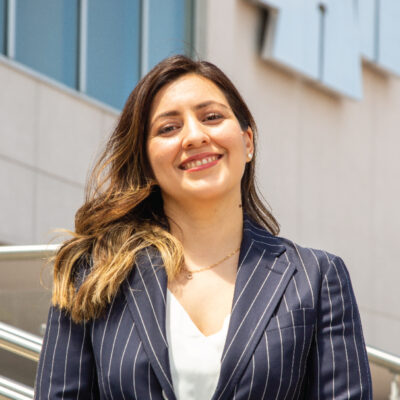
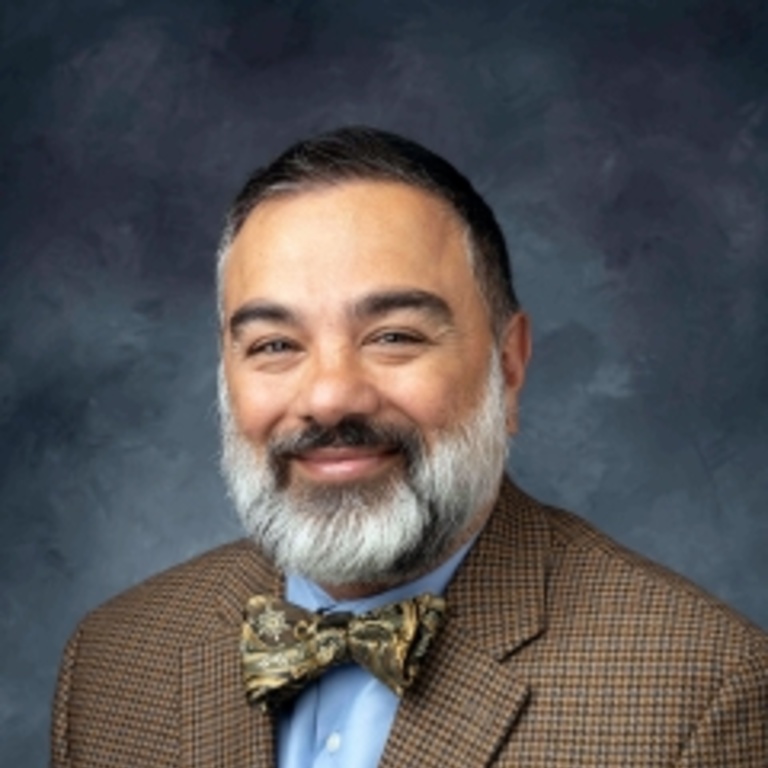
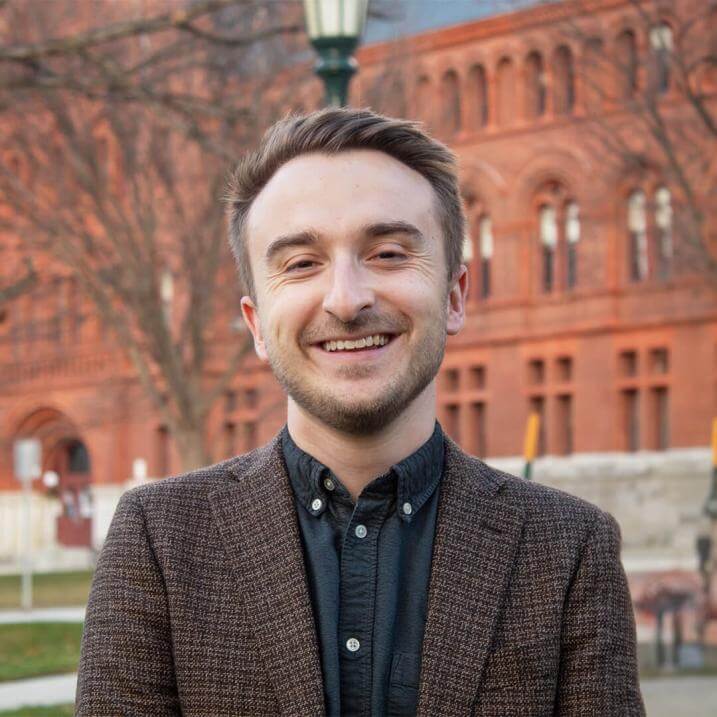
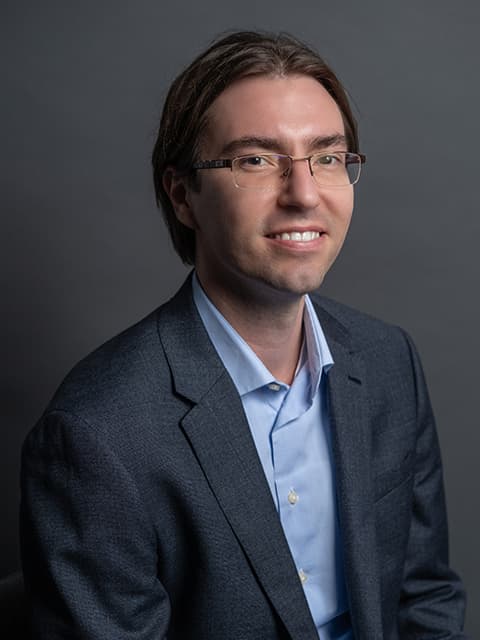
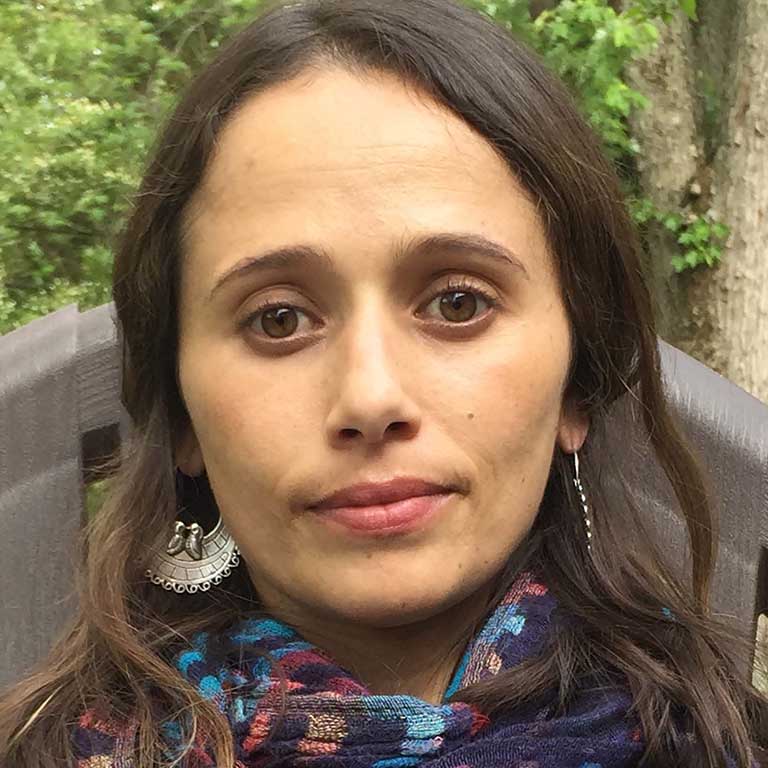
Ivalu Katajavaara Seidler is a public health researcher affiliated with the University of Southern Denmark and the Center for Public Health in Greenland . She holds a Master of Science in Public Health from the University of Copenhagen and completed her PhD thesis in 2024 on suicide risk patterns in Greenland. Her work focuses on Mental Health , Adverse Childhood Experiences , and Substance Abuse in Arctic and Indigenous populations, with over 19 research outputs including peer-reviewed articles, reports, and book chapters. Education : MScPH in Public Health (University of Copenhagen, 2016) Key Collaborations : Kræftens Bekæmpelse (2014-2017), University of Southern Denmark projects Her research combines systematic reviews , registry data analysis , and cultural adaptation of assessment tools like the ACEIG-scale. Recent media contributions highlight Greenland's suicide rates linked to Danish colonization (2025) and seasonal patterns in self-harm. She participates in projects such as Meeqqat Peqqissut (2024-2029), addressing health in Greenlandic youth. Scientific Awards : Recipient of an unspecified award in August 2016.
András Bödőcs is a Senior Lecturer at the Department of Archaeometry, Archaeological Heritage and Methodology, Institute of Archaeological Sciences, Eötvös Loránd University (ELTE), Budapest. His expertise spans Roman archaeology, GIS, and remote sensing, focusing on landscape transformation and infrastructure studies in Pannonia and beyond. Roman roads and regional administration in Northern Transdanubia Application of GIS in Roman land use analysis Non-destructive prospection techniques (magnetometry, aerial surveys) Iron Age settlement and cemetery studies His recent work emphasizes interdisciplinary approaches to reconstructing ancient landscapes. Collaborative projects include fieldwork in Iraq and transnational initiatives like the Interreg Iron Age Danube project. Scientific contributions include: Bolyai Research Fellowship (2012-2015) Pioneering methodologies for Roman road detection Leadership in geophysical surveys across Central Europe
Sarah DeMaris is a Senior Research Professor in the Department of World Languages and Cultures at Valparaiso University. Her work bridges medieval German literature, manuscript studies, and pedagogical innovation. She holds a Ph.D. from Princeton University (1983) and an A.B. from the University of Illinois (1977), with additional training as a Fulbright Research Scholar at Albert-Ludwigs-Universität (1977-78). Education: Ph.D. in Medieval German Studies, Princeton University (1983); A.B. in German, University of Illinois (1977); Fulbright Research Scholar, Albert-Ludwigs-Universität, Freiburg (1977-78). Her research focuses on medieval religious manuscripts, particularly Dominican nuns’ devotional texts and reform movements. She explores manuscript transmission, visual culture, and the interplay of gender and authority. Additionally, she integrates cultural pedagogy into language teaching, emphasizing environmental and historical themes, and collaborates on international engineering education initiatives. Her recent publications examine late medieval piety, manuscript annotations, and the Unterlinden Schwesternbuch. She has presented at prestigious conferences like the International Medieval Congress and the Medieval Academy of America, often linking manuscript studies to broader cultural discourses. Philip and Miriam Kapfer Endowed Faculty Research Award (2015-2016) Indiana Foreign Language Teacher of the Year (2011) German Language Teacher of the Year, Indiana Chapter (2011) National Certificate of Merit, American Association of Teachers of German (2004) Multiple Summer Research Awards and Grants from Valparaiso University, DAAD, and Fulbright Commission. DeMaris has held leadership roles in the American Association of Teachers of German (AATG) Indiana Chapter and the Indiana Foreign Language Teachers Association (IFLTA). She collaborates on interdisciplinary projects, including engineering education globalization.
Dr. Cristina Urías is an academic associated with Arkansas State University Querétaro. She was awarded the prestigious Premio Gastón García Cantú for her PhD dissertation focused on spatial legacy in the Northwest Mexican frontier, American colonization, and land speculation during 1854-1934. Her research spans interdisciplinary areas including Mexican history, colonialism, and transnational relations. Award: Premio Gastón García Cantú (INEHRM) Her work addresses historical dynamics of territorial transformation and U.S. influence in Mexico, bridging spatial analysis with socio-economic history. The prize-winning dissertation analyzes land speculation patterns and their impact on regional identity formation.
Dr. Sandra Dahlberg is a Professor of English at the University of Houston-Downtown (UHD), specializing in literature and cultural studies. She has taught courses such as Lit of pre-1800s Americas , Studies in Dramatic Literature , and Mexican-American Literature , while also contributing to first-year seminars. Education: PhD in English, University of Washington MA in English, University of Washington BA in English, University of Puget Sound Her research focuses on the impact of colonization and the Indian slave trade on Indigenous peoples of the Southeast, exemplified by her edited work The Travels of Richard Traunter (2022). Her scholarship bridges historical analysis with contemporary cultural criticism, emphasizing marginalized voices. The most recent articles and reviews examine poverty representations in early modern drama, colonial labor systems, comparative borderlands, and educational equity in Texas. Thematic trends include intersections of class, race, and colonialism in literature and policy. Scientific Awards Best Historical Materials, American Library Association (2024) Multiple Organized Research Grants from UHD and CTLE (2019, 2023) Dahlberg has served as Faculty Ombuds (2018-2024) and held leadership roles in committees like the Full Professors Group and Planning and Budget Development Committee. She mentors first-generation students and contributes to academic governance.
Stacie Burke is an Associate Professor in the Department of Anthropology at the Faculty of Arts, University of Manitoba, specializing in biocultural approaches to human biology. Her research examines how culturally-constructed stressors from historical transformations—including agricultural revolution, industrialization, colonization, and capitalism—impact health and disease through evolutionary and epidemiological frameworks. Her educational background includes a PhD in Biological Anthropology from the University of Toronto (1999), MSc (1993), and BSc (1992), followed by SSHRC post-doctoral fellowships at McMaster University (2000-2002) and University of Victoria (1999-2000), and a CPA in Narrative Medicine from Columbia University (2020). Dr. Burke's research spans biomedical anthropology , anthropological demography , and infectious disease studies , with emphasis on population-based case studies of health transitions. Her work critically analyzes how niche-based stressors from major societal shifts manifest in biological outcomes, particularly through tuberculosis epidemiology, reproductive health, and microevolutionary processes. Analysis of her publications (2003-2024) reveals consistent focus on historical epidemiology of tuberculosis across diverse contexts (Gibraltar, Toronto, Nova Scotia), evolving toward contemporary issues like autism and hypoxia. Key themes include architecture of medical practice, occupational health, and biocultural analysis of stressors, demonstrating interdisciplinary integration of anthropology, history, and public health. Her scholarly contributions have been recognized with: 2020 J.J. Talman Award (Ontario Historical Society) for Building Resistance: Children, Tuberculosis, and the Toronto Sanatorium 2019 Toronto Book Awards longlist for the same monograph 2007 Outstanding Achievement Award (Faculty of Arts, University of Manitoba) Dr. Burke actively mentors graduate students (accepting Master's and PhD candidates) and teaches courses including ANTH 1210 (Human Origins), ANTH 2240 (Plagues and People), and ANTH 4860/7930 (Biomedical Anthropology). Her research program demonstrates sustained commitment to analyzing health-disease dynamics through historical and biocultural lenses, with significant contributions to understanding tuberculosis across temporal and spatial contexts.
Tyler Jo Smith is a Professor in the Department of Art at the University of Virginia, specializing in Classical Archaeology and ancient Greek figure-decorated pottery. She serves as Lab Director and Director of Academic Programs for the Caesarea Coastal Archaeology Project, and co-directs the project’s fieldschool in Israel. Smith also leads the 3D-GV cohort, dedicated to digitizing Greek vases at the Fralin Museum, and co-founded Kerameikos.org, an open data initiative for Athenian pottery. Her academic leadership includes directing UVA’s Interdisciplinary Archaeology Program (2011-17, 2019-present) and coordinating the Mediterranean Archaeology PhD program. She was awarded the Z Society Distinguished Faculty Award in 2022 and held the Elizabeth A. Whitehead Professorship at the American School of Classical Studies at Athens (2018-2019). Research Interests: Smith's work bridges the visual and material culture of ancient Greece with performance theory, ritual studies, and digital archaeology. She investigates the representation of animals in religious contexts, the art and archaeology of alcohol, and contextual readings of Greek pottery. Her fieldwork spans excavations in Turkey, Crete, Chios, Thebes, and Sicily. She focuses on how Greek art communicates spectacle, gaze, and ritual, with a strong emphasis on pedagogy and the ethics of teaching sensitive material like death and human remains. Recent Publications: Her articles examine sacrificial iconography (2024), digital preservation (2024), and trends in Greek art scholarship (2023). She explores dance in vase-painting (2020), mythic storytelling (2014), and colonial cultural exchange (2013), often integrating material culture with interdisciplinary frameworks. Scientific Awards: Z Society Distinguished Faculty Award (2022) Elizabeth A. Whitehead Professor (2018-2019) Advising and Grants: Smith directs graduate programs in Mediterranean archaeology and has secured funding from the NEH for digital projects. She mentors students in Classical archaeology, though specific students are not listed. Labs and Teams: She leads the 3D-GV cohort at the Fralin Museum and co-directs the Caesarea Coastal Archaeology Project in Israel, focusing on fieldwork and academic training.
Bruce Ayati is a Professor in the Department of Mathematics at the University of Iowa, with a secondary appointment in the Department of Orthopedics & Rehabilitation and an affiliate role in the Applied Mathematical and Computational Sciences program. His research bridges computational mathematics and biological systems, focusing on modeling multicellular processes such as osteoarthritis, bone remodeling, microbial biofilms, and gut microbiota interactions. He holds a PhD from the University of Chicago and has contributed extensively to interdisciplinary research, collaborating across disciplines to address complex biomedical questions. His work emphasizes the development of innovative numerical methods for solving partial differential equations in biological contexts. Ayati’s research interests include mathematical biology, dynamical systems, and computational mathematics. His recent studies explore the interplay between mechanical forces and cellular responses in cartilage damage, microbial interactions in the gut, and the pathophysiology of multiple myeloma-induced bone disease. His computational frameworks integrate spatial and temporal scales to model complex biological systems. His publications highlight advancements in simulating bone remodeling, cytokine dynamics in cartilage lesions, and bacterial swarm colony development. Collaborative projects with clinicians and experimentalists drive translational efforts toward medical interventions for musculoskeletal disorders and oncological conditions. Ayati’s academic contributions extend to teaching and mentoring, though specific advisee details are not provided here. His lab focuses on computationally intensive modeling, leveraging numerical analysis to tackle challenges in translational medicine and systems biology.
Jay Rajiva is a Professor in the Department of English at Georgia State University's College of Arts & Sciences. He holds a Ph.D. from the University of Toronto. His research focuses on postcolonial and global Anglophone literature, trauma theory, and phenomenology, with particular attention to South Asian and South African literary responses to historical violence. He is currently completing Postcolonial Parabola: Literature, Tactility, and the Ethics of Representing Trauma , exploring how postcolonial texts ethically engage collective trauma through tactile reading experiences. His next project, Hollow Phenomenology , examines how postcolonial subjects transform marginalization into ethical potential using Glissant’s philosophy. Rajiva teaches courses on postcolonial literature, world literature, and modern British fiction, emphasizing creative engagement with literature’s representation of lived experience. His recent scholarship includes explorations of animist frameworks in trauma narratives, migrant experiences in Edwidge Danticat’s work, and intertextual dynamics in Caribbean and postcolonial contexts. His writing spans critical essays on authors like Coetzee, Rushdie, and Ishiguro, as well as theoretical engagements with trauma aesthetics and postcolonial ethics.
Alexander Clayton is an Assistant Professor of Global Environmental History at the University of Vermont (UVM), affiliated with the College of Arts and Sciences and the Department of History. Prior to his U.S. tenure, he held roles including Assistant Curator of Theatre and Performance at London’s Victoria and Albert Museum and completed advanced studies at the Royal College of Art (MA in History of Design) and the University of St Andrews (undergraduate History). He earned his PhD in History from the University of Michigan in 2024. His research bridges environmental history, the history of science, and public humanities. Central to his work is examining how colonial histories shape contemporary environmental dynamics through the lens of animals, plants, and microbes. His current book project, *The Living Animal: Menageries and the Nature of Empire*, explores the global trade and display of animal life within the British Empire, highlighting intersections of colonization, Indigenous knowledge, and slave trade labor networks. This work critiques imperial exploitation of living organisms while emphasizing agency in non-human actors. Clayton’s scholarship has been recognized with the World History Association’s Graduate Student Paper Prize (2023) and History of Science Society’s Nathan Reingold Prize (2022). His research has secured fellowships from over 20 institutions, including the McNeil Center for Early American Studies (2023–24), American Historical Association, and Royal Society. His teaching integrates museum methodologies, tasking students with creating exhibits and analyzing material culture to contextualize historical narratives. Future projects include a second book on mimicry, camouflage, and creativity in nature, stemming from his 2022 essay on animal intelligence displays. Clayton’s interdisciplinary approach fosters dialogue between academic research and public engagement, challenging conventional boundaries between human and non-human histories.
Stefan Nikolic is a Lecturer in Economics at Loughborough Business School since September 2023. Previously, he worked at Bocconi University (Italy) and held postdoctoral positions at the University of Groningen (Netherlands). He holds a PhD in Economics from the University of York (2017) and an MSc in Economic History from LSE (2012). His research focuses on spatial inequalities in economic performance, combining historical data with modern econometric methods. He co-directs the Centre for South-East European Economic History. Education: PhD Economics (York), MSc Economic History (LSE), BSc Economics (Belgrade Banking Academy) Research specialties: Economic History of South-East Europe, Market Integration, Colonial Development Teaching: Economics for Business (Loughborough MBA), Economic History (Bocconi), Research Methods (Groningen) His research examines how historical processes like ethnic integration, colonization, and infrastructure development shape long-term economic outcomes. Notable projects analyze Yugoslavia's market formation, German settler impacts in Hungary, and railway effects in Habsburg Bosnia. He has presented at Harvard, MIT, LSE, and Cambridge, winning multiple teaching fellowships and research awards. Awards: VI Balkan Economic History Award (2019), Multiple R&R recognitions Service: Co-founder of WEast Initiative, Referee for 6 top journals
Quincy D. Newell is the Walcott-Bartlett Professor of Humanistic Studies and Chair of Religious Studies at Hamilton College. Her research examines racial, gender, and religious identity formation in the 19th-century American West. Primary research areas include Native American engagement with Catholicism during Spanish colonization, African American and Native American Mormons, and religious diversity in frontier societies. Newell teaches courses on American religions, Mormonism, religion in the American West, and theoretical approaches to religion.
Professor Lynley Wallis is an archaeologist at Griffith University, specializing in Australian Indigenous archaeology, frontier conflict studies, and cultural heritage management. She leads projects in Cape York Peninsula and has advanced knowledge of phytolith analysis and geophysical techniques applied to Indigenous sites. Her work includes re-dating Madjedbebe (65,000 years old), analyzing Native Mounted Police sites, and developing AI tools for rock art classification. Education : PhD in Archaeology, Australian National University (2001) Bachelor of Science (1st Class Honours), University of Western Australia (1994) Key Research Areas : Her research explores human-environment interactions, frontier conflict, and Indigenous cultural heritage. She pioneered phytolith analysis in northwest Australia and led the Madjedbebe chronology project. Current projects include digitizing rock art via machine learning and investigating colonial violence in Queensland. Grants & Awards : $3.97M ARC Linkage Project on Cape York rock art (2020–2025) Australian Learning and Teaching Council Citation (2009) for curriculum innovation Teaching & Leadership : Developed nationally recognized archaeology programs at Flinders University. Supervised 4 PhD, 4 MRes, and 19 Honours students. Active in professional roles like Co-Editor of Australian Archaeology and AACAI Executive. Labs & Collaborations : Griffith Centre for Social and Cultural Research. Partnerships with Indigenous communities, ANSTO, and multinational heritage consultancies.
Olimpia E. Rosenthal is an Associate Professor in the Department of Spanish and Portuguese at Indiana University Bloomington, within the College of Arts & Sciences. She specializes in colonial Latin American literary and cultural studies, with particular expertise in the intersections of race, gender, and power dynamics during the colonial period and their enduring legacies. Dr. Rosenthal earned her Ph.D. and M.A. in Spanish and Portuguese from the University of Arizona in 2013 and 2008 respectively, and her B.A. in Latin American Studies from the same institution in 2004. She maintains interdisciplinary affiliations with the American Studies program, Critical Race Postcolonial Studies Program, and Renaissance Studies Program at Indiana University. As a leading scholar of colonialism in Latin America, Dr. Rosenthal employs a comparative and interdisciplinary methodology examining textual, visual, and archival sources from Spanish and Portuguese America with case studies from Mexico, Peru, and Brazil. Her research focuses on material practices of domination, the long-term effects of colonization, and resistance to imperial power. Her monograph Race, Sex, and Segregation in Colonial Latin America (Routledge, 2022) demonstrates how segregationist policies influenced the material reorganization of colonial space, shaped racialization processes, and contributed to the politicization of reproductive sex. Dr. Rosenthal's scholarly publications reveal consistent engagement with critical race theory, postcolonial thought, and the historicization of concepts like mestizaje and purity of blood. Her work traces the genealogy of decolonial thought through figures like Guamán Poma while examining how racialized sex was politicized in colonial administrative practices, particularly in Portuguese America. Her significant contributions to the field have been recognized through numerous prestigious awards: MIND Award for Impactful and MIND-Blowing Teaching (2022) Mellon Foundation Sawyer Seminar Award as Co-PI (2022) Department of Spanish & Portuguese GSAC Outstanding Mentor Award (2018) Multiple research grants from Antipode Foundation and College Arts & Humanities Institute Dr. Rosenthal teaches a range of courses from introductory surveys to advanced seminars on 'Theories of Hybridity and Mestizaje,' 'Latin American (Post)Coloniality,' and 'Race, Biopolitics & Colonialism.' She is currently developing an edited volume on Visual Culture in Colonial Latin America, analyzing Miguel Det's graphic novel Novísima corónica i mal gobierno , and participating in the comparative project 'Global Slaveries, Fugitivity, and the Afterlives of Unfreedom: Interconnections in Comparative Dialogue.'
Dr. Amit Srivastava is a Senior Lecturer at the School of Architecture and Civil Engineering within the Faculty of Sciences, Engineering and Technology at the University of Adelaide. He serves as Director (India) for the Centre of Asian and Middle Eastern Architecture (CAMEA), focusing on transnational architectural histories and material exchanges across the Indian Ocean world. His research explores colonial/postcolonial Indian construction histories, South-South cooperation, and Australian architects' impacts on Asian material culture. Education: Trained and practiced as an architect in India (specific academic qualifications not detailed). Research interests include transnational material exchanges, colonial architectural legacies, and contemporary urban development challenges. He currently supervises Masters and PhD candidates in architecture-related disciplines. Publications highlight architectural historiography, environmental engineering applications, and futuristic topics like lunar architecture. His work bridges historical analysis with modern technological innovations, emphasizing global architectural dialogues. He has contributed to editorial boards, including as Consulting Editor for Architectural Theory Review since 2013. Supervision and Grants: Actively involved in mentoring postgraduate researchers, though specific grant details are not provided. Collaborates internationally through CAMEA, fostering architectural knowledge exchange between Asia, the Middle East, and Australia. Labs/Teams: Lead India operations for CAMEA, coordinating regional research initiatives and exhibitions on South Asian modernisms.