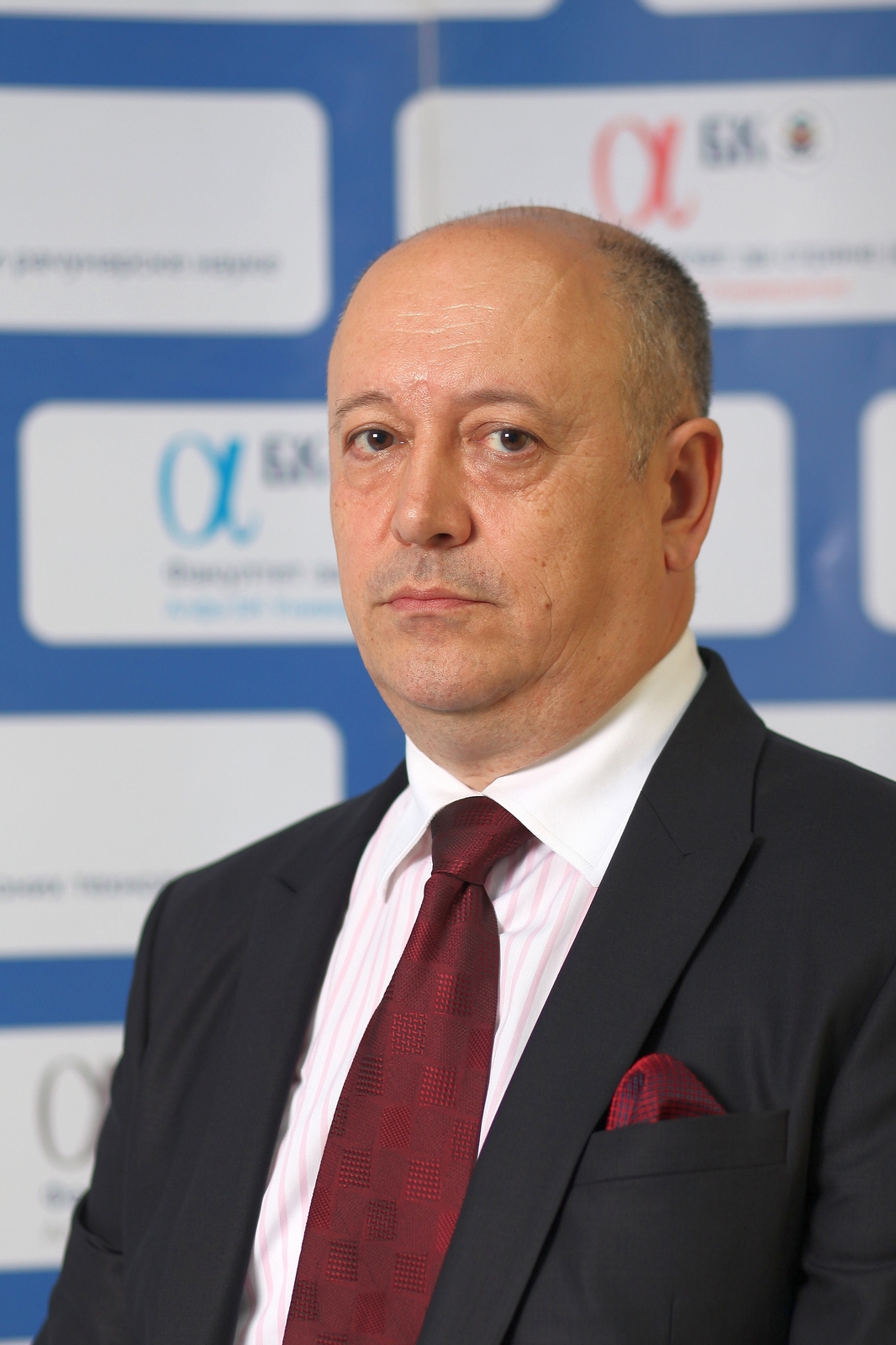
Prof. Dr. Saša Adamović is a faculty member at Singidunum University in Belgrade, Serbia, affiliated with the Faculty of Informatics and Computer Science . His academic career spans over 15 years with a focus on Cryptography, Biometrics, and IoT Security . Born October 15, 1985, in Drvar, Bosnia and Herzegovina PhD in Advanced Security Systems (2013), Master’s in Contemporary Information Technologies (2008), and Bachelor’s in Business Informatics (all from Singidunum University) His research interests include: Biometric Cryptography Blockchain for IoT Security Catalan Number Applications in Cryptography Machine Learning in Security Systems Virtualization and Energy Efficiency Steganography and Forensics Recent publications highlight trends in: IoT Healthcare Security (2022) Biometric Authentication (2021) Combinatorial Cryptography (2021) Machine Learning for Diabetes Prediction (2021) Distance Learning Security (2023) He served as one of five Serbian representatives in the Open World program (USA) for expert exchange in technology development.
Dr. Jelena S. Starčević is an Associate Professor at the Department of Social and Human Sciences, Faculty of Pedagogical Sciences, University of Kragujevac in Jagodina. She specializes in educational psychology with a focus on intercultural competence, inclusive education, and emotional development. She conducts research on teacher education, Roma community educational challenges, and child rights implementation. She serves as the President of the Commission for Ethical Assessment of Psychological Research at the University of Kragujevac. Her academic career includes a PhD in Psychology in Educational Work (2019) from the University of Kragujevac, following previous degrees from the Faculty of Philosophy in Belgrade. She teaches courses such as 'Intercultural Psychology', 'Inclusive Education – Theory and Practice', and 'Modern Concepts of Learning and Teaching' at undergraduate, master's, and doctoral levels. Her research explores themes like intercultural effectiveness among educators, preschool inclusion policies, and validation of psychological assessment tools. She actively participates in international projects like 'Positive Education' and domestic initiatives focused on professional competencies of young researchers. She implements programs for the Pestalozzi Foundation's Education for Child Rights in master's programs. Dr. Starčević's work emphasizes bridging theoretical frameworks with practical educational challenges, particularly in multicultural and inclusive settings. She has authored/co-authored over 20 peer-reviewed publications and frequently presents at national and international conferences.
Marko T. Milojkovic is a full professor at the Faculty of Electronics, University of Nis, leading the Department of Automation since 2022. He holds a PhD in Systems Management (2012), Master's in Automation (2008), and a Bachelor's in Computer Engineering & Informatics (2003), all from the same institution. His research focuses on adaptive control systems, neural networks, and dynamical systems modeling, with 27 papers in impact-factor journals. He currently heads the Laboratory for Modeling, Simulation and Systems Management and participates in 2 national and 2 international projects. Education: PhD: Systems Management (2012) MSc: Automation (2008) BSc: Computer Engineering & Informatics (2003) Research interests include neuro-fuzzy systems, MIMO system optimization, and endocrine neural networks applied to adaptive control. His publications demonstrate expertise in quasi-orthogonal filters, sliding mode control, and time-series forecasting. No scientific awards are explicitly mentioned, but his extensive project participation highlights active collaboration in control systems and automation. Prof. Milojkovic's work bridges theoretical modeling and practical applications, with recent emphasis on intelligent control systems and nonlinear dynamics. His laboratory facilitates interdisciplinary projects addressing complex system management challenges.
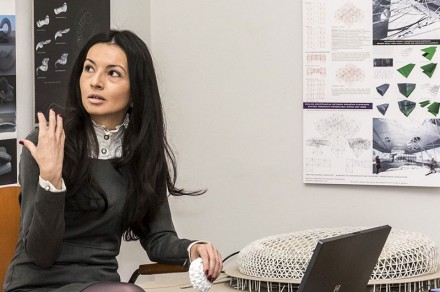
Jelena Milošević is an Assistant Professor at the Department of Architectural Technologies, University of Belgrade - Faculty of Architecture. She serves as Vice-Dean for Teaching and Student Affairs and specializes in structural systems, spatial structures, morphology, and optimization of structures. Her research combines computational design, digital fabrication, and sustainable construction methods. Education: Graduated in Architecture, University of Belgrade (2006) Enrolled in doctoral studies (2009) Her research focuses on generative design approaches for architectural structures, performance-based optimization, and applications of 3D printing in construction. She investigates biomimetic pattern applications in structural design and develops parametric workflows for complex geometries. Recent work explores circular economy potentials in architectural production through recycled materials and additive manufacturing. Publications demonstrate a strong focus on digital fabrication technologies in architectural education and practice. Recent articles examine hybrid pedagogical approaches integrating 3D printing technologies into design studios, material efficiency in additive-manufactured structural systems, and sustainable applications of recycled materials in digital fabrication. She has participated in research projects including 'Development and application of scientific methods in design and construction of highly economical structural systems using new technologies' funded by the Ministry of Education, Science and Technological Development of Serbia.
Mirjana Perišić is an Associate Professor at Singidunum University and a Senior Research Associate at the Institute of Physics, University of Belgrade. She holds a PhD in Experimental Physics (2016) from the University of Belgrade. Her expertise spans environmental physics and chemistry, with a focus on atmospheric science, air pollution monitoring, and AI-driven environmental data analysis. She has contributed to projects like Horizon 2020 and COST Actions, addressing air quality, climate change, and environmental health. Her research employs statistical modeling, machine learning, and receptor modeling techniques. Education: High School in Čačak (Natural Sciences), BSc in General Physics (University of Belgrade, 1998–2007), PhD in Atomic Physics (University of Belgrade, 2007–2016). Research Interests: Her work emphasizes AI applications in environmental fate analysis, particulate matter (PM) dynamics, polycyclic aromatic hydrocarbons (PAHs), and volatile organic compounds (VOCs). She explores the impact of environmental settings on indoor/outdoor pollution and leverages explainable machine learning (e.g., XGBoost, SHAP) for predictive modeling. Publications: Over 10 peer-reviewed articles since 2014, focusing on air pollution sources, climate change implications, and AI-based frameworks for environmental monitoring. Recent work addresses toluene behavior, PAHs distribution, and post-pandemic pollution trends. Awards: None explicitly mentioned in the text. Advising/Grants: No advising students listed. Grants and policy contributions include air quality management plans and collaborative projects with international partners. Labs/Teams: Active in the Institute of Physics, University of Belgrade, and interdisciplinary teams at Singidunum University focusing on environmental data science.
Nataša Stanišić is an academic at Singidunum University affiliated with the Faculty of Business and Department of Management and Business. She holds a Doctorate in Management and Business (2021), Master's in Financial Management from Lincoln University (2006-2008), and a Bachelor's in English Language and Literature from Faculty of Philology (1999-2005). Her research focuses on hospitality industry dynamics, employee motivation frameworks, sustainable tourism development, and human resource management strategies. Key research interests include applying behavioral theories in workplace environments, analyzing labor market trends in Serbia, and exploring blended learning methodologies in tertiary education. She has contributed to studies on employer branding in IT sectors and the impact of pandemic disruptions on tourism industries. Her recent work highlights innovations in HR practices for agile cultures, competency modeling in hospitality sectors, and evaluating translation technologies. She has co-authored over 15 papers presented at international conferences like Sinteza and SITCON, addressing topics ranging from slow tourism concepts to collaborative web development pedagogy. No scientific awards are listed in the provided materials. Her academic contributions include curriculum development for business education and cross-disciplinary research bridging technology adoption with organizational behavior.
Gordana Rendulić-Davidović is a Teaching Assistant in the Department of Industrial Management at the Faculty of Technical Sciences Čačak, University of Kragujevac, Serbia. Since 2013 she has been continuously engaged in teaching and research, specialising in management, entrepreneurship, human resources and quality management. Education: BSc in Industrial Management, Faculty of Technical Sciences Čačak, University of Kragujevac (2012) – GPA 9.67/10, Valedictorian & “Dr. Milivoje Urošević” Award MSc in Management, Faculty of Technical Sciences Čačak, University of Kragujevac (2015) – GPA 9.83/10 PhD studies in Engineering Management, Technical Faculty “Mihajlo Pupin”, Zrenjanin (ongoing) Research Interests: Her work spans quality management systems , entrepreneurship and innovation ecosystems , human resource development , business ethics and higher-education pedagogy . She frequently applies tools such as QFD, TQM and innovation management frameworks to both industrial and educational contexts, with a strong emphasis on small and medium-sized enterprises in Serbia. Publication Trends: From 2014 to 2025 she has co-authored more than 25 peer-reviewed papers. Early work concentrated on quality planning, training management and HRM; recent outputs pivot toward entrepreneurial finance, start-up ecosystems, CSR and the impact of global disruptions (COVID-19, EU policy) on education and business. Awards & Recognition: Award for the highest-ranked student on entrance exam (2007/08) Award for the best third-year student (2009/10) “Dr. Milivoje Urošević” Award for the best graduate student (2011/12) Teaching & Academic Service: She delivers over fifteen courses including Organizational Behavior , Entrepreneurship and Employment , Human Resource Management , Business Ethics and Globalization and Competitiveness . Active in conference organisation and peer review, she also mentors undergraduate theses and participates in Erasmus mobility promotion.
Luis Barba is a Research Fellow in the Machine Learning and Optimization group at École Polytechnique Fédérale de Lausanne (EPFL), Switzerland, working under Professor Martin Jaggi. He completed his PhD through a cotutelle program between Carleton University, Ottawa and Université Libre de Bruxelles, Brussels, supervised by Professors Stefan Langerman, Jit Bose, Pat Morin and Vida Dujmović. Prior to that, he earned his master's degree at Universidad Nacional Autónoma de México (UNAM) under Professor Jorge Urrutia. Dr. Barba's research spans computational geometry, algorithms, graph theory, and more recently, machine learning and optimization. His work addresses fundamental problems in geometric data structures, Voronoi diagrams, graph coloring, and distributed learning. He has made significant contributions to understanding time-space trade-offs in geometric algorithms and developing efficient methods for problems like geodesic Voronoi diagrams and dynamic graph coloring. Dr. Barba's publication record demonstrates a clear evolution from theoretical computational geometry to practical applications in machine learning. Early in his career, he focused on fundamental geometric problems including linear-time algorithms for geodesic Voronoi diagrams and efficient convex hull computation in polygonal domains with obstacles. More recently, his work has shifted toward machine learning, where he has developed novel optimization techniques for distributed and federated learning settings, including implicit gradient alignment methods and multilayer lookahead approaches. Dr. Barba has published extensively in top-tier conferences and journals including Symposium on Computational Geometry (SoCG), Canadian Conference on Computational Geometry (CCCG), Algorithmica, and Discrete and Computational Geometry. His collaborative work demonstrates strong connections across the computational geometry and algorithms communities, with frequent co-authorship with leading researchers in these fields. Throughout his career, Dr. Barba has maintained a consistent focus on algorithmic efficiency and computational complexity, whether addressing theoretical geometric problems or practical machine learning challenges. His work exemplifies how deep theoretical insights can inform practical computational approaches across different domains of computer science.
Dr. Vladimir M. Ciric is a Full Professor at the Faculty of Electronics, University of Niš, leading the Department of Computer Science. He directs the Laboratory for Advanced Security Systems and specializes in network security, distributed systems, and high-performance computing. His research spans intrusion detection systems, cloud computing cost modeling, and parallel algorithm design. Notable contributions include Hadoop-based network intrusion detection techniques and tiered programming pedagogy. He received the Cisco Excellence Award (2015) for network technology education. Dr. Ciric teaches courses on network design, cloud computing, and security while maintaining research collaborations in cybersecurity and distributed architectures. His recent work focuses on extreme class imbalance in intrusion datasets and sparse matrix optimizations.
Branislav Antonić, PhD, is a Lecturer at the University of Belgrade’s Faculty of Architecture, Department of Urbanism. He earned his PhD in 2018 and has been a Teaching Assistant since 2012, following prior work as a scientific researcher fellow (2012–2017). His research focuses on urban planning, housing’s urban dimensions, and small-town development. Dr. Antonić has contributed to over 20 urban plans, spatial studies, and architectural projects, often as a researcher in international initiatives like the DANUrB+ and BOPALiM programs. He has authored over 60 scientific papers and articles in SCI-list journals, receiving awards for research projects and monograph chapters. Research Projects: Children & Family-Friendly Urban Co-Design (2022, Project Manager) COST Action BOPALiM (2024–2028, Member) DANUrB+ (2020–2022, Communication Manager) CREATIVE DANUBE (2019–2022, Technical Secretary) Awards: Award for International Research Project Best Monograph Chapter Award Academic Contributions: Dr. Antonić has organized conferences, workshops, and exhibitions, and is active in professional associations. His work bridges urban planning with cultural tourism, emphasizing sustainable solutions for small cities and towns.
Dragan Živković is an Assistant Professor at Alfa BK University, affiliated with the Faculty of Finance, Banking and Auditing and other faculties including the Faculty of Sports Management and Faculty of Foreign Languages. His research focuses on cybersecurity in hospitality, sustainable tourism, circular economy applications, and strategic management during crises. He has published widely on topics such as post-pandemic tourism recovery, market positioning of Belgrade hotels, and the impact of foreign direct investments on economic growth. His academic work integrates interdisciplinary approaches, addressing challenges in tourism economics, nanotechnology applications in crisis management, and environmental sustainability. Notable contributions include analyzing cybersecurity vulnerabilities in the hotel industry and exploring the role of learning organizations in overcoming sectoral crises. Dragan’s articles highlight trends such as the need for resilient business models in hospitality, leveraging nanotechnology for strategic adaptation, and optimizing public finance management during pandemics. His research underscores the importance of innovation and sustainability in driving economic recovery and competitiveness.
Ivana Brdar is a researcher and academic faculty member at Singidunum University’s Faculty of Tourism and Hospitality Management in Belgrade, Serbia. She holds a PhD in Tourism Management (2016), building on prior Master’s (2009) and Bachelor’s (2008) degrees from the same institution. Her work focuses on tourism marketing, consumer behavior, digital transformation, and sustainable practices. She has authored/co-authored books like Marketing u sportu (2019) and Ponašanje i zaštita potrošača u turizmu (2018), and contributed to over 50 peer-reviewed articles and conference papers. Key research areas include neuromarketing applications in food industries, social media’s impact on tourism decisions, and the role of digitalization in education. She has led projects such as the Master Plan for Sustainable Rural Tourism Development in Serbia (2010) and collaborated on initiatives like SIGMUS (2013). Her recent work explores wellness tourism, eco-conscious consumer behavior, and the implications of online learning during the pandemic. Education Background: Bachelor of Tourism Management at Singidunum University (2004–2008) Master of Business Systems in Tourism & Hospitality at Singidunum University (2008–2009) Doctorate in Tourism Management at Singidunum University (2010–2016) High School Diploma in Tourism Technician from High School of Tourism and Hospitality (2000–2004) Research Interests: Marketing strategies in tourism and food industries Consumer psychology and behavior analysis Impact of digital technologies on education and hospitality Sustainable tourism practices and regional branding Grants & Projects: Master Plan for Sustainable Rural Tourism Development in Serbia (2010) SIGMUS (Strengthening Student Role in University Governance, 2013) Labs/Teams: Active in Singidunum University’s research initiatives, including the Singidunum University Institute for applied studies and conference organization (e.g., SITCON, Sinteza). Her work frequently intersects with industry partners in Serbia’s tourism and hospitality sectors.
Prof. Dr. Miloš Ž Papić is a Full Professor at the Faculty of Technical Sciences Čačak , University of Kragujevac, Serbia. He serves as a City Councilor in Čačak for Education, Science, and Culture, spearheading initiatives like the Čačak Culture Strategy (2023-2027) and launching the Čačak Culture Portal . Education: BSc, MSc, and PhD in Industrial/Engineering Management from University of Kragujevac institutions Research Interests: Information Systems, Environmental Management, Entrepreneurial Education, and Multi-Criteria Decision Making (MCDM) His research spans interdisciplinary applications of IT in education, tourism, and environmental protection, with recent work on: Digital dialogue systems in classrooms Soil contamination analysis using MCDM Cheating behavior in academic settings Beer tourism market analysis AI in educational outcomes prediction Scientific Contributions include over 90 publications, with 15 recent articles focusing on IT integration in tourism (2023-2024), municipal waste management (2024), and educational technologies (2022). Notable collaborations involve partnerships with Dušan Garabinović on tourism analytics and Marija Blagojević on environmental modeling.
Natasa Milosevic serves as an Assistant at the Department of Social Work, Faculty of Philosophy, University of Novi Sad since 2023, while completing her doctoral studies at the University of Belgrade. Her academic trajectory spans social policy, social work practice, and migration governance within Southeast European contexts. Her educational foundation includes: Diploma in Social Policy and Social Work from University of Belgrade (thesis: "Prevention of Youth Alcoholism") Systemic Family Therapy certification from Belgrade's Institute of Mental Health Master's in Social Policy from University of Belgrade (thesis: "Mapping Social Welfare Services in Belgrade") Ongoing PhD in Political Science - Social Policy at University of Belgrade (dissertation: "Policy of Integration of Refugees in Greece, 2015-2022") Research focuses on international social policy frameworks, anti-oppressive social work methodologies, and migration dynamics, with particular emphasis on refugee integration, social exclusion mechanisms, and crisis response systems. Her scholarship critically examines power structures in welfare institutions while analyzing comparative social models across the Balkans and EU. Recent publications (2019-2024) reveal evolving research trajectories: early work centered on Serbian migration policy and social exclusion, shifting toward humanitarian crises (Ukraine war, Israeli-Palestinian conflict) and vulnerable populations (Roma communities, mental health patients). Methodologically, she employs discourse analysis, policy evaluation, and comparative frameworks with strong emphasis on anti-oppressive praxis and EU governance structures. No scientific awards were documented in the source material. As a Horizon 2020 MIGREC project researcher, she examines migration governance while teaching core social work courses including Supervision and Evaluation, Group Work, and Leadership. Her practical experience at Belgrade's City Center for Social Work (2008-2023) informs her applied research on domestic violence prevention and elderly services. Current work centers on EU humanitarian response systems through the MIGREC consortium, connecting her doctoral research on Greek refugee integration with contemporary crisis management frameworks.
Marina Marjanovic is a faculty member at Singidunum University in Belgrade, Serbia, affiliated with the Faculty of Informatics and Computing. She maintains an active research profile with numerous publications spanning machine learning, computer vision, and signal processing applications. Her work demonstrates strong interdisciplinary connections between theoretical AI development and practical implementations in healthcare, security, and digital government services. Dr. Marjanovic earned her Doctoral degree in Signals and Systems from Universidad Politecnica de Madrid in 2007, following a Master's degree in the same field from the same institution in 2005. Her foundational education includes basic studies in Telecommunications at the Faculty of Electrical Engineering in Belgrade, and secondary education at the third Belgrade high school with a focus on natural sciences. This strong technical background has enabled her transition from traditional signal processing to contemporary AI research. Her research interests center around machine learning and computer vision, with significant contributions to emotion recognition, sign language processing, and explainable AI. She has demonstrated particular expertise in developing robust AI models that address real-world challenges such as demographic bias in age estimation systems, vulnerability to adversarial attacks in deep learning models, and accurate medical diagnostics through imaging analysis. Her recent work shows increasing focus on healthcare applications, security implications of AI systems, and making AI more transparent and interpretable. Analysis of her publication trajectory reveals a clear evolution from signal processing foundations toward contemporary AI applications. Her recent work (2022-2024) shows strong emphasis on healthcare AI, security applications, and explainability, often combining traditional machine learning approaches with novel optimization techniques. She frequently collaborates with international researchers across multiple institutions, demonstrating the global reach of her work. Dr. Marjanovic has established herself as a productive researcher with consistent publication output across reputable journals and conferences including IEEE transactions, Springer publications, and specialized AI conferences. Her collaborative approach is evident through her extensive co-authorship network spanning multiple Serbian and international institutions. She actively contributes to the academic community through conference organization (including Sinteza conferences) and participation in research projects at Singidunum University's research institutes. Her work bridges theoretical advancements with practical implementations across multiple domains, demonstrating versatility and impact across the AI research landscape.