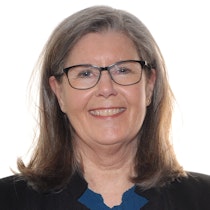
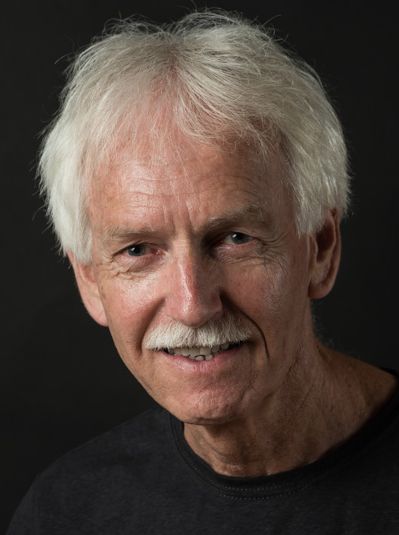
Karl-Johan Malmberg is a Professor at the University of Oslo , affiliated with the Faculty of Medicine and leading research at the Radiumhospitalet . His work focuses on Natural Killer (NK) cell biology and precision immunotherapy , with a strong emphasis on cancer immunology , HLA-KIR interactions , and cell therapy engineering . He collaborates extensively with the PRIMA - Precision Immunotherapy Alliance and contributes to translational research in hematopoietic stem cell transplantation and solid tumor immunotherapy . Expert in NK cell education and functional reprogramming Develops allogeneic cell therapies for leukemia and multiple myeloma Pioneers single-cell and high-dimensional analysis of immune compartments Recent publications highlight innovations in NK cell migration inhibition via GPR56, NKG2A/C switch receptors , and nanoparticle-enhanced NK cell activation . His team drives computational tools like MetaGate for cytometry data integration. Key affiliations include the Research Council of Norway Center of Excellence (PRIMA) , with a focus on cell therapy translation and tumor immune microenvironment mapping .
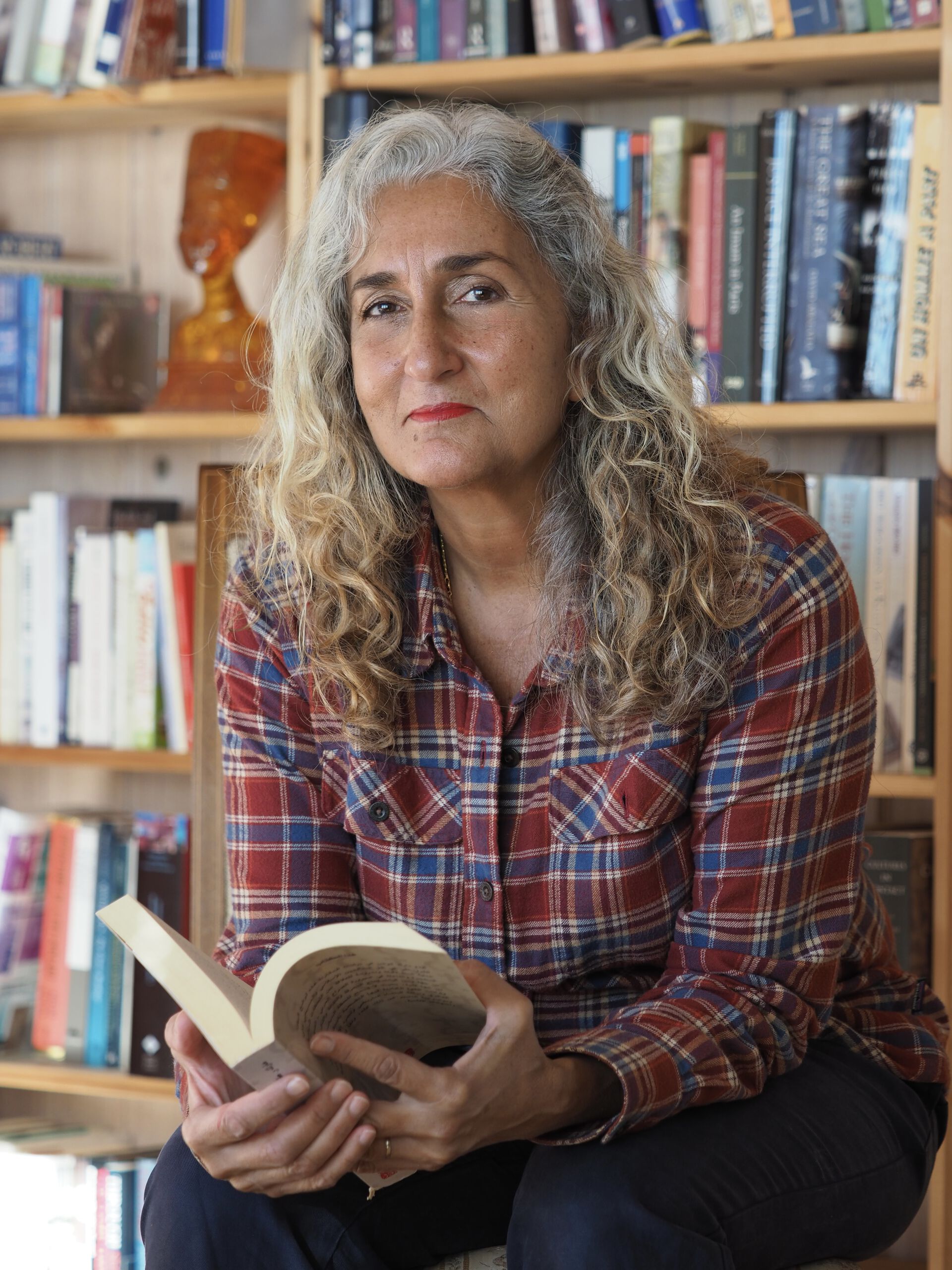
Nefissa Naguib is a Professor of Social Anthropology at the University of Oslo, affiliated with the Department of Social Anthropology. Her research focuses on culturally complex societies across the Mediterranean, Middle East, Brazil, Norway, and Spain. Key thematic interests include global moments, migrations, humanitarianism, history, maritime lifeworlds, food systems, and Islamic heritage. Regional expertise spans the Mediterranean, Middle East, and transoceanic connections. Her monographs include Nurturing Masculinities: Men, Food and Family in Contemporary Egypt and co-edited volumes such as Reconceiving Muslim Men: Love and Marriage, Family and Care in Precarious Times , which challenge traditional gender norms in Arab societies. Current projects bridge anthropology, history, and global migration through initiatives like Out of the Blue (human and material migrations), We Have Given you Gardens (botany and Islamic heritage), and Feeling the Heat (environmental labor in the Middle East). Nefissa leads the Feeling the Heat project and collaborates with the CMI Centre on Law and Social Transformation. She has directed programs like the Arab World Program and Cultures and Politics of Faith. Courses taught include advanced topics in food anthropology, Middle Eastern studies, and gender kinship. Research Highlights: Pioneering work on water as an agent of history, humanitarian practices in the Arctic, and transnational gender dynamics. Awards: Al Jazeera documentary nomination (2010) for War, Women, Welfare in Jerusalem . Grants: Research Council of Norway, Norwegian Ministry of Foreign Affairs, and Norwegian Program for Development grants. Labs/Teams: Core member of YALLA (politics and aesthetics of everyday life in MENA) and leads interdisciplinary collaborations.
Aino Lilja Petterson is a Research Fellow in Social Psychology at the University of Kent, Canterbury. Her academic journey includes a PhD in Social Psychology (2021), an MSc in Political Psychology (2017), and a BSc in Psychology (2016), all from the University of Kent. She currently leads the Leverhulme-funded project ‘Downplaying difference? How ethnic minorities navigate discrimination in Norway’ and is affiliated with the Culture, Society & Behavior (CSB) Lab. Her research focuses on political ideology, intergroup relations, and moral judgments, with a particular emphasis on how societal structures influence attitudes toward marginalized groups. She has taught courses in social psychology, personality theory, and research methodology at the University of Kent, including modules on gender relations and ambivalent sexism. Aino’s work bridges political psychology and cultural psychology, addressing topics such as discrimination, gender inequality, and the psychological impacts of climate fiction. Her recent grants include funding for studies on moral judgments about gene-editing and gender relations post-#MeToo. She has received several awards, including the Else Frenkel-Brunswik Prize for academic excellence and the Best Research Talk Poster Prize. Her research outputs span social psychology journals and interdisciplinary handbooks, reflecting her expertise in diversity competence, climate action psychology, and feminist stereotypes. She collaborates with international teams, as seen in her 2023 multi-author study on feminist attitudes.
Helene Illeris is a Professor in Art Subject Pedagogy at the University of Agder (UiA), Department of Visual and Performing Arts. Her work focuses on art-based educational practices, environmental sustainability, and aesthetic learning processes in the Anthropocene. She leads research groups exploring art’s role in youth education and social relations, emphasizing performative and sensory approaches. Her research integrates a/r/tography and interdisciplinary methodologies to address ecological awareness, community engagement, and transformative education through art. Recent projects include studies on material practices (e.g., wool felting), landscape fieldwork, and border-crossing artistic methodologies. Publications highlight her contributions to art education theory, including co-editing the 2024 anthology *Art Subject Didactics as Artistic, Research-Based, and Attentive Teaching Practice*. Her work bridges art, ecology, and pedagogy, advocating for inclusive and socially responsive educational frameworks.
Jon Hovi is a Professor at the University of Oslo's Faculty of Social Sciences, Department of Political Science. His research focuses on international agreements, climate politics, and game theory. He is affiliated with the Institute of Social Research (ISV) and has contributed extensively to understanding climate governance challenges, including compliance mechanisms, treaty design, and the dynamics of international cooperation. Key research interests include the design and enforcement of international agreements, the effectiveness of the Paris Climate Agreement, and strategic behavior in international conflict. He leads the CLIMREC project examining green recovery spending during economic crises. His work bridges political science and environmental economics, emphasizing analytical rigor and policy relevance. Publications span journals like Global Environmental Politics, Climate Policy, and Environmental Research Letters. He has edited volumes on climate governance and serves on the editorial board of International Environmental Agreements . His recent work addresses climate ambition traps, green stimulus spending, and the role of minilateralism in climate action. He advises on climate policy and has collaborated with international institutions. His research often combines formal models with empirical analysis, offering insights into improving global environmental governance frameworks.
Hilde Sandvik is a Professor of History at the University of Oslo, affiliated with the Department of History within the Faculty of Humanities. Her research focuses on women's history, gender history, and the socio-political dynamics of early modern Norway (1500–1850). She examines topics such as legal frameworks, household economies, and the interplay between local communities and central governance. Her work explores themes like democratic theory, legal codification (e.g., the 1842 Norwegian Penal Code), and the historical development of political institutions. Notable projects include studies on Anders Sandøe Ørsted’s legal contributions and the role of gender in early modern Scandinavian political culture. She has authored or co-authored several books, including *Norsk historie 1350–1625* (1999) and *Demokratisk teori og historisk praksis* (2010). Current research includes the *Book of Things Project* and investigations into Nordic freedom of expression (1815–1900). Her academic contributions span scholarly articles, edited volumes, and collaborative research groups such as 'Democracy, Freedom and Boundaries' and 'Gendering the Nordic Past.'
Professor Bård Tronvoll is a prominent academic in marketing and business administration at the University of Innlandet, serving as Director of CREDS (Center for Research on Digitalization and Sustainability). He holds a professorship at Karlstad University's CTF - Center for Service Research and has been a visiting professor at HANKEN School of Economics. His research focuses on digitalization, sustainability, and service innovation, emphasizing value co-creation within service ecosystems. Tronvoll earned a doctorate in Business Administration from Karlstad University, alongside degrees from the University of Oslo, University of Essex, and BI Norwegian School of Business. Education: PhD in Business Administration (dr. ek.), Karlstad University MSc in Political Science (cand.polit), University of Oslo MA in Applied Statistics, University of Essex Bachelor of Business Administration, BI Norwegian School of Business Research Interests: Tronvoll explores digital transformation, service ecosystems, and sustainable business models. His work challenges traditional market concepts using social theories and employs mixed-methods research (qualitative interviews and quantitative surveys). Key themes include circular economy, service recovery, and institutional logics in resource integration. Publications & Projects: Tronvoll has over 60 publications in journals like Journal of Service Management and Marketing Theory , co-editing The Palgrave Handbook of Service Management . He leads projects such as CIRIS (Interregional Circularity in Scandinavia) and Smarter Greener Innovation (SGI) research groups. Professional Roles: Former Director of the Master's program in Business Management at Inland Norway University Past Rector of Oslo School of Marketing Board member in Norwegian companies
Domhnall Mitchell serves as Professor of Nineteenth-Century American Literature in the Department of Language and Literature at the Faculty of Humanities, Norwegian University of Science and Technology (NTNU). He has maintained a continuous academic appointment at NTNU since 1991 and participates in the Advisory Committee for the Study Programme in English. His scholarly career demonstrates sustained excellence in American literary studies with particular emphasis on textual scholarship and cultural translation. Mitchell was born in Belfast and raised in an Irish-speaking community on the Shaws Road. He earned both his BA and PhD from Trinity College Dublin before establishing his academic career in Norway. His educational background in Irish language and literature informs his approach to translation studies and cross-cultural analysis. His primary research expertise lies in nineteenth-century American literature, with exceptional specialization in Emily Dickinson's correspondence and poetry. Mitchell serves on the advisory board for the Emily Dickinson Archive, a major collaborative project organized by Harvard University that brings together manuscript resources from Houghton Library, Amherst College Library, and the Boston Public Library. His Dickinson scholarship focuses on manuscript analysis, chronological refinement, and historical context. Concurrently, he investigates the writing, reception, and translation of singer-songwriters including Leonard Cohen, Bob Dylan, and Joni Mitchell, examining how their work crosses cultural and linguistic boundaries. As a member of NTNU's Translating Cultures research group, he contributes to interdisciplinary dialogues about cultural transmission. Mitchell's publication record reveals three decades of scholarly productivity with remarkable consistency in Dickinson studies. His recent work (2021-2024) demonstrates continued innovation through discoveries of previously unknown Dickinson materials, refined chronologies, and expanded cultural contexts. His scholarship spans traditional literary analysis, meticulous manuscript studies, cultural reception theory, and translation methodology. He teaches across the curriculum from introductory courses on poetry and fiction to advanced seminars on the American Renaissance and Native American Literature, connecting his research directly to pedagogy. Supervised over 25 master's theses on diverse topics including gender studies in country music, transgender identities in young adult literature, Filipino diaspora literature, and literary gothicism External examiner for PhD committees in Canada, England, and Sweden Member of evaluation committees for academic promotions Active contributor to the Emily Dickinson International Society As both a textual scholar of Dickinson's manuscripts and an analyst of contemporary song translation, Mitchell bridges historical literary scholarship with current cultural analysis. His work exemplifies how meticulous attention to textual detail can illuminate broader cultural patterns across time and linguistic boundaries.
Holger Pötzsch is a Professor of Media and Documentation Science at the Department of Language and Culture, UiT The Arctic University of Norway. He leads the ENCODE research group and co-edits the Eludamos: Journal for Computer Game Culture . His work intersects media studies, game studies, and critical analysis of digital technologies. Research interests: Critical media literacies, war films/games, algorithmic governance, border studies, and AI ethics. Recent publications focus on ecocritical games, critical AI literacy, and ethical implications of immersive journalism. Collaborations: Kristine Jørgensen, Eva Christina Makaria Lentz, Therese Holt Hansen, and Emil Lundedal Hammar.
Åslaug Ommundsen is a Professor of Medieval Latin Philology at the University of Bergen's Department of Linguistic, Literary and Aesthetic Studies. She leads the Research Group for Medieval Philology and has been part of the Medieval Research Cluster's management group since its founding in 2018. Her research focuses on medieval manuscript fragments, liturgical practices, saints' cults, and monastic history, emphasizing Norway's integration into European cultural networks. She received the Bergen Research Foundation's Starting Grant (2012–2017) for her project on early Norwegian book culture. Ommundsen actively participates in Nordic and international collaborations, including the ERC Synergy Grant CODICUM (2025–2030). She teaches courses on Latin grammar and medieval Latin literature, integrating book history into her pedagogy. Her work spans over 100 publications, including co-edited volumes like Nordic Latin Manuscript Fragments (2017) and St. Sunniva (2021). Ommundsen engages the public through lectures, museum collaborations, and media appearances, notably organizing Bergen Medieval Week since 2018.
Siri Øyslebø Sørensen is a Professor and Head of the Center for Gender Research at the Norwegian University of Science and Technology (NTNU), where she is affiliated with the Department of Interdisciplinary Cultural Studies in the Faculty of Humanities. She also holds an adjunct position (professor II) at the University of Bergen, working with the GenderAct project. Her academic background spans sociology, gender studies, and technology and science studies (STS). Dr. Sørensen's research focuses on gender, power, and inequality across various domains including organizations, politics, and contemporary culture. She has conducted extensive research on gender equality and inclusion in academia, currently leading the KARMA project (2024-2026), which develops tools for qualitative mapping of diversity, funded by the Research Council of Norway. She is also involved in the BIAS project investigating how artificial intelligence in hiring processes affects inclusion and exclusion in working life. Her methodological expertise includes action research, qualitative interview studies, microphenomenology, situational analysis, and discourse and narrative analysis. Her scholarly work reveals consistent engagement with feminist theory, organizational sociology, and critical perspectives on diversity and inclusion. Through projects like "Mann ombord" with Trondheim Municipality, she explores masculinity as a social phenomenon, examining how norms of masculinity, power, and marginalization are produced. Her publications demonstrate expertise in gender equality policy, academic careers, organizational dynamics, and the intersection of technology with gender issues. Dr. Sørensen has served as editor of Tidsskrift for kjønnsforskning (2022-24) and book review editor of NORA – Nordic Journal of Feminist and Gender Research (2016-18). She has co-edited several academic anthologies including "Bodies, Symbols and Organizational Practice" (Routledge, 2018) and "Reproduction, gender and equality in modern Norway" (Fagbokforlaget, 2016), as well as a special issue of Gender Work and Organization (2021). She currently serves on the editorial board of the Journal of Organizational Sociology. She coordinates the research group for gender, equality and diversity at NTNU and is actively engaged in developing practical tools for improving gender balance in academic institutions. Her commitment to translating research into practice is further demonstrated through her ongoing collaboration with Trondheim Municipality and local health and welfare services on initiatives to prevent exclusion among young men.
Bjørn Magne Arntsen is a visual anthropologist and researcher at the Department of Social Sciences, UiT The Arctic University of Norway. His work integrates ethnographic filmmaking with long-term field studies on natural-resource use, fisheries governance, and forced migration around Lake Chad and in the Sahel. Research interests Arntsen’s core interests span visual anthropology, ethnographic film, natural-resource management, and fisheries. He explores how audiovisual methods can deepen anthropological understanding, particularly in poly-ethnic societies under environmental and political stress. He is an active member of the university’s Visual Anthropology research group and the Sahel on Sahel project, initiatives that investigate viability and crisis adaptation in northern and southern poly-ethnic communities. Publications trend Across 40+ outputs since 2000, his recent articles (2017-2023) foreground situated knowledge, observational cinema, and the socio-ecological impacts of management regimes on Lake Chad fisheries, often combining textual analysis with documentary film. Awards & funding No specific awards or major grants are listed in the supplied text; however, his continuous film production and editorial roles indicate ongoing external support. Advising & collaboration Arntsen regularly supervises master students in Visual Cultural Studies, as evidenced by co-edited film anthologies and premiere events at UiT. He collaborates with scholars in Cameroon, Mali, and Norway, and his works appear in English, French, and Norwegian, reflecting wide international engagement.
Hans Kristian Strandstuen Rustad is a Professor of Nordic Literature at the Department of Nordic and Classical Languages (ILN), University of Oslo. His research spans poetry studies, posthumanism, intermediality, digital literature, media ecology, and Nordic modernist poetry. He explores poetry as performative events, literature's relationship with non-human entities, and cross-media artistic constellations. Editor of Nordisk poesi journal Board member of INSL (International Network for the Study of Lyric) Co-coordinator of NORLYR (Nordic Modernist Lyric Network) His work interrogates how poetry manifests across analog/digital platforms, the ethical implications of posthumanism in literature, and the redefinition of traditional literary concepts in media ecology. Recent projects include studies of Instagram poetry, AI's impact on creativity, and lyrical responses to ecological crises. Rustad's publications from 2024–2017 examine Nordic poetry's evolution through digital platforms, intermedial experiments, and posthuman ethics. His edited volumes and journal articles address themes like audio-literary performance, ecological community in Björk's work, and political rap lyrics. He contributes to institutions such as CERCOP (Center for Contemporary Poetry), NORLYR, and INSL, and teaches courses on Nordic literary history, intermedial literature, and posthumanism. His research bridges cultural, technological, and environmental intersections in poetry.
Gro Trondalen is a Professor of Music Therapy at the Norwegian Academy of Music. She holds a PhD specializing in music therapy for young people with eating disorders and has expertise in the Bonny Method of Guided Imagery and Music (GIM). Her work spans clinical practice, education, and research, focusing on mental health, relational dynamics through music, and ethical considerations in therapy. Trondalen has led major academic programs including the Master’s and PhD programs in Music, and directed the Center for Research in Music and Health (CREMAH). Her research emphasizes music’s role in fostering relational healing, particularly for vulnerable populations. Notable projects include Sounding Relationship (1999–2004), exploring music therapy with anorexia patients, and Musicians and Health (2011–2015). She actively contributes to international bodies like the World Federation of Music Therapy and European Association for Music and Imagery. Trondalen has authored/co-authored 2 monographs, 6 edited books, and numerous articles across languages. Her recent work addresses ethical musicality and contemporary developmental psychology applications in therapy. She supervises master’s and PhD students while advocating for music therapy’s role in public health, including dementia care initiatives.
Professor Jakob Lothe is a distinguished scholar in English literature and narrative theory. He held the position of Professor of English Literature at the University of Oslo from 1993 to 2020 and previously served as Associate Professor of Comparative Literature at the University of Bergen (1987–1992). He has been a visiting scholar at institutions including St. John’s College, Oxford (1996–1997), Harvard University (2005), and the University of Cape Town (2010). His research focuses on narrative theory, ethics of storytelling, and Holocaust studies. Education and academic milestones include a Dr.philos. from the University of Bergen (1986) and fellowships at the Norwegian Academy of Science and Letters (1999) and the American Philosophical Society (2018). He has authored and edited over 50 books, including Narrative in Fiction and Film (Oxford UP, 2000) and Time’s Witnesses: Women’s Voices from the Holocaust (2017). His work explores narrative ethics, memory studies, and the intersection of literature and human rights. His research projects include the Nordic Network of Narrative Studies and Interpreting Violence: Narrative, Ethics and Hermeneutics. Notable publications address topics like Conrad’s narrative methods, Kafka’s ethical frameworks, and the role of literature in addressing historical trauma.




.jpg)

.jpg)