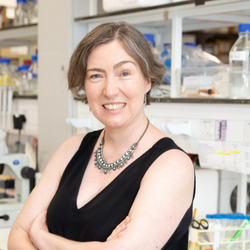
Dr. Emma Rawlins is a Professor at the University of Cambridge, affiliated with both the Cambridge Stem Cell Institute and the Gurdon Institute. Her research focuses on stem cell fate in the mammalian lung, with particular emphasis on understanding lung development and maintenance mechanisms. As principal investigator of the Rawlins Lab, she leads a team investigating the cellular and molecular controls of lung stem cell behavior. Dr. Rawlins' research interests center on lung development and homeostasis, with the long-term goal of inducing regeneration in diseased lungs. Her work combines human organoid technology with mouse genetics to understand stem cell behavior at the single-cell level. She has made significant contributions to understanding how stem cells in the developing and adult lungs know which type of daughter cell to make and when. Her laboratory has pioneered techniques for culturing human embryonic lung tips as organoids, enabling detailed study of human lung development. Her recent research publications demonstrate a strong focus on human fetal lung development, alveolar organoid modeling, surfactant protein maturation, and the mechanisms controlling lung stem cell behavior. This work has important implications for understanding and treating degenerative lung diseases such as Chronic Obstructive Pulmonary Disease. Dr. Rawlins collaborates extensively with other leading researchers at Cambridge including Kevin Chalut, Bertie Göttgens, Joo Hyeon-Lee, and Ben Simons. Her laboratory has developed important tools for genetic manipulation of human tissue-derived organoids, which have been shared through repositories like Addgene to advance research in the broader scientific community. The Rawlins Lab maintains an active research program studying lung development from embryonic stages through adult maintenance, with a particular focus on how stem cells maintain lung architecture throughout life. Her work addresses fundamental questions about how stem cells balance self-renewal with differentiation to maintain proper lung function, with implications for regenerative medicine approaches to lung disease.