Yanyan Zhang is a Professor and Director of the Department of Flavor Chemistry at the University of Hohenheim. Her research focuses on aroma characterization, natural flavor production through biotechnology, and sensory quality improvement in foods and beverages. Research utilizes advanced techniques including GC-MS-Olfactometry and SAFE extraction to identify key flavor compounds and their formation pathways. Current projects explore fungal fermentation for novel non-alcoholic beverages and valorization of agricultural byproducts. Awards include the DECHEMA Young Scientist Award and Nestlé Silver Award for Flavor Science. Zhang serves on editorial boards and leads international research collaborations in food biotechnology.
Prof. Dr.-Ing. Johannes Koke is a Professor of Mechanical Engineering, specializing in Process Engineering at Osnabrück University of Applied Sciences, Lingen Campus. He holds a Ph.D. in Engineering from RWTH Aachen University and has extensive experience in research and industry, focusing on thermal systems, fluid mechanics, and renewable energy solutions. Education: Ph.D. in Engineering (2000), RWTH Aachen University Master's in Mechanical Engineering (1995), RWTH Aachen University Bachelor's in Engineering (1994), Dartmouth College, USA Research Interests: His work centers on energy-efficient systems, solar thermal technology, fluid mechanics, and process engineering. Key areas include the design of nearly zero-energy buildings, optimization of solar thermal systems, and modeling of industrial processes. He emphasizes sustainable solutions for energy and material systems, with applications in beverage production, container architecture, and climate-adaptive design. Awards: 2002: Borchers-Plakette for outstanding doctoral thesis (RWTH Aachen) Teaching & Grants: He teaches modules on thermodynamics, fluid mechanics, and solar technology. His research has been supported by projects exploring energy-efficient container buildings and solar thermal integration in industries. Collaborations include institutions in South Africa, Sweden, and Oman. Labs & Teams: Active in the Faculty of Management, Culture, and Technology, he contributes to interdisciplinary projects on sustainable energy systems and process optimization.
HAWK University of Applied Sciences and Arts Hildesheim/Holzminden/GöttingenGermany
Prof. Stefan Holler is a Professor of Energy and Environmental Technology at the HAWK University of Applied Sciences and Arts, leading the Department of Sustainable Energy and Environmental Technology (NEUTec) within the Faculty of Resource Management. He specializes in sustainable energy systems, particularly climate-neutral heat supply and energy system transformation. His work focuses on decarbonizing district heating networks through renewable integration, thermal storage optimization, and waste heat utilization. As spokesperson for the Green Engineering and Ecosystems research focus, he drives interdisciplinary collaboration on energy transition challenges. Prof. Holler actively participates in national/international networks like the European DHC+ platform and North German Heat Research. He coordinates strategic energy research initiatives such as TEN.efzn (€58.3M program) and leads projects like InteGradeDH and HeatMineDH. His research group NEUTec develops applied solutions in energy technology, waste management, and environmental modeling, emphasizing practical industry partnerships. Notable projects include the REWARDHeat serious game for district heating education and the MEMPHIS framework for waste heat potential mapping. His contributions span over 30 peer-reviewed publications and funded research projects, reflecting expertise in energy policy, thermal systems, and sustainability strategies.
Dirk Volta is a Professor at the Department of Energy and Life Science, Flensburg University of Applied Sciences. His research focuses on energy technology, energy efficiency, and optimization of supply systems such as refrigeration, heating, and industrial processes. He teaches courses in Energy Sciences, including Heat and Mass Transfer, Refrigeration Technology, and Energy Efficiency of Supply Systems. Volta leads external projects, including conceptual design of cooling systems for the beverage industry, heat recovery in iron foundries, and legal compliance for supply systems in the chemical industry. He also develops standard calculation schemes for cold-water supply networks and manages a gas engine combined heat and power system project. His recent publications analyze energetic efficiency of gas separation technologies and exergetic evaluation of heat supply systems. While no scientific awards are listed, his work emphasizes practical applications of thermodynamics and energy optimization in industrial contexts. Advising and grants details are not explicitly mentioned, though his involvement in industry projects suggests active collaboration. No specific lab or team affiliations are detailed in the text.
Jacob Burns is a Research Fellow at the Institute for Medical Information Processing, Biometry and Epidemiology (IBE) at Ludwig Maximilian University of Munich (LMU), specializing in Evidence-Based Public Health. He has been a Research Associate with the Collaboration for Evidence-Based Healthcare and Public Health in Africa (CEBHA+) since 2017 and teaches in LMU's Master of Public Health and Epidemiology programs. Education: PhD in Epidemiology and Public Health, Ludwig Maximilian University of Munich (2013–present) Master of Science in Epidemiology, Ludwig Maximilian University of Munich (2010–2012) Bachelor of Science in Chemistry, University of Arkansas, USA (2006–2010) Burns' research centers on evidence-based public health methodology, with expertise in systematic reviews of complex interventions, evidence synthesis techniques, and evaluation of public health programs. His work emphasizes contextual factors in implementation and spans environmental health domains including air pollution, lead exposure, and sugar-sweetened beverage interventions. He develops innovative review methods such as harvest plots and gap analysis to bridge evidence and policy. His publication record since 2011 reveals consistent focus on methodological advancements in evidence synthesis, particularly for complex public health interventions. Key thematic clusters include environmental health interventions (air pollution, lead exposure), nutrition policy (sugar-sweetened beverages), and framework development for context-aware implementation. Burns frequently contributes to Cochrane reviews and collaborates internationally on health technology assessment projects. Burns has secured significant research funding through the EU-funded INTEGRATE-HTA program (2013–2015) and the ongoing CEBHA+ initiative. Though no formal advisees are listed, he actively mentors students through his teaching roles in LMU's Master of Public Health program, covering evidence-based medicine and epidemiology specializations. He operates within the Evidence-Based Public Health working group at IBE, contributing to the Context and Implementation of Complex Interventions (CICI) Framework. His current work with CEBHA+ focuses on strengthening evidence-based healthcare systems across multiple African nations through capacity building and context-specific implementation strategies.
Md Jawadur Rahman serves as a Lecturer at Weiden Business School, Amberg-Weiden University of Applied Sciences, and Research Associate & Project Manager for the Mindshift initiative. Concurrently pursuing his PhD in the REDIG program, he bridges academic theory with industry practice to prepare professionals for digital economy challenges through technology-driven educational solutions. Education Master of Arts (M.A.) PhD Candidate, REDIG program, Amberg-Weiden University of Applied Sciences Research Focus Rahman pioneers research at the technology-education-workforce development nexus, specializing in immersive business simulations using XR (Extended Reality) and neuromarketing methodologies. His work leverages biofeedback and experiential learning to transform professional development and marketing strategies, with emphasis on practical implementation in digital transformation contexts. Immersive Learning Technologies (XR) Neuromarketing & Consumer Psychology Future of Work Systems Business Simulation Design Marketing Psychology Applications Digital HR Transformation Publication Trends His 2024 publications reveal an interdisciplinary approach merging AI with human resources (ACI-powered recruitment frameworks) and psychological principles with advertising (humor/absurdity in beverage marketing). These works exemplify his core methodology: applying cognitive science and emerging technologies to solve real-world business challenges in talent management and consumer engagement. Professional Engagement Leading the Mindshift project, Rahman develops immersive business simulations while drawing on eight years of marketing experience. His teaching in Experimental Psychology and Learning Methods emphasizes actionable insights for the digital economy, presented through international conferences and industry collaborations.
Prof. Dr. Annette Hoxtell is a Professor of Business Administration specializing in Marketing at the Faculty of Economics, Logistics, and Transport at Erfurt University of Applied Sciences. Her office is located at Altonaer Straße 25 | 6.2.05, and she holds office hours by appointment on Mondays. Her educational background includes: Doctorate in economics and social sciences from University of Potsdam MA in Central and Eastern European Studies from University of Krakow Dipl.-Betriebswirtin VWA Stuttgart / BA (Honours) from The Open University Training as air traffic management assistant at Deutsche Lufthansa AG Hoxtell's research focuses on interdisciplinary marketing approaches with strong emphasis on: Social Marketing : Behavioral change initiatives for societal good AI Applications : Automating market research and recommendation systems Entrepreneurship : Founder case studies and business development frameworks Educational Equity : Marketing approaches to reduce educational disparities Her publications frequently employ case study methodologies and examine contemporary challenges in consumer behavior and business innovation. She maintains active professional memberships including: Working Group for Marketing (AfM) – Spokesperson for Public Marketing/Social Marketing German Society for Online Research (DGOF) European Social Marketing Association (ESMA) Foundation for International Business Administration Accreditation (FIBAA) assessor Leibniz Society of Sciences in Berlin
Bernd Lindemann is a Professor and Head of the Department of Food Safety at Geisenheim University of Applied Sciences, where he holds the Professorship for Beverage Technology. He serves on the Standing Commission on Good Scientific Practice and maintains an active research program bridging beverage technology and food safety. His work demonstrates strong industry relevance with practical applications for brewers, coffee producers, and food safety professionals. Professor Lindemann's research spans three primary domains: brewing science, coffee technology, and food safety analytics. In brewing science, he investigates the chemical mechanisms behind beer coloration, particularly focusing on anthocyanins in dark barley varieties and their transfer to beer. His coffee technology research addresses energy efficiency in roasting processes through digital twin optimization. His food safety work centers on the critical challenge of detecting allergens in processed foods, especially roasted nuts where standard ELISA methods fail. Analysis of his publication trends reveals a progression from fundamental sensory analysis of beer (2013) to increasingly sophisticated investigations of molecular mechanisms in food processing. His recent work (2023-2024) demonstrates advanced analytical approaches to solve practical industry problems, particularly in coloration mechanisms of barley and allergen detection limitations. This evolution shows his ability to apply cutting-edge techniques like MALDI-TOF mass spectrometry and digital simulation to address real-world challenges in food and beverage production. Professor Lindemann leads significant research initiatives including the ErdHase project (2021-2024) funded by the Federal Ministry of Education and Research, which aims to improve analytical tools for food allergen management. He also contributed to the Korn B project (2020-2023) on sustainable crop rotation using heritage cereals and the development of improved ELISA methods for allergen detection (2016-2018). These projects highlight his leadership in addressing critical challenges at the intersection of food science, processing technology, and consumer safety.
Prof. Dr. Patrick Hehn is a faculty member at Harz University of Applied Sciences , specializing in Economics with research focuses on sensory marketing, consumer neuroscience, and fragrance effects on behavior. Professor of Economics Harz University of Applied Sciences Research on multisensory consumer experiences His research interests span brand management, sensory product research, and the application of immersive technologies in consumer studies. He investigates crossmodal interactions (e.g., color influencing taste perception), scent-based marketing strategies, and how olfactory cues affect brand evaluation and social perception. Recent research trends show a strong emphasis on multisensory integration in retail environments, fragrance marketing across sectors, and neuroscientific approaches to consumer behavior. His work explores how scents can shape product evaluations, influence time perception, and enhance brand experiences through both conscious and unconscious sensory processing. Scientific contributions include: 2024: NPS methodology for product discrimination 2022: GMO perception in dairy innovations 2021: Fragrance communication at events 2019: VR/AR in sensory testing 2014: Scent impact on product evaluations 2007: Olfactory brand reinforcement Awarded with the Förderpreis für Jungsensoriker (2017), he has pioneered olfactory priming research and developed innovative approaches for context simulation in market research. His work extends to European Sensory Network collaborations and consulting for Monell Chemical Senses Center .
Beatrix Parthey is a faculty member at Anhalt University of Applied Sciences , affiliated with the Department 7 - Applied Biosciences and Process Engineering . Her research focuses on analytical techniques in food science, particularly FTIR spectroscopy and ultrasound technology , applied to wine production, grape ripeness tracking, and brewing processes. Fields of Interest : Analytical Chemistry, Spectroscopy, Viticulture, Brewing Technology, Applied Biosciences Key Technologies : FTIR spectroscopy, Ultrasound applications Her work explores innovative methods for quality assessment in wine and beer production, including terroir characterization of Riesling wines and sustainable use of agricultural byproducts like apple pomace. Publications span from 1996 to 2015, reflecting long-term expertise in food process engineering. Contact: Beatrix.Parthey@hs-anhalt.de
Martin Steinhaus is a Professor and Head of the Aroma Chemistry Research Group at the Leibniz Institute for Food Systems Biology (Leibniz-LSB@TUM), Technical University of Munich. He has held academic roles including Section Head of Sensory Systems Chemistry and Research Group Head since 2012. His research focuses on molecular sensory science, particularly identifying key odorants in foods and beverages using advanced techniques like aSAFE and GC–O. He has supervised 24 PhD students and numerous other researchers. Education includes a PhD from TU Munich (2001) and Habilitation (2017). Teaching encompasses courses on molecular sensory science and food chemistry in multiple countries. His work bridges fundamental research and industrial applications, optimizing sensory quality across agricultural, processing, and storage stages. Research Highlights: Key odorants in tropical fruits, off-flavor mechanisms, and aroma preservation. Key Projects: PeaPEP Nutrition Study, Leibniz-LSB Odorant Databases. Publications emphasize aroma compound discovery and analytical methodology. His contributions shape food quality enhancement and consumer experience optimization.
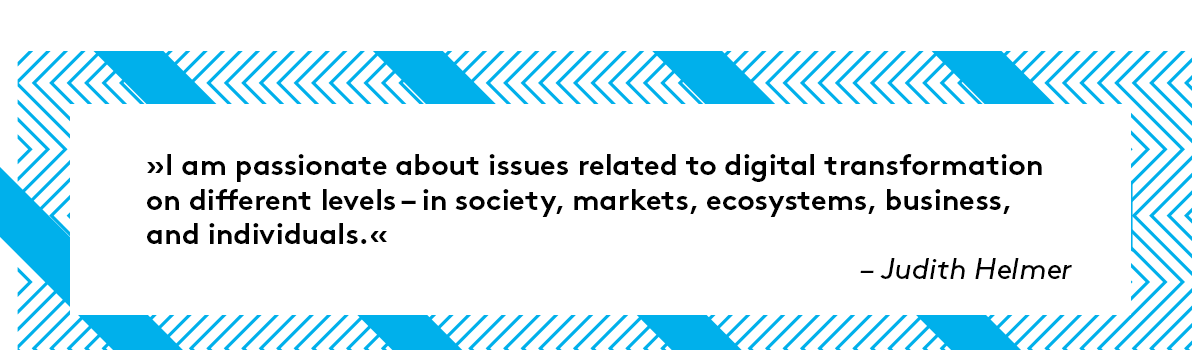
Judith Helmer is a Research Associate and PhD Candidate at the Science-to-Business Marketing Research Centre of FH Münster University of Applied Sciences. She holds an M.Sc. in International Economic Relations (Cracow University of Economics) and an M.A. in International Marketing & Sales, alongside a B.Sc. in International Management. Her research focuses on 'Shaping Markets through Digital Technologies,' with a PhD collaboration at the University of Adelaide (expected 2025). Her academic roles include lecturing courses like Creativity and Innovation Management and International Business Projects , while supervising research seminars. Key projects include leading DigiFABS (digital transformation in Food & Beverage SMEs), Blueprint for Impact (sustainability frameworks), and Change Lab (community-driven sustainability projects). Judith has received scholarships from the German Academic Scholarship Foundation, Victoria University, and the University of Adelaide. Notable awards include the 2024 Best Presentation at UIIN Conference and 2023 Best PhD Proposal at Naples Forum on Service. Over 15 peer-reviewed publications address digital transformation, innovation pedagogy, and healthcare AI applications.
Prof. Dr. Jean Titze is a Professor at the Department of Applied Biosciences and Process Engineering at Anhalt University of Applied Sciences, holding a dual role as a Temporary Lecturer in the Department of Agriculture, Ecotrophology, and Landscape Development. He holds a doctorate in brewing science from TU Munich and has extensive industry experience including roles at Weihenstephan Research Center and Deloitte & Touche. His research focuses on plant-based food technology, brewing science, and quality management, with particular emphasis on cereal-based products and sensory analysis. He is actively involved in the International DLG Quality Assessment for confectionery and cereal products as an authorized examiner. Titze teaches Food Technology courses emphasizing interdisciplinary education combining technical and business aspects. He has authored over 30 peer-reviewed journal articles and serves on editorial boards for Beverages, Foods, and Applied Sciences. His contributions include developing award-winning beers like the Bach beer 'Giovanni' and initiatives like the 'Intuitive Engineer' training program. Key achievements include the DAAD Prize and a Culinary Star for his beer innovation. He also trains professionals in quality management certifications (QMF-TÜV/QMB-TÜV) and advises on industrial food technology through the Halle-Dessau Chamber of Industry and Commerce.
Dr. Klaus Meissner is a Researcher at the University of Hohenheim, affiliated with the Chair of Agricultural Engineering in the Tropics and Subtropics. He teaches courses such as 'Biomass as Energy Carrier', 'Renewable Energy for Rural Areas', and 'Sustainable Resource Use in the Tropics'. His research focuses on renewable energy applications, agricultural engineering innovations, and sustainable resource management in tropical regions. Education: Doctorate in Agricultural Engineering (inferred from Postdoc role) His research bridges energy systems design, food processing technology, and tropical agricultural challenges. Recent work explores solar-powered peanut oil extraction, coffee byproduct valorization, and advanced drying methodologies for agricultural materials. No scientific awards or grants are explicitly mentioned in the provided texts.
Prof. Dr. Heiko Briesen is a Full Professor of Process Systems Engineering at the Technical University of Munich (TUM), affiliated with the TUM School of Life Sciences. His research focuses on applying process systems engineering to food technology, biological processes, and crystallization. He holds a PhD and habilitation from RWTH Aachen and has led research groups at the Max Planck Institute. Notable awards include the Bavarian Teaching Award (2020) and RWTH Aachen's Borchers Medal (2002). His work integrates mathematical modeling, computational methods, and experimental techniques to optimize industrial processes. Education Diploma in Chemical Engineering, University of Karlsruhe (1997) PhD in Process Systems Engineering, RWTH Aachen (2002) Post-doctoral qualification (habilitation), RWTH Aachen (2008) Research Interests Prof. Briesen specializes in modeling complex processes involving crystallization, fungal pellet morphology, and food/ beverage systems. His lab employs advanced imaging techniques (e.g., micro-CT), population balance models, and optimal control strategies to address challenges in biotechnology, material science, and process optimization. Grants & Collaborations His team collaborates with industry partners on topics like espresso extraction modeling and sustainable materials. Current projects include 4D crystal growth analysis and optimizing filtration systems using optimal control theory. Labs/Teams He leads the Chair of Process Systems Engineering at TUM, overseeing a multidisciplinary team of researchers and graduate students. Key facilities include advanced microscopy labs and computational modeling infrastructure.