معرفی
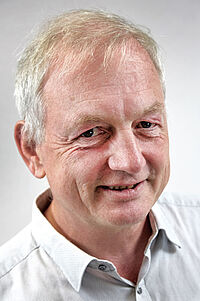
Bernd Lindemann is a Professor and Head of the Department of Food Safety at Geisenheim University of Applied Sciences, where he holds the Professorship for Beverage Technology. He serves on the Standing Commission on Good Scientific Practice and maintains an active research program bridging beverage technology and food safety. His work demonstrates strong industry relevance with practical applications for brewers, coffee producers, and food safety professionals.
Professor Lindemann's research spans three primary domains: brewing science, coffee technology, and food safety analytics. In brewing science, he investigates the chemical mechanisms behind beer coloration, particularly focusing on anthocyanins in dark barley varieties and their transfer to beer. His coffee technology research addresses energy efficiency in roasting processes through digital twin optimization. His food safety work centers on the critical challenge of detecting allergens in processed foods, especially roasted nuts where standard ELISA methods fail.
Analysis of his publication trends reveals a progression from fundamental sensory analysis of beer (2013) to increasingly sophisticated investigations of molecular mechanisms in food processing. His recent work (2023-2024) demonstrates advanced analytical approaches to solve practical industry problems, particularly in coloration mechanisms of barley and allergen detection limitations. This evolution shows his ability to apply cutting-edge techniques like MALDI-TOF mass spectrometry and digital simulation to address real-world challenges in food and beverage production.
Professor Lindemann leads significant research initiatives including the ErdHase project (2021-2024) funded by the Federal Ministry of Education and Research, which aims to improve analytical tools for food allergen management. He also contributed to the Korn B project (2020-2023) on sustainable crop rotation using heritage cereals and the development of improved ELISA methods for allergen detection (2016-2018). These projects highlight his leadership in addressing critical challenges at the intersection of food science, processing technology, and consumer safety.