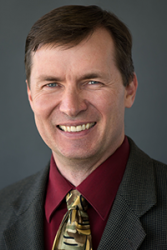
Dr. Rolf Brekken is a Professor at UT Southwestern Medical Center, where he serves as the Effie Marie Cain Research Scholar in Angiogenesis Research and Principal Investigator in the Hamon Center for Therapeutic Oncology Research. His laboratory investigates tumor-host interactions with a particular emphasis on extracellular matrix (ECM) and angiogenesis, focusing on pancreatic, breast, and lung tumors. Dr. Brekken received his Bachelor of Arts degree from Luther College in Decorah, Iowa and his PhD from UT Southwestern Graduate School of Biomedical Sciences. His graduate research focused on Vascular Endothelial Growth Factor (VEGF) as a target for therapy of solid tumors. He completed postdoctoral training in the Department of Vascular Biology at the Hope Heart Institute in Seattle, Washington. Dr. Brekken's research interests center on the tumor microenvironment, particularly pathways that drive epithelial plasticity and immune suppression. His laboratory studies how angiogenesis and ECM remodeling are key components of the metastatic cascade, with current projects focused on the function of matricellular proteins (e.g., SPARC and fibulin-5) as regulators of ECM remodeling and angiogenesis. Another major area of study is the development and evaluation of novel cancer therapies with a focus on anti-angiogenic strategies. Analysis of Dr. Brekken's recent publications (2017-2018) reveals a consistent focus on pancreatic cancer biology, particularly examining the tumor microenvironment, ECM remodeling, and angiogenesis. His work frequently investigates specific molecular targets including Axl receptor, discoidin domain receptors, and phosphatidylserine, with applications in both diagnostic approaches and therapeutic interventions. A notable trend is the exploration of combination therapies and mechanisms of resistance to anti-angiogenic treatments. Effie Marie Cain Research Scholar in Angiogenesis Research Dr. Brekken leads the Brekken Laboratory located in the Hamon Center for Therapeutic Oncology Research, where his team conducts robust modeling of pancreatic and breast cancer. His research has significant implications for understanding resistance mechanisms to anti-VEGF therapy and hypoxia-induced tumor progression. The laboratory's work spans from basic molecular mechanisms to preclinical therapeutic applications, with strong translational potential.