
معرفی
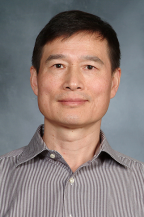
Ping Zhou is an Associate Professor of Research in Neuroscience at the Brain and Mind Research Institute, Weill Cornell Medical College, where he has been conducting groundbreaking research since 2013. His work focuses on understanding the molecular mechanisms underlying neurovascular dysfunction in Alzheimer's disease and other neurodegenerative conditions.
Dr. Zhou received his Ph.D. from the University of Illinois at Urbana-Champaign in 1991 and completed his undergraduate studies at Nanjing University in China in 1982. His educational background provided the foundation for his extensive research career in neuroscience and neurovascular biology.
Dr. Zhou's research interests center on neurovascular coupling, cerebral amyloid angiopathy, and mitochondrial mechanisms of neuroprotection. His laboratory investigates how ApoE4 contributes to neurovascular dysfunction, the role of border-associated macrophages in white matter injury, and the neuroprotective functions of prohibitin through S-nitrosylation. His work bridges basic molecular mechanisms with translational applications for treating neurodegenerative diseases.
Analysis of Dr. Zhou's recent publications reveals a strong focus on the intersection of neuroinflammation and neurovascular dysfunction in Alzheimer's disease. His work increasingly incorporates single-cell and epigenetic approaches while maintaining a strong emphasis on mitochondrial function and oxidative stress pathways. The research shows a clear progression from basic mechanisms of neurovascular coupling to more complex investigations of macrophage interactions and genetic risk factors like ApoE4.
Dr. Zhou currently serves as Principal Investigator on the NINDS-funded project "Role of prohibitin nitrosylation in its neuroprotective functions" (2022-2027) and as Co-Investigator on two additional NINDS grants: "ApoE4, neurovascular injury and cognitive impairment" (2022-2027) and "Dietary sodium, neurovascular dysfunction and cerebrovascular risk" (2021-2026). These projects reflect his continued focus on molecular mechanisms of neuroprotection and vascular contributions to cognitive impairment.
While the available information doesn't specify his laboratory structure, Dr. Zhou's extensive publication record spanning over two decades suggests leadership of a productive research team focused on neurovascular biology and neurodegeneration mechanisms.



_kontaktbild.jpg)