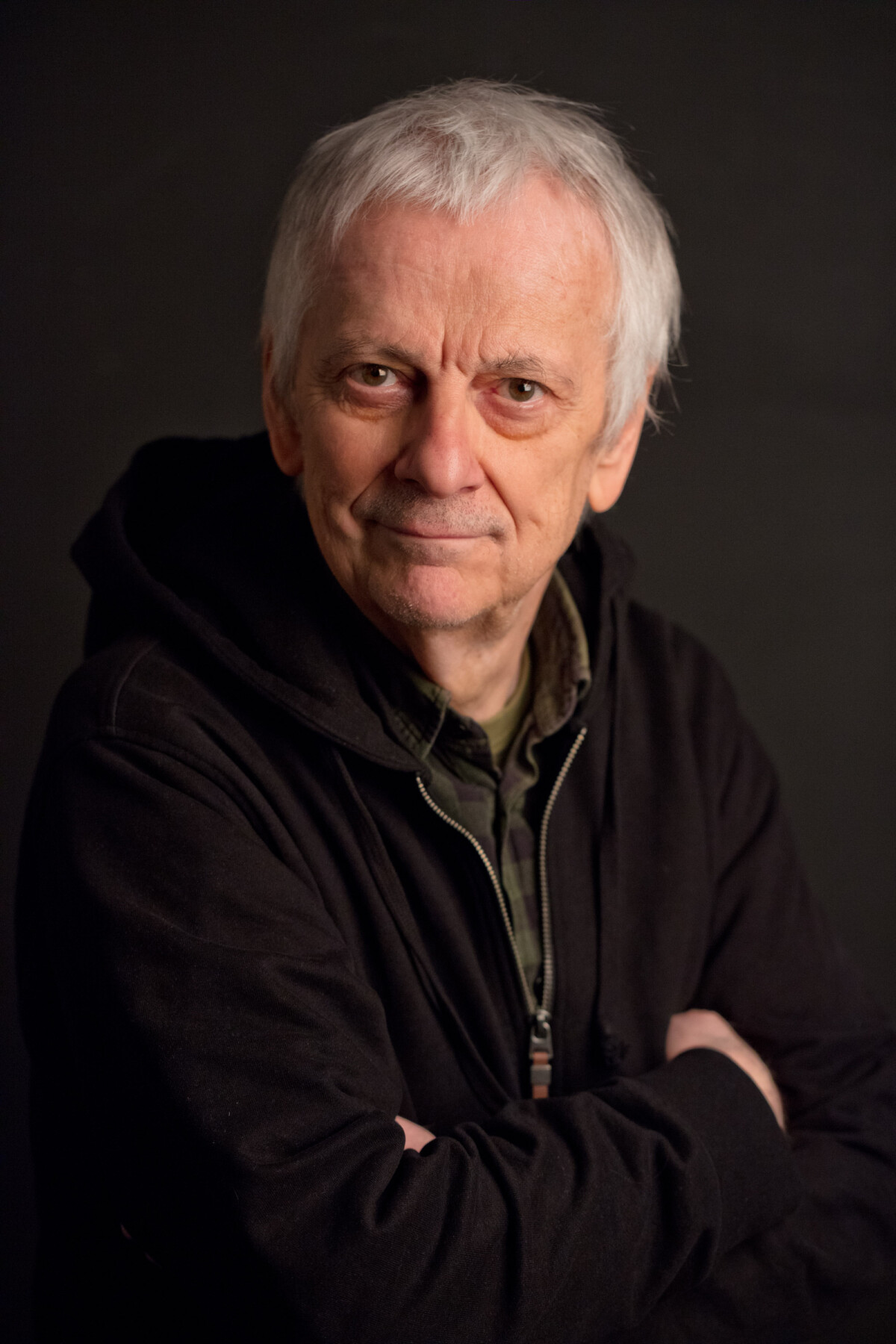
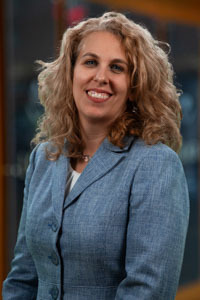
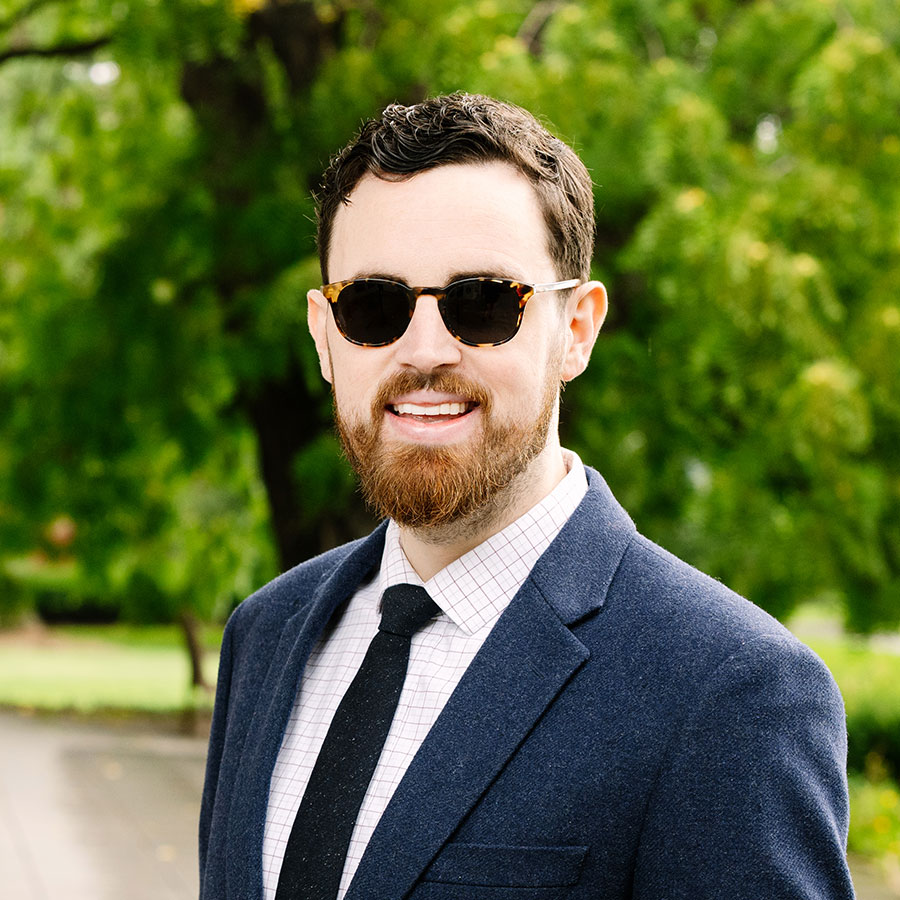
Andreas G. Markantonatos is a Professor of Ancient Greek Philology at the Department of Philology, University of Peloponnese. He holds a DPhil in Classical Philology from the University of Oxford. His leadership roles include Director of the Laboratory of Rhetoric and Dramatic Art, Vice-President of the Olympic Center for Philosophy and Education, Member of the Board of Directors of the Hellenic Foundation for Culture, Director of the Graduate Program 'Performing Arts' at the Hellenic Open University, and Supervisor of Training at the Institute of Educational Policy. His research focuses on Ancient Greek Philology, Attic Drama, Literary Theory, and Narratology, with significant contributions to the interpretation of Sophocles, Euripides, and tragic narrative structures. Recent publications explore intersections between theatre, education, politics, and cultural memory. Publications demonstrate sustained engagement with Greek tragedy's narrative techniques, religious dimensions, and socio-political contexts. Key trends include mythological reinterpretation, performance theory, and pedagogical applications of classical texts. He has extensively edited volumes advancing scholarship on Sophocles, Euripides, and Attic drama. Professor Markantonatos directs the Laboratory of Rhetoric and Dramatic Art and leads international research collaborations, including conferences on ancient drama. Future projects include an annotated edition of Sophocles' Oedipus at Colonus and a monograph on Euripides' Heracles .
Dr hab. Witold Gumiński is a researcher at the Department of Stone Age Archaeology, University of Warsaw. He specializes in Mesolithic and Para-Neolithic cultures of Northeastern Poland, with focus on paleoenvironmental studies, burial practices, and artifact analysis. Active duty hours: Tuesday & Wednesday 2:15–3:00 PM, Room 3.24 Email: w.guminski@uw.edu.pl His research explores: Mesolithic/Para-Neolithic cultural dynamics Human-environment interactions Archaeozoology and subsistence patterns Symbolic artifacts (amber, pottery) Funerary rituals and skeletal remains Publications focus on: Mesolithic burial rites in Masurian Lakes Material culture exchange networks Climate impact on settlement patterns Megalithic monumentology Interdisciplinary approaches (aDNA, isotopic analysis) Key collaborations include studies with: K. Bugajska (burial analysis) T. Tomek (zooarchaeology) R. Howcroft (bioarchaeological isotopes)
Dr. Cecilia Dal Zovo is a Marie Sklodowska-Curie/UKRI Research Fellow at the University of Oxford, currently working on the TRAILS project focused on Late Prehistoric rock art in the Gobi-Altai Mountains of Mongolia. She is affiliated with the HorsePower Project and holds advanced degrees in Prehistoric Archaeology and Ancient History from the University of Padova and University of Santiago de Compostela. Her interdisciplinary research spans archaeology, anthropology, geography, and Buddhist studies. MA in Prehistoric Archaeology (University of Padova) MA and PhD in Ancient History and Archaeology (University of Santiago de Compostela) Her research critically examines heritage, identity, gender, and human-environment relationships through topics like: Rock art and landscape archaeology Mobility and spatial memory analysis Sacred landscapes and cosmovisions Material culture in pastoral societies Her recent publications explore interdisciplinary approaches to Mongolian sacred mountains, spatial memory in the Gobi-Altai, and Bronze Age mound orientations. These works combine archaeoastronomy, digital survey methods, and cultural continuity analysis. Scientific awards include: Specialist Dissertation Prize (ICAS 2017) Marie Sklodowska-Curie/UKRI Fellowship Getty Research Institute Art and Migration Scholar's Grant
Caroline Husquin is a Lecturer in Ancient History at the University of Lille, Faculty of Humanities, History Department. She is affiliated with UMR 8164 - HISTORY, ARCHAEOLOGY AND LITERATURE OF THE ANCIENT WORLDS (HALMA laboratory) located at Pont de Bois Campus. Her academic work focuses on Roman social history with particular emphasis on bodily perceptions and their social implications. Dr. Husquin's research interests span Roman History, Social History, History of the Body, History of Medicine, and Historical Anthropology. Her work examines how physical characteristics like baldness functioned as social markers in Roman society, how disability was perceived and managed, and the intricate relationship between religious practices and political power in ancient civilizations. She approaches historical analysis through an anthropological lens, connecting ancient social structures to contemporary concerns about bodily integrity and social status. Her publications reveal a consistent theme of exploring how bodily conditions shaped social identity and political positioning in Roman society. The articles demonstrate methodological innovation through combining literary analysis with archaeological evidence to reconstruct ancient social attitudes. Recent work shows increasing attention to comparative approaches, examining continuities between ancient and modern perceptions of bodily difference. Co-author of a significant work on baldness as social stigma in ancient Rome Published research on disability perceptions in Roman society from 1st century BCE to 4th century CE Contributor to academic preparation materials for French competitive examinations in history Dr. Husquin maintains an active research agenda examining the intersection of bodily integrity, social status, and political power in ancient Mediterranean societies. Her work contributes significantly to understanding how ancient cultures constructed social hierarchies through bodily perceptions and how these historical constructions continue to influence modern social attitudes.
Burkhard Backes is a researcher at the Institute for Ancient Near Eastern Studies (Faculty of Humanities, University of Tübingen), specializing in Ancient Egyptian religion and funerary texts. He holds a doctorate in Egyptology (2003, Bonn) and completed his habilitation in 2014. His career spans research roles at University of Bonn (1999-2008), Oxford (2008-2010), and Ludwig-Maximilians-Universität München (2012-2014), with ongoing DFG-funded projects on Late Period burial practices and textual traditions. Education : PhD in Egyptology (University of Bonn, 2003) Positions : Departmental Lecturer (Oxford), Postdoctoral Fellow (Munich), and multiple DFG-funded researcher roles at Tübingen His research integrates textual criticism , funerary archaeology , and cultural studies . Publications include monographs on the Book of the Dead, Late Period ritual texts, and co-edited volumes on prestige dynamics and liturgical papyri. Recent work examines text-object correlations in funerary artifacts and cross-cultural reception of Egyptian symbols. Public engagement includes articles in The Independent and Art Quarterly, alongside exhibition contributions. His collaborative editorial work spans volumes like Studien zum Altägyptischen Totenbuch and Münchner Studien zur Alten Welt .
Mareike Wagner is a researcher affiliated with the Institute for Ancient Near Eastern Studies at the University of Tübingen, Faculty of Humanities. Her work focuses on Late Period Egyptian culture, religious concepts, and funerary texts, particularly within the Theban necropolis. PhD in Egyptology (University of Tübingen, 2012) Doctoral studies at University of Bonn (2002–2008) Her research examines the intersection of religious iconography , funerary literature , and archaeological documentation , including detailed studies of sarcophagus inscriptions, coffin texts, and astronomical symbols like the h3-b3=s stars. She has contributed to projects such as the excavation of Monthemhet’s tomb (TT 34) and the analysis of Ibi’s sarcophagi in Thebes. Recent publications highlight her expertise in textual evolution from Coffin Texts to the Book of the Dead and the liturgical functions of funerary inscriptions. She collaborates with institutions like the German Archaeological Institute (DAI Kairo) and has secured funding from the DFG and Fritz-Thyssen Stiftung. 2009–2011: Promotionsstipendium (Landesgraduiertenförderung Baden-Württemberg) 2015–2018: Forschungsstipendium (Fritz-Thyssen Stiftung) Grants include multiple DFG projects (2012–2023) focused on Late Period tombs in Thebes, and she has contributed illustrations to studies on Late Egyptian religious canons.
Lars Erik Gjerpe is an Associate Professor at the Department of Cultural Heritage Management, University of Oslo. His work focuses on Iron Age and Viking Age archaeology, with expertise in settlement patterns, burial practices, agricultural history, and interdisciplinary collaboration with natural scientists. He has led major excavation projects, including the E18 and Dobbeltspor Dilling initiatives. Current: Associate Professor (2017–present) Former: Research Fellow (post-dissertation), County Archaeologist in Østfold (2001–2003) Research Interests: Dr. Gjerpe investigates the intersection of environmental history and human activity in ancient Norway. His work addresses: Iron Age building traditions and settlement organization Climate events like the 536 AD and 207 BC Dust Veil events Evolution of agricultural tools and subsistence strategies Geoarchaeological methods for analyzing mixed farming settlements Spatial boundaries in early Iron Age communities Interdisciplinary approaches combining archaeology with natural sciences Article Trends: Gjerpe’s recent work (2021–2024) explores climate impacts on Iron Age societies, settlement morphology in southeastern Norway, and geoarchaeological methodologies. His publications emphasize: Chronological frameworks for ancient structures Social and environmental dynamics in settlement patterns Collaborative natural science in archaeological analysis Revisiting historical narratives through material evidence Labs & Teams: He contributes to the Centre for Viking Age Studies (ViS) , integrating landscape archaeology and cultural heritage preservation.
Dr. Jillian Ross is an Associate Professor of Biblical Studies at Liberty Theological Seminary, Liberty University. She joined the faculty in 2016 and was appointed Director of the Biblical Language Programs in 2017. Her educational background includes a Ph.D. from Trinity Evangelical Divinity School, an M.Div. from Central Baptist Theological Seminary, and a B.S. from Maranatha Baptist Bible College. Prior to her current role, she taught mathematics in Christian schools and served as an adjunct instructor at Trinity Evangelical Divinity School during her doctoral studies. Her research focuses on the Old Testament, with specialized interests in the Book of Judges, inner biblical allusions, and women's ministry. She explores themes of divine-human interaction, narrative typology, and theological patterns in ancient texts. Her work frequently employs literary analysis and historical-critical methods to examine scriptural narratives. Ross's publications span books, peer-reviewed articles, essays, and study Bible contributions, predominantly centered on Judges and Pentateuchal connections. Her 2023 monograph analyzes allusions within Judges, while her journal articles investigate linguistic, theological, and intertextual dimensions of biblical stories. Her writings reflect consistent emphasis on narrative criticism, Hebrew linguistics, and the theological implications of Israelite history. No scientific awards, grants, or supervised students are mentioned in the source material. She leads the Biblical Language Programs at Liberty, indicating administrative involvement in curriculum development for Hebrew and related studies.
Professor Mark Geller serves as the Jewish Chronicle Professor of Jewish Studies at University College London's Department of Hebrew & Jewish Studies, where he has been a faculty member since 1976. He also directs the Institute of Jewish Studies at UCL, a position he has held since 1982, and previously served as Head of Department from 1984-1993. From 2010-2018, he was on secondment from UCL serving as Visiting Professor for the History of Knowledge at the Freie Universität Berlin. Professor Geller completed his BA in Classics at Princeton University (1966-1970), including a year at the Hebrew University of Jerusalem, and earned his PhD in Mediterranean Studies from Brandeis University in 1974. His academic journey includes significant research periods at the University of Munich's Institute for Assyriology and Hittitology (1980-81) and multiple fellowships at prestigious institutions across Europe. Geller's research centers on the intersection of ancient Near Eastern studies and Jewish traditions, with particular emphasis on medical and magical texts. His groundbreaking work has demonstrated the survival of cuneiform script into the third century AD and established crucial connections between Akkadian and Aramaic medical traditions and later Jewish texts, especially the Babylonian Talmud. His interdisciplinary approach bridges philology, archaeology, medical history, and cognitive science. Professor Geller's publications reveal a consistent trajectory of innovative scholarship connecting Mesopotamian knowledge systems with later traditions. Recent works examine Babylonian medical knowledge transmission, cognitive aspects of ancient thought through cuneiform texts, and the longevity of Akkadian linguistic influence in Syriac magic texts. His research demonstrates how ancient medical and magical practices evolved and influenced subsequent cultural traditions. Professor Geller's distinguished career has been recognized with numerous prestigious awards: European Research Council Advanced Grant (BabMed, 2013-2018) Leverhulme grant (2022-23) Fellow at the Paris Institute for Advanced Study (2021-22) Doctorate Honoris Causa from New Bulgarian University (2009) Multiple Alexander von Humboldt-Stiftung grants spanning three decades Netherlands Institute of Advanced Studies fellowships Wellcome Trust grant for the History of Medicine As Director of the Institute of Jewish Studies, Professor Geller has organized numerous scholarly conferences and public lectures. His ERC-funded BabMed project significantly advanced understanding of Babylonian medical knowledge transmission. Fluent in multiple ancient and modern languages including Hebrew, German, Dutch, French, Akkadian, Sumerian, Aramaic, and Ugaritic, Geller's linguistic expertise enables his unique cross-cultural research approach that continues to shape our understanding of ancient knowledge systems and their enduring legacy.
Dr. Daliah Bawanypeck is a researcher in the Department of History at Goethe University Frankfurt (since 2009), specializing in the Cluster of Excellence "Formation of Normative Orders" . She holds a PhD in Ancient Near Eastern Studies (2001) and a Master of Arts from Freie Universität Berlin (1995). Education: MA in Ancient Near Eastern Studies, Near Eastern Archaeology, Law Key affiliations: Collegium Mythologicum (since 2010), DFG CHRONOS network (since 2017) Her research focuses on: Culture, religion, and history of the ancient Near East (Asia Minor, Syria, Mesopotamia) Scientific history of cuneiform cultures Standardization in Mesopotamian knowledge transmission Localization of Hittite mythological texts Intratextual connections between myths and rituals Archival organization in Hattusa Publications span Hittite royal seals, ritual texts, and cross-cultural mythological transmission. Her work intersects with digital humanities through the Hittitology Portal Mainz collaboration. Scientific recognition includes Lichtenberg-Kolleg Fellowship (2010-2011) DFG-funded research positions (1996-1999, 2001-2004, 2005-2008) Active in interdisciplinary teams at the Historical Observatory of Göttingen and through international collaborations, she continues to shape Hittite textual analysis methodologies.
Louise Gestermann is an Associate Professor at the University of Bonn , Egyptological Department. Her research focuses on Ancient Egyptian funerary texts , transmission of funerary traditions , and Cultural history of the Middle Kingdom . She has held visiting professorships at the University of Heidelberg, Tübingen, and Munich. Education: Studied Egyptology, Sociology, Classical Archaeology, and Near Eastern Archaeology (Mainz, Göttingen, Tübingen) MA in Göttingen (1981) PhD in Tübingen (1985): "Politics and Administration of the Middle Kingdom" Habilitation in Bonn (1997): "Late period transmission of the coffin texts" Her research includes a Fritz Thyssen Foundation -funded project (2012-2015) on tomb decoration programs in Thebes-West. She has collaborated on the Adolf Erman estate project (2002-2006) and German-Spanish-Egyptian tomb excavations (2006-2012). Recent publications analyze: Coffin Texts diachronic transmission Decorative programs in Osireion at Abydos Divine wrath/mercy in Egyptian theology Textual evolution from Pyramid Texts to Book of the Dead Narrative structures in Egyptian letters Scientific affiliations include the International Association of Egyptologists . She has co-edited critical series including Manuscripts of Ancient Egyptian Funerary Texts and Studies on Ancient Egyptian Funeral Texts .
Giorgio Paximadi is a Full Professor of Old Testament Exegesis at the Faculty of Theology of the University of Italian Switzerland. He holds a Licentiate in Theology from the University of Fribourg and a Doctorate from the Pontifical Biblical Institute in Rome. Catholic University of the Sacred Heart (Milan): Degree in Classics with a thesis in general linguistics applied to classical languages University of Fribourg (CH): Licentiate in Theology Pontifical Biblical Institute (Rome): Licentiate in Sacred Scripture and Doctorate in Biblical Sciences His research focuses on Old Testament exegesis, Hebrew linguistics, Septuagint studies, and rhetorical analysis of biblical texts. He has published extensively on Leviticus, Exodus, and Psalms, examining textual structures and their theological implications. His recent publications (2019-2023) explore topics such as Levitical zoological classifications, divine wrath in biblical theology, and textual variations in Septuagint manuscripts. These works span fields including Hebrew Bible studies, textual criticism, and comparative religious practices. For direct communication, you can contact him at giorgio.paximadi@usi.ch or reach via phone at +41 58 666 4568. His office is located at the Faculty of Theology in Lugano (Via Buffi 13, 6900).
Gian Pietro Basello is an Associate Professor of Assyriology (L-OR/03) at the University of Naples 'L'Orientale' since December 2020, affiliated with the Department of Asia, Africa and Mediterranean. His academic career includes previous positions as a fixed-term researcher (2017-2020) and multiple contract teaching positions at the University of Bologna. Basello holds a Laurea in Storia Orientale from the University of Bologna (1993-2000) and a PhD in Ancient Near East Studies from the University of Naples 'L'Orientale' (2001-2005). He has received national qualifications (Abilitazione Nazionale) for both Associate Professor (2014-2020, 2018-2024) and Full Professor (2023-2034) positions in sector 10/N1 (Cultures of the Ancient Near East, Middle East and Africa). His research focuses on Elamite language, culture, and history, with particular emphasis on Achaemenid studies, ancient Western Asia, and cuneiform documentation. Basello has conducted extensive work on Elamite calendars, royal inscriptions, administrative texts, and the relationship between Elamite and Persian cultures during the Achaemenid period. His methodological approach combines philological analysis with archaeological evidence to reconstruct ancient Near Eastern societies. His recent publications demonstrate a strong focus on Elamite language documentation, Achaemenid administration, and material culture studies. The research trends show increasing attention to digital approaches in epigraphy, comparative analysis of administrative systems across ancient Near Eastern cultures, and interdisciplinary studies combining linguistic, archaeological, and historical perspectives. His work spans from the Bronze Age Elamite civilization through the Achaemenid period, with particular attention to cultural continuity and transformation. National qualification for Associate Professor position (sector 10/N1), 2014-2020 National qualification for Associate Professor position (sector 10/N1), 2018-2024 National qualification for Full Professor position (sector 10/N1), 2023-2034 Basello has supervised numerous master's and doctoral theses at universities including Naples 'L'Orientale,' Bologna, Tehran, and Sydney, primarily in philological and archaeological fields related to Elam and Achaemenid Iran. He serves as a peer reviewer for prestigious journals including Journal of Near Eastern Studies, Journal of the Economic and Social History of the Orient, and Iranica Antiqua. His research is supported through significant projects including the DARIOSH project on Achaemenid royal inscriptions and the PRIN 2020 project on Iranian and non-Iranian language contacts. As supervisor, he oversees the MSCA-IF project 'Villages to Empire: 4000 Years of Death and Society in Elam.' Basello is an active member of the DARIOSH project (Digital Achaemenid Royal Inscription Open Schema Hypertext) as an Elamite and Babylonian specialist, collaborating with institutions including ISMEO, the Louvre, the National Museum of Iran, and the Parsa-Pasargadae Research Foundation. He also participates in the Italian Ethnolinguistic Mission in Tajikistan and serves on the doctoral committee for the 'Asia, Africa and Mediterranean' program at the University of Naples 'L'Orientale'.
Daniel Charles Smith is an Assistant Professor of Classics at Whitman College, specializing in religion in the Ancient Mediterranean world, including Judaism, Christianity, disability studies, and imperialism's impact on religious discourse. He teaches Greek and Latin courses while integrating material culture from the Roman East. Ph.D., Religious Studies, University of Texas at Austin (2022) M.A., Religious Studies, University of Texas at Austin (2019) M.A.R., Religion (Bible), Yale University Divinity School (2017) B.S., Theology, Southeastern University (2013) His research examines how imperial and material processes shaped exotic religion in the Roman Empire, focusing on the Apocalypse of John and disablement in religious texts. He explores bodily difference through ancient Greek, Latin, Hebrew, Coptic, and Syriac sources. Daniel's publications include interdisciplinary studies on apocalyptic literature, disability in early Christian communities, and material religion. He is actively involved in accessibility initiatives, such as developing a Coptic Braille system for biblical scholarship. Recipient of awards for distinguished teaching and publication
Veneta Handzhiyska serves as an Associate Professor in the Department of Cultural and Historical Heritage at the University of Library Science and Information Technology (UniBIT) in Bulgaria. Her academic career focuses on the intersection of archaeology, cultural heritage, and religious history, with particular expertise in early Christian sites across Bulgaria. Position: Associate Professor Institution: University of Library Science and Information Technology (UniBIT) Department: Department of Cultural and Historical Heritage Dr. Handzhiyska's research centers on historical archaeology, with a special emphasis on sacred sites and religious transformation during the transition from late antiquity to early Christianity in Bulgaria. Her work combines field archaeology with historical analysis to uncover the complex processes of religious change in the region. She has conducted significant research on ancient sanctuaries and early Christian churches, particularly in southeastern Bulgaria including the Dimitrovgrad region. Her publication record demonstrates consistent scholarly output in the field of early Christian archaeology, with particular focus on the Rhodope region and Thracian cultural landscapes. Her research examines how pagan religious sites transformed into Christian spaces, analyzing both architectural evolution and ritual practices through material evidence. Dr. Handzhiyska's work contributes significantly to understanding Bulgaria's rich religious heritage and the cultural continuity across historical periods. Dr. Handzhiyska has presented her research through public lectures at UniBIT, including a notable 2018 presentation on 'In search of the one God, an ancient sanctuary and an early Christian church near the village of Krepost, Dimitrovgrad region,' which highlighted her fieldwork and archaeological interpretations of religious transformation in the region.