معرفی
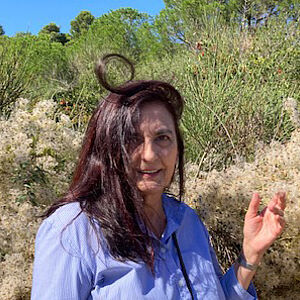
Caroline Husquin is a Lecturer in Ancient History at the University of Lille, Faculty of Humanities, History Department. She is affiliated with UMR 8164 - HISTORY, ARCHAEOLOGY AND LITERATURE OF THE ANCIENT WORLDS (HALMA laboratory) located at Pont de Bois Campus. Her academic work focuses on Roman social history with particular emphasis on bodily perceptions and their social implications.
Dr. Husquin's research interests span Roman History, Social History, History of the Body, History of Medicine, and Historical Anthropology. Her work examines how physical characteristics like baldness functioned as social markers in Roman society, how disability was perceived and managed, and the intricate relationship between religious practices and political power in ancient civilizations. She approaches historical analysis through an anthropological lens, connecting ancient social structures to contemporary concerns about bodily integrity and social status.
Her publications reveal a consistent theme of exploring how bodily conditions shaped social identity and political positioning in Roman society. The articles demonstrate methodological innovation through combining literary analysis with archaeological evidence to reconstruct ancient social attitudes. Recent work shows increasing attention to comparative approaches, examining continuities between ancient and modern perceptions of bodily difference.
- Co-author of a significant work on baldness as social stigma in ancient Rome
- Published research on disability perceptions in Roman society from 1st century BCE to 4th century CE
- Contributor to academic preparation materials for French competitive examinations in history
Dr. Husquin maintains an active research agenda examining the intersection of bodily integrity, social status, and political power in ancient Mediterranean societies. Her work contributes significantly to understanding how ancient cultures constructed social hierarchies through bodily perceptions and how these historical constructions continue to influence modern social attitudes.