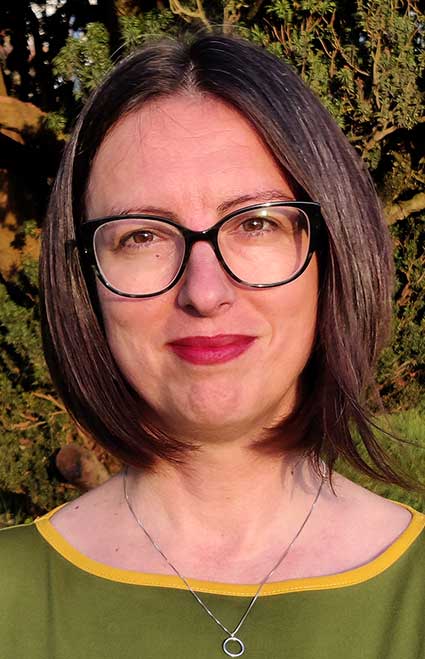
Professor Megan Richardson is an Honorary Professor at the University of Melbourne's Law School, specializing in intellectual property, privacy rights, and legal theory. She has contributed significantly to privacy law reform through advisory roles with the Australian Law Reform Commission and NSW Law Reform Commission. Research focuses on: Evolution of privacy rights in digital contexts Intellectual property intersections with personality rights Data governance frameworks Legal responses to automated decision-making Historical development of privacy doctrines Publication trends show increasing engagement with technology-law interfaces, particularly algorithmic systems and data rights. Recent work examines AI's impact on privacy, blockchain applications, and pandemic surveillance technologies, often employing interdisciplinary approaches combining law with cultural studies. Scientific Awards: No awards mentioned in provided materials. Research Leadership: Serves as Coordinating Editor for Cambridge Elements Series: Data Rights and Wrongs. No specific student advising information available.
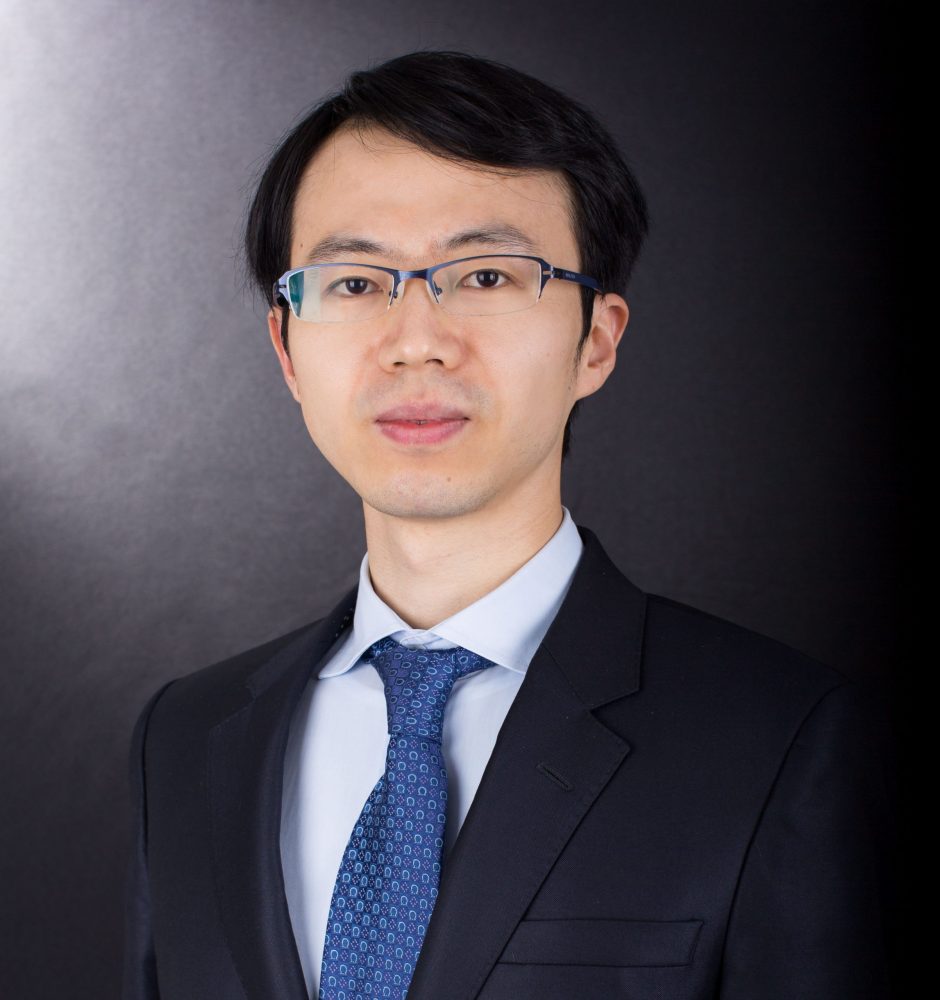
Hailiang Chen serves as Professor in Innovation and Information Management, Assistant Dean (Taught Postgraduate), and Director of the Artificial Intelligence Research Institute at HKU Business School, The University of Hong Kong. His academic journey includes a PhD and MS from Purdue University and a BM from Tsinghua University. Doctoral Degree: Management Information Systems, Purdue University Master Degree: Economics, Purdue University Bachelor Degree: Information Management and Information Systems, Tsinghua University Professor Chen's research spans artificial intelligence, FinTech, social media analytics, and platform economics, with significant contributions to understanding how digital interactions shape financial markets and consumer behavior. His work frequently examines the intersection of technology adoption and economic outcomes, particularly in cryptocurrency markets, live-stream commerce, and venture capital decision-making. His research methodology combines large-scale data analysis with experimental designs to uncover causal relationships in digital ecosystems. His publications in elite journals like Journal of Financial Economics and Management Science demonstrate consistent impact, with multiple ESI Highly Cited Papers. Current projects include Gov-RAG for e-government services and comparative studies of AI search tools. His research has received continuous funding from Hong Kong's Research Grants Council for five consecutive years (2019-2023). Faculty Outstanding Researcher Award, HKU Business School (2022-23) INFORMS ISS Sandra A. Slaughter Early Career Award (2022) Association for Information Systems Early Career Award (2019) Three ESI Highly Cited Papers (Top 1% in field) Professor Chen actively contributes to academic service as Associate Editor for Journal of Management Information Systems and MIS Quarterly , and serves as Program Chair for the International Conference on Smart Finance. His industry collaborations include Alibaba, HSBC, and China Construction Bank, bridging academic research with real-world business applications in AI implementation and digital transformation.
Tijana Rakic is Associate Professor of International Tourism and Hospitality Management at De Montfort University, affiliated with the School of Humanities and Performing Arts. She leads the Tourism and Hospitality subject area and the BA (Hons) International Tourism and Hospitality Management program. Her research expertise spans visual research methods, heritage and identity in tourism, art and tourism, visual cultures of leisure and events, and sustainability in tourism. She employs creative methodologies including visual ethnography, narrative analysis, and multimodal research. Her recent scholarly output reflects a strong trend toward interdisciplinary and visually oriented research in tourism, with a focus on representation, identity, and methodological innovation. She has contributed significantly to advancing visual methods in tourism and leisure studies through edited volumes, journal special issues, and multimedia outputs. Fellow of the Royal Geographical Society Fellow of the Royal Anthropological Institute Fellow of the Higher Education Academy Tijana Rakic is an experienced PhD supervisor and welcomes research students in her areas of expertise. She chairs the Geographies of Tourism and Leisure Research Group at the Royal Geographical Society and serves as co-editor of the Routledge book series 'Current Developments in the Geographies of Leisure and Tourism'. She is also a member of the editorial boards of Tourist Studies , Tourism Geographies , International Journal of Tourism Cities , Finnish Journal of Tourism Research , and Consumer Behaviour in Tourism and Hospitality . Her creative research outputs include co-produced documentaries and a co-curated exhibition, highlighting her commitment to public engagement and knowledge dissemination beyond traditional academic formats.
Dr. Ying Huang is a Professor of Communication at the University of West Florida (UWF), affiliated with the College of Arts, Social Sciences and Humanities. She holds a bachelor’s degree in Law from Fudan University, Shanghai, China, and a master’s and doctorate in Media Management and Mass Communication & Media Arts from Southern Illinois University Carbondale. Her research focuses on visual framing, advertising messages, and their societal impacts, with a particular interest in cross-cultural analyses and the role of humor/hyperbole in advertising. She teaches courses in advertising, research methods, and visual communication and advises UWF’s student chapter of the American Advertising Federation (ClubAd). Dr. Huang’s research explores how visual elements shape audience perception, including studies on visual metaphors, hyperbole in advertising, and gender portrayals in Chinese media. Her work often compares media narratives across cultures, such as analyzing the 2008 Olympic torch relay coverage in U.S. and Chinese press. She has also contributed to curriculum development, including a new graduate course on visual communication. Her articles span peer-reviewed journals like Sex Roles , International Communication Gazette , and Mass Communication and Society . Her research highlights trends in visual rhetoric, advertising ethics, and the intersection of media with cultural and political contexts. While no awards are listed, her work reflects a commitment to advancing understanding of visual communication’s societal role. In advising and mentorship, Dr. Huang leads ClubAd, fostering student engagement in advertising practices. Her academic contributions bridge theory and practice, emphasizing global perspectives in media studies.
Robert V. Kozinets is a Professor of Journalism at the Annenberg School for Communication and Journalism at the University of Southern California (USC). He is renowned as the founder of netnography, a qualitative research method applied to digital interaction analysis. His work bridges marketing, communication, and digital culture, emphasizing contextualized understanding of social media, influencer dynamics, and brand strategies. Kozinets has authored/co-authored eight books including Netnography: The Essential Guide to Qualitative Social Media Research (2020) and Netnography Unlimited (2021), and over 120 academic articles. He serves as an associate editor for the Journal of Marketing and Journal of Consumer Research . His research interests span digital media ethics, technocultural capital, and the intersection of technology with consumer behavior. Notable honors include the Shelby Hunt Award (2012) and Emerald Management Reviews Citation of Excellence (2010). Kozinets collaborates with global corporations like American Express and L’Oréal, and his teaching focuses on digital research methodologies. He actively contributes to public discourse through media outlets like The Conversation and NBC News . In addition to academic roles, he explores creative outlets such as videography, poetry, and painting, reflecting his interdisciplinary approach to understanding human-technology interactions. His recent work addresses AI’s impact on marketing, virtual influencers, and post-truth consumerism.
Julien Diogo serves as Adjunct Professor at Polytechnic Institute of Viseu's School of Education of Viseu since 2020, teaching Market Analysis, Consumer Behavior, Strategic Communication, and Innovation/Creativity courses. He concurrently holds Visiting Professor positions at ISAG (Higher Institute of Administration and Management) since 2018 for Executive MBA programs and was Professor of Organizational Communication at ISCA-UA (2022-2023). His academic roles extend to Visiting Facilitator positions at Brazil's Personal Branding Academy and ISLA's Postgraduate Program in Innovation. His educational background includes: PhD in Communication Sciences (in progress, 2023-2026) at University of Coimbra Specialization in Teacher and Trainer Training (2022-2023) from Employment and Training Institute of Braga Marketing Specialist title (2019) from Polytechnic Institute of Viseu Master's in Communication and Marketing (2010-2012) from Polytechnic Institute of Viseu (Final Grade: 17/20) Bachelor's in Social Communication (2005-2008) from Polytechnic Institute of Viseu (Grade: 17/20) Diogo's research integrates neuromarketing with consumer behavior analysis, focusing on emotional responses in digital environments, Generation Z consumption patterns, and neuroscience applications in place branding. His work examines how cognitive processes influence purchasing decisions through physiological measurements and behavioral experiments, particularly investigating caffeine's neuropharmacological effects on consumer arousal and shop window design's attentional impact. He bridges theoretical neuroscience with practical marketing strategy development. His publication trajectory reveals increasing focus on digital-emotional consumer interfaces, with recent work analyzing pandemic-era behavior shifts and Gen Z's narrative processing. Key thematic clusters include neuromarketing validation in retail architecture, emotional sustainability in e-marketplaces, and neuroscientific foundations of territorial branding, demonstrating consistent application of cognitive neuroscience to contemporary marketing challenges. Scientific recognition includes: 2008 Academic Merit Award for Best Social Communication Student (Polytechnic Institute of Viseu) 2021 Nomination for Global Teacher Prize Portugal Diogo actively supervises master's research including thesis on territorial brand communication (2024), language informality in digital contexts (2024), and Apple's Lovemarks strategy for Generation Z (2024). He contributes to research projects like INOV C+ Intelligent Innovation Ecosystem (2024-present) and co-orientated neuromarketing studies on advertising reception decoding (2020). His academic service includes peer review for IGI Global and International Journal of Marketing. Through his dual leadership as CCO of ICN Agency (neuromarketing consultancy), co-director of PsicoSoma (publishing/training), and expertMind (LMS platform), Diogo maintains robust industry-academia integration, developing neuromarketing frameworks applied across retail, urban planning, and digital experience design contexts.
Su-Hua Lee is a Professor of Law at National Taiwan University (NTU) and an affiliate professor in the School of Pharmacy. She has served as a full-time faculty member at NTU since 2016, following academic positions at National Tsing Hua University and National Taipei University. Her expertise spans intellectual property law with specialized focus on pharmaceutical and biotechnology applications, competition law, and civil law. Her educational background includes: Bachelor of Laws from National Taipei University Master of Laws (Magister iuris comparativi, M. iur. Comp.) from Rheinischen Friedrich-Wilhelms-Universität Bonn Doctor of Laws (PhD) from National Taiwan University in 2006 Professor Lee's research examines the complex interplay between intellectual property frameworks and specialized industries, particularly pharmaceuticals and biotechnology. She has conducted extensive comparative analysis of German and Taiwanese legal systems, informed by her time as a visiting researcher at the Max Planck Institute for Innovation and Competition in Munich (2005-2007). Her scholarship addresses critical issues including patent linkage systems, infringement damages calculation, trade secret protection, and the application of competition law to digital platforms. She frequently bridges theoretical legal concepts with practical policy implications, making her work highly relevant to legislative and regulatory development. Analysis of her recent publications (2022-2024) reveals three dominant trends: 1) Examination of IP challenges in digital environments (internet marketing, social media trademarks), 2) Pharmaceutical regulation issues (patent linkage, term extension, public health crises), and 3) Economic dimensions of IP enforcement (damages calculation, multi-sided platform economics). Her work consistently incorporates comparative perspectives, particularly from German legal frameworks, while addressing Taiwan-specific legal and policy contexts. Professor Lee leads a research team that has been instrumental in drafting Taiwan's drug approval-patent linkage legislation since 2015. She serves on governmental expert committees related to intellectual property and pharmaceutical affairs and participates in regional academic networks focused on Asian intellectual property law development. Her research has been supported by multiple grants from Taiwan's Ministry of Science and Technology, Ministry of Health and Welfare, Intellectual Property Court, and Fair Trade Commission. Her scholarly contributions span numerous law journals in Taiwan and internationally, with publications covering patent law, trademark enforcement, trade secrets, and the intersection of intellectual property with competition policy. She has also contributed chapters to several edited volumes on intellectual property systems in Asia and comparative approaches to patent enforcement.
Monideepa Tarafdar is the Charles J. Dockendorff Endowed Professor of Information Systems at the Isenberg School of Management, University of Massachusetts Amherst. She holds a PhD in Management from the Indian Institute of Management Calcutta, specializing in Information Systems and Strategy. Her research focuses on technostress, AI ethics, and the societal impacts of digital technologies. She has held academic roles at Lancaster University and the University of Toledo, and visiting positions at MIT Sloan and LSE. A world-leading scholar, she was named AIS Fellow (2024) and featured in Stanford’s Top 2% Cited Scientists (2024). Her work examines technostress creators like overload, complexity, and invasion, offering coping strategies such as proactive reorientation and organizational support. She studies AI’s role in hiring bias, social media addiction, and gig economy well-being. As Editor-in-Chief of the Journal of AIS and coordinator of Isenberg’s PhD program, she drives interdisciplinary research in IS. Key achievements include over 120 papers, mentorship accolades, and grants addressing ICT-enabled inclusion and algorithmic transparency. Recent awards include the AIS Best Publication Award (2022), multiple Research Excellence Awards, and recognition for her impactful work on workplace resilience. She advises organizations on managing technostress and serves as a scientific advisor to Unplug (Dublin). Her current projects explore gender bias in job ads and the sociotechnical dimensions of climate change discourse.
Dr. Jackie Cameron is a Lecturer and Deputy Programme Leader of the BA (Hons) Marketing with Digital Media at Edinburgh Napier University's Business School. With a PhD from the University of Stirling and industry experience in digital media/marketing across China, Europe, and Africa, she integrates academic expertise with practical insights. Her work focuses on digital marketing strategy, content marketing, and AI-era pedagogy. Education: PhD (Stirling), MA (Nottingham), BJRN (Rhodes), FHEA Her research explores human behavior in digital ecosystems, AI-driven content creation tools, and pedagogical innovations in assessment policies. Google Scholar publications highlight equity in deadline extensions, conscientious branding, and digital transformation. Recent lectures and workshops (e.g., BINUS Business School 2024) address AI integration in education. She contributes to conferences like the Global Brand Conference and serves as external examiner for MA/MSc programs at LIBF, Bournemouth, and Salford Universities. Active in scholarship of learning and teaching, she supervises research students across levels and locations (UK, Vietnam), convenes postgraduate modules, and develops research tools for media practitioners.
Kannan Srinivasan is the H.J. Heinz II Professor of Management, Marketing and Business Technology at Carnegie Mellon University's Tepper School of Business, a position he has held since 1999. Prior to joining CMU, he taught at the business schools of the University of Chicago and Stanford University. His academic career spans over three decades with significant contributions to marketing science and data analytics. His educational background includes: Ph.D. in Management from University of California Los Angeles (1986) MBA in Marketing/Finance from Xavier School of Management, Jamshedpur, India (1980) BA in Engineering from University of Madras, Chennai, India (1978) Srinivasan's research focuses on advanced data analytics models applied to marketing problems, with particular expertise in internet-generated large-scale data analysis. His work bridges the gap between theoretical marketing models and practical business applications, especially in the areas of algorithmic pricing, consumer behavior analysis, and AI-driven marketing strategies. He has pioneered research in dynamic pricing systems, location-aware marketing technologies, and the economic implications of AI in consumer markets. Analysis of his recent publications reveals a strong trend toward examining the intersection of artificial intelligence, consumer welfare, and market dynamics. His work increasingly focuses on ethical implications of AI in marketing, algorithmic bias, and the socioeconomic impacts of digital platforms across various sectors including real estate, social media, and e-commerce. His scientific achievements include: Elected Fellow of the Informs Society of Marketing Science (2013) for lifetime contribution to the field Served as President of the Informs Society of Marketing Science Holds multiple patents related to time and location aware dynamic push content, dynamic pricing, and online advertising Srinivasan has advised numerous doctoral students whose careers have led them to faculty positions at top institutions including Duke, Harvard, Columbia, Yale, University of Chicago, Wharton, University of Michigan, and Indian Institute of Management Bangalore. He has extensive consulting experience with large firms and startups, translating academic research into practical business applications. His professional service includes editorial roles at prestigious journals including Management Science, Marketing Science, and Quantitative Marketing and Economics, as well as significant committee service within CMU including the Elliott D. Smith Award Committee and various Dean's Advisory committees. His research is organized around several key initiatives focused on applying advanced analytics to solve complex marketing problems, with particular emphasis on developing interpretable AI models that balance business objectives with consumer welfare considerations.
Dr. Nicole Hartnett is a Senior Marketing Scientist at the Ehrenberg-Bass Institute for Marketing Science, University of South Australia, where she conducts high-impact research on advertising effectiveness, brand performance, and consumer behavior. She serves as Associate Editor of the Journal of Advertising Research , contributing to the advancement of marketing science globally. Research Focus: Nicole's work centers on how advertising content influences sales, with particular emphasis on creative drivers, distinctive brand assets, and media planning. Her research integrates data analytics with behavioral insights to improve advertising measurement and strategic decision-making for consumer packaged goods companies. Her recent publications reveal a consistent focus on advertising effectiveness, brand health, and consumer response across digital and traditional media. She frequently investigates how brands perform when advertising is reduced or paused, the role of attention in video ads, and the validity of persuasion frameworks—demonstrating a strong commitment to evidence-based marketing. Scientific Recognition: Associate Editor, Journal of Advertising Research Prolific contributor to top-tier marketing journals including International Journal of Market Research , European Journal of Marketing , and Australasian Marketing Journal Advising & Grants: While no formal students are listed, Nicole collaborates extensively with global sponsors of the Ehrenberg-Bass Institute, managing brand health trackers and delivering strategic insights. Her work is applied in real-world contexts with major CPG firms, suggesting active engagement in funded research projects and industry partnerships. Labs & Teams: She is a core member of the Ehrenberg-Bass Institute, the world’s largest center for marketing science research, working within a team of over 60 marketing scientists focused on evidence-based brand growth.
Dr. Magdalena Zawisza is an Associate Professor at Anglia Ruskin University's Faculty of Science and Engineering, specializing in gender, consumer, and social psychology. Her work focuses on gender stereotypes in advertising, ambivalent sexism, and embodied cognition, with cross-cultural applications. PhD in Psychology from Royal Holloway, University of London MSc in Psychology from University of Gdańsk, Poland PGCert in Learning and Teaching for Higher Education from Royal Holloway Research interests include: Gender portrayal in advertising effectiveness and societal impact Implicit and explicit stereotyping across cultures Persuasion techniques and elaboration processes Climate psychology and environmental connectedness Speciesism and animal welfare Recent publications analyze 62-nation gender attitudes, global life satisfaction metrics, and climate behavior interventions. Her work has informed UK advertising policy changes and attracted media attention from BBC, The Independent, and The Conversation. Scientific Fellowships: Senior Fellow of Higher Education Academy (SFHEA) Awards: The Conversation Contribution Award (2017) Grants include Innovate UK, British Academy/Leverhulme, European Regional Development Fund, and industry sponsorships from Unilever and Dolby. She leads the Centre for Societies and Groups and the Insights consultancy on responsible advertising.
Mercedes Herrero de la Fuente is a Professor at Antonio de Nebrija University's School of Communication and Arts in Madrid, specializing in Journalism and Media Innovation. Holding a PhD in Information Sciences from Complutense University of Madrid, she coordinates the doctoral program in Innovation in Digital Communication and Media while leading research through the INNOMEDIA Research Group. Her academic affiliations include active participation in multiple national research projects funded by Spain's Ministry of Science and Innovation. Her research focuses on the intersection of digital technologies and communication, with particular emphasis on data journalism, transmedia narratives, disinformation combat strategies, and gender representation in media. Recent work explores augmented reality applications in journalism, accessibility for people with disabilities in the audiovisual sector, and women's leadership in media production. She has conducted research fellowships at Cornell University, Radboud Universiteit, Salford University, and Charles University. Herrero de la Fuente has published extensively in high-impact journals, with her most recent work examining AI applications against electoral misinformation, women creators in streaming platforms, and immersive journalism technologies. Her research demonstrates consistent focus on emerging media technologies and their societal implications, particularly regarding inclusion and verification practices. As an educator, she previously directed Nebrija University's Master's in Digital and Data Journalism (2016-2021) and Master's in Television Journalism (2015-2020), while currently teaching in both undergraduate and graduate programs. Her professional background includes eight years as a producer for TELEMADRID News, providing practical industry experience that informs her academic work.
Arminda Pérez Marín is an Associate Professor at the University of Alicante within the Department of Communication and Social Psychology . She teaches courses including Corporate Image, New Trends in Brand Management, and Fundamentals of Creativity at the Bachelor's level, and Corporate Image and Business Identity in the MBA program. PhD candidate in the Business, Economy, and Society program Collaborating Professor at the UA Corporate Brand Chair and Corporate Brand Research Group (UA.BRANDSCIENCE) Her research focuses on brands, consumption patterns, and the intersection of pets with social sciences. She has professional experience as a Marketing and Communication Manager at Automóviles Gomis S.A. (2010-2022) and Grupo Japemasa (2022-present), handling market analysis, advertising campaigns, and public relations. Academic background includes a Bachelor's in Journalism (Miguel Hernández University), a Bachelor's in Advertising and Public Relations (University of Alicante), and a Master's in Secondary and Vocational Education Teaching (University of Alicante). She also holds certifications in language teaching and protocol expertise.
Tanya Kant is an Associate Professor in Media and Cultural Studies (Digital Media) at the University of Sussex’s School of Media, Arts and Humanities. Her research focuses on algorithmic personalization, digital identity, and the socio-economic implications of data-driven systems. She authored the influential book *Making It Personal: Algorithmic Personalization, Identity and Everyday Life* (2020) and co-manages REFRAME, an open-access publishing platform. Her work bridges qualitative cultural studies with critical political economy, examining how algorithmic systems shape identities, creativity, and socio-material realities. Key research areas include generative AI ethics, algorithmic autobiographies, data profiling, and the impact of AI on PR/communications industries. Kant has collaborated with Ofcom, MIT, and Full Fact on data ethics and misinformation. Her teaching roles include convening MA Digital Media and supervising PhDs in critical AI studies. Recent grants include a £9,600 AHRC Impact Accelerator Award (2023) for studying ethical AI use in communications sectors. Professional activities include advisory roles at Open Rights Group and Full Fact, as well as frequent media engagements discussing AI’s societal implications. Her work emphasizes creative resistance strategies against algorithmic systems, such as participatory methods for ‘writing with’ digital selves through algorithmic autobiography projects. Notable Grants: Sussex KE Fellowship (2025), AHRC Impact Accelerator Award (2023) Key Collaborations: MIT, Ofcom, Full Fact, Magenta Associates Teaching Portfolio: Convenes 10+ modules including ‘Digital Cultures’ and ‘Gender, Sexuality and Digital Culture’