معرفی
Tracy Tran serves as a Professor of Cellular Neurobiology and Director of Undergraduate Programs in Biology at Rutgers University's Department of Biological Sciences. Her research focuses on understanding the molecular mechanisms that govern neuronal wiring, with implications for neurological disorders such as autism spectrum disorder.
- Location: 601D Life Sciences Center
- Contact: Phone: 973-353-5542, 973-353-5543 | Email: tstran@rutgers.edu
Education:
- B.S. in Physiological Sciences/Neuroscience, University of California, Los Angeles (1998)
- Ph.D. in Molecular, Cellular and Integrative Physiology, University of California, Los Angeles (2003)
- Postdoctoral Training: National Institutes of Health (NIH), NINDS, Neurogenetics Branch (2003-2004)
- Postdoctoral Training: Johns Hopkins University School of Medicine, Solomon H. Snyder Department of Neuroscience (2004-2010)
Dr. Tran's research centers on how molecular cues regulate neuronal morphogenesis, synapse development and refinement, with particular focus on neural circuit formation. Her laboratory employs cellular, molecular, and genetic approaches to analyze both central and peripheral nervous systems in mice, using sophisticated techniques including mouse genetics, CRISPR, physiology, and behavioral analysis. The work has significant implications for understanding autism spectrum disorder and other neurological conditions.
Analysis of Dr. Tran's publication history reveals a consistent focus on semaphorin signaling, neuropilin function, and neuronal connectivity. Her research demonstrates how specific molecular pathways (particularly involving Plexin-A4, FARP2, and Rac1) control dendritic morphogenesis and axonal guidance. Recent publications show an increasing emphasis on the relationship between neural circuit formation and neurological disorders, particularly autism spectrum disorder.
Dr. Tran actively mentors undergraduate and graduate students through multiple research courses including Problems in Biology (21:120:491 and 492), Introduction to Neuroanatomy, and specialized graduate courses in Cellular Neurobiology and Neurodevelopment. Her laboratory appears to receive significant research funding supporting the sophisticated genetic and molecular approaches described in her publications.
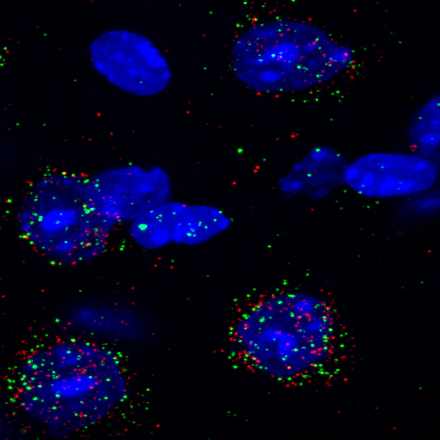
The Tran Lab focuses on developmental neurobiology, particularly investigating how molecular cues regulate neuronal morphogenesis and synapse development. Current research includes examining the dysregulation of Neuropilin-2 expression in inhibitory neurons and its impact on hippocampal circuit development and autism-related behaviors, as highlighted in their recent publication in Molecular Psychiatry.