
معرفی
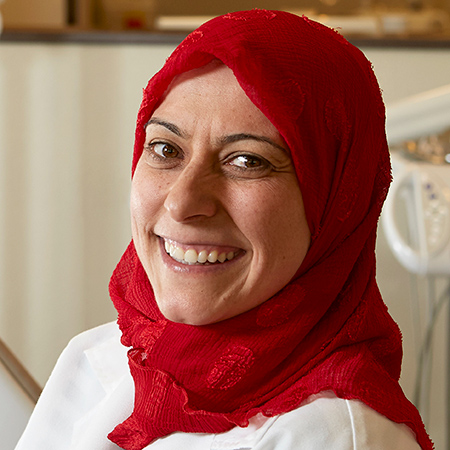
Tanya Al-Talib serves as Professor-in-Residence in the Department of Orthodontics at the University of Nevada, Las Vegas School of Dental Medicine, where she has taught orthodontic and pediatric dentistry residents alongside predoctoral students since fall 2015 while providing clinical instruction.
Her academic credentials include a Doctor of Dental Surgery (DDS) from Louisiana State University School of Dentistry (2001), Certificate of Advanced Education in General Dentistry from the same institution, and Master of Science with Orthodontics Certificate from the University of North Carolina at Chapel Hill School of Dentistry (2015).
Dr. Al-Talib's research program centers on sleep disordered breathing across pediatric and adult populations, with significant emphasis on 3-D airway analysis and identification of clinical risk factors. Her work bridges orthodontics with dental sleep medicine, investigating connections between bruxism, temporomandibular disorders, and dental restorations through rigorous clinical observation and imaging techniques.
Analysis of her 15 most recent publications reveals consistent focus on pediatric sleep apnea risk factors, particularly the role of non-nutritive sucking habits and dental anomalies. Methodologically, she employs CBCT imaging, retrospective clinical analyses, and in vitro testing to explore occlusal relationships with airway development and restoration longevity.
Her professional recognition includes:
- Diplomate, American Board of Orthodontics (2017)
- Diplomate, American Board of Dental Sleep Medicine (2020)
Dr. Al-Talib maintains active clinical practice treating orthodontic cases and sleep-related breathing disorders while mentoring residents. Her ongoing projects aim to translate research findings into clinical screening protocols for early detection of sleep-disordered breathing in dental settings.
She leads collaborative research initiatives focused on airway development and sleep medicine, working with interdisciplinary teams to develop evidence-based interventions for at-risk patient populations.


