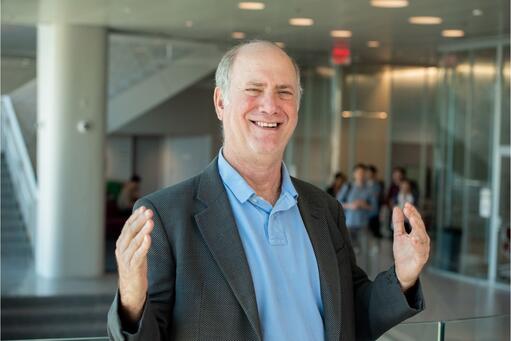
معرفی
Steven L. Blader is the Kenneth G. Langone Professor of Business at the Leonard N. Stern School of Business, New York University, where he has been a faculty member since 2003. His research focuses on the psychological and relational dynamics that influence employee behavior in organizations.
- Ph.D. in Social Psychology, New York University, 2002
- B.A. in Psychology, University of Pennsylvania, 1994
Professor Blader's research centers on organizational justice, social identity, status, and power. He investigates how employees' perceptions of fairness, respect, and identity within organizations affect their motivation and behavior. His work integrates social psychology with organizational behavior to understand the relational underpinnings of workplace performance and cooperation.
His recent publications reveal a strong focus on the interplay between status, power, empathy, and fairness in organizational contexts. The research spans disciplines including social psychology, behavioral economics, and management, with recurring themes in identity, justice, leadership, and prosocial behavior. His studies often employ experimental and empirical methods to uncover psychological mechanisms behind workplace dynamics.
Professor Blader has received significant recognition for his contributions:
- Kenneth G. Langone Professor of Business (2018)
- Edward J. Giblin Faculty Fellow (2013)
- Daniel Paduano Faculty Fellow (2010)
He serves in editorial leadership as Senior Editor at Organization Science and on the editorial boards of Academy of Management Journal and Academy of Management Review. His research has been published in top journals such as Journal of Personality & Social Psychology, Academy of Management Journal, and Personality and Social Psychology Bulletin. He has also co-authored two influential books: Identity and the Modern Organization and Cooperation in Groups. While specific advisees are not listed, his PhD training and supervisory roles imply graduate mentorship. His work continues to shape understanding of relational dynamics in modern organizations.