معرفی
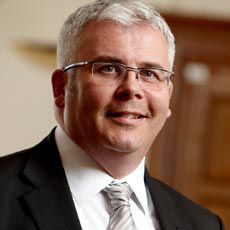
Professor Paul Jackson is a leading political economist and Professor of African Politics at the University of Birmingham, affiliated with the International Development Department within the College of Social Sciences. His work focuses on conflict analysis, post-conflict reconstruction, and governance, particularly in African contexts.
- PhD Public Policy (University of Birmingham)
- MSc Information Management (University of Central England)
- MA Development Studies (University of East Anglia)
- BA Economics and Politics (University of York)
His research interests center on the creation, destruction, and reconstruction of states, with a focus on liberal state-building, security sector reform (SSR), DDR processes, and the interplay between security and development. He has extensive field experience in Sierra Leone, Rwanda, Uganda, Zimbabwe, Iraq, Bhutan, India, China, and Nepal, working with institutions like the World Bank and local civil society organizations.
His publications highlight trends in security and development, including books on SSR in Sierra Leone, state-building, and fragile states. Recent works analyze post-conflict justice systems and the role of donor agencies in stabilization. He has contributed to journals like Peacebuilding, Third World Quarterly, and Contemporary Security Policy.
Scientific recognition includes being elected Fellow of the Royal Society for the encouragement of the Arts, Manufactures and Commerce (FRSA) based on his academic management role in public policy education. He also serves as an assessor for the University of Birmingham's Certificate in Teaching and Learning.
As Programme Leader for the British Academy's Sustainable Development Programme and advisor to the Governance and Social Development Resource Centre, he engages in policy discussions with European governments, the EU, UN, World Bank, and UK Government. He previously led the School of Government and Society (until 2010) and chairs the University's Chaplaincy Committee, integrating student welfare into his roles.