معرفی
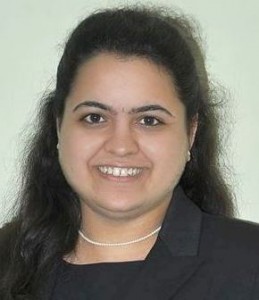
Dr. Pankaj Kumar is a Research Associate Professor at American University (AU), where he joined in April 2020. He also conducts research at the Space Weather Laboratory (code 674) at NASA Goddard Space Flight Center, having joined GSFC in April 2017 through the NASA Postdoctoral Program. Prior to that, he held research positions at the Korea Astronomy and Space Science Institute (KASI) for over six years.
His educational background includes:
- Ph.D. in Solar Physics from Aryabhatta Research Institute of Observational Sciences, Nainital, India (2011)
- M.Phil. in Physics from CCS University, Meerut, India (2006)
- B.Ed. in Physics and Mathematics from CCS University, Meerut, India (2005)
- M.Sc. in Physics from Meerut College, CCS University, Meerut, India (2004)
- B.Sc. in Physics, Chemistry, and Mathematics from CCS University, Meerut, India (2002)
Dr. Kumar has over 15 years of research experience in solar physics, with a focus on the initiation of solar eruptions (such as coronal mass ejections and jets), magnetic reconnection and particle acceleration in solar flares, and wave oscillations in the solar atmosphere. His work involves analyzing multiwavelength data from NASA missions including SDO, IRIS, STEREO, HINODE, RHESSI, and SOHO. He has made significant contributions to understanding flare and CME initiation mechanisms, flux rope dynamics, wave excitations in coronal loops, quasi-periodic pulsations in flares, and plasmoid formation in flare current sheets. Additionally, he has experience with ground-based Hα observations and solar eclipse campaigns.
Dr. Kumar has been recognized with several awards and fellowships, including:
- KASI Best Postdoc Award
- NASA Postdoctoral Program (NPP) Fellowship
- NASA HGI
- NSF Grants
He serves as a reviewer for prominent journals such as The Astrophysical Journal, Astronomy & Astrophysics, and Solar Physics, and actively participates in science communication through writing science nuggets and outreach activities. Dr. Kumar is a member of the American Geophysical Union.
His research is conducted within the Space Weather Laboratory at NASA Goddard Space Flight Center, where he collaborates on space weather forecasting and solar-terrestrial interactions.