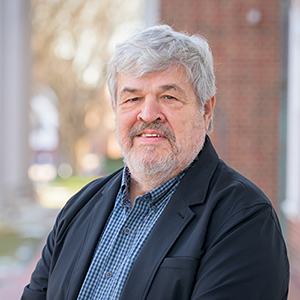
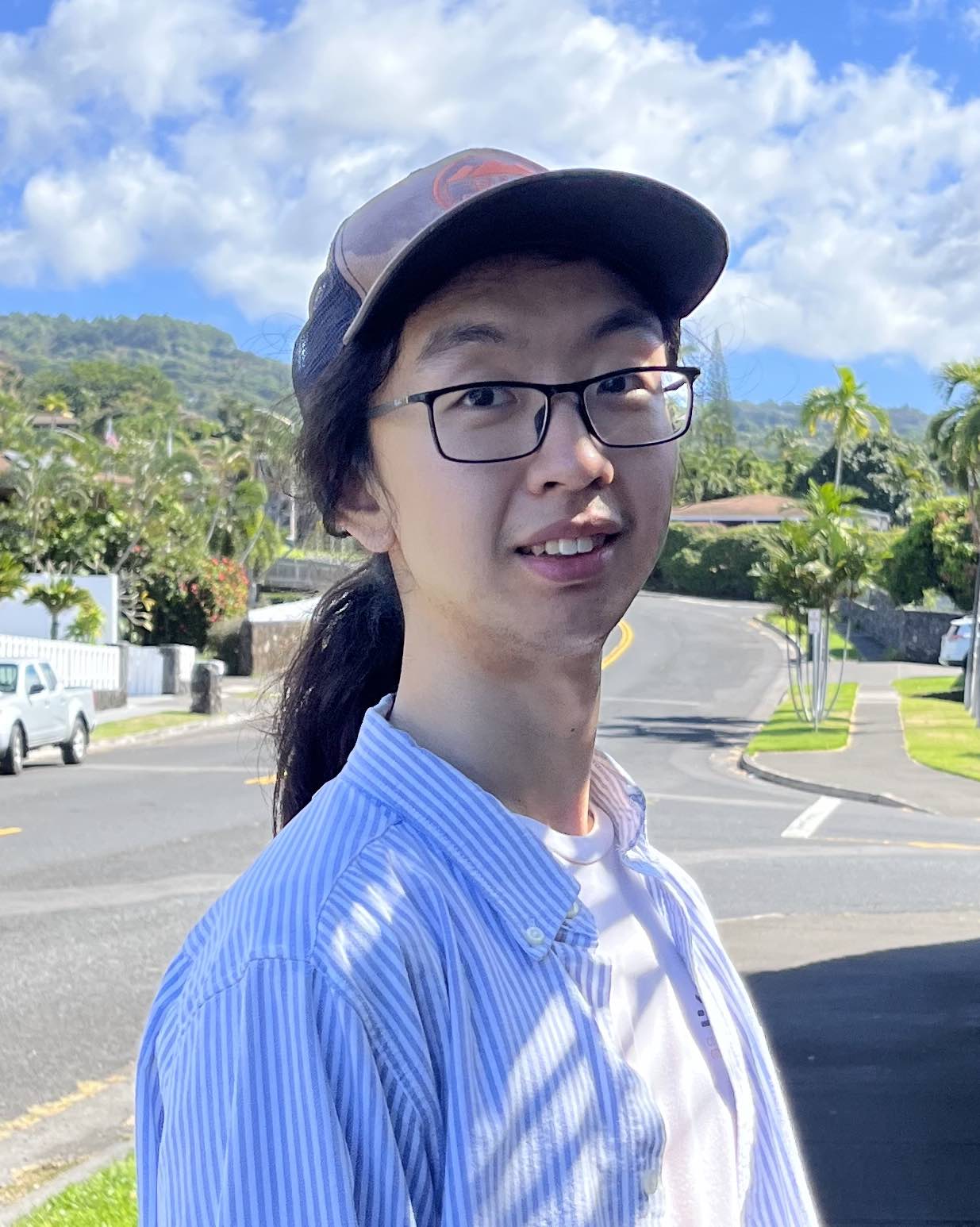
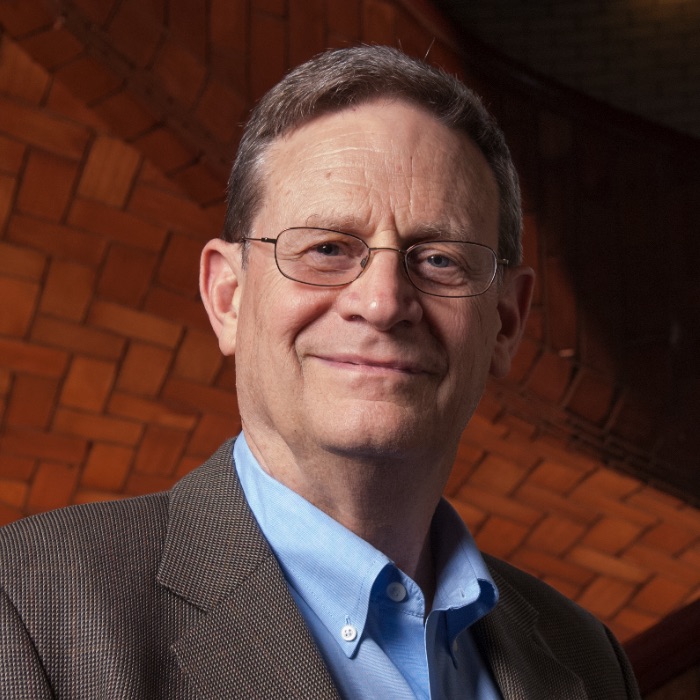
Professor Hongdong Li is a Tenured Professor at the School of Computing, Australian National University (ANU), within the College of Engineering and Computer Science. His research focuses on 3D Computer Vision, Machine Learning, and their applications in dynamic environments. He has held visiting roles at Carnegie Mellon University and has contributed to significant projects like the Australia Bionic Eyes initiative. Education: PhD (Electrical Engineering). Research Interests : 3D Computer Vision fundamentals and applied AI systems Learning-based 3D perception for plant sciences Robot navigation in unfamiliar environments Awards : Marr Prize Honourable Mention CVPR Best Paper Award Advising & Grants : Supervised 40+ PhD students, with funding from ARC, CSIRO, Microsoft, and firms like OPPO/Tencent. Active in projects such as bushfire detection via video analytics and sign language translation systems. Labs/Teams : Co-founder of the Australian Centre for Robotic Vision (ACRV). Collaborates globally on cross-view localization and autonomous systems.
Bei Wang Phillips is an Associate Professor in the School of Computing and a faculty member at the Scientific Computing and Imaging (SCI) Institute at the University of Utah. She holds a Ph.D. in Computer Science from Duke University and an undergraduate degree from the University of Bridgeport. Her research focuses on Topological Data Analysis (TDA), data visualization, computational topology, and machine learning, with applications in scientific data exploration and analysis. She has received prestigious awards including the NSF CAREER Award (2022) and the PECASE Award (2025). Her work spans projects funded by NSF, NIH, and DOE, including multiparameter TDA and topology-aware data compression. She advises numerous students and collaborates on interdisciplinary initiatives in astrophysics, climate science, and AI fairness. Education: Ph.D. in Computer Science, Duke University (2010) B.S. in Computer Science and Mathematics, University of Bridgeport (2003) Research Interests: Topological techniques for large-scale data analysis Integration of topological, geometric, and machine learning methods Applications in visualization, bioinformatics, and network analysis Key Projects: NSF-funded TDA research (DMS-2301361, OAC-2313124) DOE project on topology-preserving data compression Collaborations with NASA, Argonne National Lab, and Carnegie Institution of Washington Awards: Presidential Early Career Award for Scientists and Engineers (2025) NSF CAREER Award (2022) DOE Early Career Research Program (2020) Advising and Grants: Mentored over 30 students and postdocs Recipient of multiple NSF and DOE grants totaling millions
William H. Matthaeus is the Martin A. Pomerantz Chair of Physics & Astronomy at the University of Delaware, where he has been a faculty member since 1983. He is affiliated with the Bartol Research Institute, housed in the H. Rodney Sharp Laboratory on the University of Delaware campus. His work focuses on space physics, plasma physics, turbulence theory, and computational physics. Dr. Matthaeus received his B.A. degree in physics and philosophy from the University of Pennsylvania in 1973, followed by a Ph.D. from William and Mary in 1979. His academic journey included a National Academy of Sciences Research Associate position from 1980-1982 before joining the University of Delaware. Matthaeus's research spans solar wind physics, space plasmas, kinetic microinstabilities, and space mission development. His work involves theoretical, computational, and observational approaches to understanding plasma turbulence and magnetic reconnection in space environments. He has made significant contributions to understanding energy transfer in magnetohydrodynamic turbulence, solar wind dynamics, and particle acceleration mechanisms. His recent publications demonstrate a continued focus on multiscale plasma phenomena, with particular attention to turbulence in the solar wind, magnetosheath, and near-Sun environments. The research utilizes data from multiple spacecraft missions including Parker Solar Probe, MMS, and HelioSwarm, combined with sophisticated numerical simulations. James Clerk Maxwell Prize in Plasma Physics (2019) from the American Physical Society James B. Macelwane Award from the American Physical Society University of Delaware College of Arts & Sciences Scholarship Award Fellow of the American Physical Society Fellow of the American Geophysical Union Fellow of the American Association for the Advancement of Science Fellow of The Institute of Physics Dr. Matthaeus serves as director of the Delaware NASA Space Grant Consortium and the Delaware NASA EPSCoR program. He is a co-investigator on several major spacecraft missions including Cluster/PEACE, the Magnetospheric Multiscale mission, the Parker Solar Probe ISOIS instruments, the Interstellar Mapping and Acceleration Probe, PUNCH and Helioswarm. For over a decade, he has organized the Arcetri Workshop on Plasma Astrophysics in Florence, Italy, fostering international collaboration in the field. His research group at the Bartol Research Institute maintains active collaborations with scientists worldwide and contributes to advancing our understanding of fundamental plasma processes that govern space weather and astrophysical phenomena.
Dr Henry Moss is a Researcher at the Department of Applied Mathematics and Theoretical Physics within the School of Physical Sciences at the University of Cambridge. His work focuses on machine learning applications in climate modeling, Bayesian optimization, and Gaussian processes, bridging computational mathematics with environmental science and chemistry. His research interests include: Bayesian optimization for environmental and chemical systems Reinforcement learning in climate modeling Gaussian processes for molecular property prediction High-throughput machine learning in scientific domains Interpretable AI for coastal flooding prediction Hybrid ML-physics modeling Dr Moss's publications highlight his contributions to federated learning for climate models, sparse Gaussian process techniques, and multi-objective optimization frameworks. These works span applications in weather prediction, chemical engineering, and oceanography. Email: hwm26@cam.ac.uk
California Institute of Technology (Caltech)United States
Zongyi Li is a Research Fellow at Massachusetts Institute of Technology , hosted by Kaiming He. They are currently pursuing a Ph.D. in Computing and Mathematical Sciences at Caltech (2019-2025), mentored by Anima Anandkumar and Andrew Stuart. Ph.D. candidate: Computing and Mathematical Sciences, Caltech (2019-2025) B.Sc. in Computer Science and Mathematics with a Jazz minor from Washington University in St. Louis (2015-2019) They focus on Neural Operators for learning solution operators in Partial Differential Equations (PDEs) , particularly in fluid mechanics and earth science . Their work models physical simulations with chaotic behaviors and complex geometries, showing applications in weather forecasting , carbon storage , and aerodynamics simulation . Publications emphasize resolution-invariant models , chaotic systems , and zero-shot super-resolution capabilities. Their research combines Fourier analysis , graph networks , and physics-informed loss functions to achieve state-of-the-art performance in PDE solving with up to 1000x speedup over traditional solvers. Fellowships: Kortschak Scholarship PIMCO Fellowship Amazon AI4Science Fellowship Nvidia Fellowship MIT Novo Nordisk AI Fellowship Code & Open-Source: Co-developer of the NeuralOperator library Implementations for Fourier Neural Operators , Graph Neural Operators , and Tensorized Neural Operators Media Recognition: Quanta Magazine MIT Tech Review NVIDIA Features Towards Data Science
M. Granger Morgan is the Hamerschlag University Professor of Engineering at Carnegie Mellon University , with appointments in the Department of Engineering and Public Policy , Department of Electrical and Computer Engineering , and H. John Heinz III College . He co-directs the NSF Center for Climate and Energy Decision Making and the Electricity Industry Center at CMU. Education: Ph.D., Applied Physics and Information Science, University of California, San Diego (1969) M.S., Astronomy and Space Science, Cornell University (1965) B.A., Physics, Harvard College (1963) His research spans science, technology, and public policy with focus areas in energy systems , climate change mitigation , electric grid resilience , and uncertainty characterization in policy analysis . Recent publications analyze hydrogen market barriers , carbon sequestration timelines , and interdependent energy infrastructure risks . Scientific leadership includes: Member, National Academy of Sciences Member, American Academy of Arts and Sciences Co-chair, NAS Report Review Committee Board member, International Risk Governance Council Foundation Advisory Board, E.ON Energy Research Center, RWTH Aachen DOE Electricity Advisory Committee member Former EPA Science Advisory Board Chair Fellow of AAAS, IEEE, and Society for Risk Analysis Contact: Office 5220 Wean Hall, Phone 412-268-2672, Email granger.morgan@andrew.cmu.edu
Professor Daniel Segrè is a faculty member at Boston University, holding the title of Professor of Biology, Bioinformatics, and Biomedical Engineering. His research focuses on systems biology, microbial ecology, and metabolic engineering, with an emphasis on understanding complex biological networks and their applications in bioenergy and biomedicine. Segrè leads the Segre Lab ( segrelab.bu.edu ), where theoretical and computational approaches are applied to study metabolism, microbial interactions, and synthetic biology. Segrè earned his PhD from the Weizmann Institute of Science, Israel. His work bridges fundamental science and applied engineering, addressing topics such as microbial community dynamics, metabolic pathway design, and environmental microbiome applications. Research Interests: Systems biology of metabolism, evolution of biochemical networks, microbial interactions, bioinformatics, and environmental microbiome engineering. His lab develops computational models (e.g., COMETS) to simulate microbial ecosystems and design synthetic microbial communities for climate change mitigation and bioenergy production. Teaching: Courses include BE 777 (Computational Genomics), BF 821 (Bioinformatics Seminar), and BF 571 (Dynamics and Evolution of Biological Networks). These courses reflect his expertise in integrating computational methods with biological systems analysis.
Richard E. Turner is a Professor of Machine Learning at the University of Cambridge's Department of Engineering and Research Lead for AI for Weather Prediction at the Alan Turing Institute. He serves as Cambridge Lead for the EPSRC Probabilistic AI Hub and previously held roles including Visiting Researcher at Microsoft Research, Co-Director of the AI4ER CDT, and Course Director for the Machine Learning and Machine Intelligence MPhil program. Current research focuses on probabilistic machine learning fundamentals, environmental prediction (weather/climate), and spatio-temporal modeling combining deep learning with Bayesian methods Supervised 26 PhD students (13 graduated) and 7 research assistants/associates Secured over £30M in research funding from EPSRC, Microsoft, Toyota, Google, DeepMind, Amazon, and Improbable Featured in BBC Radio 5 Live's The Naked Scientist, BBC World Service's Click, and Wired Magazine His recent publications demonstrate expertise in diffusion models for PDE simulations, Gaussian Processes for environmental applications, and Bayesian methods for spatio-temporal forecasting. Key trends include climate modeling using ML, neural PDE solvers, and scalable probabilistic inference. Awards : Cambridge Students' Union Teaching Award for Lecturing; supervised Qualcomm Innovation Fellowship winner Collaborations : Microsoft Research (AI4Science), Alan Turing Institute, EPSRC Probabilistic AI Hub Turner leads the Turner Group within Cambridge's Machine Learning Group, focusing on uncertainty-aware ML for scientific applications. Current research assistants work on topics like meta-learning, Bayesian inference, and climate science applications.
Swiss Federal Institute of Technology in LausanneSwitzerland
Farhad Rachidi-Haeri is a Titular Professor and Head of the Electromagnetic Compatibility (EMC) Group at EPFL. His expertise spans EMC research, lightning electromagnetics, time reversal techniques, and fault location in power systems. He has led the EMC Group since the 1980s, with funding from the Swiss National Science Foundation, European Union, and private sector collaborations. His work involves international partnerships with institutions like the University of Toronto and KTH. Education: PhD in Electrical Engineering from EPFL (1991), M.S. from EPFL (1986). Roles: President of Swiss National Committee of URSI (2012–2020), Editor-in-Chief of IEEE Transactions on EMC (2013–2015), and member of the Academy of Sciences of Bologna Institute (2019). Research Focus: Lightning interaction with infrastructure, electromagnetic field modeling, time reversal applications for fault detection, and high-frequency transient analysis. His work bridges theoretical physics and engineering, addressing challenges in power systems, lightning protection, and aerospace. Awards: IEEE EMC Technical Achievement Award (2005), Berger Award (2016), and Distinguished Honorary Professor at Tsinghua University (2024). Over 400 peer-reviewed papers and 500 conference contributions reflect his prolific research output. Labs/Teams: Leads the EMC Laboratory at EPFL, focusing on experimental and numerical studies of electromagnetic phenomena. Collaborates with global networks on projects like Laser Lightning Control and structural lightning protection for wind turbines.
James F. Drake is a Distinguished University Professor in the Department of Physics at the University of Maryland, College Park, with affiliations at the Institute for Physical Science and Technology (IPST) and the Institute for Research in Electronics and Applied Physics (IREAP). He holds a B.S., M.S., and Ph.D. in Physics from UCLA (1975). His research focuses on theoretical plasma physics, particularly magnetic reconnection and plasma turbulence, with applications to space physics, solar flares, and magnetic fusion. Key contributions include elucidating the role of whistler waves in reconnection dynamics and advancing understanding of energy release mechanisms in plasmas. Dr. Drake’s awards include the American Physical Society Fellowship and the Humboldt Senior Scientist Research Award. He teaches advanced physics courses (e.g., Physics 604, 611, 761-762) and has pioneered computational models to study reconnection, turbulence, and particle acceleration. Recent work leverages Parker Solar Probe data to explore solar wind dynamics and reconnection in near-Sun environments. Education: UCLA (B.S., M.S., Ph.D. in Physics, 1975) Research Themes: Magnetic Reconnection, Plasma Turbulence, Space Plasma Dynamics Notable Achievements: Leader in reconnection theory; developer of kinetic simulation frameworks; contributor to NASA missions
University of North Carolina at Chapel HillUnited States
Miyuki Hino is an Assistant Professor in the Department of City and Regional Planning and an Adjunct Assistant Professor in the Environment, Ecology, and Energy Program at the University of North Carolina at Chapel Hill. She holds a Ph.D. in Environment and Resources from Stanford University and a B.S. in Chemical Engineering from Yale University. Her research focuses on climate hazards, governance, and public policy , with emphasis on equitable adaptation to climate change. Key areas include sea level rise impacts, flood risk on property markets, and managed retreat strategies. She has conducted extensive work on floodplain development policies, household relocation programs, and community resilience frameworks. Dr. Hino's interdisciplinary approach integrates environmental science, urban planning, and social equity . She collaborates with academic and municipal partners, such as the Center for Urban and Regional Studies and Annapolis, MD local governments, to develop actionable solutions for climate adaptation. Her work bridges technical analyses (e.g., sensor networks, machine learning) with policy design to ensure both effectiveness and justice in climate responses. Recent projects emphasize preventing future 'trapped households' by analyzing zoning policies and market dynamics that drive risky development. She advocates for climate-smart growth strategies to balance economic needs with environmental safety, while addressing disparities in vulnerability across communities. Her research has been featured in Science Advances , Nature Climate Change , and interdisciplinary journals. She actively engages with policymakers to translate findings into practical measures, such as equitable buyout programs and floodplain management reforms.
Rebecca Willett is a Professor of Statistics and Computer Science at the University of Chicago and Faculty Director of AI at the Data Science Institute. She holds the Worah Family Professorship and is a member of the Wallman Society of Fellows. Her research focuses on machine learning, signal processing, and scientific computing, with applications in astronomy, climate science, and biochemistry. She has held visiting roles at institutions including UCLA and INRIA. Key roles include Deputy Directorships at the NSF-Simons Institute for Theory and Mathematics in Biology and the SkAI Institute. Education: PhD in Electrical and Computer Engineering from Rice University (2005), followed by faculty roles at Duke University (2005–2013) and the University of Wisconsin-Madison (2013–2018). Awards include the 2024 SIAM Data Science Career Award, NSF CAREER Award (2007), and AFOSR Young Investigator Award (2010). Research interests span inverse problems, optimization theory, and interdisciplinary applications. Her work bridges high-dimensional statistics and imaging science. Recent articles emphasize neural network theory, climate data assimilation, and biophysical modeling. Awards include SIAM Fellowship, IEEE Fellowship, and teaching excellence awards. She leads initiatives in AI ethics, broadening participation in STEM, and serves on key committees like the National Academies' CATS. Labs/Groups: Machine Learning Group at UChicago, CERES Center for Unstoppable Computing. Grants include NSF, DOE, and collaborations with Argonne National Laboratory.
Dr Nima Izadyar serves as a Senior Lecturer and Course Chair of the Bachelor of Building Surveying (NBBS) at Victoria University's School of Built Environment and Engineering within the College of Sport, Health and Engineering. He leads curriculum innovation, applied research, and student-industry engagement in building regulation and performance. His educational background includes a PhD from Queensland University of Technology (QUT), Australia (2020), with academic and research experience spanning Australia, Southeast Asia, and the Middle East. Dr Izadyar's research focuses on developing practical, data-driven solutions for sustainable built environments. His work connects engineering principles with building science to improve indoor environmental quality, enhance ventilation performance, and integrate renewable energy systems. He has secured competitive funding for projects targeting sustainable housing design, digital transformation in construction, and energy efficiency through nature-based and AI-enabled solutions. His research output appears in high-impact journals in building, energy, and sustainability fields. His scholarly contributions have been recognized with prestigious awards including the Signato Medal and the AIRAH Higher Education and Research Award. Signato Medal AIRAH Higher Education and Research Award As an academic supervisor, Dr Izadyar mentors HDR students on critical topics including greening private outdoor spaces for improved indoor environmental quality, regulatory frameworks in Class 2 buildings, ventilation system optimization, occupant-centric window design, and BIM integration in construction education. His supervision approach emphasizes applied systems thinking, interdisciplinary collaboration, and alignment with national sustainability goals. He has secured competitive funding for projects targeting sustainable housing design, digital transformation in construction, and energy efficiency solutions. Dr Izadyar actively contributes to industry engagement through international collaborations that generate tangible outcomes in the built environment, serving as a reviewer, editor, and guest editor for scholarly publications while maintaining strong connections with industry partners to bridge research and practice.
Xavier Brusset is a Professor in Supply Chain at SKEMA Business School since 2016, where he also serves as Director of the PRISM Research Center since 2017. Previously, he held professorial positions at Toulouse Business School (2015-2016) and ESSCA School of Management (2009-2015), where he was responsible for the Master 2 in Purchasing and Supply Chain Management program. His academic journey includes a PhD in Management Sciences from Université Catholique de Louvain (2010) and a Habilitation à Diriger des Recherches from Université Paris Ouest Nanterre La Défense (2016). His research spans multiple critical areas in supply chain management, with particular focus on supply chain resilience, blockchain applications, weather risk management, and pandemic impacts on supply chains. Brusset has developed innovative approaches to understanding how supply chain partners interact, how information affects their behavior, and how external disruptions like weather anomalies and pandemics impact operational efficiency. His work bridges theoretical models with practical applications, often developing decision-support tools for managers facing complex supply chain challenges. Brusset's publication record shows a clear evolution of research interests, beginning with foundational work on supply chain contracts and information sharing, then expanding to weather risk management, and most recently focusing on pandemic disruptions and blockchain applications. His 15 most recent publications (2018-2025) demonstrate increasing sophistication in modeling complex supply chain phenomena, with particular emphasis on network effects, ripple effects, and multi-echelon optimization under disruption scenarios. Editorial board member of Logistics Research Editor of International Journal of Retail and Distribution Management (2022-2023) Recognized EU expert for CINEA research projects evaluation Organizer of the Colloquium on European Research in Retailing (CERR) Reviewer for multiple top journals including International Journal of Production Economics As an advisor, Brusset has supervised doctoral students including R. Alkhudary (co-director, Université Paris 2 Panthéon-Assas) and V. Capocasale (rapporteur). His professional experience extends beyond academia to include industry roles in financial markets and logistics technology, having co-founded WebLogistix, a platform for sharing logistics information in Argentina. His research has practical applications across multiple sectors, particularly in retail, food supply chains, and manufacturing, where he develops tools to help managers mitigate risks and optimize operations under uncertainty.
John Zelek is an Associate Professor in the Department of Systems Design Engineering at the University of Waterloo. He co-directs the VIP (Vision & Image Processing) lab and previously served as Associate Graduate Chair (2013-2017). He co-founded two startups: Tactile Sight (haptic navigation for disabled individuals) and Sweep3D (3D modeling technology). His research focuses on autonomous robotics, 3D scene understanding, infrastructure assessment, medical imaging, and sports analytics using AI/deep learning techniques. Education includes a BASc from Waterloo (1985), MASc from Ottawa (1989), and PhD from McGill (1996). He teaches courses like SYDE 283 (Physics), SYDE 572 (Pattern Recognition), and SYDE 675 (Pattern Recognition). Research interests span robotics, computer vision, anomaly detection, and SLAM. His work applies to infrastructure monitoring, sports analytics (hockey/pitcher analysis), medical imaging (OCT/fundus), and assistive technologies. Recent publications emphasize 3D modeling, SLAM enhancements, and sports tracking algorithms. Zelek advises graduate students (SSPS status) and collaborates with companies like Intelligent Health Solutions and EyeCheck through advisory roles. Key innovations include hybrid SLAM systems, puck localization algorithms, and medical robotic swab systems demonstrated on moving phantoms.