معرفی
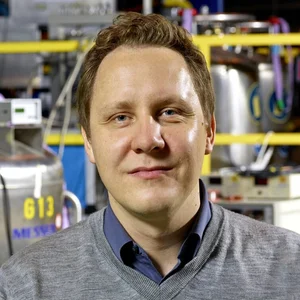
Mi Tian is a Professor of Sustainable Hydrogen Energy in the Department of Chemical Engineering at the University of Bath. Her research is highly active and centers on advanced materials for sustainable energy applications, particularly hydrogen storage and CO₂ utilization. She is involved in multiple research council-funded projects utilizing neutron scattering techniques to analyze hydrogen confinement in storage materials.
- University: University of Bath
- Department: Department of Chemical Engineering
- Email: mt747@bath.ac.uk
- Office: Wessex House 7.35
- Phone: +44 (0) 1225 384348
- ORCID: 0000-0001-6983-6146
Education:
- Doctor of Philosophy (PhD) in Mg-C composite for sustainable energy applications, University of East Anglia (Awarded: 1 July 2015)
Her research interests include sustainable hydrogen energy, hydrogen storage, porous materials, Mg-based composites, activated carbon, nanoparticles, and photocatalytic CO₂ hydrogenation. Her work significantly contributes to UN Sustainable Development Goals related to clean energy and climate action. She applies advanced material characterization techniques and innovative manufacturing methods such as powder bed fusion in her research.
The most recent articles indicate a strong focus on next-generation hydrogen storage technologies, including hydrate-based systems, metal–organic frameworks, and high-entropy oxides for CO₂ conversion. Her research integrates materials science with process engineering to develop scalable and sustainable energy solutions.
Scientific Awards:
- EPSRC Women In Engineering Ambassador (June 2023)
She has served as a Co-Investigator on two major research council projects related to neutron scattering analysis of hydrogen storage materials. Mi Tian actively participates in academic dissemination, including being a speaker at the Gordon Research Conference (June 2025). Although no formal advisees are listed, her collaborative network includes researchers across the UK and internationally. Her work is supported by national funding bodies and has significant industrial and environmental implications.