معرفی
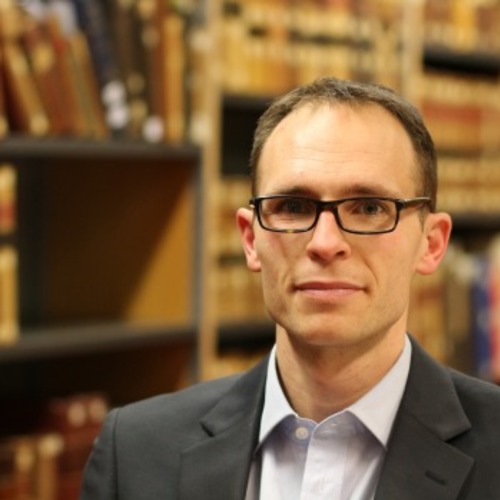
Matthew Dyson is a Professor of Civil and Criminal Law at the University of Oxford's Faculty of Law, affiliated with Corpus Christi College. He serves as Director of the Institute for European and Comparative Law and holds roles at 6KBW College Hill Chambers and the Utrecht Centre for Accountability and Liability Law. His research focuses on the intersection of criminal and tort law through historical and comparative lenses, with a particular emphasis on legal development across systems since 1850. Notable works include Explaining Tort and Crime (CUP, 2022), analyzing legal evolution in England and Spain. Dyson has held visiting positions at institutions worldwide and contributes to editorial boards of journals like Comparative Legal History and Glossae. His teaching spans criminal law, tort law, and Roman legal foundations.
Education & Professional Background:
- Previous roles: Fellow in Law and Director of Studies at Trinity College, Cambridge (2011–2016); Jesus College, Cambridge (2008–2011).
- Associate Member of 6KBW College Hill Chambers.
- Research Fellow at Utrecht Centre for Accountability and Liability Law.
- President of the European Society for Comparative Legal History.
Research Interests: Dyson explores the historical relationship between criminal law and tort law, emphasizing comparative legal frameworks and systemic coherence. His work bridges doctrinal analysis with interdisciplinary perspectives, addressing questions of legal domain boundaries, judicial reasoning, and transnational harmonization.
Recent Trends in Publications: Recent scholarship examines complicity doctrines, accessory liability reforms, and cross-domain legal interactions. His 2022 monograph synthesizes over 150 years of legal development, while articles address topics like sentencing principles, comparative civil remedies, and doctrinal evolution in criminal law.
Awards & Grants: No specific awards listed, but his extensive editorial and advisory roles indicate scholarly recognition. His grants and institutional affiliations support comparative legal research initiatives.
Labs/Teams: Active in the Institute for European and Comparative Law, Criminal Law Discussion Group, and Roman Law Assize Seminars. Collaborates internationally through exchange programs with institutions like the Max Planck Institute.