معرفی
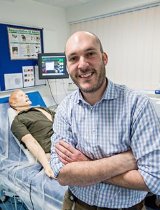
Mark Yeoman is a Professor of Neuropharmacology and Director of the Centre for Lifelong Health at the University of Brighton's School of Applied Sciences. His research focuses on the biological mechanisms of aging in the central nervous system (CNS) and gastrointestinal tract (GI), particularly the roles of stress, inflammation, and senescence. He leads a research team exploring age-related changes in serotonin signaling pathways and their impact on learning, memory, motor function, and bowel health. His work combines invertebrate (Lymnaea snail) and vertebrate models to study neural circuitry and age-related dysfunction.
Education:
- BSc (Hons) in Physiology & Pharmacology, University of Southampton (1983)
- PhD in High Pressure Neurological Syndrome, University of Aberdeen (1987)
Research Interests:
Prof. Yeoman's research integrates systems biology approaches to study aging across multiple levels: molecular (e.g., serotonin regulation), cellular (e.g., neuronal senescence), and organismal (e.g., social isolation effects). Key areas include:
- Aging mechanisms in CNS and GI tract
- Serotonin signaling in learning/memory and bowel function
- Social isolation and its synergistic effects on brain health
- Development of biosensors for real-time aging biomarker detection
Grants & Collaborations:
His research has attracted over £1.5M in funding from EPSRC, BBSRC, and NIHR. Notable projects include:
- 3D-printed biosensors for TNF-α and serotonin detection
- Investigating age-related GI dysfunction and TNF-α antagonists
- South Coast Network Centre for dementia research
Labs & Teams:
He directs the Centre for Lifelong Health, fostering interdisciplinary aging research. His lab employs advanced techniques: electrochemical sensing, proteomic analysis, and in vivo murine models.