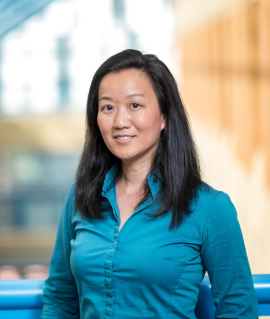
Dr. Corey T. Callaghan is an Assistant Professor in the Department of Wildlife Ecology and Conservation at the University of Florida . Based at the Fort Lauderdale Research and Education Center , his research focuses on global change ecology using big data from citizen science platforms like eBird and iNaturalist, combined with geospatial analyses and macroecological theory . Ph.D. (2019) from UNSW Sydney M.S. (2015) from Florida Atlantic University B.S. + B.S. (2013) from Canisius College His work examines urban ecology , including how species traits influence urban tolerance across birds, amphibians, and butterflies. He develops adaptive sampling frameworks to optimize citizen science data collection while addressing biases. Current projects analyze human-nature interactions through citizen science participation, secondary data in photographs, and machine learning for biodiversity monitoring. He actively contributes to conservation strategies for urban biodiversity and data-driven restoration efforts . Recent publications highlight his expertise in cross-taxa comparisons , continental-scale analyses , and ecosystem service quantification . He leads the Global Ecology Research Group at the University of Florida, emphasizing collaborative science and open-source methodologies .
Shanique Brown serves as Assistant Professor of Management at the Zicklin School of Business, City University of New York (CUNY), where she investigates cognitive processes impacting organizational team dynamics and decision-making. Her research bridges industrial-organizational psychology with practical applications in extreme environments. Her academic foundation includes: Ph.D. in Industrial-Organizational Psychology from DePaul University M.A. in Industrial-Organizational Psychology from Southern Illinois University, Edwardsville B.Sc. in Psychology from the University of the West Indies Dr. Brown's research centers on decision-making mechanisms and team cognition within organizational contexts, with specialized focus on extreme environments like space missions. She examines how cognitive styles, working memory, and team composition influence performance in isolated, confined, and high-stakes settings. Her work integrates psychological theory with actionable frameworks for optimizing team effectiveness across virtual and physical workspaces. Analysis of her publication history reveals evolving expertise in team science, particularly regarding virtual team leadership, polycultural organizations, and NASA-relevant analog research. Recent work emphasizes selection-optimization-compensation models for team performance and psychosocial factors in extreme environments, demonstrating consistent contribution to organizational psychology literature. Her scientific recognition includes: Editorial Fellowship from Group Dynamics (2022) Wayne State University Faculty Accessibility Fellowship (2022) Teaching Innovation Development Excellence Award (2020) Faculty Teaching Award (2020) University Research Grant (2019) Robert A. Daugherty Memorial Award (2011) Dr. Brown actively collaborates on NASA-funded research through the Human Research Program, developing crew composition models for long-duration space missions. She serves on Baruch College's PhD Admissions and Interdisciplinary Business Major committees while maintaining leadership roles in the Society of Industrial-Organizational Psychology, including Task Force Chair and Conference Committee positions. Her grant work focuses on translating team dynamics research into operational frameworks for extreme environments. She leads interdisciplinary collaborations with NASA researchers and international scholars on projects including virtual escape room studies for team performance assessment and CREWS (Crew Recommender for Effective Work in Space) development, demonstrating commitment to solving real-world team challenges in high-consequence settings.
Jeff Huang is an Associate Professor and Associate Chair of Computer Science at Brown University. His research focuses on Human-Computer Interaction (HCI), with emphases on personalized systems using behavioral data, health informatics, and user interfaces. Huang holds a PhD from the University of Washington and degrees from the University of Illinois at Urbana-Champaign. His work is funded by NSF, NIH, and ARO, and he has received awards including the NSF CAREER Award and ARO Young Investigator Award. Education: PhD in Information Science, University of Washington (2013) MS in Computer Science, University of Washington (2013) BS and MS in Computer Science, University of Illinois at Urbana-Champaign (2007) Research Interests: His work spans health informatics (e.g., sleep tracking systems like Self-E and SleepCoacher), user interface design, and leveraging behavioral data for personalized systems. Notable projects include WebGazer (webcam eye tracking), filtered.ink (creative illustration tools), and Sochiatrist (mental health analytics). Teaching: He teaches courses on user interfaces, HCI, and research methods, including CSCI 0130/1300 (User Interfaces), CSCI 2300 (HCI Seminar), and CSCI 2000 (Research Methods). Awards: NSF CAREER Award Facebook Fellowship ARO Young Investigator Award Grants & Advising: Huang leads a research group advising over 50 students, many of whom have pursued academic and industry roles. His grants support projects in HCI, health tech, and collaborative systems.
Georges Kostakiotis is a Senior Lecturer at the National Institute for Oriental Languages and Civilisations (INALCO) in Paris, France, specializing in Modern Greek language and literature. His academic appointment falls under CNU Section 15, covering Arabic, Chinese, Japanese, Hebrew and other languages and literature. He serves as Head of the TEMPO course for Modern Greek and teaches across multiple levels from L1 through L3, including text study, written and oral practice of Greek, Modern Greek thematic courses, specialized Greek text corpora, and technical translation at M1 and M2 levels. Dr. Kostakiotis's research focuses on the intersection of language pedagogy and literary studies. He investigates teaching oral communication from both practical and theoretical perspectives, examining how literary texts function as effective pedagogical tools in foreign language classrooms. His work develops specialized strategies for teaching Greek to Latin-speaking audiences, leveraging linguistic connections while addressing acquisition challenges. Additionally, he explores literary representations of politics and urban worlds, situating Greek literature within broader European and Balkan contexts through the CREE (Centre de Recherches Euro-Méditerranéennes et Euro-asiatiques) research center. Analysis of Dr. Kostakiotis's publication record from 2009-2024 reveals consistent scholarly engagement with Greek literature's relationship to Balkan cultures and historical contexts. His work demonstrates particular interest in how Greek literature addresses themes of foreignness, crisis, and identity through comparative analysis with other Balkan literary traditions. His research spans pedagogical approaches to language teaching, literary analysis of Greek texts, historical examinations of Greek literature, and cultural studies of Greek communities in the Balkans. Dr. Kostakiotis has been instrumental in organizing numerous academic events that bridge language pedagogy and literary scholarship. He has coordinated multiple conferences and study days focused on language teaching methodology, including sessions on oral communication techniques, vocabulary acquisition strategies, and assessment approaches. In the realm of literature and cultural studies, he has organized scholarly gatherings examining Greek-Romanian relations, Phanariote history, women's perspectives in Greek literature, and urban studies with particular attention to cities like Thessaloniki and Alexandria. His collaborative work, including co-edited volumes on Greek-Romanian relations, demonstrates his commitment to fostering academic dialogue across national and disciplinary boundaries.
Terry C. Lansdown is an Associate Professor in the School of Social Sciences and Department of Psychology at Heriot-Watt University. His expertise lies in Human Factors, particularly focusing on driver safety, workload management, and attentional distraction in transportation contexts. Prior to his academic role, he worked as a senior researcher at the Transport Research Laboratory, contributing to numerous EU-funded and government-sponsored projects. His research integrates ergonomics principles with real-world applications, addressing issues like automated driving systems, social distractions in vehicles, and occupational health in construction industries. Key research interests include: Driver behavior and road safety Human factors in automated systems Workload and attentional demands in complex tasks Health and safety in small-to-medium enterprises (SMEs) He has led studies on pandemic response strategies, such as the CHARIS project analyzing behavioral adherence during the COVID-19 crisis. Lansdown’s work frequently bridges psychological theory with practical interventions, including text messaging campaigns to improve construction worker safety and experimental designs to evaluate automation failure responses. Collaborations span academic and industrial sectors, with publications addressing topics ranging from UV exposure in outdoor workers to the cognitive impacts of in-vehicle distractions. His contributions align with UN Sustainable Development Goals related to health (SDG 3) and sustainable cities (SDG 11).
Professor Lisa Strohschein holds dual roles as a Professor in the Sociology Department and Director of Undergraduate Programs at the University of Alberta's Faculty of Arts. Her research focuses on family dynamics and health inequalities, employing longitudinal methodologies to analyze large datasets. She teaches courses on health sociology, mental illness, and socialization, emphasizing sociological perspectives on health distribution and care systems. Her research interests include the interplay between socioeconomic factors and mental health, gender disparities in marital outcomes, and generational shifts in parenting practices. She has published extensively on topics like teen pregnancy correlates, poverty dynamics, and the mental health implications of family structures. Strohschein has received the 2019-20 Killam Annual Professorship and serves as Editor-in-Chief of Canadian Studies in Population, a peer-reviewed journal focusing on demographic research. She also contributes to policy through roles like membership in Statistics Canada's Demographic Statistics Advisory Committee and past presidency of the Canadian Population Society. Her scholarly work bridges theoretical frameworks (life course, stress process theory) with methodological rigor, often using growth curve models and competing risks analysis. Current research trends emphasize cross-national comparisons and applied policy relevance, particularly in understanding how family transitions impact health across the life course.
Gareth Roberts is an Associate Professor in the Department of Linguistics at the University of Pennsylvania, where he serves as Graduate Chair. He is also a faculty member of the Psychology Graduate Group, founder and director of the Cultural Evolution of Language Lab, and co-director of the Social and Cultural Evolution Working Group at Penn. Roberts earned his PhD in Linguistics from the University of Edinburgh in 2010, following an MSc in Evolution of Language and Cognition (2006) and a BA in German and Russian (2003) from the University of Nottingham. His academic journey includes postdoctoral positions at Yeshiva University and the University of Stirling before joining Penn as an Assistant Professor in 2014, where he was promoted to Associate Professor in 2022. His research focuses on the role of social and communicative pressures in shaping language emergence and evolution. Roberts investigates fundamental questions about linguistic variant spread, phonological system structuring, and how communication shapes linguistic structure. His work bridges linguistics, cognitive science, and cultural evolution through innovative experimental approaches using artificial languages and laboratory simulations. Analysis of Roberts' recent publications reveals a consistent focus on experimental semiotics, with particular attention to social biases in language evolution, phonological organization, indexicality emergence, and the dynamics of linguistic variation. His work often combines computational modeling with human experiments to isolate specific mechanisms driving language change. Linguistic Society of America Cognitive Science Society Philological Society Cultural Evolution Society Roberts has successfully secured substantial research funding including an NSF PAC Grant ($102,648), Penn URF Research Grants ($12,155), MindCORE initiative grant ($600,000), and multiple smaller grants totaling over $20,000. His lab currently includes researchers investigating diverse topics from case and gender marking emergence to AI agent effects on group dynamics, linguistic and genetic data in British history, and phonological space organization. The Cultural Evolution of Language Lab, which Roberts founded and directs, conducts cutting-edge research using experimental semiotics methodologies. Current projects examine how social factors influence language change, the emergence of linguistic structure through communication, and the interaction between iconicity and combinatoriality in communication systems.
Dr. Kelsey Onderdijk is a Post-doctoral Researcher at Tilburg University in the Department of Communication and Cognition within the Tilburg School of Humanities and Digital Sciences. Her research focuses on the intersection of music cognition, virtual reality, and social connectedness, with publications spanning neuroscience, psychology, and human-computer interaction domains. Dr. Onderdijk completed her doctoral studies at Ghent University with a dissertation titled "Come together: Exploring unity in music interaction through agency and social connectedness." Her academic journey reflects a strong commitment to understanding human interaction through musical experiences, particularly examining how technological mediation affects social bonding. Her research interests include: Music cognition and embodied music interaction Virtual reality applications in musical contexts Social connectedness in digital music environments Effects of technological constraints on musical collaboration Physiological measures of emotional engagement in music Impact of external constraints on creative expression Dr. Onderdijk's publication record demonstrates a clear trajectory examining how people connect through music in both physical and virtual spaces. Her work bridges psychology, musicology, and human-computer interaction, with particular attention to the impact of the COVID-19 pandemic on musical collaboration. Recent publications have focused on concert experiences in virtual reality environments and the physiological correlates of emotional engagement during musical performance. Her research has garnered significant attention, with multiple publications receiving citations and mentions in news outlets, policy sources, and social media platforms. The "Impact of Lockdown Measures on Joint Music Making" paper has been particularly influential, accumulating 39 citation indexes and 50 Mendeley readers. Dr. Onderdijk actively collaborates with researchers across institutions, particularly with scholars from Ghent University including Marc Leman and Pieter-Jan Maes, indicating a strong network within the music cognition research community. Her work contributes to UN Sustainable Development Goals, particularly those related to well-being and innovation.
Ruben Andersson is Professor of Social Anthropology at the University of Oxford’s Department of International Development, where he researches migration, borders, security, and conflict. His work spans the West African Sahel, southern Europe, and global security dynamics. Current Leverhulme Major Research Fellow (2023-26) for 'Apocalypse soon: Security, subversion and the struggle for a human future' Author of three major monographs: Wreckonomics (2023), No Go World (2019), and Illegality, Inc. (2014) Co-edits special issues on remoteness and risk in global governance His research focuses on the unintended consequences of security interventions, including: How fear maps global danger zones Counterproductive border control industries Postcolonial risk economies in Mali and Afghanistan Security-fueled displacement cycles Profits from migration control systems Anthropology of the bioeconomy Recent publications (2016-2024) analyze: Security as subversion Border wall paradoxes Bioeconomic border technologies Digital danger mapping Interventionist 'bunker politics' Time as a control mechanism Scientific recognition: Leverhulme Major Research Fellowship (2023) Co-published in The Cambridge Journal of Anthropology , Political Geography , and Security Dialogue Doctoral supervision includes: Chloe Marshall-Denton Maggie Neil His fieldwork in Mali, Senegal, and the Mediterranean has produced critical insights about: Security industry feedback loops Risk aversion in academic/interventionist practices Colonial cartographic legacies in modern geopolitics Profit motives behind 'failed' interventions
Dr. Johan P Larsson serves as a Lecturer in Economics and Public Policy within the Department of Land Economy at the University of Cambridge, concurrently holding a Fellowship and Director of Studies position in Land Economy. His academic profile bridges theoretical and empirical research in spatial economic phenomena, with emphasis on policy-relevant investigations of regional competitiveness and urban dynamics. His educational foundation includes: PhD from Jönköping University Dr. Larsson's research program centers on economic geography and regional science, specializing in urban economics and entrepreneurship. He examines how historical industrial structures, neighborhood effects, and policy interventions shape economic integration and innovation ecosystems. Methodologically, he combines quantitative analysis of large-scale datasets with natural experiments (e.g., pandemic-induced remote work) to isolate causal mechanisms in spatial economic processes. His recent publication trajectory (2021-2025) reveals consistent focus on three interconnected domains: evaluation of place-based policies (e.g., City Deals), analysis of the entrepreneurial state's role in innovation, and investigation of immigrant integration dynamics. These works predominantly utilize Scandinavian and English case studies while generating globally applicable theoretical insights, demonstrating methodological sophistication through spatial econometrics and policy counterfactuals. Recognition for his scholarly contributions includes: The JIBS Student Association’s Pedagogical Prize (2017) The Martin Beckmann Award from Regional Science International (2015) Jan Wallander scholar designation (2015) His teaching portfolio spans Microeconomics, Macroeconomics, Urban economics, and Applied statistics, reflecting his interdisciplinary expertise. While doctoral advisees aren't explicitly listed, his Director of Studies role indicates active undergraduate supervision within Cambridge's collegiate system. Current research appears focused on post-pandemic labor geography and mission-oriented innovation policy evaluation, though dedicated laboratories or formal research teams aren't mentioned in available materials.
Huining Li is an Assistant Professor in the Department of Computer Science at North Carolina State University . Her research focuses on Internet of Things (IoT) , cybersecurity , and mobile computing , with a specialized emphasis on mobile health (mHealth) technologies. Education: Ph.D. in Computer Science and Engineering from University at Buffalo (2024). Her work addresses privacy-preserving sensing mechanisms , biomarker measurement , and fairness in dynamic mobile environments , developing systems for chronic wound care, Parkinson’s disease management, and mental health therapy. Recent publications highlight innovations in mmWave biometrics , machine learning for health diagnostics , and non-contact monitoring . Scientific Awards: Best Paper Awards (SenSys 2019, BodyNet 2021, ICHI 2022) Best Paper Candidate (SenSys 2022) Harold O. Wolf Achievement Award (2024) EECS Rising Star (2023) NIH mHealth Training Institute Scholar (2025) She teaches courses in Mobile Health Systems and Applications and Computer Networks , and actively serves on NSF panels , TPC committees (ACM MobiSys, IEEE-EMBS BSN), and as Associate Editor for journals like Elsevier Smart Health.
Dr. Frances Chen is a Professor and Area Coordinator in the Department of Psychology at the University of British Columbia (UBC), located on the traditional, ancestral, and unceded territory of the Musqueam People. She holds a PhD from Stanford University (2009). Her research integrates health psychology, social psychology, and neuroendocrinology to explore how social experiences influence mental and physical health. Key areas include the physiological impacts of loneliness, social support, and hormonal changes during puberty on adolescent development. Education: PhD, Psychology, Stanford University, 2009 Research Focus: Dr. Chen investigates how social interactions 'get under the skin' through studies on loneliness, stress, conflict negotiation, and hormonal mechanisms. Her work emphasizes interventions to enhance social connection and reduce health disparities. Recent Article Trends: Recent publications highlight interdisciplinary approaches, including genetic influences on depression, effects of near-infrared lighting on cognition, and longitudinal studies on adolescent hormonal contraceptive use. Her work bridges basic science and applied health outcomes. Awards & Grants: Michael Smith Health Research BC C2 Award (2022) Killam Faculty Research Fellowship (2019) Teaching & Learning Enhancement Fund Grant (2025) SSHRC Prosociality Project Funding (2023) Lab & Mentorship: Director of the Social Health Lab, she mentors graduate and undergraduate students, prioritizing equity and inclusion. Recent lab achievements include studies on teen health development and interventions to improve student success in psychology programs. Lab Initiatives: UBC Teen Health and Development Study (longitudinal hormonal/mental health tracking) NIR lighting health impact research (collaborative interdisciplinary project) Prosociality 'in the Wild' SSHRC project
Dr. Steven Kemp is a Senior Lecturer in the Department of Public Law at the University of Girona, Spain. His research focuses on the intersection of criminal law, cybercrime, and criminological analysis, with affiliations to institutions like UNICRI, Open University of Catalonia, and the Institute of Public Security of Catalonia. His work spans digital security, fraud victimization, and sentencing disparities. Current roles: Serra Hunter Fellow, University of Girona (2023–present); Collaborating Teacher, UNICRI (2024–present) Previous roles: Associate Professor, University of Girona (2015–2021); Postdoctoral Researcher, Pompeu Fabra University (2021–2023) and University of Manchester (2021) His research interests include: Cybercrime dynamics during global crises (e.g., pandemic-related fraud trends) Victimization patterns in digital societies, particularly among older adults Legal implications of smart technologies and cybersecurity frameworks Comparative criminal justice systems, especially plea bargaining and sentencing disparities Key trends in his recent publications (2025–2019) highlight: Rising cyberfraud incidents and their societal impacts Interdisciplinary approaches to digital security and legal systems Statistical modeling of crime trends post-COVID-19 Behavioral responses to cybercrime risks Scientific recognition includes: Serra Hunter Fellow He actively collaborates with research groups like the Research Group in the Seminar of Criminal and Criminological Sciences and contributes to public policy initiatives in cybersecurity and fraud prevention.
Brian D. Taylor is a Professor of Urban Planning and Public Policy at UCLA’s Luskin School of Public Affairs, and a Research Fellow at the Institute of Transportation Studies. His academic roles include Director of the UCLA Institute of Transportation Studies and former leadership of the Lewis Center for Regional Policy Studies. Education: PhD in Urban Planning (UCLA), MCP in City and Regional Planning (UC Berkeley), MS in Civil Engineering (UC Berkeley), and BA in Geography (UCLA). Research focuses on transportation equity, finance, policy, and behavior. Key areas include post-pandemic travel trends, transit ridership decline, transportation pricing, and the socio-political dimensions of urban mobility. Recent work explores falling public transit use, pandemic-induced activity changes, and equity impacts of new mobility systems. Publications highlight studies such as The Drive for Dollars (Oxford Press, 2023), analyzing freeway financing and urban transformation, and influential papers on congestion economics and transit fiscal challenges. Over 50 students advised, many now leading academics and practitioners. Awards include the YPT Excellence in Innovation Award (2021) and recognition as a Top 10 Transportation Thought Leader (2016). Teaching includes courses on transportation economics, land-use integration, and shared mobility policy. Administrative leadership roles span institutes and transportation centers across California.
Dr. Shanna Williams is an Assistant Professor in the Department of Educational and Counselling Psychology at McGill University's Faculty of Education. She holds clinical licensure in Quebec and Ontario, with expertise in forensic child psychology and maltreatment-related research. Her work focuses on child lie-telling, commercial sexual exploitation, moral development, and eyewitness testimony. Prior roles include a postdoctoral fellowship at the University of Southern California’s Gould School of Law and forensic law enforcement collaboration in Los Angeles. Education: Ph.D., McGill University: School/Applied Child Psychology M.A., McGill University: Educational Psychology B.A., McGill University: Psychology Postdoctoral Visiting Fellow, University of Southern California Research Interests: Lie-Telling Dynamics: Investigating how cognitive and social factors influence children's deception across contexts. Child Maltreatment: Developing trauma-informed forensic interview protocols and assessing maltreatment impacts on memory and disclosure. Legal Systems: Enhancing child-witness support through improved questioning techniques and cross-cultural legal practices. Publications Trends: Her recent work emphasizes pandemic-era challenges in child protection, digital exploitation, and legal system adaptations. Over 20 peer-reviewed articles address topics like forensic interviewing methods, maltreatment detection, and interdisciplinary collaboration. Awards: SSHRC Postdoctoral Fellowship (2016-2017) SSHRC Joseph-Armand Bombardier CGS Doctoral Fellowship (2010-2013) Advising & Grants: Supervises graduate students in child psychology and maltreatment studies. Research funded by SSHRC, NSF, and NIH grants focusing on forensic child development. Labs/Teams: Child Interviewing & Witness Lab Canadian Child Interviewing Research Team