معرفی
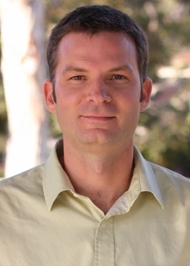
Judson Finley is a Professor and Interim Department Head in the Department of Sociology and Anthropology at Utah State University’s School of Social Sciences. He holds a PhD in Anthropology (Archaeology) from Washington State University and has been a key figure in advancing archaeological research and experiential education in the American West.
Educational Background:
- PhD, Anthropology (Archaeology), Washington State University, 2008
- MA, Anthropology (Archaeology), Washington State University, 2001
- BA, Anthropology (Archaeology), University of Wyoming, 1996
Judson's research interests center on Quaternary paleoecology, geoarchaeology, and the geological interface with Native American history in the Western United States. He specializes in rockshelter sedimentation, obsidian and ceramic geochemistry, and climate change impacts on prehistoric societies. His work bridges archaeology, environmental science, and policy, particularly in public lands and tribal consultation.
His recent publications reflect a strong trend in climate-archaeology integration, ceramic chronology using OSL dating, and interdisciplinary pedagogy. He has co-edited Ecopedagogies: Practical Approaches to Experiential Learning, emphasizing place-based and environmental education.
Scientific Awards and Honors:
- CHASS Faculty Undergraduate Mentor of the Year, 2019
- Beyond Bears Ears Think Tank Award, 2017
- CHASS Faculty Undergraduate Advisor Award, 2016
- Project of the Year Award, 2011
- Regional Forester Honor Award, 2009
- Amerind Seminar Participant, 2007, 2008
Judson has mentored numerous graduate students in anthropology and sociology, and has secured research grants supporting field schools and collaborative projects with Indigenous communities. His teaching includes courses on North American archaeology, geoarchaeology, climate change, and cultural resource management.
He is actively involved in interdisciplinary research teams focusing on environmental justice, public lands policy, and experiential learning frameworks. His work with the Bighorn Canyon National Recreation Area and tribal consultation under NEPA/NHPA highlights his commitment to ethical and inclusive archaeology.
حوزههای پژوهشی