معرفی
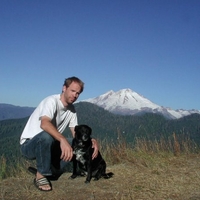
Judson Byrd Finley is a Professor and Interim Department Head in the Department of Sociology and Anthropology at Utah State University's School of Social Sciences. His office is located in Logan (MAIN 216B) and he can be reached at +1 435 797 9621 or judson.finley@usu.edu.
Educational Background:
- PhD in Anthropology (Archaeology), Washington State University, 2008
- MA in Anthropology (Archaeology), Washington State University, 2001
- BA in Anthropology (Archaeology), University of Wyoming, 1996
- Wilderness First Responder Certification, Desert Mountain Medicine, 2018
Dr. Finley is an archaeologist specializing in the geological interface with Native history of the West. His research focuses on Quaternary Paleoecology of western North America, rockshelter and cave sedimentary records, and obsidian and ceramic artifact geochemistry. He teaches courses in North American Archaeology, North American Indian Cultures, Cultural Resource Management Policy, Geoarchaeology, Climate Studies, and Archaeometry.
His recent publications demonstrate a strong focus on the intersection of archaeology, environmental change, and cultural resource management. Key themes include climate impacts on ancient societies, geoarchaeological methods, ceramic analysis, and environmental justice in cultural preservation. His work spans from the Pleistocene to more recent periods, with a particular emphasis on western North America, especially Wyoming, Montana, and Utah.
Awards and Honors:
- CHASS Faculty Undergraduate Mentor of the Year, 2019
- Beyond Bears Ears: Public Lands, Utah, and You. Interdisciplinary Think Tank Award, 2017
- Notable New Grant, 2016
- CHASS Faculty Undergraduate Advisor Award, 2016
- Project of the Year Award, 2011
- Regional Forester Honor Award, Recreation Partner of the Year, 2009
- Amerind New World Studies Series Seminar, 2008
- Amerind New World Studies Series Seminar, 2007
Dr. Finley has mentored numerous graduate students through the Sociology, Social Work and Anthropology program, guiding them in research related to North American archaeology and anthropology. His field school work, including the Two Eagles Interpretive Trail project (2012), demonstrates his commitment to connecting academic research with public education and interpretation.
His interdisciplinary approach bridges archaeology, environmental science, and cultural resource management, with particular attention to how indigenous communities relate to and manage public lands. His recent book "Ecopedagogies: Practical Approaches to Experiential Learning" (2022) reflects his commitment to innovative teaching methods that connect students with the natural world.