معرفی
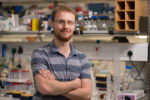
John Diffley is a Principal Group Leader and Associate Research Director at The Francis Crick Institute in London, UK, where he leads research on DNA replication mechanisms. His work focuses on understanding how cells precisely duplicate their DNA during cell division and how errors in this process contribute to cancer development.
Diffley obtained his PhD from New York University in 1985 and completed postdoctoral training with Bruce Stillman at Cold Spring Harbor Laboratory until 1990. He established his research group at the Clare Hall Laboratories (originally Imperial Cancer Research Fund, then Cancer Research UK) before moving to The Francis Crick Institute in 2015.
His research spans DNA replication initiation, cell cycle control, replication fork checkpoints, and epigenetic inheritance. Diffley's lab has pioneered methods to reconstitute chromatin replication using purified proteins, providing unprecedented insights into chromosome biology. His team combines genetics, cell biology, and biochemistry to study the molecular 'machines' that copy DNA in yeast and human cells.
Analysis of Diffley's recent publications reveals a strong focus on structural mechanisms of DNA replication, particularly using cryo-EM to visualize replication machinery. His work examines helicase loading and activation, replication fork stability under stress, and the connection between replication errors and cancer development. The research spans model organisms to human cells, with increasing emphasis on structural approaches in recent years.
- FRS (Fellow of the Royal Society)
- FMedSci (Fellow of the Academy of Medical Sciences)
Diffley actively mentors a diverse team of postdoctoral researchers and PhD students, investigating various aspects of DNA replication. His lab has received substantial funding to support their work on replication mechanisms, with projects spanning basic biochemical reconstitution to studies of replication errors in cancer contexts. The lab maintains multiple technical platforms including structural biology, biochemistry, and cell biology approaches.
His research group operates within The Francis Crick Institute's collaborative environment, utilizing shared facilities for structural biology, microscopy, and genomics to advance understanding of DNA replication mechanisms and their implications for genome stability and disease.