معرفی
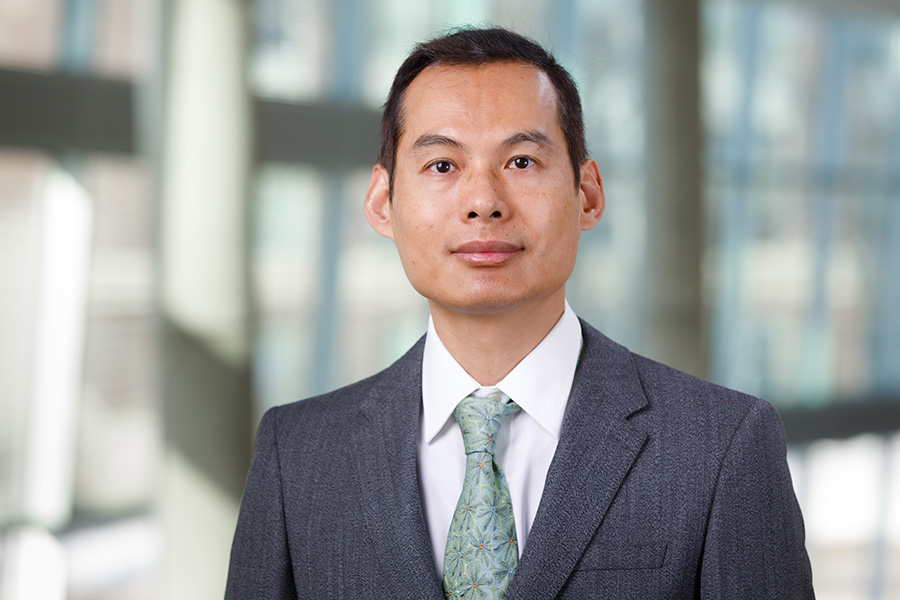
Jingwei Xie, PhD, is a Professor in the Department of Surgery at the University of Nebraska Medical Center (UNMC), specializing in the Division of Transplantation and the Mary & Dick Holland Regenerative Medicine Program. His work bridges biomaterials engineering and clinical applications, focusing on regenerative medicine, tissue engineering, and drug delivery systems. Dr. Xie holds a PhD in Chemical and Biomolecular Engineering from the National University of Singapore, with postdoctoral training in Biomedical Engineering at Washington University in St. Louis. He has earned notable awards including the 2021 UNMC Distinguished Scientist Award and the 2019 Maurer Scientific Achievement Award.
- Education:
- BS and MS in Chemical Engineering, Nanjing University of Technology, China
- PhD in Chemical and Biomolecular Engineering, National University of Singapore
- Postdoctoral Fellowship in Biomedical Engineering, Washington University in St. Louis
His research emphasizes innovative biomaterials for wound healing, antimicrobial therapies, and surgical applications. Key contributions include 3D-printed nanofiber scaffolds, hemostatic aerogels, and engineered peptides for biofilm eradication. Dr. Xie’s work integrates interdisciplinary approaches to address unmet clinical needs in trauma care, organ transplantation, and regenerative medicine. His lab collaborates closely with clinical teams at UNMC to translate discoveries into practical medical solutions.
Recent publications highlight advancements in nanofiber technologies, including injectable cryogels for hemorrhage control and microfluidic platforms for tissue regeneration. His team’s work in wearable cardiac monitors and piezoelectric metamaterials reflects expanding interests in bioelectronics and smart medical devices.
- Awards:
- Most Promising New Invention Award (UNMC, 2017)
- Maurer Scientific Achievement Award (2019)
- Distinguished Scientist Award (UNMC, 2021)
Dr. Xie’s academic leadership includes directing UNMC’s biomaterials research initiatives and mentoring early-career scientists. His lab focuses on preclinical swine models for hemostatic nanomaterials and develops scalable bioprinting protocols for complex tissue fabrication. Future directions aim to integrate AI-driven material design with clinical outcomes to optimize regenerative therapies.