معرفی
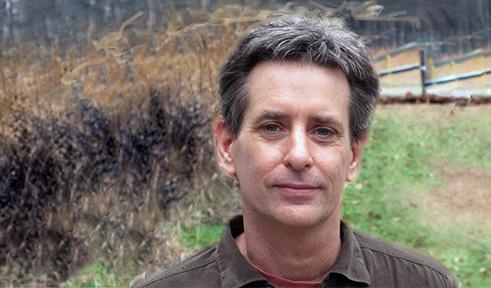
Jesse Bellemare is an Associate Professor of Biological Sciences at Smith College, where he conducts research in plant ecology, biogeography, and evolution. His work focuses on understanding how historical processes like past climate change and dispersal limitation influence contemporary plant species distributions and community diversity, with implications for species conservation in the face of modern climate change.
Bellemare's research addresses fundamental questions in ecology regarding the ecological niche concept while exploring practical conservation approaches such as "managed relocation" or "assisted migration" for dispersal-limited plant species. His laboratory primarily works in the temperate deciduous forests of the eastern United States, studying forest herbs, shrubs, and tree species through a variety of methods including large-scale seed-sowing experiments, field surveys, and analysis of horticultural plantings.
His research program encompasses several key areas:
- Investigating how plant species' distributions are influenced by climate, soils, ecological interactions, and dispersal limitation
- Using native plant horticulture as "accidental experiments" to explore species' tolerances beyond their native ranges
- Studying forest ecosystem changes at Smith College's Ada and Archibald MacLeish Field Station as Eastern Hemlock declines due to exotic insect pests
- Documenting cases of plant species naturalizing beyond their native ranges, such as Magnolia tripetala in western Massachusetts
Bellemare's work has important implications for understanding species responses to climate change and developing conservation strategies for vulnerable plant species. His research combines theoretical frameworks with empirical data to address pressing questions in plant ecology and biogeography.
His educational background includes:
- Ph.D. from Cornell University
- M.F.S. from Harvard University
- B.S. from University of Massachusetts Amherst