معرفی
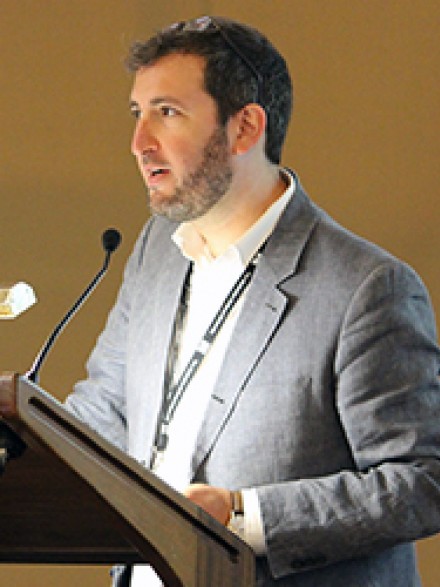
James S. Fishkin is the Janet M. Peck Professor of International Communication at Stanford University, holding dual roles as Professor of Communication and Professor of Political Science (by courtesy). He directs the Deliberative Democracy Lab and is a Senior Fellow at the Freeman Spogli Institute for International Studies. His work focuses on revitalizing democracy through deliberative processes, most notably developing Deliberative Polling® – a methodology used globally to inform public decision-making. Fishkin is also affiliated with the American Academy of Arts and Sciences, the Center for Advanced Study in the Behavioral Sciences, and Trinity College, Cambridge.
Education: B.A. (Magna Cum Laude) in Political Science from Yale College (1970), Ph.D. in Political Science from Yale (1975), and Ph.D. in Philosophy from the University of Cambridge (1976).
Research Interests: Fishkin's pioneering work explores how deliberative methods can transform democratic participation. He investigates how informed citizen deliberation affects policy preferences, reduces polarization, and enhances governance in diverse contexts like China, Uganda, and Texas. His theories address democratic renewal, the role of technology in deliberation, and cross-cultural applications of deliberative democracy.
Awards: Recognized as a Guggenheim Fellow and Fellow of Trinity College, Cambridge, Fishkin's contributions to democratic theory have earned global acclaim. His work bridges academic and practical realms, influencing policy design and institutional reforms worldwide.
Grants & Advising: Fishkin has led major projects in over 28 countries, collaborating with governments and NGOs to implement deliberative practices. His lab designs innovative consultation frameworks, including online platforms for scalable deliberation. He advises on institutionalizing deliberative methods in legislative and civic systems.
Labs/Teams: The Deliberative Democracy Lab at Stanford develops cutting-edge methodologies, from AI-moderated forums to randomized deliberative experiments. His global network includes collaborators in 100+ Deliberative Polling projects across continents.