معرفی
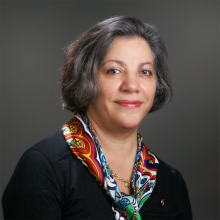
H. Cynthia Chiang is an Associate Professor of Physics at McGill University, where she has been since 2018. She leads cutting-edge observational cosmology research, focusing on 21-cm emission and cosmic microwave background studies using ground-breaking radio telescope arrays like ALBATROS, PRI Z M, MIST, and CHORD. Her work spans remote locations such as the Arctic, Antarctic, and sub-Antarctic Marion Island, leveraging extreme environments to minimize radio interference. Chiang maintains an honorary affiliation with the University of KwaZulu-Natal (South Africa), where she was a Senior Lecturer from 2013–2018. She holds a PhD from Caltech (2009) and a BS from the University of Illinois (2002), with postdoctoral experience at Princeton and a winterover scientist role at the South Pole Station.
Her research emphasizes precision instrumentation development and data analysis across satellite, balloon, and ground-based platforms. Key projects like ALBATROS (1.2-125 MHz array in the Arctic) and PRI Z M (Marion Island 21-cm detection) aim to map the 'dark ages' and 'cosmic dawn' epochs. Chiang’s team also innovates with drone-based tools for beam mapping and soil characterization, enhancing observational accuracy. She is a National Geographic Explorer (2023) and has been featured in prominent media outlets including BBC, Quanta Magazine, and Nature.
Chiang supervises a diverse array of students and postdocs, many advancing to prestigious academic and industry roles (e.g., SKA postdocs, JPL scholars). Her work bridges cosmology with engineering, glaciology, and environmental science, reflecting a commitment to interdisciplinary collaboration. Current efforts include expanding the HIRAX array in South Africa and advancing CHORD’s multi-purpose radio astronomy capabilities.