معرفی
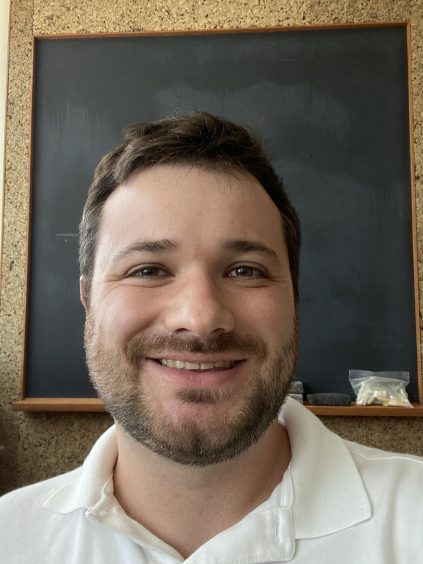
Gregory Koman is an Assistant Professor of Physical Oceanography in the School for the Environment at the University of Massachusetts Boston. He concurrently serves as a Guest Investigator at the Woods Hole Oceanographic Institution (WHOI) and a visiting assistant professor at the Sea Education Association. His research centers on observational studies of large-scale ocean circulation, particularly the Atlantic Meridional Overturning Circulation (AMOC) in the subpolar North Atlantic.
His educational background includes a PhD in Meteorology and Physical Oceanography from the Rosenstiel School of Marine, Atmospheric, and Earth Science at the University of Miami (2020), preceded by postdoctoral work at WHOI (2021-2023).
Dr. Koman's research employs seagoing expeditions and mooring arrays to investigate North Atlantic circulation dynamics. He is a principal investigator in the NSF-funded Overturning in the Subpolar North Atlantic Program (OSNAP), which monitors trans-basin heat, mass, and freshwater fluxes. His work reveals critical insights including the discovery that nearly 50% of AMOC occurs in the eastern subpolar gyre and a decreasing trend in the Deep Western Boundary Current transport. He also pioneers educational outreach through data sonification techniques to communicate ocean-climate relationships.
His publication trends (2019-2023) demonstrate consistent focus on AMOC dynamics using observational data, with increasing emphasis on climate implications and educational applications. Key outlets include Science, Nature Geoscience (preprint), and specialized oceanography journals.
His scientific recognition includes:
- University of Miami award (2019) for OSNAP research presentation
Dr. Koman leads observational research through OSNAP with NSF support, conducting regular research cruises for mooring deployments. He actively recruits PhD students (seeking Fall 2025 start) and collaborates with international teams across the North Atlantic. His lab integrates field observations with climate-relevant analysis, maintaining strong ties with WHOI and the Sea Education Association for interdisciplinary ocean science advancement.
He operates within the OSNAP international consortium and maintains active research vessels for North Atlantic mooring operations, emphasizing hands-on observational approaches to understand circulation changes.