معرفی
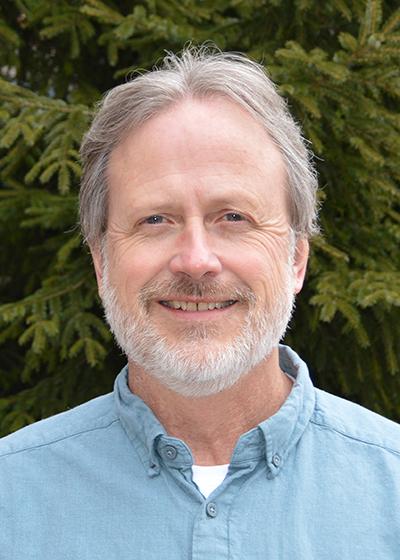
Donald Fisher is Professor and Associate Head for Graduate Programs and Research in the Department of Geosciences at The Pennsylvania State University's College of Earth and Mineral Sciences. His academic career spans structural geology and tectonics with emphasis on active convergent plate boundaries, supported by National Science Foundation funding for fieldwork across global subduction zones including Japan, New Zealand, Costa Rica, and Alaska.
His research focuses on Regional Tectonics and Structural Geology, particularly Subduction Zone Processes where he integrates field observations of accretionary complexes with microstructural analysis to understand seismogenic mechanisms. Current projects examine fault healing kinetics, slip behavior during great earthquakes, and tectonic-geomorphic interactions in Taiwan's collision zone. His work bridges geology, geophysics, and computational modeling to address fundamental questions about earthquake generation and mountain building.
Analysis of his 2017-2019 publications reveals consistent investigation of subduction interface mechanics through ancient accretionary complexes and marine terrace studies. Key themes include fault healing models, seismogenic thrust dating, numerical slip simulations, and forearc deformation quantification. His research spans Geology, Geophysics, and Quaternary Science disciplines with specific subfields covering Accretionary Wedge Dynamics, Seismotectonics, Fault-Propagation Kinematics, and Tectonic Geomorphology.
Fisher actively mentors graduate students through field expeditions to subduction zones worldwide and serves as Associate Head for Graduate Programs. His research is conducted through Penn State's Earth and Environmental Systems Institute and Center for Geomechanics, Geofluids, and Geohazards, with NSF funding enabling multidisciplinary collaborations on subduction zone mass balance, seamount impacts, and cleavage development in orogenic belts.
He maintains active field programs in Japan and Alaska studying rocks deformed at seismogenic depths, while developing new projects on Taiwan's mountain-building processes with Roman DiBiase. His work provides critical constraints for seismic hazard models through integration of paleoseismic data, microstructural observations, and numerical simulations of subduction interface behavior.