Professor John Parnell is the Chair in Geology & Petroleum Geology at the University of Aberdeen , affiliated with the School of Geosciences and Department of Geology and Petroleum Geology . His research focuses on geochemistry, paleoenvironmental reconstruction, trace element cycling, and sedimentary systems , with significant contributions to studies of the Rhynie Chert, Bowland Shale, and Lewisian Complex. Research Interests Professor Parnell's work spans: Geochemical analysis of Paleoproterozoic and Neoproterozoic systems Trace metal mobility in sedimentary and metamorphic environments Organic carbon burial and its tectonic implications Planetary analog studies for Mars exploration Shale resource characterization and environmental impact assessment Recent Publications His recent articles highlight investigations into: Graphitization processes in Scottish Highlands marbles Sulphur isotope records in Precambrian successions Trace element dynamics in the Bowland Shale Biogeochemical cycling at the Precambrian-Cambrian boundary Labs & Collaborations He leads research in the Geofluids Group and collaborates with the Planetary Sciences Department on Mars analog studies.
Peter C. Lippert is an Associate Professor in the Department of Geology & Geophysics at the University of Utah , with research spanning paleomagnetism, tectonics, and environmental magnetism. His work connects geological time scales to climate dynamics, orogenic processes, and urban pollution monitoring. BS (2003) and PhD (2010) in Earth sciences Postdoctoral training at University of Arizona and UC Santa Cruz Research focuses include: Antarctic ice age cyclicity and Earth's orbital influences Hydrothermal alteration effects on paleomagnetic records in Tibet Magmatism during Mongol-Okhotsk Ocean closure Magnetofossils as climate proxies for rapid warming events Evergreen needle magnetization for urban pollution mapping Recent publications highlight collaborations across 50+ international institutions , with methodological innovations in site-level paleomagnetic analysis and FORC-PCA magnetofossil discrimination. His 15 most recent articles (2020–2024) address tectonic reconstructions, geomagnetic field evolution, and climate-ocean interactions. He serves on the Magnetics Information Consortium (MagIC) Steering Committee and has received the Taft-Nicholson Summer Faculty Fellow award. Teaching emphasizes Earth science as a philosophy, with courses on structural geology, dynamic Earth systems, and field research.
Annakaisa Korja serves as Head of Department and Research Director at the Department of Geosciences and Geography, Faculty of Science, University of Helsinki, while also holding a Docent title in Tectonics. She is affiliated with the Helsinki Institute of Sustainability Science (HELSUS) and supervises the Doctoral Programme in Geosciences. Her leadership extends to multiple major research initiatives including EPOS Finland, where she serves as Principal Investigator. Her educational background includes a Docent qualification in Tectonics from the University of Helsinki (2003) and a Specialist qualification in Management from Liikemiesten kauppaopisto (2010). Prior to her current position, she held research roles at the Geological Survey of Finland, Geological Survey of Canada, and Geological Survey of Sweden. Korja's research centers on geophysics and seismology, with particular expertise in seismic hazard analysis, induced seismicity related to geothermal energy, tectonic evolution of the Fennoscandian Shield, and deep crustal structures. Her work bridges fundamental Earth science with practical applications in energy development and risk management, especially regarding nuclear power plant safety and urban geothermal projects. Her recent publications reveal strong trends in seismic hazard modeling for Northern Europe, moment tensor analysis of induced earthquakes, and the tectonic evolution of Precambrian terrains. She has led significant updates to the Fennoscandian earthquake catalogue and developed 3D velocity models for the Helsinki region. Suomen Leijonan 1. luokan Ritarimerkki SL R1 (Order of the Lion of Finland, First Class) - 2021 As supervisor for the Doctoral Programme in Geosciences and direct thesis advisor (including Tino Mellin's 2022 Bachelor's thesis), Korja mentors the next generation of Earth scientists. Her extensive grant portfolio includes EPOS Finland (Research Council of Finland infrastructure project), ELY-keskuksen tuki (Ministry funding until 2030), and multiple international collaborations. She actively serves on the Research Council of Finland Scientific Council for Natural Sciences and Engineering (2025-2027). Korja manages the Institute of Seismology's EPOS Finland coordination office and leads the OBF seismic network. Her research group collaborates extensively across Nordic countries and Europe, particularly on seismic hazard assessment projects involving nuclear facilities and urban geothermal development.
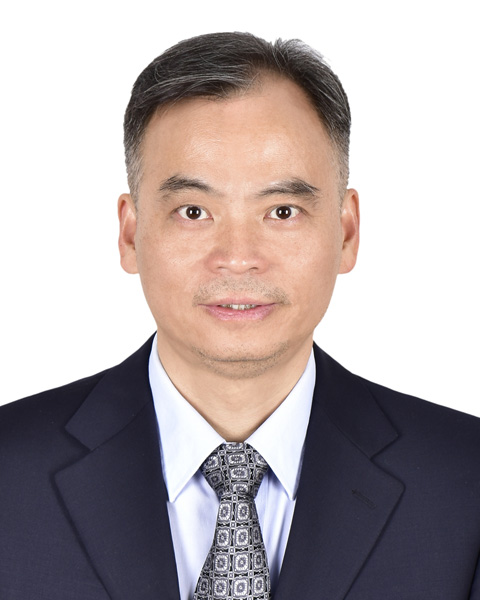
Wenjiao Xiao is a Full Professor and President at the Xinjiang Branch of the Chinese Academy of Sciences (CAS), holding concurrent professorships at the Xinjiang Institute of Ecology and Geography and the Institute of Geology and Geophysics, CAS since 2003. Elected as an Academician of CAS in 2019, he previously served as Associate Professor (1998-2003) and Assistant Professor (1997-1998) at CAS institutes, following postdoctoral research (1995-1997). His research spans Structural Geology, Tectonics, and Continental Evolution, with seminal contributions to understanding Eurasian geodynamics, accretionary orogenesis in Central Asia, and monsoon system development. Key interests include Plate Tectonics, Ophiolite studies, Paleogeography, and Geochronology, focusing on metallogeny and sedimentary basin evolution. His publication record includes 490 international papers in journals like Nature Communications, PNAS, and Geology, with 36,409 Google Scholar citations and H-index 89. As a Clarivate Highly Cited Researcher, his work demonstrates significant impact across Earth Sciences. The Special Award, Science and Technology Award of Xinjiang Uyghur Autonomous Region, China (2021) The Ho Leung Ho Lee Innovation Award (2021) The National Innovation Medal of China (2020) Academician of the Chinese Academy of Sciences (2019) Member of the Leibniz Society of Sciences (Berlin), Germany (2018) Fellow of the Geological Society of America (2017) The Second Award, National Natural Science Award of China (2012) The First Award, Science and Technology Award of Xinjiang Uyghur Autonomous Region, China (2012) Huang Jiqing Award, Geological Society of China (2010) Excellent Field-work Researcher, Ministry of Science and Technology of China (2009) Outstanding Youth Researcher of the National Natural Science Foundation of China (2007) Excellent Individual Researcher of the National Basic Science Program of China (2004) Xiao serves as Science Editor for Geological Society of America Bulletin and holds editorial roles at Episodes, Gondwana Research, and other leading journals. He co-leads international programs IGCP 592 and 662, demonstrating leadership in global geoscience collaboration and mentoring numerous graduate students through CAS institutes. His work integrates field studies with geophysical analysis across Eurasia, particularly focusing on the Altaids orogenic belt and Xinjiang region, advancing understanding of continental growth mechanisms and resource formation.
Professor Ian Metcalfe (University of New England, School of Environmental and Rural Science) is a leading geologist specializing in the tectonic evolution of East and Southeast Asia, conodont and radiolarian biostratigraphy, and Permian-Triassic mass extinctions. His 45-year career spans roles at the University of Malaya, National University of Malaysia, and UNE since 1991, where he served as Deputy Director of the UNE Asia Centre (2001-2008) and Editor of the Journal of Asian Earth Sciences . Key contributions include the 3-Tethys model for Southeast Asian geology and precise U-Pb dating of volcanic tuffs at the Permian-Triassic boundary. Education: B.Sc. (Hons. Geology), Durham University, 1971 Ph.D. (Earth Sciences), Leeds University, 1976 Research Interests: Dr. Metcalfe’s work bridges deep-time tectonics (Gondwana dispersion and Asian accretion), paleoenvironmental reconstruction of mass extinctions, and multidisciplinary applications of conodonts and radiolarians for chronostratigraphy and thermal maturation analysis. His 3-Tethys model remains foundational for understanding Southeast Asian geological evolution. Article Trends: Publications focus on Earth Sciences (tectonics, stratigraphy), Paleontology (conodonts, radiolarians), and Climate Science (Permian-Triassic climate shifts). Subfields include Permian-Triassic boundary studies, U-Pb geochronology, suture zone analysis, and applications of micropaleontology to tectonic models. Scientific Awards: Durham University Geology Fieldwork Prize (1969) Fearnsides Prize (Research) from Yorkshire Geological Society (1975) UNE Vice-Chancellor’s Award for Research Achievement (1998) Gold Medal for Best Paper in Gondwana Research (2011) Grants & Editorial Roles: Secured over $4.4 million in research funding (including 9 ARC grants) and served as Editor for Journal of Asian Earth Sciences and Gondwana Research . Led international projects like IGCP 321 and 411, and coordinated agricultural research training programs across Southeast Asia.
Yvette Kuiper is an Associate Professor in the Department of Geology and Geological Engineering at the Colorado School of Mines. Her research examines structural evolution of mountain belts through integrated field mapping, geochronology, and geophysical analysis. Current projects focus on shear zone kinematics in the New England Appalachians, southern Abitibi Greenstone Belt, and Colorado Front Range. Her research integrates structural analysis with U-Pb geochronology to date deformation events and quantify strain rates in complexly deformed terrains. She investigates linkages between microstructural development, accessory mineral growth, and tectonic processes in collisional orogens. Ore deposit settings in Yukon's Rackla Gold Belt and Colorado's mineral districts provide additional field areas for structural analysis. Recent publications explore Mesoproterozoic tectonics in Colorado (2024), channel flow hypotheses in Massachusetts (2024), and Variscan belt evolution in Northwest Africa (2023). Her work combines geological mapping with advanced geochemical and geophysical techniques to reconstruct orogenic histories.
Andrea Artoni is an Associate Professor at the Department of Chemistry, Life Sciences and Environmental Sustainability, University of Parma, with over 30 years of experience in tectonic and sedimentological studies. His research focuses on collisional orogens in the Mediterranean region, particularly the Northern Apennines, Calabrian Arc, and Ionian Sea, addressing seismic hazards and fluid circulation in thrust belts. Researcher at University of Parma since 1999 National Scientific Qualification for Full Professor in Structural Geology Teaching courses in Earth Dynamics, Regional Geology, and Subsurface Geology His research interests include tectonics-sedimentation relationships in foredeep basins, paleogenetic evolution of Mediterranean orogens, and geological risks. He employs geological mapping, seismic interpretation, and bathymetric analysis across Italy, France, Spain, and Poland. Recent publications analyze the Sicily Channel's tectonic complexity, DNAPL migration in aquifers, and natural hydrogen exploration in the Apennines. He participates in international collaborations and field campaigns like the CALAQUAKES oceanographic mission.
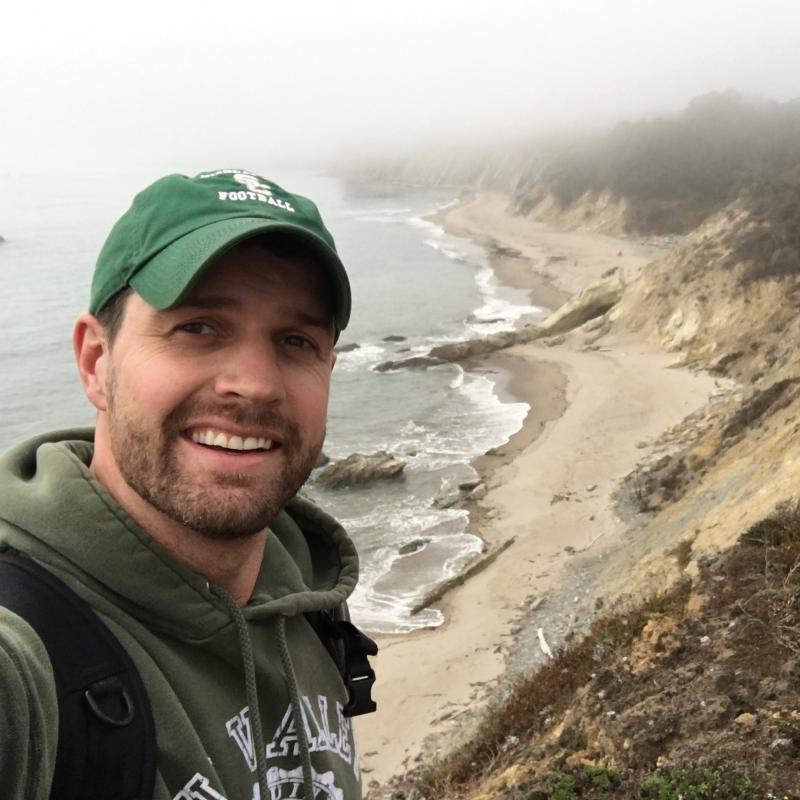
Owen Anfinson is an Assistant Professor at Sonoma State University , specializing in tectonic sedimentology and detrital geochronology. His research integrates fieldwork, laboratory analysis, and drone technology to address tectonic and sedimentological problems globally. Education : B.A. (Gustavus Adolphus College), M.S. (Washington State University), Ph.D. (University of Calgary), Postdoctoral Fellow (University of Texas at Austin). Anfinson’s research spans the Franciscan Complex and Sur Series in California, Arctic tectonics, and the Swiss-Italian Alps . He employs detrital zircon U-Pb geochronology and thermochronology to reconstruct tectonic histories. His innovative work includes using drones (UAS) for 3D modeling of geologic outcrops. Recent publications focus on Arctic paleogeography, Alpine tectonics, and catastrophic flood sediment provenance. Anfinson actively mentors students, advising projects on topics like the Franciscan Complex and virtual field trips. His work bridges fundamental tectonic research with applied geospatial technologies, emphasizing interdisciplinary collaboration and field-based learning.
Sabatino Ciarcia is an Associate Professor in the Department of Science and Technology (DST) at the University of Sannio, Italy. His research focuses on stratigraphic geology, sedimentology, structural geology, and geological surveys, particularly in the Southern Apennines and Campania regions. He teaches courses such as Multidisciplinary Geological Field on Environmental Projects and Regional Geology and Advanced Geological Survey for advanced degree programs in geosciences.
Heidrun Kopp is a Professor of Marine Geodesy at the GEOMAR Helmholtz Centre for Ocean Research Kiel and the Christian-Albrechts-Universität zu Kiel, where she leads Research Area 4: Ocean Floor Dynamics. She is also an Adjunct Professor in the Department of Earth Sciences at Dalhousie University. Her research is centered on marine geodynamics, subduction zone processes, seismic imaging, and natural hazards such as earthquakes and tsunamis. W3 Professor for Marine Geodesy, GEOMAR & CAU Kiel (since 2012) Leader, Research Area 4: Ocean Floor Dynamics, GEOMAR (since 2021; 2012–2017) Principal Investigator, ERC Synergy Grant T-SECTOR (since 2023) Coordinator, MULTI-MAREX Joint Project (since 2024) Adjunct, Dalhousie University (2018–2028) Her research interests span marine geodesy, subduction zone tectonics, crustal deformation, seismic imaging, and geohazard assessment. She investigates the structural complexity of convergent margins, the role of seamounts and ridges in subduction, and the mechanisms of earthquake and tsunami generation. Her work integrates seismic, geodetic, and bathymetric data to understand lithospheric deformation and seismogenesis at active margins. She has conducted extensive fieldwork in regions including northern Chile, Sumatra, the Mediterranean, and the South China Sea. The recent publications highlight a strong focus on subduction zone dynamics, particularly in Chile and Indonesia, with advanced seismic and geodetic techniques used to image fault structures, monitor crustal strain, and assess seismic and tsunami hazards. There is a recurring theme of amphibious experiments, offshore monitoring networks (e.g., GeoSEA), and the use of seismic tomography and reflection data to understand megathrust behavior and margin segmentation. Dr. Kopp has received substantial research funding as PI or co-PI from major agencies including the European Research Council (ERC), German Federal Ministry of Education and Research (BMBF), German Research Foundation (DFG), and the European Union. Her leadership roles include coordination of large international projects and scientific cruises. She has also held significant service roles, including President of the German Geophysical Society (DGG) and Vice-President of the IUGG’s Inter-Commission Committee on Marine Geodesy. She has led or co-led numerous research cruises and large-scale geophysical experiments, often involving ocean-bottom seismometers and acoustic ranging systems. Her lab and research group at GEOMAR focus on marine geophysical data acquisition and analysis, contributing to global understanding of subduction zone behavior and offshore geohazards.
Nicola De Paola is a Professor of Structural Geology and Rock Mechanics in the Department of Earth Sciences at Durham University, where he has held academic positions since 2007. His career progression includes Assistant Professor (2007-2012), Associate Professor (2012-2020), and full Professor (2021-present). He established the Rock Mechanics Laboratory (RML) at Durham University in 2012, securing major funding from UK Research Councils (NERC, UKUH) and industry partners (MAERSK, DONG). De Paola's research centers on fault and earthquake mechanics, employing a multidisciplinary approach combining fieldwork, microstructural analysis, and rock physics experiments. His work has evolved from fundamental fault mechanics to include human-induced seismicity, particularly in enhanced geothermal systems. Key themes include coseismic fault lubrication, earthquake rupture propagation, and the role of lithology in seismic behavior. His laboratory's recent contributions address induced seismicity risks in subsurface energy operations. Analysis of his 15 most recent publications (2016-2023) reveals a consistent focus on fault zone processes, with increasing emphasis on induced seismicity and energy applications. His work spans experimental rock deformation, field-based structural analysis, and computational modeling, demonstrating strong integration between fundamental mechanics and practical energy sector challenges. The publications show growing industry collaboration, particularly in geothermal and hydrocarbon contexts. De Paola supervises graduate students including Krishna Silva, and his research has been supported by significant grants from NERC and industry consortia. His work bridges academic geomechanics with industrial applications in energy resource development.
Gregory Snyder is a Teaching Assistant Professor in the Department of Earth, Environmental, & Planetary Sciences at the University of Tennessee. Previously, he held a Research Associate Professor position at the same institution from 1990 to 1999. He earned a Ph.D. in Geochemistry from Colorado School of Mines (1990), an M.Sc. in Geochemistry from the same institution (1996), and a B.Sc. in Geology from the University of Tennessee at Chattanooga (1982). He also holds an M.Div. from Trinity Episcopal School for Ministry (2002). His research focuses on planetary geochemistry, lunar geology, and mantle processes, with notable work on meteorite analysis, lunar crustal evolution, and diamondiferous eclogites. Snyder has taught courses such as EEPS 104 (Exploring the Planets) and EEPS 101 (The Dynamic Earth), emphasizing planetary science and Earth dynamics. His scholarly contributions include over 70 peer-reviewed articles, with key studies on oxygen isotope analysis of lunar samples and petrogenetic modeling of kimberlite-derived eclogites.
Jonathan Aitchison is a Professorial Research Fellow at The University of Queensland's School of the Environment, specializing in tectonic evolution and microfossil geochronology. With a BSc/MSc from University of Otago and PhD from University of New England, his career spans research positions across Japan, Australia and Hong Kong, including leadership of HKU's Department of Earth Sciences (2003-2009). Research interests focus on India-Asia collision dynamics, radiolarian biostratigraphy, and Paleozoic tectonics, with current projects investigating organic carbon recycling in ophiolites and microCT imaging of microfossils. Fieldwork spans Himalayan suture zones, Tibetan Plateau, and SW Pacific regions. Recent publications demonstrate consistent focus on ophiolite geochemistry, subduction processes, and radiolarian paleoecology, with methodological advances in U-Pb dating and microCT applications. Awards include the 2008 ALCAN Prize from the French Academy of Sciences. Research involves international collaborations across the Asia-Pacific region.
Mark Fanning is an Associate Professor and Honorary Associate Professor at the Research School of Earth Sciences (RSES), Australian National University (ANU). His research focuses on tectonics, isotope geochemistry, and continental crust evolution, with a particular emphasis on Proterozoic-Paleozoic orogenic systems and the reconstruction of supercontinent histories. He has conducted extensive studies on accretionary orogens in South America, Antarctica, and the Antarctic Peninsula, utilizing U-Pb-Hf-O isotope systems and geochronology to unravel crustal evolution processes. His work integrates field geology, petrology, and geochemical analyses to address questions about continental margin dynamics, magmatic processes, and the tectonic evolution of key regions such as the Patagonian Andes, East Antarctica, and the Central Andes. Recent publications emphasize the application of zircon isotopic data to constrain accretionary orogen development, supercontinent assembly/disassembly, and Paleozoic-Mesozoic tectonic events. Key areas of focus include the Proterozoic-Paleozoic evolution of central South America, the paleo-Pacific margin of East Antarctica, and the tectonic links between Antarctica and other Gondwanan terranes. His research highlights the interplay between magmatism, deformation, and sedimentation in shaping continental architecture.
Donald Fisher is Professor and Associate Head for Graduate Programs and Research in the Department of Geosciences at The Pennsylvania State University's College of Earth and Mineral Sciences. His academic career spans structural geology and tectonics with emphasis on active convergent plate boundaries, supported by National Science Foundation funding for fieldwork across global subduction zones including Japan, New Zealand, Costa Rica, and Alaska. His research focuses on Regional Tectonics and Structural Geology, particularly Subduction Zone Processes where he integrates field observations of accretionary complexes with microstructural analysis to understand seismogenic mechanisms. Current projects examine fault healing kinetics, slip behavior during great earthquakes, and tectonic-geomorphic interactions in Taiwan's collision zone. His work bridges geology, geophysics, and computational modeling to address fundamental questions about earthquake generation and mountain building. Analysis of his 2017-2019 publications reveals consistent investigation of subduction interface mechanics through ancient accretionary complexes and marine terrace studies. Key themes include fault healing models, seismogenic thrust dating, numerical slip simulations, and forearc deformation quantification. His research spans Geology, Geophysics, and Quaternary Science disciplines with specific subfields covering Accretionary Wedge Dynamics, Seismotectonics, Fault-Propagation Kinematics, and Tectonic Geomorphology. Fisher actively mentors graduate students through field expeditions to subduction zones worldwide and serves as Associate Head for Graduate Programs. His research is conducted through Penn State's Earth and Environmental Systems Institute and Center for Geomechanics, Geofluids, and Geohazards, with NSF funding enabling multidisciplinary collaborations on subduction zone mass balance, seamount impacts, and cleavage development in orogenic belts. He maintains active field programs in Japan and Alaska studying rocks deformed at seismogenic depths, while developing new projects on Taiwan's mountain-building processes with Roman DiBiase. His work provides critical constraints for seismic hazard models through integration of paleoseismic data, microstructural observations, and numerical simulations of subduction interface behavior.