معرفی
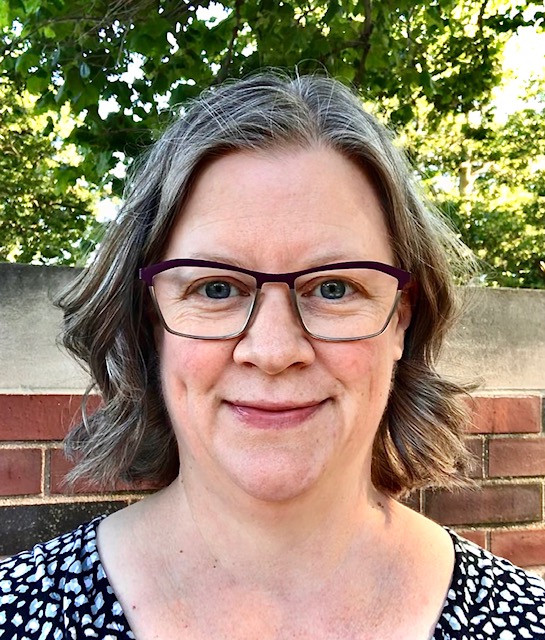
Dina Fainberg is a Lecturer in Modern History and the Director of the BA History programme at the Department of International Politics, City St George's, University of London. She holds a PhD in Modern Russian and US History from Rutgers University and has held prestigious research fellowships at New York University, the University of Bremen, and Rutgers Center for Historical Analysis. Previously, she served as Assistant Professor of East European Studies at the University of Amsterdam (2013–2016).
Her research centers on Cold War culture, Soviet and American media, propaganda, and international reporting. She explores how journalists shaped public perceptions of the 'other' during the Cold War, analyzing the ideological, institutional, and cultural forces that influenced their work.
Dina Fainberg’s publications include the acclaimed monograph Cold War Correspondents: Soviet and American Reporters on the Ideological Frontlines, 1945–1991 (Johns Hopkins University Press, 2021) and the co-edited volume Reconsidering Stagnation: Ideology and Exchange in the Brezhnev Era (2016). Her work draws on a rich array of sources, including government archives, personal papers, diaries, and interviews with journalists and dissidents. The recurring themes in her articles reflect a deep engagement with transnational media history, ideological framing, and the personal dimensions of Cold War journalism.
Her scholarly contributions have appeared in journals such as Cold War History and Journalism History, covering topics like foreign correspondence, summit diplomacy, media bias, and the construction of national identities. Her research demonstrates a consistent focus on how media narratives were shaped by political systems and cultural contexts.
Dina actively contributes to public discourse through interviews with podcasts such as the Journalism History Podcast and the SRB Podcast. She is fluent in Russian, Hebrew, and Dutch, enabling her to work with primary sources across linguistic boundaries.
She has advised on academic programmes and continues to mentor students in history and international politics. Her work is supported by extensive archival research and interdisciplinary methodologies, positioning her as a leading voice in Cold War media studies.