معرفی
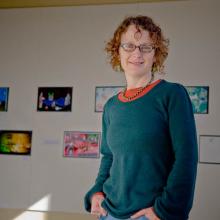
Deborah Zlotsky is a Professor of Experimental and Foundational Studies at the Rhode Island School of Design (RISD), where she teaches within the Faculty of Liberal Arts. Her academic career bridges rigorous studio practice with theoretical exploration of history, memory, and identity. She received her BA in History of Art from Yale University and MFA in Painting and Drawing from the University of Connecticut.
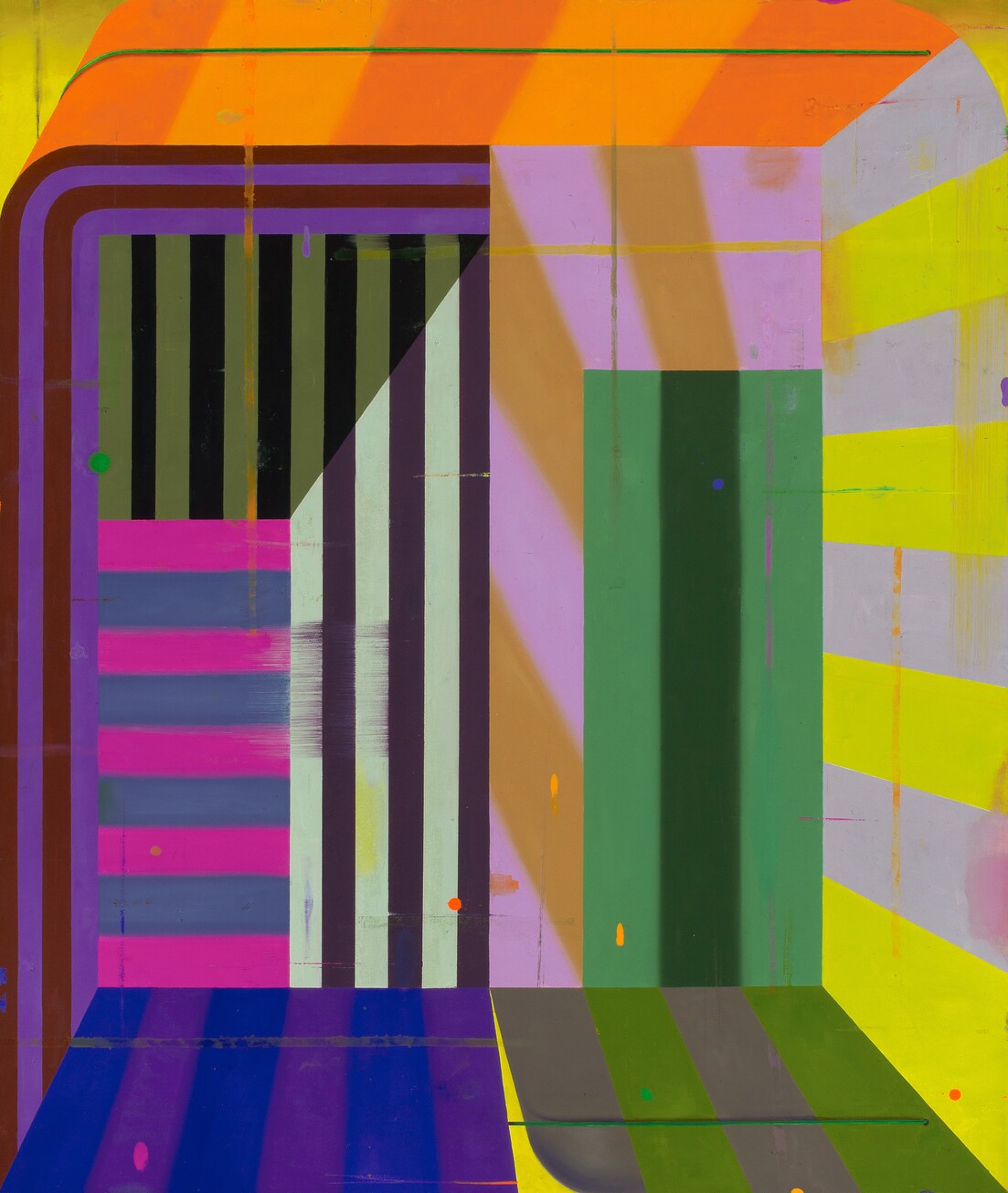
Zlotsky's research focuses on how historical narratives press against contemporary consciousness through abstract visual language. Her work explores geometric abstraction as metaphor, particularly examining stripes as timelines that build patterns while suggesting societal cycles and marginalization. She investigates how abstraction provides sensory experiences for understanding the complex relationship between past and present, with specific attention to Jewish cultural identity and historical trauma.
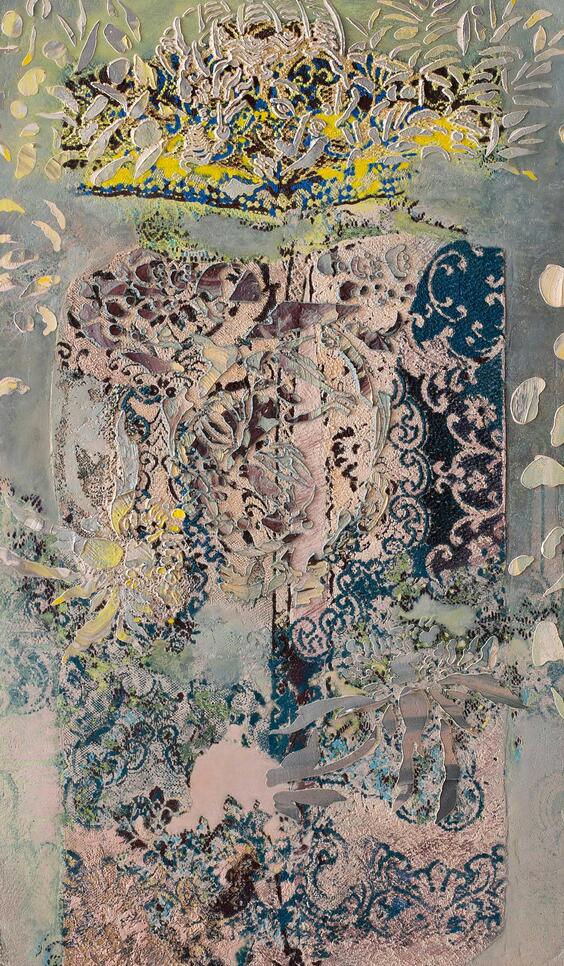
Her recent artistic output shows consistent thematic development across painting series from 2021-2024, with recurring motifs including chai symbols (representing life), shiva references (Jewish mourning), and diaspora concepts. Technical innovations include trompe l'oeil elements like stitched threads, air holes, and fleshy textures that disrupt geometric precision, creating visual metaphors for historical disruption and memory fragmentation.
- Guggenheim Fellowship (2019)
- New York Foundation for the Arts Fellowships (2012, 2018)
- Residencies at MacDowell Colony, Yaddo, Bogliasco Foundation, and Bemis Center
- Works in collections including RISD Museum, Borusan Contemporary Art Collection, and Waldorf Astoria
Zlotsky maintains an active exhibition schedule with recent solo shows at McKenzie Fine Art, Markel Fine Arts, and Robischon Gallery. Her work connects studio practice with academic inquiry through residencies that function as research opportunities, and her teaching at RISD directly informs her exploration of foundational visual concepts. She continues to develop her investigation into how geometric abstraction can simultaneously represent historical weight and visual beauty.