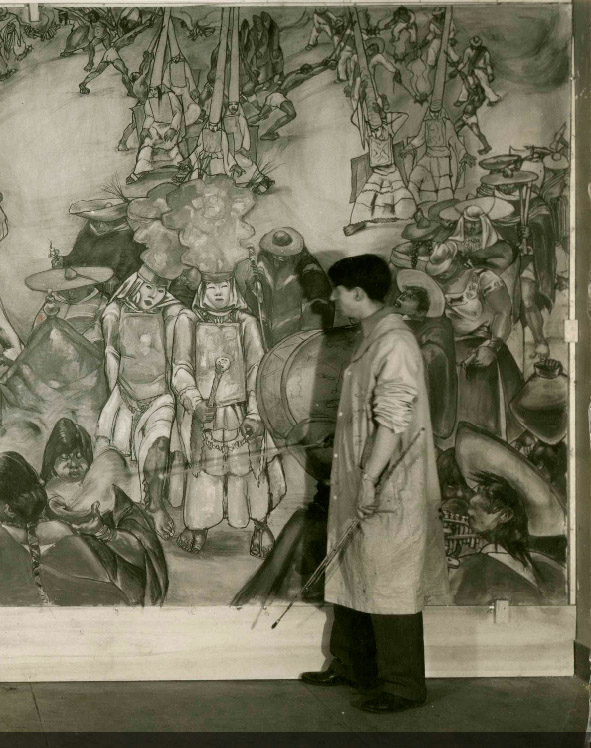
Camilo Egas (1889–1962) was a pivotal Ecuadorian artist and academic who founded the first Art Department at the New School in New York City. He served as Director of the Art Workshops (1935) and later Director of the Art Department until his death in 1962. Egas taught courses in Modern Art, Painting, Oil, and Drawing, and co-taught Advanced Painting with Robert Gwathmey (1946–1951). He integrated European artistic techniques with indigenous Ecuadorian themes, pioneering Pictorial Indigenism and contributing to Latin American modernism. Education: Studied art in Quito, Rome, and Madrid. Key works include the mural Ecuadorian Festival (1932) for the New School and contributions to the 1939 New York World Fair. His art emphasized Andean themes, indigenous struggles, and national identity, blending Social Realism, Surrealism, and Abstract Expressionism over his career. Legacy: Founded Ecuador’s first art periodical Helice , co-founded the Indigenist Movement, and mentored artists like Berenice Abbott and Stuart Davis. His interdisciplinary approach merged anthropology, archaeology, and visual arts to redefine Latin American cultural narratives.
Ann D. Braude is a Senior Lecturer on American Religious History and Director of the Women's Studies in Religion Program at Harvard Divinity School (HDS), affiliated with Harvard University. She joined HDS in 1998 after roles at Carleton College and Macalester College. Her work emphasizes inclusive religious narratives, particularly exploring intersections of gender, spirituality, and social movements. Key research areas include 19th-century Spiritualism, Indigenous religious perspectives, and modern abstract art's relationship to spirituality. Braude holds an AB from Vassar College, MA from the University of Chicago, and PhD from Yale University. Her research has produced influential works like Radical Spirits (2008) and Sisters and Saints (2007), which examine women's roles in shaping religious history. She organized pivotal conferences such as the 2005 celebration of women at HDS and curated the bicentennial exhibition Faces of Divinity (2016). Her current projects include studying gender dynamics in abstract painting and Native American religious frameworks through a biennial speakers series. Braude’s courses focus on American religious history, feminist theology, and Indigenous religious studies. Her articles and public engagement reflect a commitment to bridging academic research with broader societal conversations about religion, gender, and culture. She maintains active roles in both Harvard Divinity School and the broader academic community, contributing to interdisciplinary dialogues on pluralism and religious diversity.
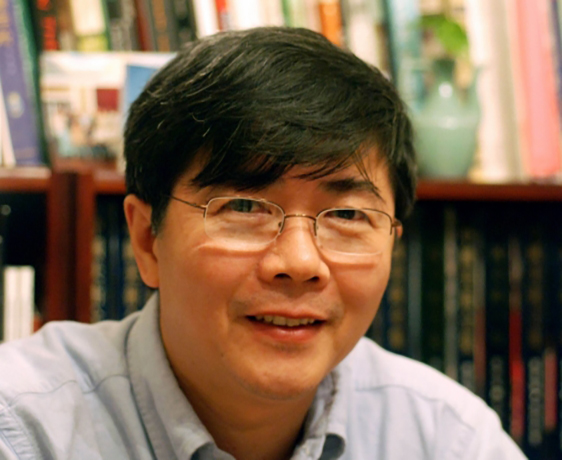
Kuiyi Shen is Professor of Asian Art History, Theory, and Criticism at the University of California, San Diego (UCSD), where he also serves as Vice Chair and Director of the PhD Program in the Department of Visual Arts. He is affiliated with the Division of Arts and Humanities and maintains an active research, teaching, and curatorial practice focused on Chinese and Japanese art, particularly modern and contemporary Chinese art and Sino-Japanese artistic exchanges. BA in Fine Arts, Shanghai Normal University MA and PhD in Art History, The Ohio State University Shen's research centers on the evolution of Chinese art in the modern era, with emphasis on ink art, unofficial art movements, and the interplay between tradition and modernity. His work explores how political, social, and transnational forces have shaped artistic expression in China, particularly during transformative periods such as the late Qing, Republican era, and post-Cultural Revolution decades. He is deeply engaged in the study of literati painting, Buddhist art, and mass visual culture, including posters and illustrated magazines. The 15 most recent publications and exhibition catalogs reflect a consistent focus on modern and contemporary Chinese ink art, unofficial art practices, and cross-cultural dialogues. Key themes include the reinvention of tradition, the role of Japan in modern Chinese art, and the emergence of independent artistic voices during politically repressive periods. His scholarly output spans academic monographs, co-edited volumes, and curatorial projects that bridge East and West. Notable scientific achievement: 2013 ICAS Book Prize in Humanities for Arts of Modern China Shen has advised numerous exhibition projects and served on international juries, including the Guggenheim Museum and the International Awards for Art Criticism. He has held academic positions at Ohio University, SUNY Buffalo, Rice University, and the University of Oregon before joining UCSD. He is Managing Editor of Brill’s Modern Asian Art and Visual Culture book series, underscoring his leadership in the global academic community. His teaching includes courses on Chinese and Japanese art, landscape painting, and contemporary art and mass culture. Shen has curated or consulted on over 20 major exhibitions worldwide, including A Century in Crisis (Guggenheim), Blooming in the Shadows (China Institute), and Light before Dawn (Asia Society), demonstrating his dual expertise in scholarship and curatorial practice.
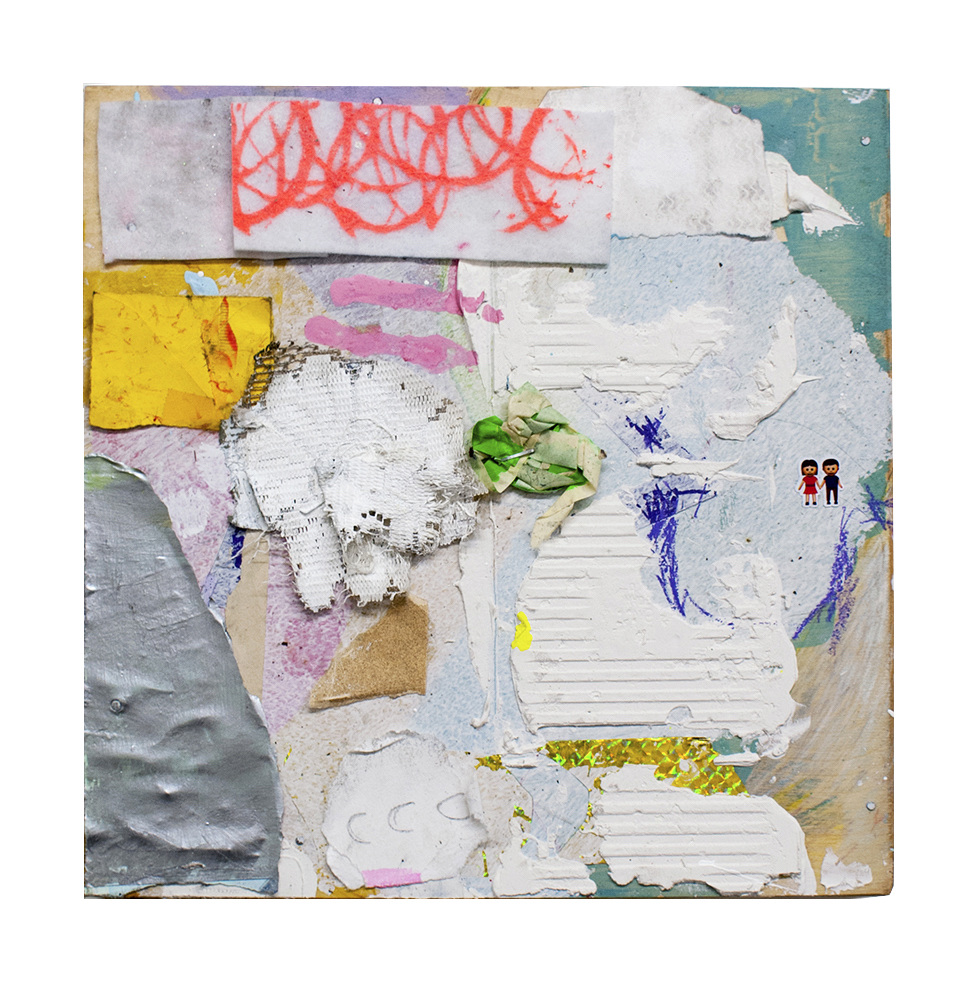
Laura M Denzer is an Adjunct Assistant Professor in the Drawing, Painting Department of the School of Art + Art History at the University of Florida. She holds a BFA from the School of the Art Institute of Chicago (2011) and an MFA from the University of Florida (2017). Her practice focuses on spatial and corporeal investigations through collage, painting, and mixed media, exploring themes of memory, identity, and transformation. Denzer’s research examines how physical and abstract spaces shape personal and collective narratives. Her work often incorporates fragmented forms, architectural references, and domestic patterns to reflect on liminal states and life transitions. Recent projects address motherhood and pandemic experiences as catalysts for reimagining selfhood and temporal continuity. Her artistic output includes over 100 works across decades, with notable series from 2023-2024 featuring screenprints that blend color theory and narrative imagery. Earlier works like Arms Folded (2016) and Party Favors (2011) demonstrate her evolving engagement with material experimentation and conceptual layering. Denzer’s practice also extends to curatorial roles, including her guest editorship of Number Magazine #96: Dependency . Her creative process integrates found materials, intuitive color choices, and formal investigations to create compositions that balance rootedness and transience. Current work explores spatial fragmentation as a metaphor for life transitions, reflecting on both personal and societal upheavals.
Wang Jianmin serves as Professor and Doctoral Supervisor at Tongji University's School of Art and Media, concurrently holding the position of Vice Dean since 2014. With a computer science PhD from Sun Yat-sen University, he bridges engineering and media arts through pioneering research in intelligent communication systems and digital media interfaces. His work focuses on human-centered design for emerging technologies, particularly in automotive and virtual environments. His academic foundation includes: PhD in Engineering (Computer Software and Theory), Sun Yat-sen University (2003) Master's in Computational Mathematics, Sun Yat-sen University (1999) Bachelor's in Computational Mathematics, Nankai University (1996) Professor Wang's research centers on intelligent communication systems and digital media art, with significant contributions to automotive human-machine interfaces (HMI), virtual reality applications, and user experience methodologies. His investigations into driver-robot transparency, augmented reality navigation, and mixed-reality educational platforms demonstrate interdisciplinary innovation connecting computer science, cognitive psychology, and design theory. Current projects explore AI-driven media systems for urban environments and safety-critical interaction frameworks. Analysis of his recent publications reveals a cohesive research trajectory focusing on automotive HMI (40% of output), human-robot interaction (30%), and mixed reality applications (30%). His work consistently emphasizes experimental validation through driving simulators and user studies, yielding practical design guidelines for industry implementation. The interdisciplinary nature spans computer science, cognitive ergonomics, and media studies, with increasing emphasis on AI integration in communication systems. His scientific recognition includes national and provincial awards for innovation in human-computer interaction and educational technology: 2019 China Industry-University-Research Innovation Award for automotive HMI systems 2020 China User Experience Alliance Excellence Award 2012 Guangdong Dingying Science and Technology Award Multiple national/provincial science progress awards (2001-2009) 2020 Tongji University Teaching Achievement Award for curriculum development As an educator, Professor Wang mentors graduate students in national design competitions including the 'Core Cup' Future Automotive HMI Challenge and International User Experience Innovation Competition. His research program is supported by substantial funding from diverse sources: National Grants: National Natural Science Foundation projects on driver behavior modeling and cognitive testing Ministry of Education: 15+产学合作 projects for virtual simulation labs and curriculum development Shanghai Municipal: Publicity Department funding for smart city media research Industry Partnerships: Huawei (intelligent vehicle HMI), SAIC Motor (AR-HUD design), and automotive electronics firms He directs Tongji's Media Experiment and Practice Teaching Center and the All-Media Research Institute, leading teams developing virtual simulation platforms for emergency news reporting, intelligent vehicle interaction testing systems, and mixed reality educational tools. Current initiatives focus on AI-enhanced media art for urban applications and next-generation HMI frameworks for autonomous mobility solutions.
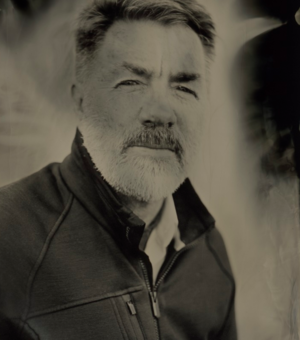
Geoffrey Batchen holds the Professorship of the History of Art at the University of Oxford, situated within the Department of the History of Art in the Faculty of History. He is additionally a Fellow of Trinity College, where he contributes to academic governance and tutorial instruction. His career spans teaching, scholarly writing, and international curatorial practice focused exclusively on photographic history. Education: BA, University of Sydney PhD, University of Sydney Batchen's research interrogates photography's cultural embeddedness across temporal and technological shifts, emphasizing its theoretical frameworks, memorial functions, and ethical complexities. His scholarship bridges art historical analysis with material studies, examining how photographic practices shape human experience from the 19th century to digital eras. Curatorial projects extend this investigation through exhibitions at major institutions worldwide, including the Van Gogh Museum, International Center of Photography, and National Media Museum. His publication trajectory reveals evolving engagement with photography's ontological status, moving from foundational studies like Burning with Desire (1997) to comprehensive historical syntheses in Negative/Positive (2020). Recurring themes include technological materiality, memory construction, and crisis representation, with recent works addressing digital dissemination and cameraless techniques. This body of work establishes photography as both artistic medium and cultural catalyst across diverse sociopolitical contexts. Information regarding doctoral students, research grants, laboratory facilities, or award recognition was not provided in the source material.
European Graduate School of Economics and ManagementBulgaria
Paul D. Miller, known professionally as DJ Spooky, That Subliminal Kid, is a Professor of Music and Mediated Art at The European Graduate School (EGS). Based in New York City, he is an experimental electronic and hip-hop musician, conceptual artist, and writer whose work spans music production, film, multimedia installations, and critical theory. He has released over a dozen albums pioneering 'illbient' and trip hop genres, authored influential books including Rhythm Science and Sound Unbound , and exhibited internationally at venues like the Venice Biennale and Andy Warhol Museum. Education: Bowdoin College: Studied philosophy and French literature; thesis on Richard Wagner's Gesamtkunstwerk as precursor to new media. Research Interests: Miller's work centers on remix culture as a postmodern methodology, exploring intersections of sound, image, and technology. His theoretical framework positions the DJ as a 'post-subjective auteur' who creates meaning through layered connections across time, culture, and media. Key projects include Rebirth of a Nation (reworking D.W. Griffith's film to address racial history) and Terra Nova (Antarctica sound recordings addressing climate change), demonstrating his focus on historical reinterpretation and environmental crisis through digital media. Publications: His 14 scholarly articles (2001-2009) analyze remix as cultural practice across domains from album art history ( The Inner Sleeve ) to Baudrillard's philosophy ( Baudrillard: A Remembrance ). The corpus reveals consistent investigation into how sampling, digital layering, and media archaeology reshape narrative, memory, and cultural identity in the information age. Awards: No scientific awards or fellowships were documented in the source text. Advising and Grants: The source text provides no information regarding students supervised, academic advising, or research grants administered by Miller. Labs and Teams: Miller operates through project-based collaborations rather than fixed labs, forming temporary collectives with institutions like the American Museum of Natural History (for Terra Nova ) and artists including Yoko Ono, Ryuichi Sakamoto, and choreographer Francesca Harper. His 'Unfinished Stories' project with Pulitzer-winning critic Margo Jefferson exemplifies his interdisciplinary approach bridging dance, music, and social commentary.
Jose Antonio Hinojos Morales is a contemporary artist and researcher affiliated with Miguel Hernández University of Elche, where he completed his PhD in 2020. His academic work focuses on contemporary painting practices within the broader context of visual arts research. His research interests center around pictorial languages and procedures in contemporary contexts , with particular emphasis on the relationship between landscape, nature, and culture. He investigates how landscapes function as cultural constructs and explores innovative methodologies in the representation of the human face through art. His work also engages with decolonial thought and aesthetics, media archaeology, and expanded painting techniques. Hinojos Morales' artistic output demonstrates significant trends in contemporary Spanish art, particularly in the exploration of spiritual, philosophical, and scientific concepts through visual media. His work often challenges conventional perceptions and hegemonic epistemological positions, creating dialogues between traditional and contemporary artistic approaches. Second place, VIII International Painting Competition 'Miradas 2018', Chicago (USA), 2018 Second Prize, XIX Pastor Calpena Painting Prize, Aspe (Alicante), 2015 First Prize, XLVI National Painting Contest Vila de Sant Joan d'Alacant, 2013 First Prize, III National Painting Competition No to Fear, La Nucía (Alicante), 2013 Third Prize, XVII National Painting Competition City of Antequera, Antequera (Málaga), 2013 As an educator and researcher, Hinojos Morales has coordinated the Altea Artistic Residency program, directing multiple landscape-focused scholarship-residencies that support emerging artists. His work bridges academic research with professional artistic practice, contributing to both scholarly discourse and the contemporary art scene in Spain.
Abigail McEwen is an Associate Professor of Latin American Art in the Department of Art History and Archaeology at the University of Maryland, College of Arts and Humanities (ARHU). She is an affiliate faculty member of the Latin American and Caribbean Studies Center. Education: Ph.D. in Art History, Institute of Fine Arts, New York University (2010) Her research centers on modern and contemporary art in the Americas, with a focus on Cuba and Puerto Rico. She explores transnational abstraction, postwar avant-garde movements, and the intersection of art and political change. Her teaching includes courses on modern Latin American art, transatlantic dialogues, and contemporary Latino art. Recent publications and curatorial projects, such as Revolutionary Horizons: Art and Polemics in 1950s Cuba (2016) and Concrete Cuba: Cuban Geometric Abstraction from the 1950s (2016), highlight her interest in abstraction’s role in political modernity and inter-American artistic networks. In 2022, she co-curated RE•CAST , a sculptural exhibition at the Art Museum of the Americas. Scientific Awards: Metropolitan Museum of Art grant Dedalus Foundation fellowship Graduate School grant at University of Maryland Latin American Studies Association funding Ford Foundation funding She directs the Carillon Art and Activism Community and contributes to initiatives like the Michelle Smith Collaboratory for Visual Culture. Her work appears in publications such as American Art , Art Nexus , and exhibition catalogs.
Christopher T. Richards is a Visiting Assistant Professor of Art at Colby College. Specializing in medieval art history, his research focuses on late-medieval illuminated manuscripts of French poetry, queer theory, and intersections of medieval and modern art practices. He actively contributes to public scholarship through platforms like the Maine Arts Journal and Brooklyn Rail. Education: Not explicitly detailed in the text. His research interests bridge Gothic art, medieval France, image theory, book history, Lacanian psychoanalysis, and queer/trans theory. He explores how medieval artists used figurative abstraction to challenge norms, paralleling modern queer art strategies. His work emphasizes the embodied, sensual nature of artistic practice in both historical and contemporary contexts. Recent publications include analyses of medieval and modern queer reflexivity in art, such as Painting Against Nature (Art History, in press) and Couverture: Transing the Medieval Manuscript (The So What, 2025). Future projects examine Amazons in 14th-century manuscripts and a trans* reimagining of the Western canon. Collaborating with contemporary artists, Richards co-curated The Invention of Truth at 601Artspace. He advocates for accessible queer scholarship, engaging undergraduates and the public through workshops like Art Queeries and podcast appearances.
Gordon Hughes is an Associate Professor of Art History in the Department of Art History at Rice University, specializing in early 20th-century European modernism with concentrated expertise in French painting and abstract art. His research significantly reinterprets foundational narratives of abstraction while extending into contemporary art and photographic history. His academic credentials include: Ph.D. in Art History from Princeton University (2004) M.A. from the University of Western Ontario (1996) M.F.A. in Studio Art from the University of Illinois at Chicago (1992) B.F.A. from the Nova Scotia College of Art and Design (1989) Professor Hughes' scholarship centers on re-examining abstract painting's origins through meticulous visual analysis, particularly focusing on Robert Delaunay's contributions to modernist vision. His work bridges pre-war European art with American conceptual practices from the 1960s-1980s, evidenced by influential publications on Fernand Léger, Georges Braque, Douglas Huebler, and Jenny Holzer. His theoretical approach integrates continental philosophy while prioritizing phenomenological engagement with artworks, reflected in his current book project Seeing Red: Murder, Abstraction, Machines which investigates intersections of art, technology, and violence. Analysis of his recent publications (2006-2022) reveals consistent scholarly engagement with French modernism's theoretical underpinnings while progressively incorporating contemporary critical frameworks. His work demonstrates evolving methodological sophistication through examinations of visual perception, medium specificity, and post-structuralist theory across diverse artistic movements from Cubism to Conceptual Art. His distinguished recognitions include: Getty Research Institute Scholar-in-Residence (2012-2013) Barr Ferree Foundation Publication Grant (2011) Terra Foundation for American Art support (2010) Professor Hughes mentors graduate students in Rice's Art History program with emphasis on close visual analysis and theoretical rigor. His research has received significant institutional support including Getty Research Institute residencies and major publication grants that facilitated his influential monograph Resisting Abstraction and editorial projects like October Files: Richard Serra .
Julia Gelshorn is a full professor of modern and contemporary art history at the University of Fribourg , Switzerland, since 2013. She specializes in strategies of appropriation, repetition, and translation in art, with a focus on 21st-century practices and 18th-century French art theory. Her research explores artistic subjectivity, realism, and the intersection of art, politics, and economy. Education: Art History, Theater Science, and Italian Literature at the Universities of Cologne and Bern. Key Roles: Post-doctoral fellow at the German Center for Art History (2006-2008); visiting professor at HfG Karlsruhe (2008-2010); professor at Universities of Vienna (2010-2011) and Hamburg (2011-2013). Research Interests center on: (1) artistic appropriation as a critical and affective tool; (2) realisms across historical contexts; (3) artist interviews as legible texts; (4) art’s engagement with political and economic systems; (5) theoretical frameworks for visual culture. Her current Real Abstractions project (2023-2027) rethinks realism through social abstractions like financialization and digital networks. Scientific Contributions include the Lazarus Prize from the University of Bern’s Faculty of Humanities (2003) for her dissertation on Richter and Polke. Her publications span books like Aneignung und Wiederholung (2012) and edited volumes on artists such as Jean Tinguely (2016), while her recent articles address Martin Kippenberger, Rosemarie Trockel, and Benjamin Buchloh’s historiography. Notable Projects include the completed SNSF-funded Cinema in Art and Literature (2016) and the ongoing Real Abstractions initiative, which also involves a traveling exhibition and interdisciplinary workshops.
Nathaniel B. Jones is an Associate Professor of Art History and Archaeology and Director of Graduate Studies at Washington University. His work focuses on Greco-Roman art's intersections with social practice, theory, and aesthetics. He holds a PhD from Yale University (History of Art) and a BA from Grinnell College (Classics and Art History). Research emphasizes meta-pictorial reflections in Roman art, spatial-temporal dynamics, and art collection practices. Supported by institutions like the National Gallery of Art and the Institute for Advanced Study, his scholarship bridges ancient artistic practices with modern theoretical frameworks. Selected Awards: 2021 First Book Award (The Classical Association of the Middle West and South) for Painting, Ethics, and Aesthetics in Rome Teaching spans ancient Mediterranean visual culture, emphasizing critical analysis of material evidence. Courses include 'The Age of Augustus' and 'Pictorial Illusion in the Ancient Mediterranean.' Recent grants include Washington University's 'Literacies for Life' Faculty Engagement Grant (2023).
Maria Antonella Pelizzari is a Professor of Art History at the City University of New York (CUNY), teaching at Hunter College and the Graduate Center. She earned her PhD from the University of New Mexico and has held curatorial and teaching roles at Concordia University, Ryerson University, and the Canadian Center for Architecture in Montreal. Her research spans the History of Photography , with a focus on Italian photography , American modernism , and the intersection of photography and architecture . She explores themes such as 19th-century British colonialism , visual anthropology , and politics of representation . Key publications include Photography and Italy (2011) and Painting in Italy, 1910s-1950s (2015). Recent projects include co-editing The Idea of Italy: Photography and the British Imagination, 1840-1900 (2022) and curating 125th Street: Photography in Harlem (2021) with CUNY students. Scientific Awards : CAA British Art Historians Prize for Traces of India (2003)
Rachel Price is an Associate Professor of Spanish and Portuguese at Princeton University, affiliated with the Program in Media and Modernity, the Princeton Environmental Institute, and the Program in Latin American Studies. She holds a Ph.D. from Duke University and a B.A. from Yale University. Her research focuses on Latin American and circum-Atlantic literature and culture, with a particular emphasis on Cuba. Key areas include environmental humanities, media studies, slavery’s legacies, and visual art. She is the author of The Object of the Atlantic (2014) and Planet/Cuba (2015), exploring material aesthetics and planetary crises in Cuban art and literature. Price co-edited El populismo por venir? (2018) and has published widely on topics such as concrete poetry, neoconcrete art, and media during slavery’s height in Cuba. She is a 2024–2025 Harvard Radcliffe Institute Fellow and has held roles in Princeton’s Interdisciplinary Doctoral Program in the Humanities. Her work bridges environmental policy, postcolonial theory, and media history, analyzing how material objects and artistic practices reflect broader socio-political transformations. Recent projects examine climate change in contemporary Cuban art and the interplay between digital culture and postcolonial identities. Price previously taught at Brown and Stony Brook Universities and has engaged in research with Colombia’s Consejo Regional Indígena del Cauca.